Prescient writing or unheeded warnings?

November 26th, 2019

Many times sci-fi writers get it right. Arthur C. Clarke’s comsats are now ubiquitous, Theodore Sturgeon’s spread-spectrum communications is tech in hand every time you pick up your cellphone, and Isaac Asimov’s robots have morphed into assembly-line miracles and precision surgical tools.

Bioengineering is the name of the game in the 21st century. Cloning and specially designed plants and animals generate lots of debate, but they will occur, for better or worse. In my “Clones and Mutants Series,” the clones are human and the mutant is a super soldier. Together with smart armor and weapons, the latter might change wartime battlefields, as if we needed to improve killing efficiency.
My “Mary Jo Melendez Mysteries” focus on another warfare possibility–MECHs, or “Mechanically Enhanced Cybernetic Humans.” Advances in robotics lead to advances in prosthetics, and one can imagine all kinds of possibilities there too.

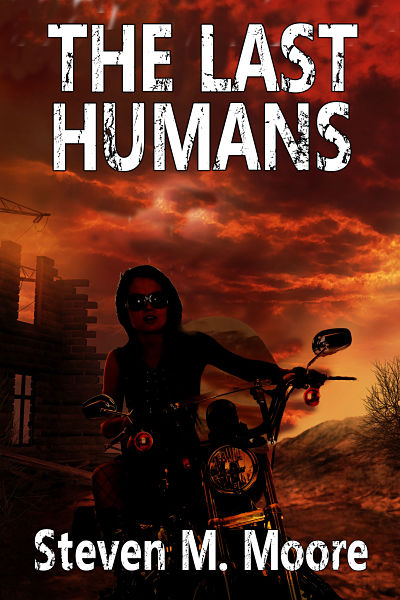
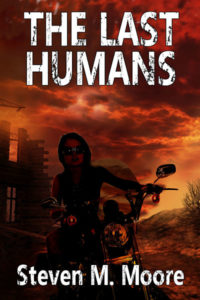
In my recent novel The Last Humans, a region already scarred by fires and quakes is part of the post-apocalyptic SoCal landscape. Post-apocalyptic is a subgenre of sci-fi, and the genre is known for extrapolating current science and technology to the future.

But sci-fi writers don’t necessarily want to get it right! Extrapolations can go in many directions, and when they take us to places most of us don’t want to go in our creative imaginations, they reduce to warnings we writers broadcast to readers and society in general, warnings that boil down to, “If we continue along this path, bad things will happen.”

Huxley started all this in Brave New World, depicting a population made docile with drugs—not exactly marijuana legalization or the opioid crisis, but close enough, especially if all the anti-depression drugs on the market are considered—is the whole world going crazy? I don’t think so, but Big Pharma is selling anti-depressants even to little kids to make a buck.

Orwell wrote about doublespeak, Bradbury about book burning. The first still plagues us today, evidence in the spin doctors debating the differences between quid pro quo and bribery. Book burning isn’t necessary because readership is down, with most otherwise intelligent people, especially millennials, limiting their reading to tweets, not books.

Are writers really prescient? Or are they just keen observers of human nature who warn us about the worst that can happen if we don’t change our ways? I certainly can’t gloat about my fire-scarred landscape in The Last Humans becoming the new normal in my beloved native state of California. I’m sure no sci-fi author really wants to say, “I told you so.”
In one of my first novels, Survivors of the Chaos (now the first book in the ebook bundle The Chaos Chronicles Trilogy Collection), multinationals have taken over the world, using their mercenaries to control everyone—and here I just wrote an article in this blog about tech giants being too big! In that same novel, I mention dikes on the East River keeping the seawater out of Manhattan. That story originated in a 2003 manuscript because I saw the perils of multinationals and climate change, but I never imagined that we might be beyond the tipping point for the latter sixteen years later. Recent events in the magnificent city of Venice show some places are far beyond the tipping point (the Italian government’s dragging its heels about a dike construction didn’t help). Needless to say, my warnings—or anyone else’s—have not been heeded, we’re being controlled by multinationals and pulling out of the Paris Climate Accord, and a little Swedish girl is correctly blasting politicians worldwide for stealing her contemporaries’ future! Or present, as the case may be.

A sci-fi author can only do so much. Maybe people are so happy, happy, happy that the Star Trek communicator became their smart phone, the first drug of choice for billions, that they ignore the warnings. Dunno. I never had a smart phone. Never will. I prefer to write sci-fi, even if no one heeds my warnings. Mind you, I’m not prescient. I’m just an observer of humanity’s foibles. It’s not hard to extrapolate those to the end of humanity in this galaxy. Let’s hope that such an extrapolation is incorrect.

***

Comments are always welcome.
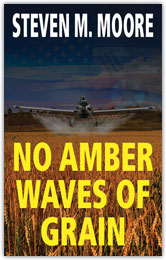
Evergreen Series: “Clones and Mutants.” The clones are victims of a secret government conspiracy in Full Medical. The mutant appears in Evil Agenda as a sinister businessman endeavors to create the super soldier. And the clones and mutant team up to stop an industrialist out for revenge against the West in No Amber Waves of Grain. All books are evergreen—novels as current today as when I wrote them…maybe even more so. Available on Amazon and everywhere ebooks are sold.

Around the world and to the stars! In libris libertas!
Steve’s shorts: Deathday…

November 21st, 2019

Deathday

Copyright 2019, Steven M. Moore

Ralph Middleton, born January 7, 1997. Died January 7, 2067. He tossed the rest of the prefab death certificate on the table, sipped his synthetic coffee, and frowned. He’d simply filled in his name where appropriate in the state-recommended obituary. There was no one left to care who he was or what he had done during his lifetime anyway. The only person who could possibly care now is me, and I don’t give a shit.

He’d seen a lot in seventy years. He’d been called a millennial and as a kid protested the country’s turn to fascism that had started in 2016. During the following years, it had been like butting his head against a brick wall considering that the whole world was traveling down that doomsday road. Some historians had called it Chinese-style capitalism to make it sound better. Labels weren’t important; the erosions of people’s rights everywhere were. Some people cared about the latter back then. Now no one cares!

He looked forward to death. They were doing him a favor. Oh, he had protested against the rubber-stamp Congress’s passing of the 2035 Geriatrics Act, but now he was happy his time had come. He was fed up with human beings’ love affair with autocracy.

The Geriatrics Act was just a more pleasant name for the mass murder of elderly people who had reached age seventy. Not that he wanted to live any longer in this world gone mad.

His health had deteriorated in lock step with the environment. Jodie had died in Hurricane Harold in 2061, one of the many extreme weather events resulting from climate change. He was now a widower in terrible health unable to stand in the long lines of people waiting for inadequate medical care, unless you were a member of the ruling fascist elites. The euthanasia center would be a welcome relief.

He had spent his deathday breakfast allowance on fresh fruit and a scone. He hadn’t had that much breakfast in years, simply because he couldn’t afford such luxuries. The death of Earth’s environment meant that most of the planet’s billions lived at starvation levels—he had become used to seeing scrawny kids’ ribs and their blank, hungry eyes. Crops from the remaining arable lands were only affordable for the elites. He knew the country’s leaders always ate well, though.

When he finished, he put the dirty dishes in the sink. His water allowance wouldn’t allow him to wash them before he reported to the center. That didn’t worry him. Not today. Jodie had always been tidy and made the best use of their allowance. Jodie!

He found his mask and left his small apartment. Out on the street he looked back at the front of the drab building where the government had assigned them living quarters years ago. It looked like one of those tenement buildings he’d once seen in history books depicting life in East Germany. Just more fascists. You’d think people would have learned.

He then tossed the mask and took a deep breath of the foul, polluted air. The center was only three blocks away, conveniently close to the elderly housing units. Soon the killer drugs would be pumping into him. What did a bit of killer air matter?

***

Comments are always welcome.

Evergreen Trilogy: “Clones and Mutants.” Full Medical has clones as victims of a government conspiracy; in Evil Agenda, mutant super soldier Serena is introduced; and they team up to try to stop a mad industrialist bent on revenge against the West in No Amber Waves of Grain. These are novels as current as the day I wrote them…maybe even more so. Available where ebooks are sold.

Around the world and to the stars! In libris libertas!


Reviews for The Last Humans…

November 20th, 2019

[Note from Steve: In an attempt to declutter my web page “Books & Short Stories,” I’m going to start collecting some significant reviews for each book in the blog category “My Reviews.” When all is said and done, readers can search for a book title or its series and see the reviews. This might be doubly important, because good reviews I’ve received are often NOT on Amazon. I exclude all reviews by trolls, of course, most of which have zero content and contain only vitriol—Lord knows why. You’ll find most of those on Amazon and its sister-site, Goodreads…and more reviews by good readers!

Also please note: If you’d like more information about me, please see my interview tomorrow at the Write Way Cafe. Join HiDee and me for a cup of virtual coffee to discuss The Last Humans and learn more about this post-apocalyptic thriller and why I wrote it. And please peruse the features and past visitors to this wonderful blog promoting reading, literacy, and other authors. Bookmark it–you’ll be glad you did.]

“Steven M. Moore pens an apocalyptic thriller in The Last Humans. Penny Castro left the US Navy and became a forensic diver for the Los Angeles Sheriff’s Department. Penny and her fellow deputy George are called out to locate a victim offshore. Penny plunges into the ocean, finds the body and tugs on her line. The line goes limp. Letting go of the body, she swims to the surface. On the boat, she discovers her fellow deputy dead. Shocked, sickened, and saddened, she heads to shore. Upon arrival, all she finds is more dead bodies. They are everywhere! The world had turned upside down while she was under water. The stench of death surrounds her. Alone and frightened, she hides. But soon wild and feral humans begin terrorizing, looting and raping at will. Penny saves a small boy, Sammy, and then an old man named Ben. Penny, Sammy, and Ben become a family, fighting to survive in a desolate world gone mad.

The Last Humans is a thrilling ride into a dystopian world. Written in first person narrative, the heart and soul of the heroine emerges. Every thought, emotion, and action is seen from her perspective. She is courageous but not necessarily brave. She faces her fears and often vomits in the aftermath. Her femininity at times gets the better of her, but her humanity always prevails. The cast of characters and the tragic events surrounding her cause her character to grow beyond expectation. This concept is mandatory for survival in an apocalyptic world, keeping to the adage ‘that which doesn’t kill you makes you stronger.’
To survive you must have water. History has proven most wars are fought over water rights. Therefore, it is not surprising that there is a continual battle over water. Moore obviously did his research on the desalination process, bringing a realistic level of science into the conflict. Minimizing politics, the story never reveals the source of the plague; instead, the narrative concentrates on the aftermath of the global disaster. As the story comes to an end, the action slows, leaving you wondering if those who survived were truly the last humans. ‘The future was an unknown, but the known past had to be put aside to make room for it.’”—Cheryl E. Rodriguez, in her four-start Readers’ Favorite review

Read the rest of this entry »

Settings, real and imagined…

November 19th, 2019

Today it’s difficult to determine whether authors have visited any of the settings used in their novels. While I obviously haven’t been to Luna, Mars, or any planet in the 82 Eridani star system (all settings in my sci-fi stories), I’ve traveled a bit on our home planet and observed a lot in situ. But authors can also personalize other settings they’ve never been to by using Google Maps and Google Earth for generalities and then embellishing with their imaginations. There’s nothing wrong with that, and readers can visit faraway places that way.

That said, I traveled recently with my wife to see a few places in Europe we hadn’t seen before. We’d been planning and saving up for this trip for a while. (Readers of this blog probably didn’t even notice, thanks to WordPress’s ability to set up posts ahead of time!)

I knew Europe fairly well, but my knowledge was somewhat one-sided—I’d never visited the ex-Iron Curtain countries after they shed the oppressive yoke of the USSR. Considering that this year we’re celebrating the thirtieth anniversary of the fall of the Berlin wall, the “velvet revolution,” and other freedom movements taking place in 1989, my desire to visit these countries was doubly motivated.

Okay, there was an exception: In 1982, I took a train through the GDR on my way to a conference in West Berlin (I always saw that D in GDR as a grim joke, by the way, and that trip confirmed the black humor of the situation). Some of that experience is reflected in a flashback contained in my new novel from Penmore Press, Son of Thunder.

On our recent tour, we heard stories from locals about how the Russians worked hard to keep people behind the Iron Curtain—true-life stories about a corrupt and oppressive system’s efforts to control people’s lives. Their plight was real. It seems incongruous that now some people in those countries want to cozy up to Putin and his thugs, but newer generations all too often forget the struggles of past generations.

Read the rest of this entry »

Tech giants are too big…

November 14th, 2019

Do you often feel like you’re David vs. Goliath when confronting the tech giants? You should! You don’t even have a slingshot to use in any individual confrontation. And you’re not alone. The courts are way out of their league too. In fact, the tech giants are multinationals with more power than most governments. Only the EU, a combination of many governments, seems to be able to stand up to them. The US is largely successful, largely because money interests dominate both political parties and allow them to cajole blocks of voters.

There’s something insidious and inhuman about how big tech now dominates our world. Facebook’s CEO seems to think he’s above the law, Apple’s CEO is only a few steps behind, and let’s not talk much about Amazon’s whose hands are everywhere. Google controls the information you see. And there are many other tech giants on the list—I’ve only named the so-called American companies. Other huge companies, most of them Chinese, are out to control your lives, using info obtained from spyware you willingly buy (TikTok is but one example).

I’m no Luddite. I worked on the high tech frontier most of my career. Tech produces good things—medical imaging advances, more efficient farming techniques and disease-resistant crops, and so forth. But I understand where it’s going, and I don’t like it generally speaking because It will grow and grow and destroy everything that makes us human. It’s already doing so. If there’s a zombie apocalypse, it will be of our own choosing. We are already destroying rational and logical thought. Kornbluth’s classic sci-fi novella “The Marching Morons” is more likely to occur from tech destroying our minds than any genetic selectivity towards stupidity. Artificial Intelligence will be all that’s left, the world taken over not by machines as in the Terminator series, but by our giving the machines all the power.

But enough of generalities—let’s have some specifics. How does all this affect readers and writers?

Online social media like Facebook and Twitter are already havens for liars, haters, and bigots…and Facebook’s CEO condones this as “free speech.” You say, “Just ignore it.” I say, “I can’t.” Friends of “friends” spew out the vitriol; followers of “followers” do the same—so I get blasted too!

Amazon is always the very large rogue elephant in the room. It and its toady service Goodreads allows trolls to make zero-content reviews that skew the rankings at the best, and spew vitriol against books at the best, all excused by parroting Zuckerberg’s free-speech dogma. They serve neither readers nor writers, but Amazon/Goodreads just calls them “negative reviews,” not hate diatribes.

Authors, search for yourselves on Google. If you don’t see pirating sites come up in that search offering your books for free, lucky you! Google doesn’t give a rat’s ass that this happens. For all I know, the pirating sites pay Google to have it happen!

And they all give preference to Big Five authors and their books over self- and small press published books. And they all give authors false hope by selling ads, thus sapping and wasting author resources. They make a lot of money selling those ads that do very little to promote a book.

There’s very little that’s democratic about online retailers now in this supposed democratization of the publishing process—the retailers are autocrats who think they can control our lives and run the world better than any government. It’s astounding how much power over out lives that they’ve accumulated in 25-30 years, and they’re grabbing more with every year that passes. In particular, they tell you what to read and watch…and we follow along like lambs to the slaughter.

Because they’re all about making money, some say they’re apolitical. They’re not. They’re fascist capitalists, ones not following the Chinese model becoming more like that Chinese model all the time. They wield immense power because of their size.

So it’s time to split them up. They’re bloated carnivorous giants like 21st century T-rexes. It’s time to hit them with an asteroid or two and return the world to sanity, one where we’re not in danger of being swallowed up in the maws of the tech giants.

***

Comments are always welcome!

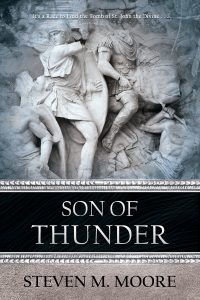
Son of Thunder. Art detective Esther Brookstone, now retired from Scotland Yard, becomes obsessed with finding St. John the Divine’s tomb using directions left by the Renaissance artist Sandro Botticelli. Esther’s search, the disciple’s missionary travels, and Botticelli’s trip to the Middle East make for three travel stories that all come together in one surprising climax. Esther’s paramour, Interpol agent Bastiann van Coevorden, has problems with arms dealers, but he multitasks by trying to keep Esther focused and out of danger. The reader can also learn how their romance progresses, as well as travel back in time to discover a bit about Esther’s past with MI6 during the Cold War. Available in print and ebook versions at Amazon and the publisher, Penmore Press, as well as in ebook versions at Smashwords and its affiliated retailers (iBooks, B&N, Kobo, etc.). Or visit your favorite local bookstore (if they don’t have it, ask for it).

Around the world and to the stars! In libris libertas!

Reviews for Son of Thunder…

November 13th, 2019

[Note from Steve: In an attempt to declutter my web page “Books & Short Stories,” I’m going to start collecting some significant reviews for each book in the blog category “My Reviews.” When all is said and done, readers can search for a book title and see the reviews. This might be doubly important, because good reviews I’ve received are often NOT on Amazon. I exclude all reviews by trolls, of course, most of which have zero content and contain only vitriol—Lord knows why. You’ll find most of those on Amazon and its sister-site, Goodreads…along with other reviews!]

Son of Thunder is the second novel in the Esther Brookstone Art Detective Series by Steven M. Moore. Esther has now officially left Scotland Yard and she is ready to pursue things that she always wanted to do but never had the time. Now that she has time, she is going to search for St. John the Divine’s tomb by using the directions Sandro Botticelli left centuries ago. There is nothing that will stop her from finding it, not even an imminent danger that her Interpol Agent boyfriend is trying to protect her from. Even though Bastiann has his own troubles to focus on, keeping Esther safe is his first priority. What are these two going to do? Can Esther find the tomb in time? Can Bastiann keep her safe while she is miles away?

This is an exceptionally well-crafted and well-researched novel. Even though I haven’t read the previous novel in the series, I had no trouble becoming invested in the story and getting involved in the protagonists’ lives. I enjoyed the connection between Esther and Bastiann and how they seemed to balance each other out. While Esther is a firecracker, Bastiann is the calm soul that brings her back to earth while helping her fly. I also enjoyed how Esther seemed to bring a lot to the story. From her quirky personality to her great sense of humor, she made things work while having a grand time. The development of the story was great, the plot was incredibly rich and the characters were super entertaining. It is a great story and I cannot wait for more.” —Rabia Tanveer, in her Readers’ Favorite 5-star review.

Read the rest of this entry »

Fiction, non-fiction, and fact finding…

November 12th, 2019

I read a lot of non-fiction in addition to genre fiction, and I consider myself a lifelong student of history as well as being well-versed in current events. Non-fiction books should always be fact-checked. What about fiction books? And who’s responsible for the fact-checking?

Ultimately publishers and authors are both responsible for fact-checking. Both share the royalties for their books. Publishers often say it’s the responsibility of the authors, that they don’t have the staff to do it. The authors do?

I used to comment on current events in this blog. In those blog posts, I was both publisher and author. Fact-checking was on me. I don’t have any staff, but I fact-checked a lot. It took a lot of time. That’s why I stopped writing those op-ed-style posts. I can commiserate with authors and publishers. It takes time to fact-check. But it must be done.

So much for non-fiction where there’s no doubt that fact-checking is necessary. But what about fiction? A lot of it, especially historical fiction, takes historical events and builds a story around them. From Fred Forsyth’s Day of the Jackal to Dan Brown’s The Da Vinci Code, even mystery and thriller novels use historical facts to give human substance to a story. Forsyth’s facts about the Algerian war were few but correct; Brown’s were invented, not by him, but by others, hoaxes he bought into. Forsyth’s were never questioned, probably because he was a journalist who believed in facts. Brown’s only sin probably was swallowing a bunch of inventive hearsay, and that was only discovered after his book was published.

I’m not even going to discuss more recent and egregious circumstances that have scandalized the reading and writing public. Some authors and publishers have taken a lot of heat, to say the least. Of course, if neither one fact-checks, who will? Politicians are often fact-checked by the media, and occasionally the media checks books to. But with thousands of books published every month, checking every book is as likely as my inventing antigravity.

What can readers and writers do? The important actions are vigilance and skepticism. Both readers and writers can practice those.

When I wrote Son of Thunder (see below), I was skeptical about many events, especially dating from the time of St. John the Divine. I had the Renaissance artist Sandro Botticelli express some of that skepticism. But I portrayed both the “facts” that I could find, often checking multiple sources. I also tied them together with legend and my own storytelling, a common procedure in historical fiction. But, like Dan Brown, I might later learn there are unintentional gaffes. Historians are welcome to point them out to me; so are readers. I’ll acknowledge that new information, first in this this blog and then in any following editions of the book.

Fact-checking is especially important for the science and technology used to underpin sci-fi. For example, I have a gaffe in common with Andy Weir, author of The Martian. His storm at the beginning of that novel couldn’t do the damage because of the low atmospheric pressure on the Red Planet; the shuttle landing in my More than Human: The Mensa Contagion is equally improbable. We both misrepresent the Martian atmosphere. In Rembrandt’s Angel, I described a BMW as a British motorcar. I knew better—it’s German, of course—but I had been reading analysis of BREXIT’s consequences. One was the that BMW parts, many made in the UK, might have to be made elsewhere when UK leaves it. In the book, BREXIT has already occurred, so that might end up being a gaffe too!

The farther we go forward in time and the farther we go back, the less we’re certain about facts. The former is often extrapolation, the wilder the time lapse. The latter is due to legend being confused with history and just the lack of hard facts. Readers and the media can keep authors and publishers honest; and authors and publishers must police themselves the best they can. That’s all hard to do with the number of books that are published every year!

***

Comments are always welcome.

Son of Thunder. Art detective Esther Brookstone, now retired from Scotland Yard, becomes obsessed with finding St. John the Divine’s tomb using directions left by the Renaissance artist Sandro Botticelli. Esther’s search, the disciple’s missionary travels, and Botticelli’s trip to the Middle East make for three travel stories that all come together in one surprising climax. Esther’s paramour, Interpol agent Bastiann van Coevorden, has problems with arms dealers, but he multitasks by trying to keep Esther focused and out of danger. The reader can also learn how their romance progresses, as well as travel back in time to discover a bit about Esther’s past with MI6 during the Cold War. Available in print and ebook versions at Amazon and the publisher, Penmore Press, as well as in ebook versions at Smashwords and its affiliated retailers (iBooks, B&N, Kobo, etc.). Or visit your favorite local bookstore (if they don’t have it, ask for it).

Around the world and to the stars! In libris libertas!

Veterans Day…

November 11th, 2019

You might not be a veteran or have a veteran in your life, but I assure you veterans have touched your life. The many freedoms you and I enjoy exist because many women and men felt the call to duty to protect our way of life, especially after 9/11 when terrorism created a new battlefront against forces of evil who would enslave human beings worldwide…and continue to do so. Freedom is a precious thing, and it is worth fighting for. Join with me today to celebrate our veterans, many of them wounded in mind and spirit in battles fought to preserve our freedoms. They aren’t Democrats or Republicans, alt-left or alt-right–they’re all Americans, and this is their day!

“You must read…”

November 7th, 2019

People often know I’m an author after they know I’m an avid reader—for one thing, I present myself that way. In polite conversation, somewhat rare in this politically charged environment, we often turn to culture, usually a safe topic. After chatting about movies and musicals—often not blockbusters, by the way, because I rarely see them—we often move on to books. Then comes the pat on the arm and the statement, “You must read….”

Here’s why I hate that expression: it reflects the business model of the NY Times Book Review. Out of curiosity, I sometimes look at a book review there. I all too often say, “This plot [and or characters] doesn’t [don’t] resonate with me.” Maybe these are just thoughts where I’m subconsciously wreaking revenge against the many agents who expressed something like this in their many rejections! But the books in that Review have gone through an extensive acquisition and editing process, so they must be better than other books, right? Wrong!

I’ve studied all that the Times will acknowledge about the way they select books for their Review. (I’m not talking about ads. The Times will take anyone’s money.) Even my old POD, Xlibris, has those—their authors paying exorbitant fees to have their books appear among a few dozen. Ugh! The Times’s selection formula suffers from the fatal flaw of American Idol and other audience participation mega-events: “voters” in this case are book buyers, but only ones selected by the Times who frequent a sampling of bookstores. How can a big city newspaper afford a secret and obscure sampling technique that supposedly determines a book that’s worthwhile to read. It can’t because they don’t have the staff for that. Their Review comes down to telling the American public “You must read…” without a damn thing to back it up.

Of course, the NY Times Review is just a toady of the Big Five publishing conglomerates, most of them located in Manhattan. I’m not against the paper in general, but “All the news that’s fit to print” doesn’t apply to books, and makes the Review ignoreable in my mind’s eye. I actually take pride in rarely reading books they recommend that the reading public should read. I’ve never paid attention to pop contests from American Idol and Dancing with the Stars to the Times’s book editors and their arcane sampling techniques. I’ll determine which books I want tor read, thank you.

To be fair, the Review isn’t the only culprit in this business. Amazon tries to force books down my throat, presumably based on my previous buying history, but they only use keywords and have never read the books. I also don’t trust those stacks in bookstores announcing “Books Selected by our Employees.” Why take anyone’s word for your book buying? You can browse in a bookstore and read cover material and peek inside. Even Amazon formalizes this a bit. Readers have all the tools that are needed to be educated book buyers. They don’t need anyone telling them what to read.

***

Comments are always welcome.

The Last Humans. Did you miss this post-apocalyptic thriller. Ex-USN and LA County Sheriff’s forensics diver emerges from a dive to find all her colleagues dead. She had to survive in this world, one of death and destruction. But maybe the remnants of the US government are more dangerous than the lack of food and water and feral humans? Available in ebook and print and ebook format at Amazon and the publisher, Black Opal Books, as well as in ebook format at Smashwords and all its affiliated retailers (iBooks, B&N, Kobo, etc.) Also available at your favorite bookstore (if they don’t have it, ask them to order it).

Around the world and to the stars! In libris libertas!

Have a novel in you?

November 6th, 2019

Don’t cripple it by trying to write it in a month! Even the venerable NY Times (yes, the newspaper that often has its names attached to “bestseller” in some arcane and suspicious indication of quality) bought into NaNoWriMo, or “National Novel Writing Month.” The challenge (and it belies the name a bit): Write a novel in a month. The best I can say about that nonsense is that it might motivate someone to get started writing. The worst? Continue on.

Most of you know I’ve written a few novels. I’ve never written one in a month! I’ve never met or corresponded with a serious writer who says she or he did this. It’s just not done. Maybe a short story or possibly a novella, but never a novel. While dependent on genre, a novel is a creation of at least fifty or more kwords (that’s 50,000 words—most are longer) that are not randomly placed on the page. Monkeys couldn’t have written Shakespeare’s plays; they can’t write novels either, because they’re much longer.

Of course, “serious writer” are two words to emphasize here. It took Michelangelo two years to sculpt David, the novel-equivalent in Renaissance art, chiseling away one chip at a time, even though he was an energetic twenty-year-old. I’m not pretending to compare genre fiction to that magnificent statue in the Uzzi, but no one can write a novel in a month. “Only 2000 words per day,” you say. Yeah, anyone can type 2000 words per day, but is anything of quality produced? Maybe you think that you just need to get the words down and afterwards you can turn a sow’s ear into a silk purse (adages like that shouldn’t be in your novel, by the way, unless one of your characters uses them in dialogue…a character trait exhibited by some people).

Even if you’re a pantser like me, which gets you going after you have some idea about plot and characters, writing a novel in one month isn’t equivalent to just typing 2000 words per day!  (You don’t know what pantser means? One decision you have to make is whether to be a pantser or a plotter. The Times’s article focuses on writing software that almost enforces the latter, which can be more time consuming. I’m not going to debate the merits of either one. And did they count the time for the learning curve you have to climb to use the software?)

For some novels, I’m more “in the zone” in my writing than with others. I can type long stretches of prose almost semiconsciously as if the characters were whispering their own stories in my ear. That might produce days where I add up to 10 kwords to a novel. Those days are exceptional, and that zoned-out state often leads to prose requiring a lot of content editing.

“Oh, I don’t have to content edit. I can do that at the end. Or I’ll leave it to the editor.” Poor editor! If I were an editor, I’d refuse to edit a novel written so poorly that it’s an illogical mishmash of random thoughts, but you can work anyway you want to. Just remember: Content editing is only the first step in editing. Copy editing comes next before you even should contemplate submitting your one-month miracle. And there’s a lot more after that. And leaving all editing to the end can make your life miserable.

I guess my main problem with NaNoWriMo is that it trivializes the novel-writing process. Its hypothesis is that everyone has a novel in them, and they just have to dedicate some focused time to get it written. It’s not that easy, folks! While it can be a lot of fun, there’s a lot of mind-sweat and skills involved in writing, novel writing in particular.

So go ahead and try to write your novel, but do it at your own pace, enjoying the process, that uplifting feeling of creation. Just don’t put artificial constraints on yourself by joining in NaNoWriMo. If your novel is any good, you’ll have plenty of time to fret with schedules and deadlines afterwards!

***

Comments are always welcome.

Son of Thunder. Art Detective Esther Brookstone has a new obsession. Recently retired from Scotland Yard’s Art and Antiques Division, she becomes obsessed with finding the tomb of St. John the Divine following directions left in the frame of a painting by Renaissance artist Sandro Botticelli. Three parallel stories from three different eras—St. John’s clandestine missionary work, Botticelli’s own search for the tomb accompanied by his parish priest, and Esther’s search—all come together at the end.

Here’s one reviewer’s summary of the novel:

“Moore’s deft interweaving of history, religion, fable and fact makes for a fascinating read, highly recommended for readers who favor a thriller that makes them think beyond the page.”– Barbara Bamberger Scott, in her Feathered Quill review.

Available in print and ebook format at the publisher, Penmore Press, and Amazon, as well as in ebook format at Smashwords and all its affiliated retailers (iBooks, B&N, Kobo, etc.). You can also find it in you favorite local bookstore (if they don’t have it, ask for it).

Around the world and to the stars! In libris libertas!