The influence of Hamlet…

November 5th, 2019

As I was watching PBS’s “Shakespeare Uncovered” analysis of Hamlet a while ago, I realized how much that play has influenced writers. Revenge is a common plot device, and often, like in Hamlet, it doesn’t turn out well for the avenger. Hamlet’s moralistic dilemma so aptly portrayed by Shakespeare (for example, Hamlet can kill his uncle in one scene, but refrains from doing so when the uncle is praying, thinking that will send his father’s assassin to heaven instead of hell). But in other works, protagonists handle similar moralistic dilemmas well, so, even if the antagonist is killed, readers feel s/he deserves it.

Examples of the play’s influence abound. For example, this might be something we’ve missed about Star Wars in the first three movies of the series: Luke Skywalker is Hamlet; Darth Vader is the evil uncle, even though he’s really Luke’s father; and Obi-Wan has the role of Hamlet’s father (a ghost after Vader slays him). And Luke is avenging the slaughter of his aunt and uncle by Vader’s troopers. I for one would have never come up with that interpretation without that PBS show! (Of course, Star Wars also borrowed a lot from Edgar Rice Burroughs and Isaac Asimov.)

I also realized after that PBS show that Hamlet has influenced me, in my own Rogue Planet and A. B. Carolan’s Mind Games, for example. Mind you, the last time I read Hamlet was long ago in a Shakespeare course I took as an undergrad at UCSB. But I now realize my unconscious played a trick on me, at least in those two books.
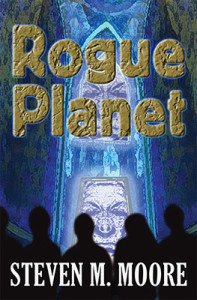
Rogue Planet features the son of a murdered king who must save his people from a brutal and oppressive theocracy. The role of the uncle in Hamlet is assumed by the religious leader (any similarities to current and similar 21st century theocrats are intentional, of course).

In Mind Games, and also in a sci-fi context, a young girl assumes the role of Hamlet who strives to find her adopted father’s murderer. The antagonist, who’s not known at the beginning (a break with Hamlet because it’s a YA sci-fi mystery), plays the role of the evil uncle.

All these examples are variations on Willy’s famous play about assassination and revenge. And my analysis of these examples (you probably can think of many others) never would have occurred without that PBS show. Thank you, PBS and the foundations who sponsor the series!

***

Comments are always welcome!
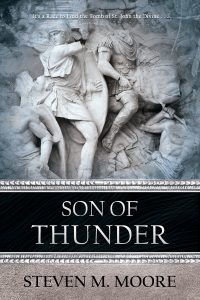
Son of Thunder. This sequel to Rembrandt’s Angel from Penmore Press has Esther Brookstone in trouble again. She become obsessed with finding the tomb of St. John using directions she finds in the frame of a painting by Renaissance artist Sandro Botticelli. Three parallel stories occur—the first about St. John’s missionary work (first century), Botticelli’s own hunt for the tomb (Renaissance), and Esther’s search (twenty-first century). They are all brought together by the end of the novel. Available in print and ebook format at Amazon and the publisher and ebook format at Smashwords and all its affiliated retailers (iBooks, B&N, Kobo, etc.). Also available at your favorite bookstore (if they don’t have it, ask them to order it).

Around the world and to the stars! In libris libertas!
My reading and writing days…

October 31st, 2019

H A P P Y   H A L L O W E E N!

There will be ghosts and goblins cruising around your neighborhoods tonight. Please be careful. And, if you’re adults heading off to a party, be responsible: Don’t drink and drive.

***

I was already a mature adult when computers, computing, and the internet came into being and began to dominate our lives. I remember that “blog” originally was an abbreviation for “bio log.” They often took the form of someone going through their waking day, describing everything that happened, maybe even with a videocam—in other words, some narcissist wanting to make public the boring details of her or his existence. Now you’ll find the narcissists on Facebook or Twitter (the most extreme one is on Twitter). And then people complain they’re losing their privacy!

Now “blog” is defined as “a regularly updated website or web page, typically one run by an individual or small group, that is written in an informal or conversational style.” Hence this is a “blog post,” i.e. one of those updates. But I thought it would be fun to show how my writing and reading days are organized most days. I think that’s what it means to be a full-time writer…emphasis on full-time. I might be wrong, though, so please comment. And there’s nothing wrong with being a part-time writer. Been there; done that.

6 a.m. Our usual wake-up time. (We’re morning people.) News goes on, NY Times is brought in, and we eat breakfast, usually with two mugs of coffee and cereal. Boring stuff mostly, but I get ideas from the news and the Times, and the two mugs of java are necessary to jumpstart my writing batteries (occasionally three).

8 a.m. Email, answering what’s not spam, especially authors, editors, and publishers; maybe a bit of social media; a few posts to Facebook and Twitter.

10 a.m. Maybe writing some short fiction or blog posts.

12 a.m. Lunch—usually a sandwich, with soup added in the winter.

1 p.m. “Serious writing” starts, i.e. working on a story…if not before. Will it become a short story, novella, or novel? I don’t care during the writing, and I don’t worry about word count until I’m done. If there’s no WIP, I start a new one after consulting my notes. I might have to do some research for settings, which include both space and time. That might require reading Science News, or the online Wikipedia or Britannica (often to check Wikipedia), or using Google.

2:30 p.m. My batteries might be getting low. If not, I keep going; otherwise, back to email and social media. I don’t add more java because I wouldn’t sleep. Editors, publishers, and reviewers keep me awake enough. Marketing stresses me out.

3:30 p.m. Batteries are definitely drained by then. News—CNN at first, then local, then national—and dinner. I’m sometimes cooking (barbecuing); otherwise my wife is.

7:00 p.m. Email check on my Kindle. Nothing going on? I read, unless there’s something worthwhile on TV (rare, and mostly on PBS). Earl Grey Tea or two fingers of Jameson. No java. R&R is the key.

10:00 p.m. Bed.

Rinse and repeat the next day.

Read the rest of this entry »

Book review of Daniella Bernett’s Lead Me into Danger…

October 30th, 2019

(Daniella Bernett, Lead Me into Danger, Black Opal Books, 2015.)

Readers of this blog know that I love British-style mysteries. Here’s one that’s a bit different, a tightly written international mystery/suspense novel. Lead Me into Danger will keep the reader guessing.

Emmeline Kirby is an investigative reporter for the Times who has a bit of personal baggage, both in her family history and in her relationship with jewel thief Gregory Longdon. As in any Christie novel, she becomes involved in a murder mystery. The plot is clever and the characters complex, covering a wide spectrum of humanity. The settings are London and Venice.

A fellow reporter, Charles Latimer,  is pursuing a story that involves a Russian mole in the British foreign office. An attempt is made on the reporter’s life in Venice, and he’s finally murdered in Emmeline’s apartment in London. She decides to continue pursuing his story and bring his murderer to justice with the help of a Scotland Yard chief inspector and Longdon’s.

Of course, that Metropolitan Police inspector Burnell (he appears in other books in the series, along with Kirby and Longdon) is what makes this a British-style mystery, one written by an American (both my books Rembrandt’s Angel and Son of Thunder follow that plan, so the author and I must share a love for British-style mysteries). That inspector isn’t the main character, but he reminds me a lot of P. D. James’s Dagleish and other favorites…and that’s a good thing.

Lots of twists and turns in the plot here. There’s also enough international intrigue to call this a spy novel, and enough action to call it a thriller. Thank you, author Bernett! I’m already reading #2, and she has a new one out in the series. How did I miss these wonderful books? I must catch up.

(For more about mystery author Daniella Bernett, see the above interview.)

***

Comments are always welcome.

Around the world and to the stars! In libris libertas!
Interviewing mystery author Daniella Bernett…

October 30th, 2019

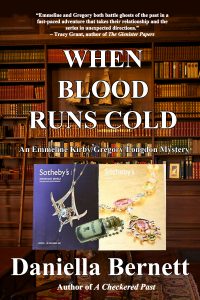
Steve: It’s my pleasure today to interview author Daniella Bernett, author of the Emmeline Kirby/Gregory Longdon mystery series. (A review of the first book, Lead Me Into Danger, follows.) Her sleuths are unusual. Emmeline is an investigative journalist while Gregory is a jewel thief. They’re both British, and together with a Scotland Yard detective, readers will find an unusual trio that makes her books fit nicely into one of my favorite subgenres, British mysteries. So please welcome Daniella to my blog. Why don’t you say something about yourself for the readers to get things started?

Daniella: I’m a member of the Mystery Writers of America, New York Chapter, and I have a B.S. in Journalism. The books in the series are set in the U.K. and Europe. Lead Me Into Danger, Deadly Legacy, From Beyond The Grave, and A Checkered Past are the first four books in the series. When Blood Runs Cold, Book 5, was released on September 21. Old Sins Never Die, Book 6, will be released in fall 2020. I’m currently working on Book 7 in the series. I’m also the author of two poetry collections, Timeless Allure and Silken Reflections.

Daniella on Reading and Writing:

Steve: Why, how, and when did you start writing?

Daniella: The spark that launched me into the writing world was my fourth grade teacher. Once a week, she had Creative Writing hour and gave us different assignments. I absolutely loved it. I started pursuing my dream by writing short stories (mostly mysteries). After I graduated from college, in the four months it took me to find employment, I wrote a mystery novel. My first job was as a copywriter at Penguin USA. One day, I plucked up the courage to show my book to one of the editors. She actually read it. She told me that it was better than what she usually sees from first-time authors. However, she said that I should think more in terms of a series. I tried revising the book and submitted it to several agents, who all rejected it. Thus, I chalked it up to a good exercise. But I didn’t forget the editor’s advice. The kernel of the idea for my Emmeline and Gregory mystery series slowly started swirling around in the back of my mind, until one day when all pieces fell into place, and Lead Me Into Danger, Book 1, came to life on the printed page.

Steve: What is your biggest problem with the writing process? How do you tackle it?

Daniella: Since I have a full-time job, squeezing in the time to write is my greatest challenge. I can only write when I come home in the evenings and on the weekends. I try to be disciplined about it.

Steve: Do you feel writing is something you need to do or want to do?

Daniella: Writing is like breathing. I simply must do it. I’ve had a love affair with language and the written word since I was very young. The idea that I could allow my imagination to roam freely and string words together like a strand of pearls to tell my own tale was (and still is) absolutely enchanting.

It can be frustrating at times when the words refuse to come and doubts bring my story spluttering to a halt. However, those instances are to be expected. Nothing can take away the sheer joy and sense of accomplishment in the creative process.

Steve: How much of your creative ability do you think is innate and how much is learned?

Daniella: I think most of my creativity is instinctive. Writing has always come naturally to me. I think what I learned in school merely honed the skills that I already possessed.

Steve: What is the last book you read? What are you reading now?

Daniella: The last book I read was The Sentence is Death by Anthony Horowitz. I’m currently reading Ribbons of Scarlet: A Novel of the French Revolution’s Women by Kate Quinn, Stephanie Dray, Laura Kamoie, E. Knight, Sophie Perinot and Heather Webb.

Steve: Who are your favorite authors?  Whose writing inspires you the most and why?

Daniella: Among my favorite authors are Rhys Bowen, Lauren Willig, Alyssa Maxwell, Tracy Grant, Emma Jameson, Kate Quinn, Tasha Alexander, Susan Elia MacNeal, Tessa Arlen, Jeffrey Archer, Daniel Silva, and many, many others.

In terms of inspiration, Agatha Christie influenced me the most. There are so many things I admire about the grande dame of mystery. She was truly a master at her craft. What I love the most is that Christie conceived such deliciously wicked and ingenious plots that appeal to the reader’s intellect. Jealousy, love, and greed are the primary motives for murder. Christie took these motives and threw them into a pot, swirled them about, and in each book conjured up a new way to explore these emotions. Her stories endure to this day because of her astute insight into human nature and all its foibles.

I would like readers to be talking about my books long after I’m dead. I try to leave readers wanting more, like Christie did with such consummate skill. I hope I’m succeeding.

Steve: Should writers read in their genre?  Should they be avid readers?

Daniella: I think writers are readers at heart. Reading nourishes my soul. It also has allowed me to develop a broad vocabulary and made my mind curious about many things. Books make the reader think.

I would tell aspiring writers to read everything they can get their hands on to get a feel for pacing, moods evoked, subjects written about and the language. Read different authors to see how each handles the narrative and plot twists. In the end though, let these other books merely be a guide. The most important thing is to write the story that you want to write and not what others tell you or what the current market trends are. To write a great story, you have to breathe it, live with it, and nurture it in your dreams and waking hours.

Read the rest of this entry »

Writing for Hollywood…

October 29th, 2019

Screenplays—who’s writing them? I’ve often said in these blog pages that many good movies are adaptations of a good book into a screenplay. They can also come from screenplays where the author(s) are good at storytelling. But can a screenplay be written by someone who can’t write?

Apparently—and those screenplays often lead to bad movies, ones without much of a plot and with characters who seem to be wooden caricatures of humanity. And a movie is often just an audiovisual spectacle without themes or substance.

Film is a complicated media. The two hours of a typical movie hinders good storytelling in general. How do you shoehorn a good story into two hours? I can’t do it. I wouldn’t even try. When I see a movie where it’s been done, I’m amazed. Most of the time I see failures.

Maybe short stories lead to better movies? Most of the Phillip K. Dick stories that were made into movies—Blade Runner, Total Recall, The Adjustment Bureau, and so forth—came from shorts. Compare those original Star Trek episodes to the drivel in Star Trek: The Next Generation and those of the other TV shows in the franchise. Guess what? Most of those original episodes were based on short stories written by real sci-fi writers—Theodore Sturgeon, Richard Matheson, Harlan Ellison, and so forth—or by Gene Roddenberry, who had good storytelling skills. Sure Kirk was an atypical, womanizing captain, while Jean Luc was more sedate, commanding his Number One as a true ship’s captain. But those first episodes were great. Ellison’s “The City on the Edge of Forever” is a classic.

The other night I rewatched King Solomon’s Mines, starring that Dr. Kildare guy and a giggly, silly Sharon Stone. It was a bumbling farce that never captured the wonder that I had reading the original novel, one that predated Indiana Jones by decades—Indy owes more to the book than that movie, although I’ll have to admit some of that old score often sounded like John Williams’s.

Is it worse to start with a good story and ruin it by turning it into a terrible screenplay (let’s not mention what often gets left on the cutting room floor) than just writing a bad screenplay to begin with? I don’t know. But I often wonder if screenwriters have the skills to tell a good story. The results are so often disappointing.

Or maybe the directors just want to destroy a screenplay that tells a good story? Some of them—I’m thinking of the legion that just likes to blow things up—probably wouldn’t know a good story if it bit them in the butt. Hollywood should confront these questions…and maybe those directors.

And then we can ask if the moviegoers care. Do they want a good story? Or do they just want an audiovisual spectacle—raunchy sex and violence in gory detail? Movies are dramas, after all. Would you go to a play that has no plot or interesting characters? Why do they write screenplays and make movies that have none?

Maybe I’m asking too much? Movie making is a business, and as long as customers are willing to pay to see movies, everything’s okay. Right? If I apply that same logic to books, we’ll see readers not caring about plot and characters in their fiction reading, yet still buying such stories. That could happen too. Hopefully I’m not around to see it…or meet those readers.

***

Comments are always welcome.

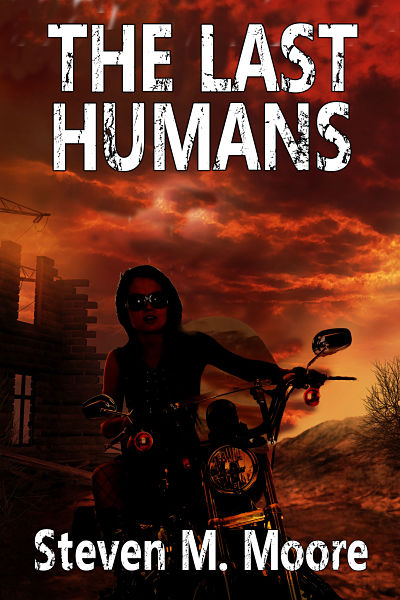
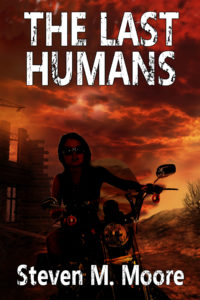
The Last Humans. Did you miss this? Ex-USN and forensics diver for the LA County Sheriff’s Department Penny Castro surfaces from a dive for a body only to find death all around her.  Follow her adventures—her struggles to survive and create an adopted family–in this post-apocalyptic thriller brought to you by Black Opal Books. Available in print and ebook format at Amazon or the publisher’s website, and in ebook format at Smashwords and all their affiliated retailers (iBooks, B&N, Kobo, etc.) and lenders (Overdrive, etc.).  Also available at your favorite bookstore (if they don’t have it, ask for it.)

Around the world and to the stars! In libris libertas!
Themes we need to see…

October 24th, 2019

Both authors and publishers seem to be afraid of serious themes in these days of political correctness and fear of something controversial that internet trolls attack. The #MeToo and anti-cultural appropriation troops strike fear in everyone about saying anything that might set them off. Anti-vaxers even resort to calling new vaccine laws racist. Everyone has a cause, and many are fanatic about their causes. My two main causes are gun and climate control. 90% of Americans want reasonable gun control, and climate change threatens everyone’s children and grandchildren, so you would think that those causes are not only bipartisan, they’re universal concerns. Think again!

As a consequence, it seems hard to find a well written book with some red meat in it these days. Okay, vegans and vegetarians will probably come after me for using that metaphor. Change it to “…with some serious topics in it….” I’m not talking about political things necessarily. Something like my novella “Fascist Tango” would be attacked mercilessly if I made it into a novel and sold it, but any sane person knows both the extreme left and right can both become fascist—just consider Maduro’s Venezuela and Pinochet’s Chile. No, I’m speaking in general about themes that appear in the national dialogue, or even worldwide.

By avoiding serious themes, books become bland. Orwell’s 1984 or Koestler’s Darkness at Noon could never be published today…or, if they were published, they’d be relegated to the bottom of the pile of books Amazon promotes. If a book has good vs. evil, it’s all light and darkness with no gray, reminding me more of The Perils of Pauline than serious and complex storytelling. Romance sells; cozy mysteries sell, focus on “cozy” meaning not controversial. Sci-fi sells if it reduces to space opera; fantasy succeeds if it’s something like Star Wars or Game of Thrones—there be dragons over yonder, but they’re not all that bad…and they know smoking can affect their health.

It all reduces to supply and demand, of course. Econ 101. There are few readers remaining who want fiction with serious themes. Maybe it’s because they live a reality where they’re bombarded with serious themes every waking hour, or relive them in their nightmares. They don’t want to read about them in the books they buy. They want escape from all that—comfort food, not exciting taste challenges.

These are over-generalizations, of course, observations about the average in the distribution of reading behavior. There are still tails for that statistical distribution, often determined by niche books, but do the tails lead to bestsellers? I conjecture that happens so rarely that I use the NY Times Book Review to filter out books I do NOT want to read. And I’m proud to say I haven’t read one book nominated for the National Book Award—they all look like pablum, and I’m not Oliver asking for more porridge.

A book can be exceptional for many reasons. It can’t be exceptional by trying to please everyone, though. That leads to blandness. Such books might entertain, but they don’t stick in my mind as being exceptional. Fun to read? Maybe. Exceptional? No way. It’s as if authors and publishers are participating in the “small talk” Eliza Doolittle must master in My Fair Lady—inoffensive jibber-jabber that doesn’t qualify as intelligent speech.

Where will it all end? Perhaps we won’t need the soma from Brave New World. Perhaps Bradbury’s book burners in Fahrenheit 451 won’t be needed either. Blasé books will rule the day—they mostly do that already—and then books will disappear, killing something that makes us human…good storytelling. Everyone will be happy, happy, happy discussing nothing. I don’t see it ending well, but that’s just my opinion. What’s yours?

***

Comments are always welcome.

Son of Thunder. What’s unusual about this book? It’s the sequel to Rembrandt’s Angel. It features Esther Brookstone, now retired from Scotland Yard, who is now obsessed with finding St. John the Divine’s tomb using directions left by the Renaissance artist Sandro Botticelli. Esther’s search, the disciple’s missionary travels, and Botticelli’s trip to the Middle East make for three travel stories that all come together in one surprising climax.

Esther’s paramour, Interpol agent Bastiann van Coevorden, has problems with arms dealers, but he multitasks by trying to keep Esther focused and out of danger. The reader can also learn how their romance progresses, as well as travel back in time to discover a bit about Esther’s past with MI6 during the Cold War.

History, archaeology, romance, religion, and art make for a tasty stew in this moving, moralistic mystery/thriller novel published by Penmore Press. Available in print and ebook formats at Amazon and from the publisher, and in ebook format at Smashwords and the latter’s affiliated retailers (iBooks, B&N, Kobo, etc.) and lenders (Overdrive, etc.). Also available at your favorite bookstore (if they don’t have it, ask for it.)

Around the world and to the stars! In libris libertas!

ABC shorts: Fish Story…

October 23rd, 2019

Fish Story

Copyright 2019, A. B. Carolan

[Note from Steve: A. B. Carolan obviously thinks “young adult literature” applies to ETs as well.]

The Humans called it a meteor. It was our shuttle. The ocean dissipated its kinetic energy, but the water entry at high speed cracked the hull. We were forced to use escape pods. My father, mother, and I ejected into a strange, alien ocean. I never saw them again.

The pods, designed for deep space, weren’t designed for maneuverability in an aquatic environment, and the viscous seawater and currents made them less maneuverable. I was able to get near the surface somehow and left the pod.

We’re amphibians, so I could swim underwater until I found the pier Humans had built. I remained under it until nightfall.

***

The male Human child saw me on the moonlit beach from the porch. The planet had an unusually large satellite. Its light made the froth of the waves luminous and the beach visible to anyone nearby.

The child was crying but stopped when he saw me. Too late to hide!

My father and mother had studied the primitive Humans for many of the planet’s years. They were often warlike and violent. At first I was afraid, but the little Human didn’t look threatening as he ran toward me. I waited for him.

“Are you a merman?” he said, stopping in front of me, breathless. “I want to keep you!”

Although not easy, English was fast becoming the language understood almost anywhere on the planet. To have one planetary language was a good step toward stability, but you’d think they’d pick something easier for everyone to learn. I understood it. So had my parents, but much better than I.

Merman? That was an unfamiliar word. I analyzed its construction. Man = short word for male Human; woman = short word for female Human. Mer- seems to be borrowed from another language, French, meaning sea. “No, I come from space. Sorry. What’s your name?”

“Peter? What’s yours?” This young person was almost bouncing up and down in excitement.

“You can call me Ka.” That was only the first part of my name, a mix of sounds and sonic images. “Do you have any radio transmission equipment in your house? I need to send a message so I can be rescued.”

“No, we don’t. And that would only transmit messages at the speed of light. Don’t you come from light-years away?”

I translated that distance measurement to my own. The speed-of-light part was universal; but the time duration, one of these planet’s years, wasn’t. Still, this young Human didn’t seem so primitive. “My parents are scientists. There are others here studying you. The starship is in orbit around the planet, only light-seconds away.”

“Cloaked like a Klingon ship?”

I didn’t know the answer to that question. From my parents, I’d never heard about an intelligent species called Klingons. “Cloaked, yes, but I have no idea if it’s the same process Klingons use. In any case, I just need to broadcast a message requesting help.”

“We have a radio station nearby. There’s also a navy base. What frequency do you need?”

I thought a moment. Their commercial radio station that only played songs about lost love for females and dogs—I’d heard it—was probably assigned a specific frequency. This primitive society at least had that organized. But I needed a transmitter where I could vary the frequency. “Navy” implied ocean surveillance, so a navy base would likely have those kind of transmitters, even on this primitive planet.

“Can you take me to this navy base?”

“Tomorrow. If you put on Grandpa’s waders and wear Mom’s rubber gloves, I can make you pass as human. My Dad goes to work at the base.”

“Will he take us?”

“I go to school there. You can hide in the trunk.”

I had no idea what a trunk was, but hiding from the child’s father sounded like a good idea. I doubted the adults would be as nice as the children.

***

Peter hid me in the garage. Designed to hold a vehicle, it seemed curious that it was filled with junk instead. I slept comfortably on an old mattress.

He came out early in the morning with a bucket of what he called bait (I called it breakfast) and had me crawl in the back space of the car with the bucket. I suppose I was in a trunk. I ate breakfast on the way to the base. Ten minutes later, their time, I sensed motion. It was jerky and bouncy, but I considered it necessary to get me where I needed to go.

The vehicle came to a stop. I waited, trying to decide whether I should break out. But the trunk opened.

“I know where the com station is,” Peter said. “Follow me.”

Read the rest of this entry »

Excess baggage…

October 22nd, 2019

After I have a manuscript (MS) ready—a first draft if you like, although my first draft is my last because I content edit as I go—I self-edit, which is copy editing done before I ever send the MS to editors and beta-readers. (There are additional editing steps if I submit the MS to a publisher.) For my self-editing, I think algorithmically. I know my own gaffes fairly well, so I search for them.

A lot of those gaffes can be called excess baggage. While they’re reflections of my bad writing habits, I’ve often noted them in other authors’ works as well. You’ll see what I mean by “excess baggage” after some examples.

the [search on “the “—note the space; you don’t want to find “there,’ for example] This article is often unnecessary, especially before plurals and collective nouns. By searching for it, I can immediately determine whether it’s essential. If not, I kill it. I often do this at the end of my self-editing, because I overuse “the” (my Spanish influencing my English). Try it. I’m always surprised at how many times it’s superfluous in my prose.

very [search on “ very ”] I’m lazy, and often use this overused adverb to create a superlative. Sometimes I have to do that, but many times a perfectly good superlative exists.

thing Here I’m talking about using the word alone. Try to find something more specific.

stuff Same comment.

anyway(s) People often overuse this in ordinary speech, so it can be a character’s quirk. Don’t overuse it in prose.

because I tend to overuse this too, because I try to restrict my use of “since” to time (a logical quirk that I believe makes sense). Maybe someone can point out an alternative that’s not “since.” The solution I often use is to make two independent clauses, especially when I’m writing a hard-boiled mystery.

then Often not needed, even in a series of actions occurring one after the other. In “if…, then” constructions, “then” is often superfluous too…except for mathematicians.

even Often used to create some kind of superlative-conditional construction, and it’s often superfluous too. Alternate “even though” with “although,” or simply “though,” for variety.

hue Looking for a synonym for “color”? Don’t overuse this one.

incredible Overused in dialogue and prose. Other words can be used.

sudden(ly) When I find these in my prose, I know I’m being lazy. There are alternatives—abrupt(ly, for example—although be careful with overusing those –ly adverbs (you can search on “ly “ too).

just Often added for emphasis, but often not needed.

almost Don’t overuse. There are alternates like “approximate” and “about.” Mix them up.

real I don’t like to see superlatives created with this, in my prose or anyone else’s. “Real crazy” in dialogue is okay if it’s a character quirk, though.

seem Often overused. There are alternates, and don’t use it for “appear,” especially if you’re writing about visualization.

appear The flip side: Minimize the use of this to replace “seem.”

quite Often used by Brits to create a superlative, but it’s quite superfluous…or use the superlative.

felt Often used for “thought,” “believed,” or “perceived”—in my case, my being lazy. I try to replace it with body language where possible, as part of the general tactic of show-don’t-tell.

up, down [search for “up “ and “down “] Often redundant.  “Down to the waterhole” is only appropriate if the waterhole is downhill, not if it’s a pub.

out [search for “out “] This is often redundant too.

out of Replace with “from” where possible.

joint collaboration [search for “joint”] Joint is often redundant…unless it describes that pub.

make corrections Just use “correct” unless those corrections are special cookies you’re baking for me.

activity Often redundant, as in “sports activity.”

whether or not The “or not” is redundant.

mostly unique This is just wrong. “Unique” can have no modifiers—kill the “mostly.”

prohibited altogether This is just wrong again—kill the “altogether.”

vast difference, vast wasteland Kill the “vast.”

for the purpose of Ugh! Use “in order to” or just “to.”

Read the rest of this entry »

Breaking the timeline…

October 17th, 2019

You’ve seen it in movies: Some action scene or a murder starts things off in a mystery or thriller film, or a heated verbal battle between two lovers that makes you wonder why they’re together in a rom-com. Then on the screen some words like “two weeks earlier” or “a year ago” appear. The film industry didn’t event this—it’s been used in books for a long time.

Such scenes are the “hook” that writing tutors talk about ad infinitum. They make the moviegoer or reader ask, “Why is this happening?” Depending on the quality of the hook, the viewer or reader wants to find out the answer to that question because the hook is completely lacking it. The answer comes later in the story and breaks the timeline when it does.

The use of a hook plus subsequent break in the timeline has been used for a long time, but not too long. Christie didn’t use it. She often built up to murder and then Miss Marple or Hercule Poirot would step in and figure out who did the foul deed. Same for H. Rider Haggard’s adventure novels that would be called thrillers nowadays. His Alan Quatermain stories, for example, unlike their Indiana Jones descendants, built up the story from the beginning. Indy’s hooks often have nothing to do with the main story, although that snake phobia in a book might appear as a prologue.

That technique is effective too. A murder occurred long ago and became a cold case, only to be solved years later. A thriller can begin with an event from the main character’s childhood or far past. There has to be a connection to the “present day,” of course, and it still has to be an effective hook that’s there for a reason. But the break in the timeline between that hook and “present day” could be many years…or eons in the case of sci-fi and fantasy.

This can be confusing to readers like the first hook plus timeline break mentioned, so writers have to clarify things. Words like “two weeks later” or “a year later” are now appropriate. In both cases, the writer wants the reader to say, “Why is this occurring?” or something similar, and not “This is confusing, so to hell with it!”

And switching into the new timeline, that is, returning to the book’s present, shouldn’t derail the train either. The prose flow should seem natural and inevitable. The reader must be smoothly carried from the hook to the new point in time. Writers can use phrases like I mentioned, isolated at the beginning of the chapter dealing with the present, after the chapter heading, or they can simply appear at the beginning of the first sentence in the chapter. The publisher or author might have a preference in how this is handled, but it must be handled.

The hook doesn’t have to be accompanied by a break in the timeline, of course. That’s the least confusing for a reader, but it might not be as effective. Can the hook be a prologue? Maybe, but I prefer it to be part of the first chapter, unless the events are far in the past, when your choice becomes a coin toss (warning: many readers and reviewers don’t like prologues).

I probably have examples of all these techniques in my novels. They can also be used to make short fiction more interesting. The basic idea is to grab the reader with the initial prose, maybe even the first few words. “Call me Ishmael” doesn’t satisfy readers nowadays (it has never satisfied me). The lesson I have learned during my many years of writing is the one I’m trying to convey: Storytelling exists in both space and time, and the reader must always place the reader in the proper location for both.

Honing our writing skills is a continuous process.

***

Comments are always welcome.

The Last Humans. Did you miss this? Ex-USN and forensics diver for the LA County Sheriff’s Department Penny Castro surfaces from a dive for a body only to find death all around her.  Follow her adventures—her struggles to survive and create an adopted family–in this post-apocalyptic thriller brought to you by Black Opal Books. Available in print and ebook format at Amazon or the publisher’s website, and in ebook format at Smashwords and all their affiliated retailers (iBooks, B&N, Kobo, etc.) and lenders (Overdrive, etc.). Also available at your favorite bookstore (if they don’t have it, ask for it.)

Around the world and to the stars! In libris libertas!


News and Notices from the Writing Trenches #174…

October 16th, 2019

The last quarter. It’s hard to believe we’re in it and heading for the year-end holidays. How many shopping days left? Of course, it’s not about shopping. It’s about seeing family and friends…and enjoying the festivities with them.

Holly Berry Show. This takes place in early November, and it’s a blast! Sponsored by the Upper Montclair Women’s Club (NJ), you will find all kinds of festive things for holiday decorations and gifts. Usually I’m present with my book booth too, because books make great holiday gifts. This year I can’t participate, though, but I will be present in spirit. I’ll leave copies of some of my recent books for the raffle. Don’t miss this arts and crafts spectacular!

Pirating. Book publishing is suffering through what music publishing suffered. Pirating is common, and shady websites are offering free pirated copies of books, ebooks mostly, but print versions are offered too. They even appear on Amazon.

Here’s the most common SOP for pirates: buy the ebook on Amazon, strip off the DRM (“Digital Rights Management”), and upload it to the pirates’ websites. An ebook is just software, and it can be pirated. And not only ebooks are pirated. Print books are too, and they have been pirated a lot longer than ebooks. A recent NY Times article exposes this practice.

Pirating represents a huge loss for authors and publishers. If it’s not halted, authors and publishers will have no incentive to write and publish. It’s that simple. Please avoid the temptation.

Son of Thunder. What’s unusual about this book? It’s #2 in the “Esther Brookstone Art Detective Series” and the sequel to Rembrandt’s Angel. It features Esther Brookstone, now retired from Scotland Yard, who is obsessed with finding St. John the Divine’s tomb using directions left by the Renaissance artist Sandro Botticelli. Esther’s search, the disciple’s missionary travels, and Botticelli’s trip to the Middle East make for three travel stories that all come together in one surprising climax.

Esther’s paramour, Interpol agent Bastiann van Coevorden, has problems with arms dealers, but he multitasks by trying to keep Esther focused and out of danger. The reader can also learn how their romance progresses, as well as travel back in time to discover a bit about Esther’s past with MI6 during the Cold War.

History, archaeology, romance, religion, and art make for a tasty stew in this moving, moralistic mystery/thriller novel just published by Penmore Press. Available in print and ebook formats at Amazon and from the publisher, and in ebook format at Smashwords and the latter’s affiliated retailers (iBooks, B&N, Kobo, etc.) and lenders (Overdrive, etc.). Also available at your favorite bookstore (if they don’t have it, ask for it.) (Note: the print version might be slightly delayed.)

The Last Humans. Did you miss this? Modern biological warfare can be scary. In this novel, a localized attack spreads to cause an apocalypse throughout the world. I don’t focus on that, though. Instead, I focus on what happens to the survivors. This post-apocalyptic thriller is really about LA County Sheriff’s forensic diver Penny Castro and her adventures to survive and form an adopted family in the aftermath. Available in print and ebook formats at Amazon and from the publisher Black Opal Books, and in ebook format at Smashwords and the latter’s affiliated retailers (iBooks, B&N, Kobo, etc.) and lenders (Overdrive, etc.). Also available at your favorite bookstore (if they don’t have it, ask for it.)

Free fiction? You can have a free copy of any of my ebooks in return for an honest review. Otherwise, TANSTAAFL. Of course, all my published books are reasonably priced, even the print versions. My collaborator A. B. Carolan and I offer free short fiction on the “Free Stuff & Contests” web page at this website as well as in the blog categories “Steve’s Shorts” and “ABC Shorts.”

Sales? You won’t find them here. They’re only on Smashwords, and you’ll only have access to them by receiving my email newsletter. Sign up for the email newsletter using my contact page. You’re not a member of Smashwords? It’s easy to join and it’s free. You’ll have access to more ebooks and more ebook formats by being a member.

***

Comments are always welcome.

Around the world and to the stars! In libris libertas!