Computers and writing…

October 15th, 2019

Whether writers are self- or traditionally published, they’ll probably be spending a lot of time on their computer. While there might be a few who still write manuscripts longhand, nowadays it’s hard to be a complete Luddite.

My writing life has been a history of resistance to the computer, though. I never wrote an MS (manuscript) longhand, but I certainly made lots of notes for my storytelling on a lot of media that didn’t involve computers—napkins, post-its, backs of takeout menus, and so forth. I still make notes, of course, but I now transcribe them into MS Word files. And early on, if I sketched out story ideas or wrote some short fiction, I did it on my mother’s Remington or later on my Olympia electric. All that activity served as R&R from intense courses that today would be categorized as STEM in high school and math and physics at the college level. I’d made the decision to work on something in science and technology because I couldn’t imagine making a living as a writer (I still can’t, but we all know a few who can).

In those days, computers were either for business (COBOL) or science and technology (FORTRAN); it was also a punch-card era. I wouldn’t even have had access to a computer if I hadn’t worked part-time during my college years and full-time in the summer with an R&D organization. And no word processing on computers was done back then, only later on Wang machines especially designed for that (I wrote my thesis on one!).

My first very own word processing software was on a Color Computer. The only thing I remember about it was that it was all text with no special fonts, primitive software compared to MS Word, which, even when it first came out, tried to do everything. Laser printers didn’t exist either; my first printer was a dot-matrix beast best described today as a doorstop.

Time-travel now with me to the present day. We submit our manuscripts as email attachments, we receive edits as an email attachment, we check our masterpiece’s voyage to become a published book online, and we promote and market our books online. Even if we do some of those old-fashioned promo events like book signings or book fairs, we set those up on online. I can’t imagine how a modern author can avoid owning a computer and using the internet. Even Stephen King is on Twitter.

Read the rest of this entry »

Provincialism and nationalism…

October 10th, 2019

The –isms are often thought of as political or religious: conservatism, progressivism, Protestantism, Catholicism, Buddhism, and so forth. The –isms in the title often mingle with those first –isms, but they can also appear in fiction. A lot of Steinbeck stories are examples of provincialism, for example, that of California’s middle coast area around Stockton. The US is so large that provincialism naturally occurs as varying regions become settings for a novel. Harper Lee’s To Kill a Mockingbird is provincial. Even genre fiction—Michael Connelly’s Harry Bosch series, for example—is provincial for the most part (I think Harry leaves the LA area in one book to go to China, though).

One can argue that American readers want provincial or national—DC is often a setting for a political thriller, for example. There’s something familiar and comfortable about regional and national settings. Let’s call these readers “comfort readers”—I don’t mean anything pejorative by using that description; it’s a reading choice.

There are other readers who want to explore new places, even places far away from Earth! They might still want to be comfortable in those strange settings, or want the author to make them feel comfortable in them. But some also want to feel threatened by a hostile government to empathize with the protagonists of the novel. Let’s call these readers “experience-seeking readers.”

Finally, there’s a class of readers who are a bit masochistic. They like “raw” stories of violence and horror, especially if it occurs in setting they’re familiar with. Dean Koontz and Stephen King are old masters who appeal to this group, with Dean being a little more mature in his storytelling than Stephen. Let’s call these readers “masochistic readers.”

I repeat: I don’t mean anything pejorative by choosing these names for these classes, nor do I claim they’re the best names—you might have better ones. Moreover, what’s curious to me is that these sets aren’t disjoint. Readers are a bit like hummingbirds, flitting from flower to flower in their reading. (I probably shouldn’t call books appealing to readers in that third class flowers—my metaphor is a wee bit flawed—but they’re flowers in the sense that many are quite good.)

I certainly skip around a bit in my own reading and writing. In Isaacson’s Leonardo da Vinci, I found that Florentine setting as interesting as Leonardo’s life; it influenced my writing of Son of Thunder (see below). For an Italian, that book is provincial; for me, as an American, I was in that second class of readers as I read it—I was exploring Renaissance Florence in a way I never could by visiting (I visited the 20th century version once). I had a similar experience reading Carole Lawrence’s Edinburgh Twilight; 1880’s Edinburgh is different than the 20th and 21st century Edinburgh found in Ian Rankin’s books. In other words, readers in my three classes can experience settings that span the entire four-dimensional continuum of space and time.

These distinctions go far beyond genre. Even additional adjectives like historical, archaeological, and so forth are just keywords we can use to describe books readers read and writers write. These keywords express commonalities. I prefer to think of every book as unique (even though I committed the sin of creating those additional classes above!). The great adventure lies in discovering their differences! Saying one book is like other books is not necessarily a good promotional tool either, because readers might not like some of those other books. The mere fact that readers often read books from all three classes indicated above means reading tastes are fluid. And that’s wonderfully human!

***

Comments are always welcome.

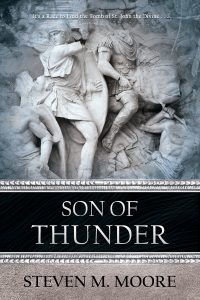
Son of Thunder. #2 in the “Esther Brookstone Art Detective Series,” this sequel to Rembrandt’s Angel has Esther Brookstone, now retired from Scotland Yard, obsessed with finding St. John the Divine’s tomb, using directions left by the Renaissance artist Sandro Botticelli. Esther’s search, the disciple’s missionary travels, and Botticelli’s trip to the Middle East make for three travel stories that all come together in one surprising climax.

Esther’s paramour, Interpol agent Bastiann van Coevorden, has problems with arms dealers, but he multitasks by trying to keep Esther focused and out of danger. The reader can also learn how their romance progresses, as well as travel back in time to discover a bit about Esther’s past with MI6 during the Cold War.

History, archaeology, romance, religion, and art make for a tasty stew in this moving, moralistic mystery/thriller novel published by Penmore Press. Available in print and ebook formats at Amazon and from the publisher, and in ebook format at Smashwords and the latter’s affiliated retailers (iBooks, B&N, Kobo, etc.) and lenders (Overdrive, etc.). (The print version might be slightly delayed.)

Around the world and to the stars! In libris libertas!

Steve’s shorts: The Seaside Caper…

October 9th, 2019

The Seaside Caper

Copyright 2019, Steven M. Moore

Summer evenings, after dinner at one of the beachside cafes, Lillian would go down to the nearest pavilion and read a spy novel, or some other mystery or thriller novel, until it became too dark to read, the hour averaging around 8 p.m. in daylight savings time. Fall and spring she would do the same thing while eating her lunch, a PB&J sandwich with a fiber bar for dessert.

Those were pleasant times of relaxation, especially for a librarian. The pavilion was far enough from water’s edge that even the happy screams of summer beachgoers combined with the sound of crashing waves formed a white noise background that let her know she was alive without distracting her from her reading. With the covered pavilion, she was protected from sun and rain.

That summer day she was at a point in her book where the spy peered around the corner of the old warehouse to see the Stasi agent getting out of his car. A shot was fired.

She jerked because that wasn’t in the book! On the beach, a man who had been sitting in a low chair sunning himself slumped forward, a bright red flower mixing with the sun tan lotion on his hairy back.

That shot came from the road just in back of the pavilion, she thought. She turned and saw a black sedan speeding away, but she managed to snap several photos of it with her smart phone. As the screams from the sun worshippers who had been close to the victim rose above the level of the white noise after seeing their fellow’s demise, she called 9-1-1.

She then marked her place, closed her book, and waited to see how it would all play out.

***

Leo Gamberini had set up his table to interview witnesses in the concession area at the beach, also located in the rear of the pavilion, but to one side. His Panama hat and Hawaiian shirt fit right in at the beach scene. Being a detective in a resort town wasn’t a bad gig, but now he had his first murder case.

He’d taken early retirement to flee all the stress of the NYPD. At first, he even missed the action in the Big Apple, but no longer. Now this happens!

There was no local homicide department, just a police department with a fat, old police chief, one detective, Leo, and four officers in uniforms. The most serious case he ever had until then was a domestic dispute where the wife shot her husband in the butt—he was a nasty drunk and probably deserved it.

“Who’s next?” Leo said to Max Jepson, who was organizing witnesses with Maria Rodriguez.

Max looked at his list. “Lillian Zannis.”

“Our librarian?”

“The same.”

Leo sighed. “My wife is always complaining about how strict she is in enforcing fines.”

“Your wife forgets to take her books back, Leo.”

Leo frowned and nodded. “Let’s get to it then.”

“Hello, Detective Gamberini,” Lillian said as she sat down across the table from him. “You’re looking unhappy. Murder isn’t a pleasant thing. You, of all people, should know that. How’s Alice?”

“She went to Red Bank to do some shopping. School clothes for the grandkids, you know.”

“Yes, almost time for it. My summer reading groups will be gone, swallowed up by an educational system that now teaches kids to hate books.” She placed her smart phone on the table. “I want it back, of course. Have someone copy the pictures.”

“What pictures?”

“The ones of the assassin’s getaway car.”

“Are you kidding me?”

“Detective, I’d never kid about something like that. The poor victim was sitting right in front of me on the beach. I saw him slump over, turned, took the pictures, and then called 9-1-1.”

Max, who was sitting off to the side with the remaining witnesses, winked, nodded, and smiled at Leo.

“You knew about Lillian’s pics?” said Leo.

“Nope. She told me to alphabetize the witnesses to put some order in the proceedings. I guess she likes to wait.”

“Not so,” Lillian said with a smile. “I wanted to study the others to see if they looked guilty. But it was a bit chaotic, so alphabetizing them by name at least added some order to the process.”

“Well, thank you, Lillian,” Leo said. “Maybe you solved a murder.”

“You know very well, detective, that a murder isn’t solved until the perp is in handcuffs. By the way, the victim isn’t from around here. I saw him get out of his car. It has New York plates. So does the assassin’s.”

“The victim is from Long Island,” Leo said. “We’ll find out where the murderer is from if you have a clear image of his license plate.”

“I would be looking for a motive too. Who knows? Maybe the victim was a secret agent.”

“Or vice versa. You read too much fiction, Lillian.” Leo waved the phone at Max. “Get these pics copied.”

“Don’t mess with my contacts or playlist,” Lillian told Max.

***

Two days later, Lillian saw Leo at the WaWa when she went for some bread and peanut butter.

“How’s the case going, detective?”

“Slow,” said Leo with a growl. “The assassin’s plates were stolen. Some guy in Queens had reported it.”

“So you only have the make and model of the car. I’ll have to keep my eye out for him. Maybe the assassin’s local. What did the victim do for a living?”

“Accountant for an Atlantic City casino.”

“Ah, the plot thickens. Maybe he was going to squeal about improprieties taken by the casino’s owner.”

“We’re checking on the owner. I interviewed him. He wasn’t cooperative.” Leo smiled at her. “Stay out of it, Lillian. Let us handle the case.”

“Okay. I’ll just be a cheerleader.”

***

Of all the games at the casino, Lillian liked roulette best. But she left the table and her modest winning streak to follow the casino owner. His driver took him to a large mansion with its own beach, a green black lawn sloping down to it. She figured he was renting it. She’d known the previous owner. When he passed on, the family didn’t want the house, preferring to rent it out instead. She’d already checked—the money the casino owner paid in rent each month was a lot more than she’d won at roulette.

She parked her car a few blocks away, more inland, and walked to the mansion. What are you doing, Lillian? she asked herself. She already knew the answer: she wanted to solve a crime and arrest its perpetrator. Or, she could just say she was helping her police department that didn’t have enough able bodies to track down a killer.

In the shade of a scrawny tree at the corner of the property and just outside the iron fence, she spied on the casino owner with her binoculars. She saw him close the upstairs curtains; the house became dark. Time for action!

The main entrance had a kiosk where a fat security guard had fallen asleep after his boss drove in. She ducked under the bar across the entrance and hastened around the house to the back on the beach side. There was no moon, so she’d have to admit defeat if all back doors were locked. She could pick a lock, but she needed light to do it.

But a door was open, and it was a way into a study. She eyed the shadowy, leather-covered tomes on the bookshelves. Probably just for appearances. She didn’t think the casino owner was much of a reader.

Read the rest of this entry »
Word count…

October 8th, 2019

Some writers are super-conscientious about counting words. Maybe they’re ex-journalists—the editor says, “I want a nine-hundred-word story about the mayor’s birthday party”—or they’re submitting to a ‘zine—“We want short stories, three-thousand word limit.” Whatever the motivation, don’t worry about word count upfront. The right fixation should be making the words count!

Your story determines the words that are needed; how many there are is secondary. A short story can have as much impact as a novel, and a 130k-word novel might be better received as two novels. Write the story that you need to write, and worry about the word count later. And make sure those words are the right words. As much as possible, make them flow for the reader in such a way that s/he cannot imagine any other possible words to use in that story.

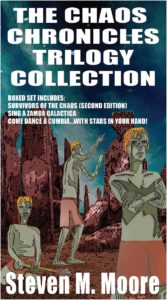
I learned this the hard way for “The Chaos Chronicles Trilogy” (now in an ebook bundle—lots of words in that e-file!). I didn’t cause my first problem: an agent said the MS was too long, and there was too much narrative. The narrative she was referring to was world-building; she didn’t know anything about writing sci-fi obviously. World-building is essential. It’s what often makes sci-fi novels longer than mystery or thriller novels. Only fantasy writing requires as much world-building.

But I receive comments and try to reap some benefit from them. Too long? I thought. Maybe. Maybe I should turn the MS into something like the Foundation trilogy? Segue to the second problem: I’m not Dr. Asimov. Yes, I’m an ex-scientist who likes to write sci-fi, but I’m a lot more theme-oriented than the great master, and I cut my sci-fi teeth on dystopian and post-apocalyptic novels.

That MS became two and led to the first two books in the trilogy: Survivors of the Chaos and Sing a Zamba Galactica, with a few excisions and additions along the way. I’d probably still piss off that agent—now there’s even more hard science narrative, with starships jumping through multiverses instead of Asimov’s jumps; ETs whose language is spread-spectrum-based like your cellphone; strange collective intelligences; and so forth. Dr. Asimov, who had no ETs in his Foundation stories (End of Eternity “explains” how that happened), probably wouldn’t like my trilogy at all, especially because at first it wasn’t a trilogy.

The next problem: After all that, how do I make a third book to complete the trilogy? I’ve already pissed off Dr. Asimov’s ghost, so I decided I needed someone like his Mule. Having just come through the 2007-2009 recession, which led to my mystery/thriller novel The Midas Bomb, I decided my Mule would be a mad shipping magnate. That made the trilogy come full circle—starting with the dystopian Earth of Survivors of the Chaos, where multinationals had run amok, and ending with my version of the Mule, who upsets peace and prosperity, just like Asimov’s Mule did, an outlier no one can predict, not even that strange, collective intelligence called Swarm.

Some have called Come Dance a Cumbia…with Stars in Your Hand! military sci-fi. Yes, there are battles, but none more important than the battles between Humans and Tali in Sing a Zamba Galactica where Humans fight to regain control of Earth. My Mule, the psychotic shipping magnate, is an amalgam of many evil autocrats, from the corporate boardrooms to the Kremlin and White House (I’m actually channeling Gabo’s dictator in Autumn of the Patriarch to some extent, another amalgam). Greed and power drives the Tali; it drives some Humans even more.

So the third book just rounds out the series and establishes ITUIP (the International Trade Union of Independent Planets), which appears in many of my sci-fi stories. But these books aren’t Asimov’s, and I really didn’t worry about word count. I only worried about finishing a saga that I’d started with that agent who had no clue about how to write sci-fi. Narrative aka world-building is important; the number of words the sci-fi writer, or any writer, uses to make that narrative isn’t. Use the words you need to use, no more, no less. The Goldilocks Principle applies.

***

Comments are always welcome.

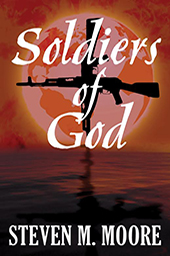
Soldiers of God. An FBI agent and priest collaborate to thwart a group of domestic religious terrorists in the US and uncover an even larger worldwide conspiracy created by an international villain who uses extremists to further his own agenda. This novel is an important bridge between the “Clones and Mutants Trilogy” and the “Chaos Chronicles Trilogy.” The villain has been causing trouble since The Midas Bomb. Available in ebook format from Amazon and Smashwords and the latter’s affiliated retailers (iBooks, B&N, Kobo, etc.) and lenders (Overdrive, etc.)

Note: To understand all the connections between several of my series, download the free PDF “Future History Timeline”—see the web page “Free Stuff & Contests.”

Around the world and to the stars! In libris libertas!

Movie Reviews #81…

October 4th, 2019

Ad Astra. James Gray, director. Here’s a summary of my review of this clunker: there’s so much wrong here! If you want more info, read on.

First, there’s the confusing, illogical, and boring plot. The idea is that Brad Pitt’s character had daddy problems and wants to find his father and ask him why daddy left mommy and young’un back on Earth to go to the far reaches of the solar system. What daddy tells his son isn’t at all surprising, but I would have told him, “What the hell is the matter with you?”

Second, scientific errors abound. Didn’t they hire some scientific consultants? Some specifics: Antimatter experiments out in space? Probably not a good idea to do them on Earth, but the tokamak researchers would probably be interested in how to contain them. Pirates on the moon’s far side? The explanation for that is lame, but so is the whole movie…scientifically speaking. Experiments on animals in space beyond Mars? Zero explanation for that. They’re already experimenting with humans in zero grav, after all. Where’s PETA when you need them? Using a metal shield to get through Neptune’s rings? Maybe the Pentagon doesn’t need all those tanks, just crap ripped off a Space X rocket.

Third, they translate the movie title for those who don’t know Latin, but the movie has nothing to do with going to the stars. Everything takes place in the solar system. Moreover, that very same intro says “In the near future…”. With several bases on Luna and Mars where spaceships launched from Mars toward the outer reaches of the solar system, that future isn’t near. But I guess it all depends on what “near” means to the screenwriters.

Fourth, how can Brad Pitt’s character fool the psychs? He’s nuts. Maybe the screenwriters (a team which includes the director) want to prove AI is evil a la Kubric’s HAL? If so, that point is lost, and, of course, wrong.

Fifth, Space Com takes over as the evil corporation. Maybe the point here is a dig at the president’s new initiative, which hasn’t launched yet (pardon the pun). And it’s not quite clear why they’re evil. And, if they are, why does the Pitt character do their bidding?

Sixth, did I already say slow and boring? The acting doesn’t help. They shouldn’t have chosen Pitt or Jones. They would have done better with newcomers because neither protagonist can save this movie with their famous names. This movie is yet another case of critics lauding a clunker and audiences having more common sense than the critics…and screenwriters. Definitely not worth the money. If you thought Gravity was boring, you have to see how boring this one is. Any ahs for special effects (and you will have many–they basically got Neptune’s rings right) reduce to nothing if you take into account the bad science and slo-mo boredom that gives you plenty of opportunities to relieve yourself.

I fortunately had an immediate respite. After the movie I came home and watched Jeremy Irons discuss Shakespeare’s Henry plays on PBS’s “Shakespeare Uncovered.” Now there are three great dramas! Drove Ad Astra right out of my mind…with the help of some Jameson as I toasted Willy.

***

Comments are always welcome!

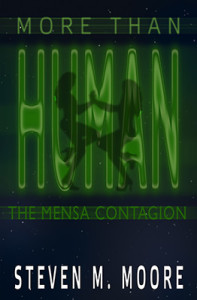
More than Human: The Mensa Contagion. In a twist on the alien invasion or apocalyptic contagions, an ET virus infects Earth and creates Homo sapiens 2.0 and a new society for them full of new vigor and desires for adventure. The new humans colonize Mars and find the ET colony ship in an orbit around Saturn. One reviewer said of this epic sci-fi novel:  “More than Human kept me turning pages after I should have put the book down…. I found the characters well developed and the plot fresh. I was reminded at times of Kim Stanley Robinson’s Mars trilogy.”—Debra Miller, in her Amazon review. Available in ebook format at Amazon and Smashwords and the latter’s affiliated retailers (iBooks, B&N, Kobo, etc.) and lenders (Overdrive, etc.)

Around the world and to the stars! In libris libertas!


Slogans…

October 3rd, 2019

I haven’t registered mine: “Around the world and to the stars! In libris libertas!” It describes my books. I write and sell books, in case you didn’t know.

The first phrase tells readers something about the settings in my books. I write mystery, thriller, and sci-fi novels, often combining those genres, and their settings can be anywhere on Earth and beyond. I want to entertain my readers, and I want to do so in many places so we can have fun touring the world and the cosmos together.

Although it’s a bit long, I don’t think that first phrase is a bad one. Versions I discarded had “Travel” and “Travel with me” tacked on at the beginning, but I rejected them because I didn’t want to seem like a tour guide. I also rejected a version with “…the U.S., the world, and to the stars!” I took out “the U.S.” because I want readers anywhere to understand that they can be entertained by my storytelling (even ETs like the ones I’ve created). For example, my “Detectives Chen and Castilblanco” books often start with a homicide in New York City (itself a wonderfully diverse mix of people from everywhere) but can often travel beyond the constraints of Manhattan, even outside the U.S.

Another option I rejected was “…to the planets and beyond!” That seemed a bit limiting because many of my stories go far beyond our own solar system (of course, the planets could be those in another solar system!). There’s an implied mindset too—my own thoughts that human beings should explore space, the final frontier. While it’s true that the ocean deep with its strange flora and fauna also is a mostly unexplored frontier, the oceans are a finite part of Earth (a big part!) and space is basically infinite—that final frontier will always exist, even long after our sun goes nova and turns Earth into a crisp. And what’s possibly out there offers infinite variety for storytelling.

“In libris libertas!” is more important. Yes, it’s in Latin, but it’s easy for any reader to guess it’s important meaning. It’s a statement describing my belief that reading stories and storytelling is liberating, encompassing many meanings of that word. Reading is a freedom human beings can ill afford to lose. That’s why autocrats censor books, from some tyrannical principle in a hick-town high school, to the most murderous despot like Putin. Many politicians don’t want people to read—an educated population only takes so much of their crap. Other politicians are just the opposite, and some even surprise me by being avid readers. Illiterate tweets do not a leader make; an avid reader can be a good leader. Bradbury’s Fahrenheit 451 points out the extreme limits of anti-book thoughts. We have to avoid that extreme at all costs.

I’d used “In libris libertas!” for years before I added the first part. Buildings and institutions often have Latin phrases in their mottos. I think I stole “In libris libertas!” from a public library somewhere; it’s appropriate for libraries, of course. (I wonder if some VIP backing the movie Ad Astra went to the University of Kansas; it’s motto is “Per aspera ad astra.” It’s also the motto of the Spanish Air Force and other institutions, although it could describe the imaginations of most sci-fi writers!)

So the first part of my slogan describes my settings; the second part my belief that books and reading are essential for freedom and equality. I have yet to pare that down to one phrase that says both. When I do, I’ll let readers know.

Does an author need a slogan? Probably not. I use it on my web pages and at the end of my email signature. I’m not sure I derive any marketing or promotion benefits from it. So what? Publishing is a business; storytelling is an art and a quintessential human activity. Actually, that’s a good slogan too!

***

Comments are always welcome.

Son of Thunder. #2 in the “Esther Brookstone Art Detective Series,” this sequel to Rembrandt’s Angel has Esther Brookstone, now retired from Scotland Yard, obsessed with finding St. John the Divine’s tomb, using directions left by the Renaissance artist Sandro Botticelli. Esther’s search, the disciple’s missionary travels, and Botticelli’s trip to the Middle East make for three travel stories that all come together in one surprising climax.

Esther’s paramour, Interpol agent Bastiann van Coevorden, has problems with arms dealers, but he multitasks by trying to keep Esther focused and out of danger. The reader can also learn how their romance progresses, as well as travel back in time to discover a bit about Esther’s past with MI6 during the Cold War.

It might seem like The Da Vinci Code, but the historical references here are confirmed as true and a product of my extensive research. History, archaeology, romance, religion, and art make for a tasty stew in this moving, moralistic mystery/thriller novel soon to be published by Penmore Press. While it can be read independently from the first book, you can learn more about Esther and Bastiann in Rembrandt’s Angel, available in print and ebook formats at Amazon and from the publisher, and in ebook format at Smashwords and the latter’s affiliated retailers (iBooks, B&N, Kobo, etc.) and lenders (Overdrive, etc.). Son of Thunder will be available at the same places (the Kindle version is now available on Amazon while the Smashwords and print versions will soon be released).

Both are entertaining stories for your fall reading.

Around the world and to the stars! In libris libertas!

Steve’s shorts: Dr. Carlos’s Lost Love…

October 2nd, 2019

Dr. Carlos’s Lost Love

Copyright 2019, Steven M. Moore

Carlos Obregon performed a decent dive and surfaced in the turquoise water where bubbly froth from the waterfall floated in clumps.

“Not bad, doc,” Gina Kal said, splashing water toward him. “I’m impressed.”

“My home planet was a bit like this, you know. At least in the summer.”

“I’ve never been to New Haven,” said the exobiologist. “I don’t like crowded planets. That’s one reason I joined SEB.”

Obregon treaded water. “Good E-type planets aren’t that common. That’s one reason the Space Exploration Bureau keeps trying to find them, and that, dear lady, is why you and I have interesting employment.” He ducked his head below the water and smoothed back his hair. “I guess you feel at home here then. No one except our landing party present. Only grass feeders and their predators.”

Kal scrambled onto a rock in the middle of the pool and stretched in the sun, her naked body glistening with the jewel-like beads of water. Obregon felt an ancient urge stirring in his loins and sighed. A few centuries separated their ages. A romance with her wouldn’t normally be a problem, but the only thing they had in common so far had been their mutual desire for a day off from exploring the pristine planet. Kal had suggested the swim.

She had become a good friend during their work days together at camp, her field close enough to his to break the ice between the new crewmember of the starship Brendan and its chief medical officer.  He had pegged her for a loner, a curious lady who had trouble adjusting to the rest of the crew. That wasn’t unusual, though. The captain chose professional skills over personalities. Sometimes that led to personality conflicts. But two days on E-4013 had changed things between the two.

***

One day later, Gina Kal was in the camp’s medical tent; she was running a high fever.

“Must be a local bacteria or virus,” said his Tali intern on board Brendan. His face showed no expression. Tali’s faces never showed expressions, but the intern’s ears were twitching, body language for stress and worry.

“I’m working on it,” said Obregon. “Lester doesn’t like it at all, of course.”

Read the rest of this entry »

Dystopian vs. post-apocalyptic…

October 1st, 2019

My editing eyes were already functioning one morning after Dorian turned north. I read a headline in the venerable NY Times calling the disaster zones in the Bahamas “dystopian.” Not to diminish that huge human tragedy—as New Orleans and Puerto Rico have shown, it takes years to recover—or ignore the evidence it adds about the dangers of global warming, the idea for this post popped into my head. Maybe the Times’ loss, but my gain? They blew it. The correct word they should have used is “post-apocalyptic.”

As the name implies, post-apocalyptic refers to what comes after an apocalypse. To be precise and succinct, here’s a short definition: post-apocalyptic = denoting or relating to the time following a nuclear war or other catastrophic event. Emphasis is on “catastrophic event”—it doesn’t have to be a nuclear war, and Dorian qualifies.

The original apocalypse is portrayed in the Book of Revelation, although Noah’s flood can be considered a prequel (some people like to capitalize religious terms, so I meet them halfway by capitalizing Book of Revelation but not apocalypse—take it as a bow to Noah). Official Church dogma tells us that St. John wrote the apocalyptic vision in the Book of Revelation, and a lot of Christian lit portrays such an event will occur in the post-apocalypse when the “true believers” ascend to heaven.

An objective person, however, when reading that last book and St. John’s gospel, has to conclude at least that the styles are very different. It’s hard to believe that the same author wrote those two books. And, unlike the loving God of John’s gospel, the Book of Revelation is a throwback to the vengeful God of the Old Testament. This is discussed briefly in my new book Son of Thunder. I focus on John’s gospel in that novel rather than the Book of Revelation and its unknown authorship. In brief, there’s nothing post-apocalyptic or dystopian about that novel!

For many, Dorian was just a quirk of Mother Nature. For me, it was a result of global warming, at least its intensity. Recent storms have been intensified by increasing ocean temperatures. 90% of extra greenhouse heat is absorbed by the oceans! This also causes adds to the destruction of coral reefs and other ocean flora and fauna around the globe. In other words, that apocalypse called Dorian was mostly man-made.

A bit of this adds to the apocalypse portrayed in my post-apocalyptic thriller The Last Humans, mostly in climate problems and fresh water availability, but the main cause of that disaster is also man-made. It’s caused by a bio-engineered and airborne super-virus that blankets the Earth. It even kills most of its creators. Oops! I focus on the survivors. Surviving in a post-apocalyptic wasteland makes for good thriller fiction—depressing, yes, but there’s some hope as the story progresses.

While humans are responsible for the apocalypse in The Last Humans—even the consequences of global warming—ETs are responsible for the bioengineered and very adaptive super-virus in More than Human: The Mensa Contagion (“Mensa” here refers to the southern constellation, not the group of self-proclaimed super-geniuses). That sci-fi novel has a twist, though: An apocalypse occurs, but humans benefit in the post-apocalyptic world! I don’t know of any other post-apocalyptic novel that does that.

Dystopian is the antithesis of utopian: dystopian = relating to or denoting an imagined state or society where there is great suffering or injustice. The sequel to The Last Humans could be called dystopian: humans can react in a post-apocalyptic environment by creating a dystopia—there’s usually nothing left to create a utopia. I’m not sure that describes the dystopia in Survivors of the Chaos, though. It’s unlike Brave New World and 1984 too, two classic dystopian novels. In my novel, multinationals react to the breakdown of social institutions and breakups of large countries into smaller, tribal ones, called the Chaos, by maintaining order on Earth via their paid mercenaries and turning space exploration into space exploitation. That’s a different twist on dystopia too, one that neither Huxley nor Orwell could have imagined.

Bottom line: the NY Times should learn the difference between dystopian and post-apocalyptic. Sci-fi authors should too. Arguably the boundaries between them are a bit fuzzy, and the distinctions, as always, must take second place to the storytelling when writing fiction. Newspaper reporting is another matter.

***

Comments are always welcome.

The Last Humans. Did you miss this? Ex-USN and forensics diver for the LA County Sheriff’s Department Penny Castro surfaces from a dive for a body only to find death all around her.  Follow her adventures—her struggles to survive and create an adopted family–in this post-apocalyptic thriller brought to you by Black Opal Books. Available in print and ebook format at Amazon or the publisher’s website, and at Smashwords and all their affiliated retailers (iBooks, B&N, Kobo, etc.) and lenders (Overdrive, etc.).

Around the world and to the stars! In libris libertas!

Books I’ll only borrow…

September 26th, 2019

Let’s choose one example: Donna Tartt’s The Goldfinch. I’ve had my eye on this book since it was published six years ago in 2013. It dovetailed nicely into my interest in crime stories involving stolen artworks, an interest that led to The Collector (2014) and the “Esther Brookstone Art Detective Series,” Rembrandt’s Angel (2017) and Son of Thunder (coming soon—see below for a description). That interest is in turn motivated by my belief that preventing the general public from viewing masterworks is a criminal act in itself (which is why the Louvre’s decision to make da Vinci’s “Mona Lisa” less accessible did not set well with me), whether done by private collectors (often receiving the stolen artwork from art thieves), or by those who deal in the black market.

But I refused to buy, and still refuse to buy, The Goldfinch. It’s an old book by today’s standards, and yet it’s still $11.99 on Amazon (maybe because it’s now a movie?). If I read it, I’ll borrow it from a public library. Thank goodness books still provide that option. Public libraries are cherished institutions. The general public might never see the Boston Symphony Orchestra play Mahler’s Third Symphony or Les Bohemes at the Met—these tickets are astronomically expensive unless you sit in the nosebleed sections. You can buy a recorded performances of these great works, priced comparably with The Goldfinch, but you can also borrow the CDs from most public libraries.

But let’s stay focused on the book business. As the cost of ownership increases, often more than inflation, libraries will become more important. It’s a vicious circle that will eventually morph the Big Five’s long price-gauging reign into bankruptcy and cause them to lose a lot in the interim. By putting the exorbitant price of $11.99 on The Goldfinch (this is the ebook version—libraries often carry both ebook and print versions), a six-year-old book, Little, Brown, and Company (sorry fellas, I put in the Oxford comma!) are forcing readers to find alternative solutions, and that will hurt their bottom line more and more. Libraries are the obvious (and legal) alternative solution.

Readers who pay $11.99 for The Goldfinch should have their heads examined. Yes, I know, the publisher Little, Brown, and Company has huge costs to cover. And that’s the problems: Big Five publishing companies’ business models suck! Their bloated bureaucracy drives up costs, so they focus on what they consider are the sure bets provided by their agent-gatekeepers and their formulaic stable of old mares and stallions. In general, they’re not willing to gamble with the new, fresh voices found amongst small press and indie authors. Readers turn to the latter (I’m in that group). They can buy three ebooks like my The Last Humans from Black Opal Books  or Rembrandt’s Angel from Penmore Press, for the price of the six-year-old The Goldfinch. Maybe Tartt’s ebook is considerably better, if you believe the Pulitzer truly recognizes great literature—I really can’t say because I haven’t read it!—but is it three times better for the avid reader who has a limited budget? That avid reader will more likely turn to a library to find out. (In fact, s/he just might borrow my books too!)

Read the rest of this entry »

Review of Alan Brenham’s Game Piece…

September 25th, 2019

Game Piece. Alan Brenham, author. This mystery/thriller novel won a Readers Favorite award, so I thought it had to be good. Right? Wrong! It’s an excellent addition to the crime fiction literature. It reminded me of the early Bosch books—they were even mentioned as reading material in the novel.

Barry Marshall is a detective in the police department of Temple, Texas. People he’s had problems with in that job are turning up dead. The serial killer always phones Barry to gloat after murdering another victim. A witness is also killed, and another one is injured in a deadly hit-and-run—the killer wants to leave no witnesses of his heinous crimes.

Barry’s job is dangerous—any cop’s is—so Barry’s wife Erin wants him to quit. One reason: her favorite uncle who worked undercover was murdered. She’s making her husband miserable with her constant nagging. She becomes even more irate when she receives pics of Barry hanging out with another woman. She kicks him out.

Will Barry survive all this stress in his professional and private lives? No spoilers here, but you can imagine he won’t have an easy time of it. The classic ploy of making your main character jump through dangerous hoops works well here with the addition of the cops-make-bad-husbands theme. The author’s background also adds gritty reality in this crime drama filled with interesting, complex characters living in a small town that could be Anytown, USA—here a town in Texas.

It’s hard to find negatives in this story. Erin’s over-the-top reaction to the photos bothered me a bit. She and Barry have been married a while, so she should know her man. It’s petty of her to not give him a chance. In her defense, she hangs with three divorcees who have good reasons to hate philandering husbands. She’s a pharmacist, though, so she’s intelligent enough to filter our her friends’ advice and think of Photoshop—it’s the 21st century, after all! Barry thinks of it, although he’s slow to make the connection to the serial killer, who is out to destroy him completely.

Another negative: Right from the start, it’s obvious that there’s a mole in the police department (or maybe I just write too much mystery and crime myself?). Someone is providing insider info to the killer. We’re not given enough clues about who the mole is, though, so that comes as a surprise, with a wee bit of Deus ex Machina as an added ingredient.

These are minor negatives in a damn good story filled with positives, enough twists to keep mystery fans happy and enough thrills for fans of the thriller genre too. Stories of serial killers abound; this one rises above the norm.

***

Comments are always welcome.

Son of Thunder. #2 in the “Esther Brookstone Art Detective Series,” this sequel to Rembrandt’s Angel has Esther Brookstone, now retired from Scotland Yard, obsessed with finding St. John the Divine’s tomb, using directions left by the Renaissance artist Sandro Botticelli. Esther’s search, the disciple’s missionary travels, and Botticelli’s trip to the Middle East make for three travel stories that all come together in one surprising climax.

Esther’s paramour, Interpol agent Bastiann van Coevorden, has problems with arms dealers, but he multitasks by trying to keep Esther focused and out of danger. The reader can also learn how their romance progresses, as well as travel back in time to discover a bit about Esther’s past with MI6 during the Cold War.

It might seem like The Da Vinci Code, but the historical references here are confirmed as true and a product of my extensive research. History, archaeology, romance, religion, and art make for a tasty stew in this moving, moralistic mystery/thriller novel soon to be published by Penmore Press. While it can be read independently from the first book, you can learn more about Esther and Bastiann in Rembrandt’s Angel, available in print and ebook formats at Amazon and from the publisher, and in ebook format at Smashwords and the latter’s affiliated retailers (iBooks, B&N, Kobo, etc.) and lenders (Overdrive, etc.). Son of Thunder will be available at the same places.

Both are entertaining stories for your fall reading.

Around the world and to the stars! In libris libertas!