Punctuation choices…

September 24th, 2019

I learned something new a few weeks ago from editor Bobbie Christmas’s newsletter—rather the official name of something I haven’t liked for a long time. Consider: Judy’s the section head, Bill’s the IT guy. I never have liked that construction. Now I have a name for it: the comma splice. I’ll accept a conjunction or a semicolon in place of that comma, but a comma splice stops me in my tracks when I’m reading or reviewing. And too many authors are using it. Maybe they think it’s cool; it’s not!

Punctuation doesn’t have to be a worry for traditionally published authors. The following isn’t bad advice: “Write the book the way it should be written, then give it to somebody to put in the commas and ****.”—Elmore Leonard. (Note: If you know Leonard’s prose, you can fill in the asterisks.) Traditional publishers provide editing services to guarantee “good grammar and punctuation” consistently in their products. Self-published authors should also find a good editor. Many authors consider grammar and punctuation a matter of style. In particular, there are stylistic choices to be made, but I don’t consider comma splices one of them.

Whether self- or traditionally publishing a book, punctuation choices can be made that aren’t as flagrant as comma splices. Other readers, writers, and editors might not agree with your choices, though. Those that affect your voice are worth fighting for; those that are basically equivalent and amount to a roll of the dice must bow to consistency within the publisher’s book universe.

I mentioned semicolon as an option in the above example. Consider: Judy’s the section head; Bill’s the IT guy. That’s a correct choice, although Kurt Vonnegut would have wanted to lynch you for choosing it—he hated semicolons. But it’s a valid choice, because semicolons can be used to join two complete sentences into a single written sentence when the two are closely related. I’m sure Vonnegut would have chosen the following: Judy’s the section head, and Bill’s the IT guy. Or: Judy’s the section head. Bill’s the IT guy. Both are okay, but maybe not as strong? To me the second takes me back to Dick, Jane, and Spot. (Why is Dick always first? Alphabetical order is trumped here my female/male order in order to be politically correct—one instance I care about it, because I’m a bit old-fashioned.) These are all stylistic choices the writer can and has to make. Sorry, Kurt.

Read the rest of this entry »

Movie Reviews #80…

September 20th, 2019

Angel Has Fallen. Ric Waugh, dir. Gerard Butler. Mike Banning (Gerard Butler) is set to become the next Secret Service director. He saves President Allan Trumball (Morgan Freeman) from an overwhelming attack that puts the president in a coma. The Rambo-like security man is framed for the attack, so much of the film is dedicated to his discovering those responsible for the frame and hunting them down. I soon picked out the sniveling jerk in the White House responsible for everything, so there’s not much left to the imagination here. Nick Nolte is great as Banning’s father and Butler and Freeman are okay too.

Reviewers didn’t like this movie; I did. So did audiences. I guess I’m not a reviewer yet! This action/thriller is entertaining, albeit violent. Mr. Waugh must be another director who loves to blow things up. Much better to see it on the silver screen than in real life, of course, where the good guys so often win.

Official Secrets. Gavin Hood, dir. As many readers of this blog know, I favor British-style mysteries a lot in my reading for R&R. This is one on the silver screen. Unfortunately it’s not fiction but a true piece of history I was unfamiliar with. And it’s simply the best movie I’ve seen this year! It now replaces Vice as #1, although it overlaps the same period. (Funny that Cheney wasn’t in this one—he’s more responsible for all those deaths in Iraq than anyone else!).

Katharine Gun (Keira Knightly), who works at Britain’s GCHQ (the Brits’ counterpart of the NSA), receives an email about Blair’s bro act with Dubya to spy on UN diplomats so they can blackmail them into voting for a resolution against Saddam Hussein. Said resolution would give some legitimacy to the US government’s murdering nation-changing plans.

Gun gives a copy of the email to an antiwar activist who in turn gives it to a reporter from the Observer, Martin Bright (Matt Smith). Thus begins a year of hell for Gun, which includes the invasion of Iraq, as Blair and company torment her, including trying to deport her husband, a Kurdish refugee who has no love for the Iraqi strongman.  Real video is interpolated into the film at key spots to add authenticity. A free-speech lawyer Ben Emmerson (Ralph Fiennes) helps Gun finally get around that Official Secrets Act that doesn’t even allow Gun to discuss her defense with her lawyers.

This is a true exposé of American and British duplicity used to initiate an illegal war where millions were killed—Americans, British, Iraqis, and others. Like that movie about the atrocities in Benghazi, I wonder how long this movie will stay around before authorities on both sides of the pond force it out of theaters. Like that Benghazi movie, this is at least a damning indictment of ineptitude at the highest levels of government. Maybe with bigger stars, American and British governments wouldn’t dare censor this movie this time.

In this case, the audience was stunned. Getting the information about bad deeds after the governments do them does that to people.

***

Comments are always welcome.

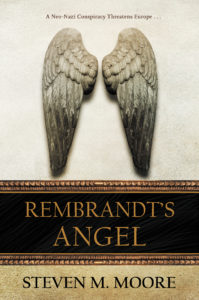
Son of Thunder. #2 in the “Esther Brookstone Art Detective Series.” This sequel to Rembrandt’s Angel has Esther Brookstone, now retired from Scotland Yard, obsessed with finding St. John the Divine’s tomb, using directions left by the Renaissance artist Sandro Botticelli. The disciple’s missionary travels and Botticelli’s trip to the Middle East make for three travel stories that all come together. Esther’s boyfriend, Interpol agent Bastiann van Coevorden, has problems with arms dealers, but he multitasks by trying to keep Esther focused and out of danger. The reader can also learn how their romance progresses. History, archaeology, romance, and art make for a tasty stew in this mystery/thriller novel soon to be published by Penmore Press in print and ebook formats. While it can be read independently of the first book, you can learn more about Esther and Bastiann in Rembrandt’s Angel—available in print and ebook formats at Amazon and in ebook format at Smashwords and the latter’s affiliated retailers (iBooks, B&N, Kobo, etc.) and lenders (Overdrive, etc.).

Around the world and to the stars! In libris libertas!

Anthologies and collections…

September 19th, 2019

They don’t sell well. That’s not just my perception. I’ve stopped publishing my own short fiction collections. I’m giving away a companion volume to Pasodobles in a Quantum Stringscape, which was published six years ago and is now one of my “evergreen books” (books that are as current in plots and themes as they were when I wrote them). You can download Volume Two as a free PDF—see the list on the “Free Stuff & Contests” web page at this website. I’m preparing Volume Three, which will also be a free download.

I’ve participated in a few anthologies too—World Enough and Crime is an example. FYI: If the other subject matter or the theme of the anthology correlates well with my story, I’ll rarely turn down an invitation. That might also increase the chances my story will sell a bit better than a collection dedicated to just one author’s stories. I’d need more stats to prove that, though. For now, being a pessimistic guy about publishing in general and authors’ success in particular, I’m sticking with the assumption that neither collections nor anthologies sell well.

If true, isn’t it odd that it is? Someone on a long commute via bus or train can probably zip through a short story and get through most of a novella on their smart phone instead prefers to catch up on social media where “friends” and ‘followers” are often faceless e-acquaintances (I haven’t had the experience of contacting someone with one user’s name only to find that I’ve had contact with her or him where another name is used, but I know people who have). Or they participate in a silly video game where the sound effects annoy everyone else around them. Short fiction also suffers the same fate as novels—there are fewer readers every day that passes because there are too many other distractions available where people don’t have to use their minds.

When people do read—rare these days—they often prefer a novel to short fiction. There’s more demand for novels than short stories. Some of that lost demand for short fiction once rested in the domain of ‘zines, online or old paper standbys. They’re in trouble, so a vicious circle is created. Fewer ‘zines means fewer places for authors to publish short fiction. And the ‘zines left have become incestuous old boys’ clubs.

Read the rest of this entry »

Review of Carole Lawrence’s Edinburgh Twilight…

September 18th, 2019

Edinburgh Twilight. Carole Lawrence, author.* Talk about satisfying two of my reading preferences at once! Hmm…maybe three: this novel’s setting is Ian Rankin’s dark Edinburgh underbelly, only in 1880; it’s a British-style mystery, with a Glasgow-born inspector playing the major role; and it’s first-rate historical fiction in addition to being an excellent mystery/crime story. I could hardly put this one down long enough to sip my Jameson!

Inspector Hamilton is a complex character with as much baggage as Rankin’s Inspector Rebus, and then some. He lost his parents in a terrible fire, and he has the burn scars to prove it. The arsonist was never captured, which is Hamilton’s motivation for becoming a policeman, although his father was also one. (Makes you wonder if the arsonist was on a payback mission, but the author doesn’t even hint at that. Maybe for later novel?)

The reader also is introduced to Hamilton’s Aunt Lillian, a Miss Marple/Esther Brookstone-type saucy character who often slips back into her Glasgow accent. That’s my only complaint, because the author’s transliteration of that accent propagates along with the tale—she should give the reader the initial flavor and then forget about it. The reader also meets Hamilton’s boss, assistant, and a street urchin who becomes essential to Hamilton’s investigation. All wonderful characters.

Not so wonderful is the serial killer. He’s on the loose, and Hamilton wants to find him as soon as possible before he kills again. Hamilton is unsuccessful, though, so the mystery and suspense builds, as the killer matches wits with the detective and his aides while killing again. Through it all, the reader discovers the vast gulf between rich and poor, the plight of Irish immigrants in the city, and the dark evil that can lurk in criminal minds.

Standard plot, right? Okay, but the interesting characters, all different, and noir setting make up for the weak plot. And remember, this is 1880, so the era also contributes to the setting. The author’s mesmerizing skill with words far exceeds the magical prowess of her villain.

In spite of the plot, this story is a well written  mystery/crime novel. For any newbie author looking for examples on how to write them, studying how it’s put together will be enlightening. I’ve already finished #2 number two in the series, and I understand the author is strolling the streets of Edinburgh in preparation for #3. Good luck to her.

***

*Note from Steve: I will no longer indicate either publisher or date of publication in my book reviews. I usually don’t indicate price either. This allows “evergreen books,” which I often read, play on an equal playing field with recently published books—same for indie, small press, and Big Five books. If interested, the reader can follow the links I give here to Amazon, where the cover, blurb, and “peek inside” can provide more information than I can in my brief reviews.

And, as strange as it seems, you should not pay much attention to those book reviews, of my books or anyone else’s, especially those on Amazon or even my own reviews. Instead use the information I’ve indicated for your final buying decision. You have a right to make your own reading choices—they’re completely subjective, after all. The fact that I like or dislike a book or certain elements in it is only my opinion—yours might be entirely different, and I wouldn’t want you to accuse me of leading you astray.

Of course, I have no ax to grind here, and I don’t play favorites.

***

Comments are always welcome.

Son of Thunder. #2 in the “Esther Brookstone Art Detective Series.” This sequel to Rembrandt’s Angel has Esther Brookstone, now retired from Scotland Yard, obsessed with finding St. John the Divine’s tomb, using directions left by the Renaissance artist Sandro Botticelli. The disciple’s missionary travels and Botticelli’s trip to the Middle East make for three travel stories that all come together. Esther’s boyfriend, Interpol agent Bastiann van Coevorden, has problems with arms dealers, but he multitasks by trying to keep Esther focused and out of danger. The reader can also learn how their romance progresses. History, archaeology, romance, and art make for a tasty stew in this mystery/thriller novel soon to be published by Penmore Press in print and ebook formats. While it can be read independently of the first book, you can learn more about Esther and Bastiann in Rembrandt’s Angel—available in print and ebook formats at Amazon and in ebook format at Smashwords and the latter’s affiliated retailers (iBooks, B&N, Kobo, etc.) and lenders (Overdrive, etc.).

Around the world and to the stars! In libris libertas!

The three R’s…

September 17th, 2019

Reading, writing, and ‘rithmetic are now taught poorly in schools, so this post isn’t about those three R’s. In fact, I often denote this post’s theme by R&R&R, a new kind of three R’s that signify “rest and relaxation and reading.” Many people don’t include that third R often enough with R&R, thinking that reading is more a chore than rest or relaxation. (Some schools, in fact, make it into a chore!)

It used to be that parents read to their kids to start them early in a lifetime of reading enjoyment of stories that can enrich their lives. To be sure, modern schools can destroy reading pleasure, from grade school on up—required reading often isn’t enjoyable reading. (Teachers can tell students that Silas Marner is a timeless classic, but they’ll know soon enough it’s a lie.) Maybe older kids are looking at streaming video on their iPads under the covers now instead of reading an exciting book. Times have changed, and change is accelerating. (In spite of Dylan’s song, the sixties often look tame now.)

But I digress. How does reading compare with other entertainment for relaxation? If you’re a regular reader of this blog, you probably have noticed I write a lot of movie reviews. When I go to a movie, I watch how the audience reacts. Afterward I listen to their comments about the movie. Both observations often reveal stress levels in adults and kids. I’m often stressed too. Does that differ from how we feel after reading a good book? I think it does.

A thriller novel causes thrills, not stress. A mystery novel relieves stress as we use the clues to solve the crime(s) along with the protagonists. Sci-fi novels generally cause wonderment; so does fantasy. The Star Wars movie in which a major character was killed caused me and many in the audience a lot of stress, neither wonderment nor thrills. I’ve never had that feeling with a novel.

Maybe the lack of stress when reading is because we can take measured doses tailored to our R&R needs. It’s a bit like a few glasses of wine now and then doing no harm while a full bottle all at once can get you into trouble. While I often read for a couple of hours straight, that’s not the same as two hours in a movie, maybe because the sensual audiovisual nature of a movie exacerbates the stress more than the intellectual savoring of a good book.

The stressful aspect of literature might be genre-dependent, of course. I’m guessing horror stories can produce more stress than cozy mysteries. And I suspect that the stress of sexual tension can be worse in a book than it is in a movie, but don’t forget that audiovisual aspect.

Have any psychologists studied which is more relaxing, a movie or a book? They might be tempted to limit their studies to people who read a book and then watch a movie made from it, but we more or less know the answer there: A recent survey in the NY Times Magazine found that 70% of those surveyed like the book better, 28% are ambivalent, and 2% say they like the movie better. I postulate that those results correlate well with stress levels, measured out in small doses in a book and all at once in a movie.

Until more scientists study stress levels in reading—I can imagine MRIs being taken of readers’ and moviegoers’ brains to analyze brain activity and where it’s located—I’ll keep on with my three Rs. You should too…and also teach your kids to do the same. Literacy is a gift that keeps on giving.

***

Comments are always welcome.

Son of Thunder. #2 in the “Esther Brookstone Art Detective Series.” This sequel to Rembrandt’s Angel has Esther Brookstone, now retired from Scotland Yard, obsessed with finding St. John the Divine’s tomb, using directions left by the Renaissance artist Sandro Botticelli. The disciple’s missionary travels and Botticelli’s trip to the Middle East make for three travel stories that all come together. Esther’s boyfriend, Interpol agent Bastiann van Coevorden, has problems with arms dealers, but he multitasks by trying to keep Esther focused and out of danger. The reader can also learn how their romance progresses. History, archaeology, romance, and art make for a tasty stew in this mystery/thriller novel soon to be published by Penmore Press in print and ebook formats. While it can be read independently of the first book, you can learn more about Esther and Bastiann in Rembrandt’s Angel—available in print and ebook formats at Amazon and in ebook format at Smashwords and the latter’s affiliated retailers (iBooks, B&N, Kobo, etc.) and lenders (Overdrive, etc.).

Around the world and to the stars! In libris libertas!

News and Notices from the Writing Trenches #173…

September 13th, 2019

Friday the 13th! The origins come from the Middle Ages. If you’re afraid of the day as being unlucky, curl up and read a good book…especially if the weather no longer looks like summer! (Obviously I don’t believe in the bad luck–I wouldn’t offer my newsletter otherwise.)

School time! It’s here again: School buses, kids on the streets, walking or in bicycles…Every driver must expect the unexpected now, because, as Art Linkletter used to say, “Kids do the darnedst things” (okay, he actually said “say the darnedest things,” but I wanted to generalize). Have you seen the signs that say “Drive as if your kids lived here.” We all have to do that now, with schools back in session. Be a watchful, careful driver. In particular, if a school bus has flashing red lights and that “Stop!” sign out, it’s illegal to pass.

Terrible segue? Kids will be writing book reports soon. Maybe they have a list to choose from, or maybe they can choose their own. If the latter case, think about young adult novels for ages 12 to 18. Children’s lit is often divided into children’s, middle, and young adult books—it’s a bit like movies going from general to PG-13. For young adults (and adults who are young at heart), please consider A.B. Carolan’s sci-fi mysteries.

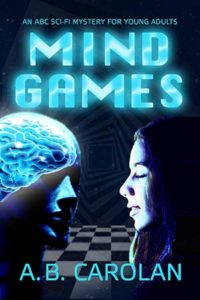
The first, The Secret Lab, features four tweens living on the International Space Station in the future as they try to discover the origins of a mutant cat. The second, The Secret of the Urns, follows the adventures of a young girl living on a satellite of a Jupiter-like planet who wants to study the ETs there; she must first combat the hatred and bigotry of the few humans, including her parents. The third, Mind Games, has a young teen trying to discover who killed her foster father; she’s forced to develop her ESP powers in the process.

All these books were written for young adults—A.B. and I love writing for them. All the books take place in my sci-fi universe, but at different times so they can be read independently. For reviews, please see Amazon or this website.

Want to perform a good deed? We have our own wolf preserve here in NJ, but a group of writers called the Wolfpack has found a way to help both wounded wolves and wounded warriors, i.e. veterans with physical disabilities and/or mental problems. The anthology of wolf-themed short stories and poems Once Upon a Wolfpack is now available on Amazon—there are both print and ebook versions. All royalties will be donated to …, where veterans help wolves at the preserve and around the U.S.

Sales. You won’t find them here in this online newsletter or on my website. Sorry. They’re only offered in my email newsletter. (Sign up for it using my contact page at this website.) All my books are reasonably priced, though, even the print versions, where available.

Free fiction. Check out the list on the “Free Stuff & Contests’ web page. If you like what you download from that list, or the free fiction you find in my blog categories “Steve’s Shorts” and “ABC Shorts,” please consider donating to one of my favorite charities (see the “About the Author” web page for a list)…or one of yours. My free PDFs are like open source software. Instead of sending me whatever you can for my stories, your charitable donations will motivate me to offer you even more free fiction.

Son of Thunder. Scotland Yard Inspector Esther Brookstone, now retired, becomes obsessed with finding St. John’s tomb, following the directions left by a traveling companion of Renaissance artist Sandro Botticelli. Interpol agent Bastiann van Coevorden tries to keep her focused and safe while multitasking in his efforts to thwart illegal gun merchants. You can also follow how Esther and Bastiann’s romance progresses.

This is a sequel to Rembrandt’s Angel. Coming real soon from Penmore Press. And don’t worry—you can read it independently from the first book, but while you’re eagerly awaiting the next adventure in the “Esther Brookstone Art Detective” series, you might enjoy reading that first book.

That’s all, folks!

***

Comments are always welcome.

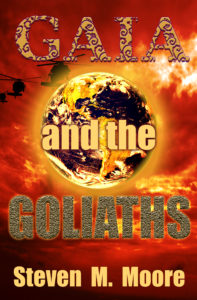
“Detectives Chen and Castilblanco Series.” Their homicide cases often go from local to national and international—for example, Gaia and the Goliaths. In this seventh book of the series, the homicide case of an environmental activist leads to the discovery of an international conspiracy perpetrated by a US energy conglomerate and a Russian oligarch. Bastiann van Coevorden, Interpol agent and paramour of Esther Brookstone in Rembrandt’s Angel, has a cameo in the novel. And the villain of the first book in the series, The Midas Bomb, continues to play a nefarious role. But which side is he really on? Lots of entertaining reading for mystery, crime, and suspense fans! Available on Amazon and Smashwords and at all the latter’s affiliated retailers (iBooks, B&N, Kobo, etc.).

Around the world and to the stars! In libris libertas! 


Guns…

September 12th, 2019

I kill people with them…in my books! My detectives Chen and Castilblanco have guns because the lowlifes they face in their cases have them. Guns are among the “props” in many of my stories. I write mysteries, thrillers, and sci-fi, and I use these props when writing in all those genres.

Although I’m against automatic and semi-automatic weapons and large-capacity magazines being available to the general public—they belong in the military and not in John Q. Public’s hands—I think reasonable gun control can be legislated so people can own the non-military weapons in a regulated fashion.

Emphasis is on “reasonable.” What we have now is chaos, with some states allowing free and open carry even of military style weapons, others not, and there’s no uniformity in background checks to keep guns out of the hands of mentally ill  or insane individuals wanting to kill anyone who disagrees with them. There’s no Second Amendment right to kill people (that was only intended by our Founding Fathers to keep the militias armed—they are, and they’re called National Guards nowadays).

Even in NYC where Chen and Castilblanco hang out, with its tough gun laws, my detectives have to confront a lot of firepower. That reflects the reality real cops have to face. The “bad guys” often seem to be better armed than the “good guys,” even in real life. And, as Castilblanco points out a few times, a bad buy in NYC can buy a weapon from a “dealer” aka gun smuggler who’s selling a trunkful of weapons he’s “imported” from a state with lax gun laws. Gun regulations must be federal and tough—to hell with states’ rights in this case.

While guns are props in my stories, only Teeter-Totter between Lust and Murder focuses on the illegal gun trade…for now. In that Chen and Castilblanco tale, Chen is accused of murdering her senator-boyfriend with a gun—the murder weapon is her own she kept in her apartment. The illegal gun trade is a big deal, of course, nationally and internationally. Interpol agent Bastiann van Coevorden combats it in my new mystery/thriller, Son of Thunder, soon to be released by Penmore Press (the son of thunder is the disciple St. John the Divine—now there’s a twist that might whet your reading appetite). But the illegal gun trade almost seems irrelevant in the US considering that anyone can buy a gun from a friend, or at a gun show,  or order it online without any background checks.

Read the rest of this entry »

Best sci-fi short fiction…

September 11th, 2019

Let’s never forget the lives lost in the 9/11 attacks on the WTC. Terrorism came to America in a disastrous way, killing nearly 3000 innocent victims, along with first responders–the latter are still dying. Terrorism is evil in any shape or form, no matter who the perpetrators are! Let’s stamp this blight on innocent humanity.

***

[Note: This article forms a trilogy with my article about best sci-fi novels and best mysteries and thrillers.]

Sci-fi novels tend to be long…or they become trilogies or series. Some of this length is due to world-building, required narrative to establish exotic and strange settings. It’s also due to the “saga” aspect, because a novel or series can cover thousands of years of ET and human development. (I’ve written a few—see the ad below.)

Sci-fi short fiction is different. Both world-building and character development must be greatly reduced—plot dominates and there are fewer characters. Writing short fiction is a great way, though, for an author to become a minimalist writer, and sci-fi writing is no exception. Minimalism even serves writers well in their novels—you write just enough description to let readers form their own images, thus allowing them to participate in the creative process and identify more with the story.

That said, here is a list of what I consider the best sci-fi short fiction. The stories are notable classics for many reasons—originality, twists, eeriness, and so forth—and they also have influenced my own sci-fi writing.  Your list might be different, and that’s okay. The stories are listed in alphabetical order for author then title (discounting “the” and “a(n)”—years in parentheses indicate Hugo awards):

Isaac Asimov, “The Bicentennial Man”

Isaac Asimov, “Nightfall”

Arthur C. Clarke, “The Nine Billion Names of God” (1954)

Arthur C. Clarke, “The Star” (1955)

Phillip K. Dick, “Adjustment Team”

Phillip K. Dick, “Do Androids Dream of Electric Sheep?”

Phillip K. Dick, “Minority Report”

Phillip K. Dick, “We Can Remember It for You Wholesale”

Charles Louis Fontenay, “The Silk and the Song”

William Gibson, “Johnny Mnemonic”

Harlan Ellison, “’Repent, Harlequin!’ Said the Ticktock Man” (1966)

Daniel Keyes, “Flowers for Algernon” (1960)

Damon Knight, “To Serve Man”

C. M. Kornbluth, “The Marching Morons”

Geoffrey A. Landis, “Falling Onto Mars” (2003)

Larry Niven, “Inconstant Man” (1972)*

Larry Niven, “The Warriors”

Frederik Pohl, “Fermi and Frost” (1986)

Clifford D. Simak, “Grotto of the Dancing Deer” (1981)

*This recent addition was brought to my attention by fellow Black Opal Books author and friend Stanley Brown (author of Veiled Memories and Legacy). Many sci-fi stories are hard sci-fi in the sense that they contain lots of current science and technology and their extrapolations, often far into the future. This Niven story didn’t influence me like other hard sci-fi stories—I just read it, thanks to Stan! It’s a good example, though, of how to weave hard science into a short story. (Surprisingly, Niven doesn’t have an excessive background in science; he was trained as a mathematician.) Hoyle’s The Black Cloud (a novel) has probably influenced me most in that sense. Niven’s other entry here initiated the many-anthology multi-author enterprise of wonderful sci-fi short fictin describing the Man-Kzin wars.

Probably the best story twist here is found in Knight’s “To Serve Man” (He probably also wrote the best how-to book for writing short fiction, Creating Short Fiction.) The best mini-saga can be found in Fontenay’s story. But all these stories offer great examples on how to create short fiction, especially in sci-fi. Young writers would do well to emulate them.

Today short fiction is an endangered species in literature. Anthologies and collections don’t sell very well, and there are few ‘zines left where authors can publish their stories (the ones left are selective, or should we say old boys’ clubs of exclusivity?)—they don’t pay well either. That’s sad…and interesting in an age when people could read a short story with their smart phone while riding to work on a bus or train.

All that doesn’t mean that authors should stop writing short fiction. It can be used to introduce readers to our writing. That’s why A.B. Carolan and I give our short fiction away. (An exception is Pasodobles in a Quantum Stringscape. Volume One is sold on Amazon only. I give away Volume Two—see the list on the “Free Stuff & Contests” web page.) (I start writing a story, not knowing whether it will become a short, novella, or novel. Those that end up short fiction are maybe my loss and possibly your gain, because they’re free.)

***

Comments are always welcome.
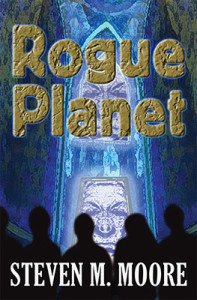
Rogue Planet. Extends The Chaos Chronicles Trilogy Collection to a planet ruled by an oppressive theocracy. The son of a deposed king must step forward and save his world. Game-of-Thrones action in a hard sci-fi setting…no dragons here, but plot and characters that will keep you reading. Available in ebook and print format at Amazon and ebook format at Smashwords and all the latter’s affiliated retailers (iBooks, B&N, Kobo, etc.).

Around the world and to the stars! In libris libertas!
Technical jargon…

September 10th, 2019

When someone asks me for an explanation of some esoteric physics topic—say, “What’s dark matter?”—I know I can’t go on very long before I lose the person, because I’m that way too! (That’s why I subscribe to Science News. Asimov did too, so I’m in good company.) The reasons for this vary from not really caring (that someone…or me…is just trying to make conversation, at a cocktail, for example) to lack of attention (cocktails start having effect…or Jameson whiskey, in my case).

Most people are just users of science and technology—does anyone actually worry about how a smart phone works, whether it’s the little computer inside them or the RF signaling?—they’re not creators of that science or technology, they’re users. That’s fine. Other people often have skills that can boggle our minds, even if they’re not considered technical. I never knew the skill it takes to back up a semi until I had to wash them on a summer job. Have you ever watched a crane operator? Or seen a lifeguard save a drowning swimmer? Or a major league batter swatting a ninety-five-mile-per-hour pitch out of the park? That’s all technical knowledge I can’t even imagine having!

Writers have their own technical skills…and technical jargon to go along with it. Most people have heard of plot and characterization, but the jargon can go far beyond that. Poetry seems to be the worst in that regard—iambic pentameter sounds more like Romulan than English, for example (by the way, I don’t speak Romulan). I once had to learn some of that jargon—high school English teachers and college English TAs love to speak it and force you to speak it too. Maybe that’s why I didn’t like poetry very much until N. Scott Momaday taught me to love it…in spite of his TAs!

Fiction writers can speak in code with their technical jargon; Oxford comma, comma splices, magical realism, zeugma, POV, dialogue tags, internal dialogue, genres, metonymy, and synecdoche are some examples. (Authors who read this post can have fun looking up some of the definitions if they don’t know them. I hoped I spelled them all correctly…most from repressed memories.) Writers’ discussions and arguments are rife with technical terms to describe their craft as much as electrical engineers’ or crane operators’. In the arts, maybe they’re not as bad as artists, architects, sculptors, and so forth, but technical enough to make some wonder what language they’re speaking. (Maybe a screenwriter might even speak Romulan?)

The art and crafts world has its own technical jargon, but like that of technological and scientific jargon, users—readers, in the case of writing—don’t need to worry about it much. Storytelling is an art, and a reader can appreciate a good story without getting bogged down in technicalities, just like we can admire van Gogh’s “Starry Night” without learning about the technical details associated with how the master painted it (which didn’t require having just one ear, by the way).

Does that mean that both these artistic products are more human than the scientific and technological ones? Probably, but that’s debatable. Storytelling existed long before modern science and is a quintessential human activity; even the art on the walls of that French cave is storytelling, as are many paintings down through the centuries. The fact that we can now view such things on our smart phone just adds to their mystery.

***

Comments are always welcome.

“Detectives Chen and Castilblanco Series.” Their homicide cases often go from local to national and international—for example, Gaia and the Goliaths. In this seventh book of the series, the homicide case of an environmental activist leads to the discovery of an international conspiracy perpetrated by a US energy conglomerate and a Russian oligarch. Bastiann van Coevorden, Interpol agent and paramour of Esther Brookstone in Rembrandt’s Angel, has a cameo in the novel. And the villain of the first book in the series, The Midas Bomb, continues to play a nefarious role. But which side is he really on? Lots of entertaining reading for mystery, crime, and suspense fans! Available on Amazon and Smashwords and at all the latter’s affiliated retailers (iBooks, B&N, Kobo, etc.).

Around the world and to the stars! In libris libertas!
Freelancing…

September 5th, 2019

The decision I made long ago that I’d better do something else because I couldn’t make money at writing to feed a family was a good one. That might not sit well with aspiring young writers. Admittedly I’m just one datum in a very large statistical pool of writers. And I have to qualify the statement: the writing I’m doing now is not profitable enough to support a family either.

That said, there are other ways besides novel writing that a writer can use to make a living: ghost writing, editing, advertising, science writing, and so forth—a lot of companies employ people who know how to write because most of their other employees don’t. Especially in the more technical fields. You can’t read the instruction your doctor wrote on your prescription, but the doc’s handwriting is only the beginning of his bad writing skills. Many scientists and engineers are lucky to communicate via speech; their writing skills often make you wonder how they passed high school English, let alone college level.

Unfortunately none of these jobs pay much and benefits are usually terrible, especially if you work for a company that outsources writers to big corporations. In our illiterate society (just sample the usual text messages), a literate person should be royally treated, but that’s not the case. Unlike most people, I read the scrolling comments on TV news reports; they’re often illiterate, by which I mean it’s hard to figure out what the person wants to express. I see tweets from famous (or infamous) people on Twitter (yes, I’m there, but I’m not famous…or infamous); they’re often illiterate too. Literacy takes hard hits from many directions and many sources.

Freelancing of one form or another can be a good source of income as the world becomes less literate and spirals down toward complete illiteracy. There are enough people out there who want writers’ skills—their products, ideas, and dominance of issues. The global market still requires intelligent expression…for now. I don’t know how long that will continue. Freelancing includes most of the detailed writing activities I’ve mentioned, and more (even a poet can find employment writing humorous greeting card couplets). Unfortunately, having success with freelancing is a bit like having a successful book: You not only need to produce a quality product; you also need several examples of such products in your portfolio to establish your brand.

I’ve never freelanced or employed a freelancer (discounting those people I use for my self-published books—editors, formatters, cover artists, and publicists), but I’ve been told by many writers that it’s the only way to make a living as a writer. Illiterate celebs need ghostwriters. Think tanks and lobbyist orgs, both containing illiterate people, employ writers to clean up their messes. A CEO’s speechwriter can become that CEO’s go-to person (although that might become a permanent position). Illiterate politicians need writers of literate position papers. And so on.

Again, these might be transient opportunities. Literacy is under attack in America and elsewhere in the world. Like most anything else that it touches, high tech adds to that assault. But for now, there are ways to make a living as a full-time writer. If you don’t like the idea of freelancing, though, don’t leave your day-job. Unless it already involves writing.

***

Comments are always welcome.

Mind Games. “You can’t walk into the CEO’s office in a major corporation and accuse him of murder. As a scruffy fourteen-year-old from the Dark Domes of Sanctuary’s capital city, I couldn’t even get in the front door!” Androids with ESP? What could go wrong? Find out as a young girl searches for her adopted father’s killer in A.B. Carolan’s new addition to the “ABC Sci-Fi Mysteries.” Available in print and ebook format on Amazon and in ebook format on Smashwords and all its affiliated retailers (iBooks, B&N, Kobo, etc.)

Around the world and to the stars! In libris libertas!