Mini-Reviews of Books #43…

September 4th, 2019

The Skeletons of Birkbury. Dana J. Febry, author. For a first novel, this is very entertaining…and it’s one of my favorite subgenres, British mysteries. I suppose it’s self-published—the copyright doesn’t even have a date on it. Come to think of it, I won’t put dates on books I review anymore. Unlike many people, I don’t neglect “evergreen books,” and this certainly falls into that class of books that are always current and entertaining. As for the myth about all those self-published books with editing errors, I’ve seen more in a Big Five ebook, so how this evergreen book was published is also irrelevant.

This is about a cold case that becomes hot as a young girl’s body is found when a tree topples over in a storm. You’ve seen pics recently of how the tree’s root system excavates an area around the tree when it goes over. I’m assuming that’s what happened in the story, but it’s not completely clear.

The plot is familiar in the sense that the detective here has a jerk as boss and some family problems he’s handling, so he struggles to concentrate on the cold case. The reader gets to follow the clues along with the detective and his assistant. Characters from the Birkbury area, good and bad alike, are skillfully drawn, complex, and cover a wide range of human behavior. There’s a bit of class tension too, which can always occur within Great Britain’s social structure.

This one has some meat to it—it’s not a cozy mystery. My only problem was that the ending was a wee bit unclear and rushed, but overall the novel is an interesting read. I’ll try to remember to purchase other books in the series.

Trilisk Ruins. Michael McCloskey, author. This is the case of an author giving away the first book in a series to get readers to buy the rest. Marketing gurus recommend this practice—I deplore it. The reasons are simple: (1) An author should get better with each succeeding book in a series, so maybe the last book is the best one to read first. (When that doesn’t happen, something’s wrong.) (2) Each book in a series should be an independent read. In other words, readers should be able to jump into a series at the end or the middle and not have to read the books in order.

I guess I got what I paid for, though. This book was free, and there’s something a bit off with this novel. Maybe the fault lies with my sensing that the writing style is a bit pedantic and academic as if the author were trying to impress. When I need to consult a dictionary, that observation always occurs. The characters are a bit wooden and stereotypical too—beautiful kick-ass female meets Rambo-style macho man so they can kick ass together and become romantically involved. I don’t mind that if the rest of the plot is good. This one is not that great.

Ruins from ancient civilizations are a common theme in sci-fi (I’ve even used that in some of my sci-fi stories), but as a plot device it’s all in how it’s handled. The author ruins things (pun intended) by making the novel a space opera that’s too long. The relic seekers are smugglers. In space opera, there’s usually an evil corporation or government too. In this case, it’s the UN Space Force, which is essentially that evil government—no black UN helicopters, though, just nasty starships, but the author is maybe appealing to that meme?

I’ll admit that the story captivated me for a while. It became very boring when the author went into excruciating detail about the Trilisk base the smugglers are exploring. How it all worked was never explained to my satisfaction either. Not a bad story, though, if you flip through the boring pages fast enough. I won’t be buying the next books in the series, though.

***
Comments are always welcome.

Mind Games. “I was fixated on one goal: determine who killed Ferdie and punish them. If I could find out how they killed him, all the better, but that one goal was essential.” Androids with ESP? What could go wrong? Find out as a young girl searches for her adopted father’s killer in A.B. Carolan’s new addition to the “ABC Sci-Fi Mysteries.” Available in print and ebook format on Amazon and in ebook format on Smashwords and all its affiliated retailers (iBooks, B&N, Kobo, etc.)

Around the world and to the stars! In libris libertas!
The right word…

September 3rd, 2019

When I started my last day-job, occasionally the language in my mind was still Spanish. I would make work presentations where I’d need to adlib a bit, especially in Q&A, and it was frustrating that sometimes the Spanish word was the first one to pop into my mind…and embarrassing when I used it. I’d spent a long time living in Colombia and had reached the point where I even dreamed in Spanish—extreme total immersion, if you will—so I wrote this off as a natural phenomena that would soon go away as I adjusted back into U.S. society.

As I write my fiction, that’s still happening, although less often. This leads me to the subject of this article: How does an author know the right word to use in a given circumstance? Putting aside my strange quirks attributable to my sojourn in Colombia causing my first choice to be a Spanish word (sometimes I have to check that), consider any word and you will find synonyms for it (an online thesaurus is good for that). That process might help you find the right word—your mind recognizes it—but it won’t tell you the different shades and nuances of meaning that the mind often seems to know intuitively.

Most authors have an uncanny ability to choose the right word. Of course, and frequently as a reviewer, I’ve seen some bloopers, but, in general, an author’s mind is on automatic and chooses the correct word. Better said, best word, because correctness is more logical and bestness is more emotional (when the right word doesn’t exist, you can make one up…like I just did for the property of being best!). I suppose the more talented the writer, the better the skill at choosing the right word.

Whether from aging or the influence of my second language (Spanish has been relegated to second place now, primarily due to the lack of use), I often “know” there’s a best word choice but just can’t remember it, so I write an X and go on. As I content edit (I continuously do that), the right replacement often pops into my head.

That’s an even stranger phenomenon: My mind knowing there’s a right word—I say to myself when I’ve found it, “Eureka!”—but not coming up with it immediately. The human mind is a strange computer. There’s no operations manual for it, but everyday things can seem stranger than ESP.

“That’s just active versus passive vocabulary,” you say. Okay, but giving it a name doesn’t take away the mystery. And, of course, finding the right word is a problem for all of us in everyday speech, but do writers suffer from it more? Moreover, I always thought my writing vocabulary is passive vocabulary. Maybe there are multiple levels of active and passive vocabulary? Psychologists and other professionals studying the human brain, speech, and language, please weigh in. I might be an ex-scientist, but this is one of many scientific problems I can’t even imagine how to solve!

***

Comments are always welcome.

Mind Games. “I found Ferdie when I returned from my internship. I’d entered our secure niche in the Dark Domes and stood frozen staring at his body.” Androids with ESP? What could go wrong? Find out as a young girl searches for her adopted father’s killer in A.B. Carolan’s new addition to the “ABC Sci-Fi Mysteries.” Available in print and ebook format on Amazon and in ebook format on Smashwords and all its affiliated retailers (iBooks, B&N, Kobo, etc.)

Around the world and to the stars! In libris libertas!

Movie Reviews # 79…

August 30th, 2019

Luce. Julius Onah, dir. A better title for this movie would be Boxes. Its theme is about the artificial boxes built around people (societal expectations) and boxes built around themselves (goals), especially for blacks in America.

A seven-year-old refugee from war-torn Eritrea is adopted by the Edgars and given the name Luce. We’re left to wonder throughout the movie if this adoption occurred for the wrong reasons, including the Edgars feeling good about themselves. Luce is black; the Edgars are white. And Mrs. Edgar (Naomi Watts) works hard to fit Luce (Kevin Harrison Jr.) into genteel white upper middle class society in Arlington, VA.

The boy grows up and develops a love-hate relationship with a black high school teacher Harriet Wilson (Octavia Spencer), who also wants more for Luce but suspects he hasn’t left behind the violence of his homeland. Luce resents both boxes, the one his parents have constructed for him and the one Wilson wants to build for him.

Everyone in this movie has baggage; everyone is flawed…but not any more than real people. It’s much ado about not much, slowly building an artificial intensity that seems to accompany the music instead of the other way round. Frankly, considering audience conversations afterward, not many viewers understood it…or could identify with the problems portrayed that are, pardon the expression, white-washed.

But there is some great acting that saves this movie, especially by Kevin Harrison Jr. and Octavia Spencer. The director Onah and J.C. Lee wrote the screenplay. Maybe it would have been better as a true play on a Broadway stage? The history of Sundance and other critics’ praise couldn’t sway me to think better of this portrayal of a war refugee’s story. It’s like art imitating real life…and failing. You might want to give it a chance, though. The story’s better than most Hollywood movies’ these days…where Sturgeon’s Law applies all too well.

***

Comments are always welcome.

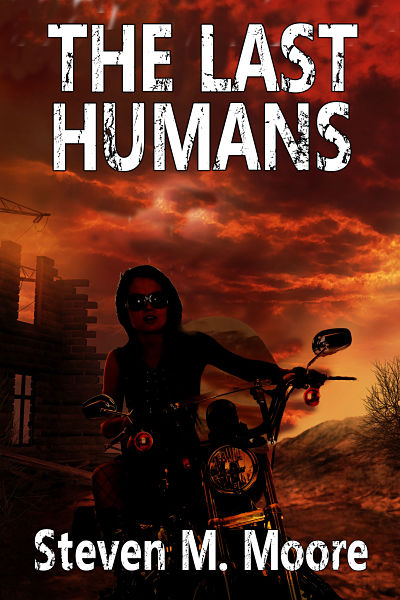
The Last Humans. LA Sheriff’s Department forensics diver Penny Castro surfaces to find a post-apocalyptic world in this thriller set in the near future. Her struggles to survive, find new friends, and create an adopted family make for adventures that will have you asking, “Could this really happen?” Available in print and ebook format from Amazon or the publisher Black Opal Books, or in ebook format from Smashwords and its affiliated retailers (iBooks, B&N, Kobo, etc.). Also available at your favorite local bookstore (if they don’t have it, ask for it).

Around the world and to the stars! In libris libertas!

Globalized literature…

August 29th, 2019

As I watched PBS’s presentation of the Vienna Summer Concert recently, I started thinking about globalized literature. Yes, the music was great, and I hummed the great, rousing trombone countermelody from Sousa’s “Stars and Stripes” along with the orchestra because I’d once come to the front of the stage with my fellow trombonists to blast that out as part of a rousing finale for a high school band concert decades ago. Of course, the Vienna Philharmonic isn’t a band, but they were playing both band and orchestral  music—“American music,” written by Americans or inspired by America.  An earlier piece was Gershwin’s “Rhapsody in Blue,” but the pianist was Wang Yuja, and that was the trigger for my thoughts. The first movement of Dvorak’s “New World” Symphony sealed my fate.

Nationalist music is old music. So is nationalist literature. Today, across Europe with all those different countries with different languages, people speak and read English. I’ve heard better English from foreign diplomats whose native tongue isn’t English than I heard in any classroom I’ve taught in. If books are written in another language, they’re often translated. Agents and lawyers make money representing authors so their books can be translated. Not long ago I read Liu Cixin’s The Three-Body Problem; it won a Hugo award. (A poorly written, chaotic plot, but maybe it lost something in the translation.)

Does any reader check where an author comes from anymore? Maybe at local book events (people want to know where I’m from in NJ), but most readers don’t care until they’ve finished the book, if then. In fiction, I only care that the author spins a good yarn. In non-fiction, I only care that s/he’s knows something about what s/he’s writing about.

Yes, it’s true. Stories that take me globetrotting through the pages might be a lot of fun, but again that makes the point: literature is global now. We read stories no matter what their settings are and where their authors come from or where the stories go.

That Viennese orchestra was playing American music—old music. In our high schools and colleges we teach American literature—old literature. Classical, jazz, rock, and other musical styles are universal now. Mystery, thriller, and sci-fi genres are also universal. Now both music and literature are global because modern society is global.

Books are global, the stories are global, and the readership is global. In fact, publishing conglomerates, often composed of hundreds of subsidiaries, are global, and, like it or not, have the most readership. Of course, it’s not the publishing industry driving this globalization; it’s the readership. Readers aren’t interested in nationalist literature; they’re interested in good stories. Stieg Larsson is widely read. So is Garcia Marquez. Books are international treasures now that everyone and anyone can read, unless an autocratic government bans them (plenty of those are still around).

And maybe that old literature will rise from the ashes and become international too. Salinger is making ebooks. New media possibilities add to the globalization of literature.

The world is getting smaller. So is the world of literature. This isn’t a bad thing. We’re all humans on spaceship Earth together, and storytelling is a quintessential human characteristic. It doesn’t belong to one country or one region.

***

Comments are always welcome.

Son of Thunder. Scotland Yard Inspector, Esther Brookstone, now retired, becomes obsessed with finding St. John’s tomb, using directions from Renaissance artist Sandro Botticelli, in this mystery/thriller. Interpol agent Bastiann van Coevorden tries to keep Esther focused and protected while he multitasks fighting illegal gun merchants. The reader can also follow how their romance is going. All in this new book in the “Esther Brookstone Art Detective” series–coming soon from Penmore Press.

Around the world and to the stars! In libris libertas!

Steve’s shorts: The Stalker, Part Two…

August 28th, 2019

The Stalker

Part Two

Copyright 2019, Steven M. Moore

“I turn my heat down to sixty at night,” Mary Lou said after Raul arrived, studied the emails, and reiterated his intentions of sleeping on the rug in front of her door. “Let me get you a blanket. I have some sharp knives. Do you want a weapon?”

He laughed. “Mary Lou, don’t worry.” He jerked a thumb towards the door. “With your door lock and two deadbolts, he’s not getting in here easily. But I’ll have my cellphone ready to dial 9-1-1 if he tries. It’s time to catch this guy.”

Is he courageous or foolish? She took one of her knives from the kitchen and put it on one nightstand, the farthest from the front door and Raul, so he wouldn’t laugh at her paranoia.

During the night, she awoke to see a shadow at her window. He’s on the fire escape! The glass broke and Raul came running. He threw open the window and surveilled the alleyway below.

“He-he was there!”

Raul picked up the brick that had smashed through the window and removed the note attached to it. They both read it:

“I, UberBatman, went a-robbin’ only to find

A pretty Catwoman who’ll soon be mine.

Green eyes will close

For this wild rose

After I’ve sliced and drank

The blood of this skank.”

“That’s awful!” Mary Lou said.

“Some of the emails were worse,” said Raul. “Now he’s writing poetry? Certainly not Keats.”

“What am I going to do?”

“First, we’ll clean up the glass. Then I’ll move your bed to the middle of the room and sleep at its foot. And tomorrow we’ll go see that detective.”

***

Detective Jerry Reid leafed through the emails, but he dwelled on the note associated with the brick. “I’m not a poetry critic, but this poem seems pretty lame. I suppose both of you handled it?” They nodded. “it’s handwritten, which might help a bit. Slants funny too, and it’s almost illegible. He could be a lefty trying to make it look a right-handed person wrote it.”

“Why is that important? And what could be his motivation?”

Reid shrugged and smiled. “His teachers slapped him for being left-handed?” He enjoyed their expressions. “Just kidding. They don’t do that anymore.” He cleared his throat. “Could be anything from playing psych games with Mary Lou here to an obsession with killing her.”

“Those aren’t motivations,” Mary Lou said. “And I’ve never pissed off anyone except my sister.”

“Where does she live?” said Reid.

“Oh, please,” said Raul.

A uniformed cop approached at that moment and whispered in Reid’s ear. He nodded.

“We caught a break,” the detective said. “We need some DNA samples from you two. There was a hair strand stuck in a rough part on the brick. If it’s not yours, it’s the perp’s…and we can check our records. Mind you, that only works if his DNA is on file.”

“He’s probably a repeat offender,” said Raul. “At least for stealing. But even if that DNA is on file for a previous crime, if it wasn’t solved, we have nothing.”

Reid frowned at Raul. “Leave the policing to us, Mr. Rivera.”

“His father was a cop,” Mary Lou said, smiling at Raul.

“Yeah? NYPD? What’s his name?”

“Was. Pablo Rivera.”

Reid shook his head. “Pablo was a great cop. I didn’t know him well, but a lot of other cops did, and only had good things to say about him. Guess he taught you something about solving crimes?”

Raul nodded. “But I want to be a public defender. He always was afraid he’d send someone off to jail who’s innocent.”

Reid nodded. “It happens. That hair might belong to a poor construction worker here for a DWI. You never know.” He showed crossed fingers. “We just hope the justice system minimizes that sort of thing.”

***

The DNA results were inconclusive. Considering his backlog, Reid decided to put the case on the backburner. Raul took Mary Lou out to dinner.

“What am I going to do?” she said to him. “That detective doesn’t want to help, and I can’t live like this.”

He nodded. “I’m sure your stalker intends to make you suffer psychologically. Can you remember anything more about him? I didn’t get a good look. I was more worried about you.”

She thought a moment. “Tattoos. Maybe lots, but I only saw the one above his ankle. It looked like a snake devouring a bird.”

“That’s a start. And I know how to follow that clue.” He showed the eagle on his shoulder; it held a flag in its talons. “A whim. The salon’s right down the street.”

“Raul, my man, you’re back,” said the tattoo artist as they entered. “What ink suits your fancy today, bro?”

“A snake eating a bird,” Mary Lou said.

The tattoo artist smiled at Raul. “You’re the snake and she’s the bird, I suppose? Lucky man. She’s quite the bird.”

Mary Lou blushed.

“Ignore Sammy. He thinks life is all about having a good time.”

“Only one life to live, Raul. Where do you want the tatt?”

“I want to see the graphic first.”

Sammy went to a counter overburdened with design books. After rummaging through a couple, he said, “Here’s one that could work.”

He showed the design to Raul. Mary Lou peered over his shoulder.

“That’s it!”

Read the rest of this entry »

Amazon…accomplices in a crime?

August 27th, 2019

I allege they are. The country’s largest retailer started as an online bookstore. Maybe now they should be banned from the book business?

I’ve hammered the online retailer for years on this blog, and for many reasons, but the story about illegal copies of my favorite classics like 1984 and Animal Farm in August 20’s NY Times is my tipping point. Orwell’s estate isn’t getting any royalties from these classic dystopian books and others. Someone else is, because they’re often rewritten (some by high school students!), and/or have the author’s name changed (you can’t copyright a title, but if the content is basically the same). And Amazon condones these scams by allowing them to happen.

These scam tactics and piracy in general occur because some readers want cheap versions, and scurrilous “entrepreneurs” are willing to provide them. It’s like a customer buying a fake Gucci handbag or fake Rolex out of a car trunk in Manhattan (I’ve seen that occur, and many of those cheap knock-offs come from China). If it looks the same and costs less, what the hell, right? Wrong! Think about it. China’s whole economy was built on this principle (other countries like India are now playing this game), so consumers should know better, but they still buy the knock-offs. Those classic knock-offs on Amazon are in that same category…and Amazon is a much larger trunk!

A few nights ago, I was browsing on Amazon. I do that sometimes because I don’t want to leave a chapter of the book I’m reading unfinished before I turn on the TV—in this case, it was a PBS show without commercials, so I couldn’t finish the chapter as the commercials ran (muted, of course—annoying soundtrack plus annoying video equals doubly annoying, so I eliminate the soundtrack). It seemed like the more I refined my search criteria, the more books the Amazon bots threw at me and the more worthless they were, and, presumably, the more their authors or publicists paid to get into that exalted position on Amazon. I was denied the experience I have in a bookstore or library by this huge company that, when history is taken into account, owes its very existence to the book business.

I soon embarked on another browsing journey. For some time now, I’ve bought some classics just to have them on my Kindle. I looked for 1984 and Animal Farm and a few others. Lots of Kindle versions, but they all looked wrong, so I was at a lost to find one that was like the original paper version. I was ready to give the retailer the benefit of the doubt (silly me), but my show came on. The next morning, I saw the Times article and had my suspicions confirmed—old classics can be knock-offs.

Read the rest of this entry »

Have you read…?

August 22nd, 2019

In book events and online, I often get the question, “Have you read X’s book Y?” I don’t know about other authors, but I’m not embarrassed to say, “No, I haven’t.”

I know where readers are coming from when they ask such a question. They either follow X or really liked Y, and that “or” isn’t necessarily exclusive. I could be dishonest or say something like “I’ll have to look out for X’s books.” That would make the person who’s asking feel better and maybe validate her or his reading choices, but I’m an honest person. I’m not going to say I’ve read a book if I haven’t, for several reasons that go beyond honesty:

First, there are so many books and good authors now. I don’t have time to read them all. Maybe if I were on a long-haul starship like Brian Aldiss’s (have you read that novel?), I might get through all the books in the ship’s database, assuming I wasn’t sleeping away in a cryopod. Here on Earth, I just don’t have time to read them all. For fiction, I’m a speed-reader, which is why I often peruse a fiction story a second time before I review it, looking for writing details I might have missed (as a speed-reader who’s also an author, I tend to autocorrect as I read, sailing through the editing errors). For non-fiction, I read more slowly, searching for the little details I want to file away in that hard drive in my head. (I do this for fiction too, but not as much, yet certainly more for historical fiction where I always wonder where reality ends and the fiction begins).

Second, although I’m an avid reader, I might not like X and I might hate Y. To avoid mentioning current authors who piss me off, let me mention X = Eliot and Y = Silas Marner—terrible author and terrible book. In fact, I’m not much into classics. The only Dickens stories I like are Tale of Two Cities and A Christmas Carol. The last classic I read was Les Miserables (I read it in the original French in high school). The best thing I can say about that boring novel is that it’s better than the musical that has not one memorable tune. Because no one can read every book, reading choices are subjective. The person who asks me about X and Y made one choice, but my reading list might have zero intersection with that person’s list. And my choices aren’t based on popularity or critical acclaim. I think the last book on the NY Times bestseller list I read was Isaacson’s Leonardo da Vinci. (I used the Renaissance milieu depicted there in my upcoming novel Son of Thunder, but I also read the book just for fun and my general education.)

Read the rest of this entry »

Steve’s shorts: The Stalker, Part One…

August 21st, 2019

The Stalker

Copyright 2019, Steven M. Moore

                Mary Lou stopped trying to make sense of the complicated spreadsheet to watch Raul bend over to pick up a sheet of paper that had fluttered off her desk. She sighed.

Perdoneme por interrumpir,” he said, handing her the paper with a flourish. “La señorita quizá necesite este papelito?”

She only understood señorita, but his gentleman’s gesture was clear. “Gracias, Raul.”

De nada.” He smiled and continued on his journey down the aisle between the cubicles.

The only thing she knew about Raul was that other women in the office admired the young man, to put it mildly. As the low-paid newbie among the staff, she was the only one his age, though.

If only I weren’t so shy, she thought. The intern and future lawyer from Columbia University had finally noticed her, and all she could say was “Gracias, Raul”!

She returned to the spreadsheet, a list of boring patent documents she’d found in the archives.

***

                On her way to lunch, Mary Lou left a five-dollar bill in old Bob’s hat. Her reward was always a smile from the homeless veteran. Muttering “There but for the grace of God” phrase she always muttered when seeing hapless victim’s of society,  thinking of most of her family’s entrenchment in the lower middle class, she elbowed her way up to the deli counter and ordered her usual sandwich—ham and cheese on rye with spicy mustard. The man behind the counter only had to look at her; he didn’t have to hear the order, which, considering the noise background and her tiny voice, could be difficult. Read the rest of this entry »

Escapism…

August 20th, 2019

I get it. People live vicariously via their fantasy movies—Endgame, Star Wars, Harry Potter, Game of Thrones,…. They also get lost in their computer games, so much so that Fortnite becomes a competition on national TV. I don’t agree with you-know-who that either one drives gun violence. This kind of escapism is a much healthier way to get a high, even compared to gambling, alcohol, or opioids. But the scientist in me makes me think there should probably be an organization with acronym EA, for Escapists Anonymous because the media experience of these “safe activities” can be addictive.

That said, let me state that I also participate in escapism too, via book reading. The Marvel Universe in film can entertain sometimes, but those old comics entertained me more. Harry Potter was a series of seven books long before they became movies, although the last book in the series was so verbose that it became two movies. Game of Thrones became popular in books before audiovisual addicts got hooked on it watching HBO.

Generally speaking, I’m not a fantasy book reader. I enjoyed the first Potter books, but hated the intruding and bludgeoning verbosity of the later novels. I gave away my Marvel Comics long ago (they’d be collector items today), simply because all comics seemed immature as I read Agatha Christie and H. Rider Haggard under the bedcovers with a flashlight. I’m proud to say I never read Game of Thrones—anything with dragons turns me off (I did like Sean Connery as a dragon, though).

What becomes popular in the fantasy genre often seems inferior when compared to books in other genres…with some notable exceptions. Stan Brown’s Veiled Memory represents very original fantasy writing, for example; it contains no dragons, has many historical references, and can be considered young adult-oriented just like the Potter books…and like the Potter books, adults who are young at heart can enjoy them too. Zoe Tasia’s Kilts and Catnip is another example of fantasy writing—I can even relate to the Celtic people with the magical powers! (Irish writers seem to have them in abundance. See the pic on my web page “About the Author.”)

I don’t write fantasy. It’s complicated to write. The author must build a fantasy world, sometimes within our real world as in the case of Harry Potter and the last two books I mentioned. This world still has to have consistent rules. I’ve seen many a fantasy story ruined by deus-ex-machina appearances of a different rule that allows a protagonist to survive. That’s not allowed! Building this fantasy world with its own rules is similar to sci-fi where world-building narrative is required if only to establish the other-worldly settings.

Read the rest of this entry »

Movie Reviews #78: The Kitchen…

August 16th, 2019

The Kitchen. Andrea Berloff, dir. I saw one family walk in to see this movie—daddy, mommy, and three little kids—and thought, Does daddy think this movie is a comedy because Haddish and McCarthy are in it? Either daddy and his family were surprised, or daddy just wanted to see a violent, bloody Quentin Tarantino-style movie that makes Wise Guys seem like a little kindergarten skirmish. I wasn’t surprised—I saw the previews—and there aren’t many good films now (that sappy dog story doesn’t appeal to me), and I like both Haddish and McCarthy in serious roles.

Three women, Kathy Brennan (Melissa McCarthy), Ruby O’Carroll (Tiffany Haddish), and Claire Walsh (Elizabeth Moss), take over the Irish mob’s territory aka Hell’s Kitchen, circa late seventies, after their good-for-nothing lowlife hubbies get sent to prison. That’s the plot, all wrapped up in a nice if bloody bow.

But the movie has its moments as well as its inconsistencies, if the plot isn’t illogical enough for you. One of the three (Claire), whose husband uses her for a punching bag—she’d already lost her baby because his favorite target is her gut—receives what’s due him as far as I’m concerned. And a nice lowlife Gabriel O’Malley (Domhall Gleeson) returns to Manhattan just in time to kill Claire’s new attacker—too much of a coincidence and in the plot mostly because Claire deserves some true romance, even if it’s a killer romance, literally. Another inconsistency is the Brooklyn Mafioso who defends the three criminal newbies. Brooklyn? Really? He belongs in Little Italy.

Gloria Steinem is mentioned once, so I guess this is a female empowerment film. Okay. We all know the world would be a far better place if women were in charge (I’m speaking truth here)…but maybe not in this way! Instead, I saw the movie as an excellent example that Haddish and McCarthy can act in serious roles. I want to see more of that—they’re very talented. So is Elizabeth Moss. The three aren’t exactly the Three Musketeers, i.e. not all for one and one for all…or whatever Dumas’s phrase was. Instead, there’s friction, just like in any good crime family.

In fact, that friction is related to a nice twist that really caught me by surprise, mostly because no clues were offered in the script (I might have missed them, of course)—deus ex machina without the deus. Still, as a writer of mysteries and thrillers, I should have seen it coming. That twist alone makes me respect the screenwriter who, by the way, is also the director…and also a woman! (I hope she can break through old Hollywood’s glass ceiling and make more movies.)

Do I recommend this movie? Sure, for some great acting and a great twist. Just don’t take your little kids to see it. We have enough kids with PTSD on the southern U.S. border and in broken families elsewhere.

***

Comments are always welcome.

The Last Humans. “’We’ve done a real number on the environment, Miss Castro.’ ‘Call me Penny.’ ‘She’s ex-navy,’ said one air force guy, winking at me. ‘She only understands salt water.’” Penny Castro makes a forensic dive for the LA County Sheriff’s Department and surfaces to find the apocalypse. In the post-apocalyptic thriller where survivors include feral humans and incompetent bureaucrats, she manages to find some good people. Her adventures will still have you asking, “Could this really happen?” Available in print and ebook formats at Amazon and ebook format at Smashwords and its affiliated retailers (iBooks, B&N, Kobo, etc.). Also available at the publisher Black Opal Books and your favorite local bookstore (if they don’t have it, ask them to order it).

Around the world and to the stars! In libris libettas!