Language destruction…

March 17th, 2020

[Note from Steve: If you’re a lover of Bailey’s, Guinness, Jameson, or Irish coffee, like me you have a tradition of participating in a St. Paddy’s Day visit to a favorite pub…or attending a traditional parade. It’s not recommended this year. It might be depressing to stay at home and enjoy your corned beef and cabbage there, along with some of those traditional drinks before, during, and/or after, but it’s the safest choice. Parades are cancelled around here (New York City’s is usually bigger than Dublin). Pubs and restaurants are either closed or with a 50% capacity limit. Follow the rules. Acquiring or passing on COVID-19 on just isn’t worth it. Please take care of yourself, family, friends, and everyone else. There’s always next year…and if COVID-19 is vanquished, there will be more cause for celebration!]

There are little details that annoy me: a weather reporter describing cold weather improvement by “we’re knocking down the feels-like temp” (I’m not complaining about “feels-like,” just that winter temperatures improve by going up); a furniture store touting its “bestest” sale ever; using “it’s” for “its,” or vice versa, in those moving banners on news programs; statements like “me and my partner were just going to WaWa”; and so forth. I call this language destruction.

Language is always changing, of course. Aramaic and Latin aren’t dead, but they’re on life support and used infrequently, so they stagnate, but modern languages evolve, often not for the better as globalization erodes them. It happens to English, which ironically helps destroy other languages. I had a French friend in Colombia who used “le weekend” all the time and insisted that the Brits had stolen it from the French long ago. Huh? Where’s the Academie Francaise when you need them? And German now tends to avoid all those long words where shorter German words are stitched together by just using the shorter English version.

Social media contributes a lot to language destruction. “R U OK?” seems a bit cryptic when someone inquires about your health. A famous Twitter addict and abuser just continues on and on with badly written tweets, but my complaint is more about the contact—lots of people murder Twitter tweets.

Business and science types and Pentagon wonks are like pollinating bees with their plethora of acronyms too, spreading that sickness far beyond their little niches (COVID-19 has taken away a better metaphor). Acronymese could be the worst destroyer of language if it weren’t used all the time for insider code. One serious problem is that the same acronym can mean multiple things when it comes to learning them. And they’re evolving too. APB has been replaced by BOLO—I always thought word was for an Argentine gaucho’s version of a lasso. DWI has been replaced by DUI—the I in the first case means “intoxicated,” specific to liquor originally, while it means “influence” in the second. The first might not be appropriate if the person caught is on meth, while the second covers multiple things, including that, as well as marijuana, which is legal in some states. And it’s probably general enough to describe  the guy’s girlfriend on his cellphone saying she’s leaving him too.

“Meth” is slang, of course, and slang is often regional and group specific, but it also often changes the meaning of words, which is more language destruction that drives me nuts. I barely understand what a person means when they say “bad” and “awesome” anymore. I think most people still understand me when I say I was a member of a “nerd herd” in high school, but I’m not certain of that anymore. I think I’m a “cool” guy, and that’s not because I went out to get the paper in PJs when the thermometer says eighteen degrees, but I’m not “bad” or even “awesome” in the sense I mean it.

Writers have to be careful in their stories and blog posts. Old standbys like CMOS (acronym for Chicago Manual of Style) are out-of-date for more than the acronym (CMOS is a low-voltage printed circuit technology). Its rules aren’t as archaic as the Academie Franciase’s, but they’re not up-to-date (I prefer the NY Times Manual of Style, but I let editors have their own way…usually).

The primary criterion is that the majority of readers understand our prose. After all, when human beings are long gone (maybe sooner than later with climate change—there will be survivors from COVID-19), it would be nice if ET archaeologists didn’t need a Rosetta stone. But I doubt that they’d ever figure out what WC meant, even if they took advantage of the facilities.

***
Comments are always welcome.

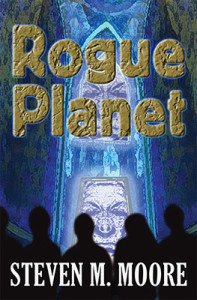
Rogue Planet. A deposed king’s son must fight to win back his planet from a brutal theocracy. No Game-of-Thrones dragons, just hard sci-fi with Game-of-Thrones action and romance. No magic either, although the theocrats of the planet make the oppressed citizens of the planet believe they possess it. Consider this tale a parable for our times, a warning that what could come to pass if religious fanatics take over. Available in print and ebook (Kindle .mobi) format from Amazon, as well as in all ebook formats from Smashwords and all the latter’s affiliated retailers (iBooks, B&N, Kobo, etc.) and library and lending services (Scribd, Overdrive, Baker & Taylor, Gardners, etc.).

Around the world and to the stars! In libris libertas!
Channeling Garcia Marquez…

March 12th, 2020

In Gabo’s novel Autumn of the Patriarch, he created an amalgam of the most ruthless dictators known to him. While eating your enemies isn’t quite so literal nowadays, current strongmen and those who want to be show many of the same characteristics: paranoia, narcissism, ruthless holding on to the reins of power, and so forth. In short, Gabo’s novel is an extreme example of an author satisfying Clancy’s maxim that fiction must seem real, even in Macondo.

Although I lived in Colombia for over a decade, Garcia Marquez lived in Mexico at the time, so I never met Colombia’s Nobel prize winner, but he’s also an example of advice I’ve often given in these pages: the best preparation a fiction writer can have, if one is necessary, is journalism. Novelists must make their fiction seem real, whether it’s magical realism or gritty realism. Journalists are immersed in real life and report on it. They see people in real situations and they deal with real settings. That’s a huge start for any storyteller.

Moreover, most despots hate journalists, so they get to experience what it means to be in the public spotlight under attack (everyone now knows US media isn’t immune to that). In fact, they often know what it means for their lives to be in danger. Translating that into a novel should be a piece of cake, and that same novel can become their protest against the despot.

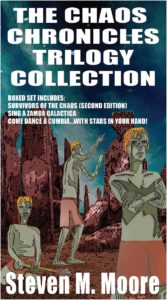
Journalists are often minimalist writers too. Gabo wasn’t, but the verbosity in his books is more a reflection of his native tongue—most Latin-origin languages are verbose. No hard-boiled mysteries there. I once served as a translator when a Scottish physicist visited Colombia. I would translate my colleagues’ Spanish into English, and he asked a few times, “Is that all he said?” I smiled and said more than once, “Essentially.” I was cutting out the extraneous material and giving him the minimalist version. (As a humorous note, in Sing a Zamba Galactica, the AI translating the old ET storyteller’s buzzwords does the same thing!)

But even in Colombian, Italian, German, and Russian newspapers, the column structure forces journalists to use minimalist writing. ‘Zines can allow a bit more verbosity, but those few still published in paper version must be more to the point. That’s excellent training for any writer.

I don’t know if Gabo is the only ex-journalist who received a Nobel prize in literature, but many journalists have become prolific fiction writers. Journalism is one way to make some good money writing too, which doesn’t happen all that often for novelists. Something to think about….

***

Comments are always welcome.

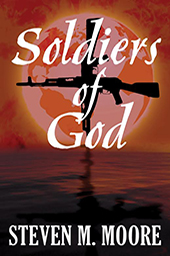
Soldiers of God. In this sci-fi thriller, FBI agent Caitlin Murphy is the handler for Father Juan Pablo Gomez, who’s working undercover in a fanatical religious group. Her main problem? She’s in love with the priest! They work together to thwart the group’s plans to attack famous sites in the Washington DC area. But is that group only part of a broader conspiracy with a bigger agenda? Available in .mobi (Kindle) ebook format on Amazon, and in all ebook formats on Smashwords (for my email newsletter subcribers, on sale through March) and at all the latter’s affiliated retailers (iBooks, B&N, Kobo, etc.) and library and lending services (Scribd, Overdrive, Baker & Taylor, Gardners, etc.) An “evergreen book” as current today as when it was published, if not more so.

Around the world and to the stars! In libris libertas!

Steve’s shorts: Decision…

March 11th, 2020

[Note from Steve: Again a bit of noir sci-fi comedy to alleviate some of your pain in these dark times…]

Decision

Copyright 2020, Steven M. Moore

Dilinyx of House Falki looked around the conference table. “Will anyone speak for them?”

“The case is clear,” said Ermev of House Malati. “These vermin could become an infestation that will overrun and ruin the galaxy.”

“The leader of their strongest tribe has taken over completely and is destroying over two hundred of their years of civic progress,” said Tensez of House Sefi, the only female in the triad that ran the starship. “No one will speak for them, Dilinyx. On the contrary, we’re all here to support extermination.”

Dilinyx was the oldest and emitted the equivalent of his people’s sigh. “Perhaps we should let him defend himself?”

“It’s a waste of time,” aid Ermev, “but if it makes you feel better about the decision, why not?”

“—and I want Germany to smear that senator so badly that not even his own mother would vote for him.” The creature with the orange face and dyed yellow hair looked around the room. “And who the hell are you jerks? You look like Muppets having bad hair days.”

“You are standing here before us to defend your actions,” said Dilinyx, his voice sounding a bit robotic via the AI’s translation to the creature’s language.

“I don’t have to defend my actions to anyone,” the creature said. “I’m God’s chosen one and completely above the law.”

That was all they needed. They sent him back. The destruction of the planet the local predominant species often called Earth began immediately.

***

Comments are always welcome!

Soldiers of God. In this sci-fi thriller, FBI agent Caitlin Murphy is the handler for Father Juan Pablo Gomez, who’s working undercover in a fanatical religious group. Her main problem? She’s in love with the priest! They work together to thwart the group’s plans to attack famous sites in the Washington DC area. But is that group only part of a broader conspiracy with a bigger agenda? Available in .mobi (Kindle) ebook format on Amazon, and in all ebook formats on Smashwords and at all the latter’s affiliated retailers (iBooks, B&N, Kobo, etc.) and library and lending services (Scribd, Overdrive, Baker & Taylor, Gardners, etc.) An “evergreen book” as current today as when it was published, if not more so.

Around the world and to the stars! In libris libertas!


Little kids…

March 10th, 2020

I make a distinction between young adults who are twelve- to eighteen-years-old and anyone younger than that. I can write about the former, but evidence indicates that I have trouble writing about the latter.

Writing about little kids in an adult novel with adult themes is even more difficult. They usually appear as secondary characters in my stories. And sadly, they occasionally appear as victims.

My hang-up might be a common one: I can remember events in my own childhood all the way back to around when I was three-years-old, but it’s hard to put myself in the mind of that Stevie from so long ago. It’s even harder to create childlike character. I can rarely identify with and get into their minds enough to write a meaningful story.

Young adults have childlike and adult characteristics. It’s easier for me to remember how difficult that time was and create and identify with my young adult characters. Little kids are big trouble, in real life and in fiction.

Most authors aren’t child psychologists or pediatricians. Readers shouldn’t blame them for not creating good child characters. Children, young adults, and adults all react differently to Dr. Seuss. The adults’ Little Mermaid isn’t the kids’ Little Mermaid—Ariel is the same character, but they react differently to that character.

I see this in many animated films. The jokes many times are only understandable for adults because little kids don’t have the life experiences an adult has. So the writers just resort to slime and farts for the kids. Kids get jokes, but maybe not adult jokes.

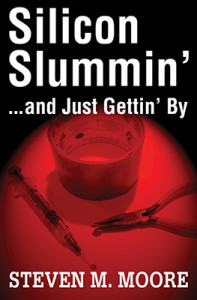
I have to make a confession: I only have one little kid as a major character in my many novels. I often challenge myself in my writing, and I did so that one time. The result might contain evidence about my struggle, but I hope not. What spurred me on was my observation that the autistic spectrum is wide, a lot wider than most people think, so I created a child character at one end of that spectrum. That character is Manuel, an autistic boy in Silicon Slummin’…and Just Gettin’ By from the “Mary Jo Melendez Mysteries.” He’s almost a main character, and Mary Jo Melendez would be dead if it weren’t for him.

Readers can determine if I successfully met that challenge. Will I write about another child character in an adult novel? The answer is the same one I give to all writing questions: If a little kid fits into the plot, why not? Having done it once, it should be easier the second time, right? But Manuelito is a tough act to follow, so we’ll see.

***

Comments are always welcome.

Soldiers of God. In this sci-fi thriller, FBI agent Caitlin Murphy is the handler for Father Juan Pablo Gomez, who’s working undercover in a fanatical religious group. Her main problem? She’s in love with the priest! They work together to thwart the group’s plans to attack famous sites in the Washington DC area. But is that group only part of a broader conspiracy with a bigger agenda? Available in .mobi (Kindle) ebook format on Amazon, and in all ebook formats on Smashwords and at all the latter’s affiliated retailers (iBooks, B&N, Kobo, etc.) and library and lending services (Scribd, Overdrive, Baker & Taylor, Gardners, etc.) An “evergreen book” as current today as when it was published, if not more so.

Around the world and to the Stars! In libris libertas!

Movie Reviews # 84…

March 6th, 2020

[Note from Steve: All my movie reviews are archived in – you guessed it – “Movie Reviews.” Considering many of you subscribe to some streaming video service like Netflix, etc., you probably have access to every movie I’ve reviewed. Maybe you’ll want to check out my review to save some time – five minutes reading vs. two hours of potential drivel. Consider me your guinea pig or canary in the coal mine. Like the following movie, I tend to see only recent movies. I don’t have streaming video!]

Call of the Wild. Chris Sanders, dir. I read Jack London’s 1903 novel in the eighth grade. Our old English prof had us read London’s “To Build a Fire.” I was impressed, so I asked for more London to read. I think we were doing American authors that year because I wrote my final paper on Samuel Clemens, which I titled “His Pen Name was Mark Twain” (not my shortest or worst poem, by the way).

To the review of this movie then: Because I read the book so long ago, I knew I wouldn’t be able to tell whether Hollywood’s take destroyed it, yet it seemed to be less gritty and survivalist than the book. I had that impression, but I’m willing to concede that what I consider gritty and survivalist has changed a lot since I was in the eighth grade!

Harrison Ford his usual rugged, suffering bastard role (made famous in Blade Runner but probably over the top in The Fugitive), and [spoiler alert maybe] keeps the Deep Throat-like voiceover going even after he dies (maybe Han Solo doing an Obi-Wan Kenobi trick here?). I don’t think critics have ever given Ford enough credit. He’s a damn good actor. Omar Sy impressed me as the black carrier of the Yukon mail too. I hope to see more of him; he almost steals the show.

The dog Buck is the real star, of course. I didn’t much mind that he and the bear were computer generated creatures. I did mind that Buck looked a bit too human at times. You almost expect him to speak to the old man and curse the villains (there are many). I’ve seen dogs that are expressive, though, so all this is pure nitpicking.

And, just for fun, I’ll play the race card (a little dig at Hollywood for the Oscars’ lack of diversity): Why was the wolf-spirit calling Buck to the wild and leading him astray black and the real white wolf Buck’s love interest? Maybe that call to the wild was good for Buck, but the wolf-spirit doing it certainly looked bad. (Yeah, I know, a weird reaction on my part!)

This was an all-around good movie, though, with beautiful scenery (hopefully not computer generated), good acting, and London’s great story defining the plot. Hollywood can still turn a good book into a good movie once and a while…and should do it more often.

The whole experience got off to a bad start for me, though. Someone put that silly Sponge Bob movie in the previews. Are you kidding? It almost ruined my enjoyment of Call of the Wild! And I clocked twenty-five minutes of previews, all of them cartoons. AMC bludgeons viewers too often.

***

Comments are always welcome.

The Golden Years of Virginia Morgan. What will the US government do in the future with its agents and other employees who know too many secrets? Find out in this tale about a frightening government conspiracy. While fiction, you might ask yourself, “Could this really happen?” I wrote it, so you already know my answer! Available in .mobi (Kindle) ebook format at Amazon, and in all ebook formats at Smashwords and its affiliated retailers (iBooks, B&N, Kobo, etc.) and library and lending services (Scribd, Overdrive, Baker & Taylor, Gardners, etc.).

Around the world and to the stars! In libris libertas!
Mini-Reviews of Books #45…

March 5th, 2020

[Note: Given the dark times we live in, I’m taking a chance reviewing these two important political books.  The Far Right and Far Left hordes (a lot more numerous than those at the US’s southern border) might rise up against me. I’ll admit that a lot of my non-fiction reading is political, simply because I’m worried about what the future might have in store for human beings on this planet. I still read more science, though, as if studying the physics of global warming and how climate change deniers and polluters are causing extinctions will get me any reprieve from those extreme groups. Honestly, I’d read conservative tomes too if they weren’t grim fairy tales written by Krugman’s fascist zombies (did you catch the pun?). Anyway, here are the reviews.]

A Very Stable Genius: Donald J. Trump’s Testing of America. Philip Rucker and Carol Leonnig, authors. I could just make this review a mini-mini: If you don’t already know most of what’s in this book, you’re part of the problem. It just elaborates on Trump’s legacy of incompetence in everything and this tendencies for paranoid authoritarianism. Trump is by far the worst president in US history, but any US citizen who already knows that can read this book and find out more details about why, even a Trump supporter (assuming they can read—their vainglorious leader rarely does, of course, but don’t take my word for it; it’s documented in the book!). And the book barely gets to that infamous phone call with the Ukrainian president where he illegally pressures him to meddle in the 2020 election, a mob capo’s favor.

Arguing with Zombies: Economics, Politics, and Fight for a Better Future. Paul Krugman, author. Economics is like anthropology for me, a pretend-science if only because it deals mostly with human beings and their complex and often irrational behaviors. Most of this book analyzes, in a direct and understandable way, why Trump’s economic policies are both stupid and downright dangerous for the US. It’s a bit more dense than the first book but nicely complements it. The section titled “Trump” actually summarizes the first book: Our democracy, if not dead, is in a hospice. Sound the bag pipes, MacDougall.

The section on Pelosi should be mentioned. Being a native Californian who loves San Francisco might bias me, but she’s one damn smart woman who doesn’t get the credit she deserves. Her recent fame comes from standing up to Trump, who, with the help of the Good Ole Piranhas like ticks on a dog, might have already succeeded in destroying the country and the world without the Speaker. She is 1000 times better than the previous GOP House speakers and has done far more to improve Americans’ lives than Ocasio-Cortes can even dream of achieving. GOP House members (and a few senators too) hate Pelosi, of course, emotions from mostly small-minded men who  can’t stand the fact that she’s much smarter than they are…or ever will be.

Krugman showed some laziness by simply reprinting many of his earlier NY Times’ columns (contrary to Trump’s lawsuit against the Times, and the opinions of Trump supporters, those are fairly balanced as is the rest of the paper–there’s no fake news). But the inclusion of those posts creates a historical flow in each section that shows our spiral down into the maelstrom of fascism in the US and the world (he correctly mentions both Hungary and Poland) is not a new phenomenon. Very interesting reading. Of course, if you prefer fiction, you can read Trump’s Art of the Deal…or just read the Tweeter-in-Chief’s tweets from the vulture himself. Hmm. Maybe those latter are just noir comedy?

***

Comments are always welcome.

The Golden Years of Virginia Morgan. What will the US government do in the future with its agents and other employees who know too many secrets? Find out in this tale about a frightening government conspiracy. While fiction, you might ask yourself, “Could this really happen?” I wrote it, so you already know my answer! Available in .mobi (Kindle) ebook format at Amazon, and in all ebook formats at Smashwords and its affiliated retailers (iBooks, B&N, Kobo, etc.) and library and lending services (Scribd, Overdrive, Baker & Taylor, Gardners, etc.).

Around the world and to the stars! In libris libertas!
Steve’s shorts: Who’s the Anti-Christ?

March 4th, 2020

[One positive thing I can say about Mr. Trump is that he provides many opportunities for sci-fi that’s either post-apocalyptic or dystopian, maybe with a touch of noir humor because he is, after all, a comical figure with his orange face and fluffed, dyed hair. He holds grudges, and in this story he seeks revenge for something that goes all the way back to the 2016 election.]

“You can’t do that, Mr. President,” said the Secretary of State. “Even ignoring the religious aspect, the Vatican is a sovereign state.”

The great leader, who was a “very stable genius” by his own royal estimation, pretended to be considering that advice. The Secretary of State knew POTUS was considering whether he should fire the chief diplomat. He had already assumed the Secretary of Justice’s role as top cop, after all.

“Nope. Remember, I can do anything. My evangelical voters will love it. Most of them think he’s the Anti-Christ anyway.”

The new National Security Director, the tenth in thirteen years, beamed. “I’ll talk to the CIA Director!”

***

“I’ll do no such thing,” said the Pontiff, trying to see his inquisitor in the harsh light of the interrogation room. “Is this his stupid idea of revenge?”

“Everything will remain the same. All you have to do is go on Worldwide CNN and declare him to be your Almighty God. That’s not too much to ask.” The inquisitor leaned in to the Pontiff, who smelled the whiskey and garlic.

“And if I don’t?”

“They’ll have to elect another Pope who will.”

***

Three days later, a few in the crowd in St. Peter’s Square watched with heavy hearts as the white smoke billowed from the conclave’s chimney.

“Long live Pope Donald,” the others in the crowd roared.

That evening, on government-controlled Italian TV, members of Italy’s fascist dictatorship celebrated.

***

Comments are always welcome.

The Golden Years of Virginia Morgan. What will the US government do in the future with its agents and other employees who know too many secrets? Find out in this tale about a frightening government conspiracy. While fiction, you might ask yourself, “Could this really happen?” I wrote it, so you already know my answer! Available in .mobi (Kindle) ebook format at Amazon, and in all ebook formats at Smashwords and its affiliated retailers (iBooks, B&N, Kobo, etc.) and library and lending services (Scribd, Overdrive, Baker & Taylor, Gardners, etc.).

Around the world and to the stars! In libris libertas!
Secondary characters…

March 3rd, 2020

Secondary characters aren’t that important in short stories because they can’t be, but in novellas and definitely in the novel they can contribute a good deal to readers’ enjoyment. My perception is that secondary characters prop up the plot and main characters. Perhaps Hollywood argot describes the situation better: main characters are the main actors, and secondary characters are supporting actors, emphasis on “supporting.” Where would Conan Doyle’s Sherlock be without Dr. Watson? Where would Rowling’s Harry be without Ron? And would Asimov’s futuristic detective Elijah Bailey accomplish much without his android partner Daneel Olivaw? (In fact, Elijah disappears from the extended Foundation series, and Daneel becomes a main character, who ends the series!) These are old examples, of course, but there are many more recent ones.

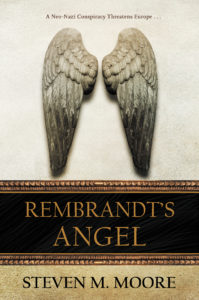
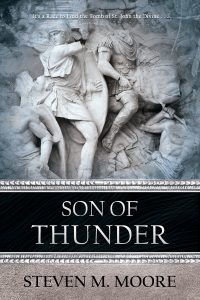
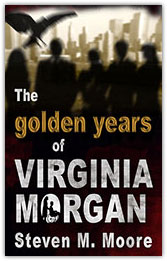
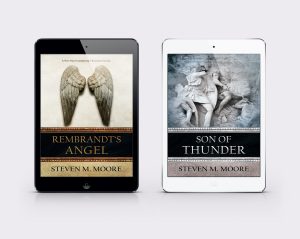
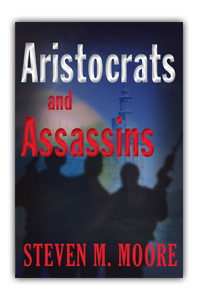
Both editors and reviewers have complained when I kill off secondary characters. I can become so attached to them that I’ll give them their own novels—Ashley Scott, in The Golden Years of Virginia Morgan, and Esther Brookstone, in Rembrandt’s Angel and Son of Thunder, are examples of characters who graduated from secondary roles to starring roles in their own stories. Nobody complains about this;  It’s the killing off that creates the blowback. A reviewer protested about my killing off a secondary character in Aristocrats and Assassins. I actually liked her, but I just didn’t know enough about the inner workings of Mossad (and with Trump’s friend Bibi in charge now, I’m not sure I want to know). An editor protested when I killed off a Turkish inspector, who I also liked (but I knew he didn’t have much of a future with Erdogan in charge). I also have an affection for villains (Vladimir Kalinin lasted a long time before I bumped him off). I’ll take the blowback and admit to character assassination (at least none of these cases happened on Fifth Avenue).

The reason that secondary characters are important is obvious: Every character must seem human, an interesting, complex, human being who could really exist. Secondary characters help the main ones achieve that, but, in doing so, they often appear to take over and dominate the plot, essentially writing their own stories within a story. You’ve seen that occur in movies, but I saw it in books first.

Authors often struggle with this. I have fought with secondary characters. I can usually broker a truce by promising that pushy secondary character a starring role elsewhere, but sometimes I throw up my hands and turn that secondary character into a main character, which requires rewriting a lot of material. (Detective Chen is an example. Yes, Dao-Ming, you convinced me, and I don’t regret it.)

Does this sound schizophrenic? Ask other authors. I’m no psychiatrist, and I’d refuse to psychoanalyze myself even if I were. If those other authors are honest, they’ll admit to these goings-on. In my case, it’s because themes and plots are more important to me than characterization. I’d guess that authors who emphasize the latter might have this occur less frequently? Dunno.

I don’t know how writers managed all this before computers and word-processing software. I’m guessing they’d go through lots of notebooks and reams of paper on their typewriters. Developing characters is like developing plots for me: it requires a lot of content editing before I’m satisfied. And the whole process often leads to new stories as well.

***

Comments are always welcome.

The Golden Years of Virginia Morgan. What will the US government do in the future with its agents and other employees who know too many secrets? Find out in this tale about a frightening government conspiracy. While fiction, you might ask yourself, “Could this really happen?” I wrote it, so you already know my answer! Available in .mobi (Kindle) ebook format at Amazon, and in all ebook formats at Smashwords and its affiliated retailers (iBooks, B&N, Kobo, etc.) and library and lending services (Scribd, Overdrive, Baker & Taylor, Gardners, etc.).

Around the world and to the stars! In libris libertas!
My deviousness…

February 27th, 2020

No, I’m not going Trumpian on you. I just thought I’d mention that I sometimes add things to my stories to see if readers are paying attention. There are my Hitchcockian cameos where I appear as a bookstore owner, and even a cameo for Prince Harry (one astute reader noticed that one). You can have some fun trying to find these! Hint: In the “Esther Brookstone Art Dectective Series,” two novels strong now with Rembrandt’s Angel and Son of Thunder, Esther, an ex-MI6 and Scotland Yard Inspector in the Art and Antiques Division (in the second book, she has just retired), you’ll find the cameo in the first book.

My sci-fi stories have cameos too. Although I’m not an eternal like the main character in Asimov’s End of Eternity, his famous android detective Daneel Olivaw has a cameo in one of my sci-fi novels. And Asimov himself has one in a my new time-travel novel (recently sent to beta-readers).

Some of my deviousness is more subtle. Arch-villain Vladimir Kalinin, who has appeared in several novels, uses many aliases in the stories he appears in, but Raven was a bow to a famous American horror and mystery writer. In that same time-travel novel, I pay homage to a famous hard-boiled crime novelist and two of his characters.

Oh, by the way, the Queen of Hearts is in that time-travel story too. Alice Through the Looking Glass is one of my favorite stories—even in Disney’s silly and classic cartoon version. I like sly cats too, and Tweedle-Dee and –Dum so often describe harmless idiots (or ones not so harmless, like McConnell and Graham). And, while I have no lobr for a cruise ship commercial that brutally edits the song, I consider Jefferson Airplane’s “White Rabbit,” one of my favorite songs, as an anthem for my creativity.

Here I’ve offered a different use of the word deviousness! These examples from my writing are just me having a wee bit of fun with my art. (Andrew Lloyd Weber did that in Unmasked, a recent musical biopic we saw, where he wrote a song about the song everyone hates, “Music of the Night”).

None of these examples of deviousness is quite as profound as Sandro Botticelli using himself as a model in his own painting (mentioned in Son of Thunder) because some might not consider them an improvement of my art (or Weber’s), but to hell with that opinion! It’s all about fun (probably even Botticelli had fun with his “cameos” in his paintings).

And let this be a question for every author: If you’re not having fun with your storytelling, why do it? You probably will be frustrated if you think you’re going to get rich, you will often get mad at trollish reviewers, and you will consider everything after finishing your MS a complete drag. If you don’t have fun with your writing, there’s not much left where you can have it.

***

[Note: Some clues to the references above might be found in the cover images.]

Comments are always welcome.

“Mary Jo Melendez Mysteries.” Ex-USN Master-at-Arms Mary Jo has had a harried life. In Muddlin’ Through, she takes a security job at a NJ firm and is framed for her sister and brother-in-law’s murder by a secret US agency when Russian agents steal the MECHs (“Mechanically Enhanced Cybernetic Humans”). In Silicon Slummin’…and Just Gettin’ By, she not only has US and Russian agents again to contend with in her new CA security job, but also a stalker. And in Goin’ the Extra Mile, China steps in to pursue the MECHs, kidnapping Mary Jo’s husband and children to find out where they are. These three novels of heart-pounding action typify what I mean by “evergreen books”—novels that are as fresh and current as the day they were published, if not more so. Available in .mobi (Kindle) format on Amazon, and in all ebook formats on Smashwords and its affiliated retailers (iBooks, B&N, Kobo, etc.) and library and lending services (Scribd, Overdrive, Baker & Taylor, Gardners, etc.). Come and meet the MECHs!

Around the world and to the stars! In libris libertas!
Steve’s shorts: The Meeting…

February 26th, 2020

The Meeting

Copyright 2020, Steven M. Moore

The Russian got out of his Mercedes-Benz, which he called “his Nazi car,” and was immediately surrounded by his security detail. They all entered the glittering palace where they met the prince’s aide. At that point, the Russian and the aide continued down a long corridor until they halted at an entrance with two guards in front of a double door.

“Announce us,” said the aide.

One guard opened one of the doors. Stepping inside, he said in Arabic, “Your majesty, the Russian has arrived.”

“Show him in.”

The Russian and the aide entered.

The prince stood. “Welcome, my dear Vladimir. Please, let us sit together and discuss this stupid American president.” He gestured to a chair across from where he’d been sitting.

The man called Vladimir, a name as common in Russia as the thuggish man appeared to be, liked the Saudi prince’s directness. He approached the raised area containing the two chairs and table that was topped with fresh fruit, assorted small pastries, and coffee and water carafes. When they were both seated comfortably, the Russian smiled and became direct too.

“We have something in common, my prince. We both kill journalists. I’m sure the American would love to do so on many occasions.”

The prince waved a deprecating hand, dismissing the comment. “That is past history. We’ve shown once again the Americans’ incompetence for finding the Saudis responsible for the World Trade Center events and bringing them to justice. Their Department of Justice has just declared once again that any evidence they collected is considered state secrets. Once again that fool president and his cronies have failed American citizens pushing for that lawsuit.” He winked at the man he knew to be as ruthless as himself. “Now that we have flattered that American fool enough to make him compliant, I need to talk with you about how to exploit the situation to our benefit even more.”

“There’s no hurry. He’s going to get rid of the stupid rule put in place after FDR and run again for a third time. His House and Senate just do his bidding now. He’ll be a ruler for life just like us.”

“That wasn’t just braggadocio? He has that bad habit, you know.”

The Russian smiled. “I’m encouraging him to do it. The US will be just like China and Russia. And your country, of course. We’ll rule the world.”

***

Comments are always welcome.

“Mary Jo Melendez Mysteries.” Ex-USN Master-at-Arms Mary Jo has had a harried life. In Muddlin’ Through, she takes a security job at a NJ firm and is framed for her sister and brother-in-law’s murder by a secret US agency when Russian agents steal the MECHs (“Mechanically Enhanced Cybernetic Humans”). In Silicon Slummin’…and Just Gettin’ By, she not only has US and Russian agents again to contend with in her new CA security job, but also a stalker. And in Goin’ the Extra Mile, China steps in to pursue the MECHs, kidnapping Mary Jo’s husband and children to find out where they are. These three novels of heart-pounding action typify what I mean by “evergreen books”—novels that are as fresh and current as the day they were published, if not more so. Available in .mobi (Kindle) format on Amazon, and in all ebook formats on Smashwords and its affiliated retailers (iBooks, B&N, Kobo, etc.) and library and lending services (Scribd, Overdrive, Baker & Taylor, Gardners, etc.). Come and meet the MECHs!

Around the world and to the stars! In libris libertas!