ABC shorts: Nicking the Dog…

April 8th, 2020

[A.B. was watching the world go to hell from his little home in Donegal, so he needed a distraction and wrote this story. We both thought it might be a distraction for you too.]

Nicking the Dog

Copyright 2020, A. B. Carolan

Alan McCormick’s dog-sitting duties included walking old Prince and scooping up his poop when the dog cleared his tubes. Alan once had a dog who died, and his ailing mother didn’t want another one—his father had done most of the dog-walking—so Alan thought that the job was his best chance to be with man’s best friend…and make a few euros to invite Cathy out. He was becoming more interested in girls than dogs, although dogs didn’t seem to be much less capricious with their affections. Cathy didn’t seem to pay as much attention to what side of town boys came from, though, or how much money they had, but he still needed to improve his financial situation.

Prince was a bit nearsighted but still became distracted by squirrels, birds, and butterflies. It was no surprise when he started to strain at the leash and bark at the rustles in the hedgerow. The leash broke and off he went, through the bush and to the other side. Alan couldn’t do that—in his area, hedgerows were as effective as fences—so he had to go to the end and around to the other side. There was no sign of Prince.

That became an odyssey as he began searching the neighborhood of mostly abandoned houses. At one that looked more ready for demolition than the others, he heard barking. He climbed the steps, carefully avoiding the broken boards, and knocked. More barking. Alan knocked again.

He peered inside and saw Prince with the remainder of his leash tied to the stair bannister just off the entrance foyer. Someone nicked my dog! he thought. There was no way Prince could tie himself up.

He tried the door. The knob turned freely, so it wasn’t locked. If he hadn’t wanted to recover the dog, he’d never enter such a spooky place. But he did. What would the dog’s owner say if Alan knew where the dog had run off to and didn’t try to save him?

He opened the door wide, stepped through a few cobwebs, and went to Prince. The dog stopped barking and wagged his tail. Alan and Prince were tight. Or maybe the dog just likes kids? Any kid?

He’d just seen the strange-looking little kid standing in the doorway to the kitchen.

He was shorter than Alan and looked more like a little old man with a big head. Not a leprechaun. They’re not so ugly. He had big eyes, floppy cheeks, and pink, wrinkled skin. Alan could see a lot of that because this kid, if he was a kid, only wore something like a nappie.

“Did you nick my dog?”

“We like dogs. Yours is nice.”

The voice sounded like the synthesized computer voices from the games on Alan’s laptop, which was on its last legs. Alan’s mother couldn’t buy him a new one of those either.

“We? There are more of you?”

“Currently our nest is borrowing this house to use as our base.”

“Nest? Base?” A frisson went down Alan’s spine. “Who are you?”

“You wouldn’t understand, but we mean no harm to you or the dog. We can be friends. That will help us in our studies.”

Alan thought a moment. “You’re ETs, aren’t you? What are you doing here? Are you spying on us as you plan to invade Earth?” He was thinking of several computer games with that theme.

The electronic chuckle sounded a bit like something from a horror movie similar to the ones he used to watch on the telly with his father.
Read the rest of this entry »

Recognizing similarities and celebrating differences…

April 7th, 2020

Sometimes I watch shows from the major networks, preferring mostly dramas over sitcoms (what you might expect). I often end up criticizing how badly written the screenplays are—movies are often worse though—but I read so much that late at night my eyes focus better on the TV screen than on my Kindle page.

So I noticed when the Asian actors disappeared from Hawaii 5-0 a while ago (maybe that’s why the series ended last Friday?)—I hadn’t watched it much since that happened—and when FBI didn’t choose the Muslim guy as the lead—the female lead is now “on leave” working undercover, so maybe other viewers felt the same way. I also noticed that black actors play stereotypes on sitcoms like The Neighborhood and Bob [Hearts] Abishola, but the actor playing Abishola (she’s a black woman, in case you’re wondering, so Hollywood gives her two strikes to begin with) is much better than the comedian main character (a black man), but black actors are doing better than black directors in Hollywood now.

That said, I’m sure that most of these four shows don’t play well in certain sections of the country that I shall not name here. How we perceive stories, whether told in a book or on the TV or movie screen, is greatly influenced by our backgrounds and cultural surroundings. I loved a recent FBI episode for faithfully portraying the inequities of ICE policies, but maybe some people were turned off by it. There are still some people who want to “purify the nation” by either making non-whites into slaves, or by kicking them out, and you can be sure those people applaud the current administration’s anti-immigration policies (only one presidential adviser seems to be determined to create them, much to the concern of his own relatives!).

Good novels invariably recognize our similarities and celebrate our differences, though, because their writers put that into words and tell stories covering the whole human spectrum. Both my parents’ attitudes and growing up in a culturally diverse California taught me to do that long before I published my first novel (Full Medical, 2006). My long sojourn in South America only added to that background. If you’ve ever wondered why my books hold up a mirror to the wonderful diversity found in our country and world, that’s the reason. Better said, I love the beauty found in that diversity where others, hopefully still a minority, might feel only rage and hate.

One interpretation I’ve made of Clancy’s maxim that fiction has to seem real (to be sure, he rarely carried it as far as I do) is that we need to include cultural diversity in our fiction. The real world is diverse, like it or not. There are differences, and we should celebrate them in our storytelling. Among human beings on this planet, there are more similarities than differences, and we should celebrate that too. Even if TV and Hollywood continues to resist because of some perceived marketing constraint, authors can lead the way in doing just that. Sure, we should avoid cultural stereotypes as much as we can, especially when they overemphasize the differences, but we should celebrate the variety of cultures, especially considering the melting pot that the US has become. And, in fiction, we can show how people can resolve their differences and just get along, to paraphrase Rodney King.

I’m not saying that diversity has to be included in every novel. That’s absurd. However, just from the writing aspect, it can become an important plot device. For example, in reading Saralyn Richard’s two mysteries, Murder in the One Percent and A Palette for Love and Murder (both reviewed in this blog), I often smiled as the main character, a black police detective, moves among the rich white folks of Brandywine Valley. Whether the author did this on purpose or not, this choice was very effective in her stories, because it allows her main character to stand up, be different, and play against the stereotype of the white New York Irish cop, which no longer exists in the city’s police force, by the way, except in the very top echelons. For the same reasons, my homicide detective Rolando Castilblanco is Puerto Rican and his partner Dao-Ming Chen is Chinese-American. Does any of that turn you off? You shouldn’t read these books then. Or maybe you should?

***

Comments are always welcome.

In these troubled times, anthologies and collections offer readers small and varied bites of reading entertainment if they’re lacking the time to become immersed in a novel. The #WolfPackAuthors’ Once upon a Wolfpack and Howling at the Moon are anthologies of short fiction and poetry that offer very tasty bites indeed, and all royalties go to good causes. Yours truly has a short story in the second anthology. You can complement those two with some of my own, a few at Amazon and others for free—see the list of PDFs on the “Free Stuff & Contests” web page where you can download with only a few clicks. Enjoy!

Around the world and to the stars! In libris libertas!

Originality and nostalgia…

April 2nd, 2020

[A message to readers: I hope these blog posts inform and entertain you during these troubling times. I will keep writing them as long as I can. Considering our tri-state area is the COVID-19 epicenter now, I believe it’s not if but when most everyone around here, including me, becomes ill with this damn virus. Everyone is in danger. A large percentage of cases here are less than forty-four-years-old. We still don’t know much about the virus, how it affects different ages and genders, but it’s more lethal than the flu. So stay smart, be safe, and, if you must socialize, use the internet. Hopefully these posts will add to your experience there. Now here’s the post….]

It’s said that there are only so many plots. Accepting that, originality in how those plots are spun is key: the Devil’s always in the details.

This modern definition of originality is an acceptable one. You can’t copyright a generic plot, after all. We can look back on those Greek dramas or Shakespeare’s plays and find commonality with many current stories. It’s okay to repeat those generic plots as long as the author’s version is a bit different, i.e. original.

But what about that recent nostalgia movement that repeats more recent works? Why is a Broadway musical like Oklahoma put back on the stage again? Or why are musical biopics like Beautiful or Jersey Boys so popular? Little Women now has its fourth cinematic incarnation! And is Disney’s animated feature to Broadway stage to streaming video and computer-generated reality just money-grabbing exploitation of audiences? And the laughs on the remakes of All in the Family and The Jeffersons are mostly from people who saw the originals—people not born yet during the original airings probably don’t care and probably don’t understand what’s funny.

Nostalgia is probably originality’s worst enemy. It even affects tech. The current fad over old LPs and Steve Job’s signed floppy are examples where nostalgia leads to extolling old, inferior technology. I don’t agree that LPs sound better, and I don’t care about Job’s floppies or anyone else’s—I got rid of all of mine, although I still distrust computer clouds. I do have some LPs, but only because I can’t find their equivalents in CDs (yeah, I know, even those are disappearing, but I don’t trust iTunes completely as an archive for my favorite music either).

In the book world, there are revivals of old books all the time. Just slap the “classic” label on a book and there’ll be readers who buy it. Never mind that the stories have plots with modern alternatives in books that are more current and meaningful today. No one cares about how blubber is turned into lamp oil, yet Moby Dick is essentially a manual on how to do just that, and it’s forced upon unsuspecting high schoolers all too often. Instead, we should read stories about how to protect whales…and the need to do so. That’s why Star Trek IV is a better story than Moby Dick! (Yeah, I know—high school English teachers will cry “foul!” here. They almost succeeded in making me hate “literature,” though, so I always take their opinions with a grain of salt.)

Read the rest of this entry »

Steve’s shorts: Passing the Divisive Torch…

April 1st, 2020

Passing the Divisive Torch

Copyright 2020, Steven M. Moore

“My daughter, my princess, and your next president!”

The old man stepped aside from the lectern and offered the mike to the much younger woman, dressed in a famous designer’s gown, not from one of her own brands.

“You have been blessed to have my father’s steady hand at the tiller of the ship of state,” she began. “I will continue his work to make America great again!” There were cheers and thousands of nodding red hats in the crowd.

One Secret Service agent in that crowd stood by his partner, a woman. He never stopped surveilling that mass of humanity. There were always death threats against the old president and his daughter now, and only two weeks earlier, a mob of his white supremacist supporters had lynched a black man.

“You know, Lara, I’m sick of this bullshit. I’m not a fascist nor a racist. I’m resigning tomorrow. My own daughter has received death threats.”

The black woman studied him. “There are a lot of young people ready to revolt, millennials and gen-Z’ers mostly. I can’t blame them. My own son is an activist too. But I need my job.”

“I’m going to be a PI,” her partner said. “Business is booming for them. Attorneys are busy defending people from one side or the other—probably a lost cause for his enemies—and they need people to gather evidence. I’ll be okay with my pension and all that, especially mentally.”

“I’ll envy you. Protecting this SOB and his Barbie-doll spawn is a pain in the butt. Everybody hates them, except those in his fascist inner circle who pucker up and kiss his derriere. How did we come to this?”

“Nothing lasts forever, not even America.”

***

Comments are always welcome.

Come Dance a Cumbia…with Stars in Your Hand! This is my longest title, but not my longest novel—and has both direct and hidden meaning. It’s the last novel in the Chaos Chronicles Trilogy Collection, all three books sold as a bargain ebook bundle. Read together, the reader will experience centuries of future history, going from a dystopian Earth run by multinational corporations and policed by their mercenaries; to first contact out among the stars and saving a strange collective intelligence; and finally to this story of how a psychotic industrialist schemes to take over all of near-Earth space (this is my bow to Asimov’s Foundation Trilogy, and this villain is my Mule). Available in .mobi (Kindle) format at Amazon and in all ebook formats at Smashwords and its affiliated retailers (iBooks, B&N, Kobo, etc.) and lending and library services (Scribd, Overdrive, Baker & Taylor, Gardners, etc.). Hours of reading entertainment.

Around the world and to the Stars! In libris libertas!

Pompous titles…

March 31st, 2020

Not long ago—with COVID-19, it now seems like eons—I was amused when a local Montclair, NJ paper had an ad for an event at the local university here. An “Information Designer and Data Humorist” was going to give a lecture at the business school. My kneejerk reaction? “Hey, that’s me! I’m an information designer and data humorist now. I write novels!” (Generally I don’t write comedic stories, but a new title will be a sci-fi comedy.)

I suppose some people were impressed by that woman’s title. And I suppose some people need their pompous titles to buoy up an insecure or egotistical personality. (I’m not accusing the lecturer of the latter; let’s just say I’m suspicious.) For example, from the president’s daughter and son-in-law to House and Senate committee and subcommittee names, DC is full of pompous titles. The world of sports and Hollywood personalities have their fair share too.

But I’m a full-time writer, so I’m more concerned about book titles—the ones for the books I read, and the ones for my own books. Book titles can be pompous too, or, to borrow one of the bard’s, they can be “much ado about nothing.” They can even be too cute. For example, Paul Krugman’s new book, Arguing with Zombies (reviewed in this blog), is an excellent non-fiction book, but that title is both a bit both pompous and cute…and it made me pause. (It was probably created by someone else. His publisher?)

I originally thought Dan Brown’s The Da Vinci Code was about spies because of the word “code,” and I thought Jeffery Deaver’s Garden of Beasts was sci-fi horror, the word “beasts” reminding me of one of the Man-Kzin novellas I’d just finished. (These were the first two books from these authors that I read many years ago, the first bad and the second excellent.)

Considering my age at the time I read it (I was in my teens) and family upbringing, I can be excused for thinking that Asimov’s End of Eternity was either post-apocalyptic (I’d just finished C. M. Kornbluth’s Not This August), or something about the Second Coming (all this occurring long before the “End of Days” theme became popular with Christian writers, or faux-Christian writers like Chad Daybell—gee, how fast that man’s name disappeared from the news!). I’d also just concluded that the “Book of Revelation” should really be in the Old Testament because its apocalyptic God wasn’t the loving God of the New Testament.

And that’s the problem with book titles, whether they’re pompous, cute, much ado about nothing, or otherwise: they can, and often do, mislead readers. Worse, they could just be stupid. What the hell is Gone Girl about? If you read the book or saw the movie (I did the last…and regretted it, although I dozed through most of it), you know it really should be Missing Woman if the author wanted to keep it to two words. (Worse, that book, with its success that left me baffled, spawned a whole series of Gone X-titles where other authors tried to benefit from the similarity of their titles.) Stephen King has some doozies too: It could mean anything; Cell is so general that it could be a microbiology text, and It’s so meaningless (is that a pun?); and The Stand implied a copse of trees to this environment-concerned author.

“Classics” weren’t immune to this disease either. While Tale of Two Cities had something to do with Dickens’s plot, To Kill a Mockingbird certainly did not. And what the hell does Wind in the Willows mean (Mr. Toad almost ran me over with that one)? And Jane Austen’s titles are just blah (as are her novels).

Maybe this is just more proof that titles are important. They are for me. And, after all, Harry kept most of his! (That’s the Duke, not the magician.)

***

Comments are always welcome!

Come Dance a Cumbia…with Stars in Your Hand! This is my longest title, but not my longest novel—and has both direct and hidden meaning. It’s the last novel in the Chaos Chronicles Trilogy Collection, all three books sold as a bargain ebook bundle. Read together, the reader will experience centuries of future history, going from a dystopian Earth run by multinational corporations and policed by their mercenaries; to first contact out among the stars and saving a strange collective intelligence; and finally to this story of how a psychotic industrialist schemes to take over all of near-Earth space (this is my bow to Asimov’s Foundation Trilogy, and this villain is my Mule). Available in .mobi (Kindle) format at Amazon and in all ebook formats at Smashwords and its affiliated retailers (iBooks, B&N, Kobo, etc.) and lending and library services (Scribd, Overdrive, Baker & Taylor, Gardners, etc.). Hours of reading entertainment.

Around the world and to the Stars! In libris libertas!


Road trips…

March 26th, 2020

The movie Thelma and Louise is the quintessential road-trip flick that has some important themes to give it some meaning. So is John Christopher’s No Blade of Grass, although it’s sci-fi. It inspired me to write No Amber Waves of Grain, which isn’t a road trip; and The Last Humans and its sequel, which are, for the most part.

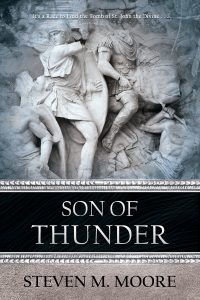
However, my most meaningful road-trip novel might just be Son of Thunder. Like some 3X-matches you’ll see political candidates offer for your donations, Son of Thunder contains three road trips: ex-MI6 spy and ex-Scotland Yard inspector Esther Brookstone, whose put her name on my art-detective series, is on a quest to find St. John’s tomb; so is Sandro Botticelli, the Renaissance artist, accompanied by his parish priest; and St. John himself is jumping around the Roman Empire, a Christian rebel who’s out to destroy said empire with God’s love. All three road trips come together at the novel’s end.

Mary Magdalene, the first female apostle, in her own missionary and rebel role, provides the thematic meaning along with St. John; Botticelli, not so much. Esther’s commentaries touch on themes that have confronted human beings for centuries and that are still current and meaningful today.

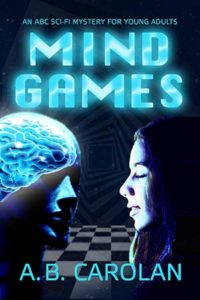
Road-trip stories fascinate people because they can virtually travel to many places they either want to visit or feel they won’t have the chance to visit. The latter includes many sci-fi stories, of course. When A.B. Carolan wrote Mind Games, it was clear that it is a special type of road-trip novel where three different planets are visited. I don’t know if young adults like road-trip stories, but they’ll like A.B.’s whether they do or don’t. (As well as adults who are young-at-heart.)

To see how far back road-trip stories go, consider Homer’s Iliad and Odyssey, Chaucer’s Canterbury Tales, and Cervantes’s Don Quijote—none of them written in a modern language (arguably Quijote unified and created modern Castilian Spanish). The African Queen is a road-trip movie full of adventure that lets the screen presence of actors Katherine Hepburn and Humphrey shine. Road to Hong Kong is a comedic and musical road trip with Bing Crosby and Bob Hope acting and singing (guess who sings better). Movies and novels featuring road trips, as noted above, continue to appear even today, and the public never seems to tire of them. They’re one of the mainstays for writers, whether novels or screenplays. They can be funny; they can be depressing. The variety of road-trip stories says something fundamental about human beings. Maybe we’re all nomads at heart?

We certainly started out that way. Modern women and men’s ancestors made several migrations north from Africa into Europe. European Neanderthals returned the favor by migrating back to Africa a few times, according to the DNA, so that we modern women and men are a mix. Several migrations from Asia crossed the land-and-ice bridge and settled the Americas. Polynesians populated the South Sea islands. These were all early road trips, often odysseys in themselves, so there’s something to be said for them to be more than just our genetic makeup. Organized agriculture and the founding of large towns and cities in the ancient world made human beings stay at home more, but maybe that wanderlust is still in most of us. That might explain the love for road-trip stories.

***

Comments are always welcome.

Mind Games. This is A.B. Carolan’s third book in the “ABC Sci-Fi Mysteries” series. Androids with psi powers? What could go wrong? Della returns to her home in the Dark Domes on the planet Sanctuary to find her adopted father murdered. All her life he has told her to keep her psi powers hidden, but now she must hone her skills to find his murderer. Her quest takes her to Earth and then New Haven, planets in different star systems. She acquires many friends on those journeys and battles many enemies.  Set in my ITUIP (“Interstellar Trade Union of Independent Planets”), this novel is available in print and ebook (.mobi for Kindles) format on Amazon, and in all ebook formats on Smashwords and its affiliated retailers (iBooks, B&N, Kobo, etc.) and lending and library services (Scribd, Overdrive, Baker & Thompson, Gardners, etc.).

Around the world and to the stars! In libris libertas!

Steve’s shorts: End Game…

March 25th, 2020

[Scientific fact: The same rules now in place for COVID-19 also work to slow down climate change, as recent evidence shows. The virus is our immediate enemy; climate change is the long-term one that will affect all our descendants. I debated posting this little sci-fi story, but it seemed like a good time to do so. Neither likely presidential candidate has a clear environmental policy. People and politicians need to get smart to be safe and do their jobs of protecting society. And they need to think both short-term and long-term. The future of human beings on planet Earth isn’t guaranteed by any means. We haven’t been here very long in the grand scheme of things, and our time here could be shorter than many people realize.]

End Game

Copyright 2020, Steven M. Moore

Raging waters in front of them, roaring flames in back—Dave hugged his wife and girls.  What can I say now? To his wife, maybe “I thought they were wrong”? To his girls, “You have no future”?

A Coast Guard helicopter was busy rescuing some families. Their turn would come if they didn’t drown or burn to a crisp first.

“How could this happen?” his wife Barbara asked.

He could hardly hear her question over the wind’s roar. It increased the storm surge and fanned the flames.

He had no answer, so he considered it a rhetorical question. If anything, she was asking it of the Universe, or their tiny piece of it, once a paradise but now threatening and foreboding.

He’d gone along with the other climate change deniers of his party. Industries came first; so did economic prosperity. He’d even believed that climate change was a hoax—didn’t the president say so?—just something liberals dreamed up to take away their economic good times.

Many things were like that. Guns don’t kill; certain crazies just used them to kill. Why waste money on saving lives of patients with fourth-stage cancer? And don’t we have to take care of our own before all those people seeking asylum from corrupt governments run amok?

His internal dialogue went on and on. He’d bought the party line. Why not? With the redistricting, he’d always be returned to Congress, just like the tenure those leftist professors had allowing them to brainwash college students.

He looked back at the flames and then at the approaching waters. Maybe the water will save us from the flames?

He looked skyward and heard the thump-thump of the helicopter. He waved as the searchlight bathed his family.

His mood started to change. They would be saved, but they wouldn’t be going home. The house had either become smoldering cinders or was underwater. But they would survive.

They had passed the tipping point long ago. That’s what the liberal media said. He doubted it. That’s just another one of their lies! He began planning his next speech to his constituents.

***

Comments are always welcome!

Mind Games. This is A.B. Carolan’s third book in the “ABC Sci-Fi Mysteries” series. Androids with psi powers? What could go wrong? Della returns to her home in the Dark Domes on the planet Sanctuary to find her adopted father murdered. All her life he has told her to keep her psi powers hidden, but now she must hone her skills to find his murderer. Her quest takes her to Earth and then New Haven, planets in different star systems. She acquires many friends on those journeys and battles many enemies.  Set in my ITUIP (“Interstellar Trade Union of Independent Planets”), this novel is available in print and ebook (.mobi for Kindles) format on Amazon, and in all ebook formats on Smashwords and at its affiliated retailers (iBooks, B&N, Kobo, etc.) and lending and library services (Scribd, Overdrive, Baker & Thompson, Gardners, etc.).

Around the world and to the stars! In libris libertas!

News and Notices from the Writing Trenches #179…

March 24th, 2020

A bit late…. That’s me for this month. I have two excuses. One is preparing our house for COVID-19,  something that now seems like a day-to-day affair. We’ve changed our habits. Most people will have to do so. I’ll be brief with my recommendations: Be smart, be responsible, be safe, and follow the guidelines and rules. Remember, even if your reaction to the virus is minimal, you can still infect others where their reactions won’t be minimal—stay at home and, if you must go out, stay away from groups larger than ten people…and maintain your distance. I don’t have to work too hard to follow this advice—I do most of my reading and writing at home. But beating this virus will be a community effort.

My second reason is a bit mundane compared to the first: February was a short month, even though I had one extra day. That meant I’ve been in catch-up mode for a while with my story writing (see below). At least I remembered Valentine’s Day! What about you? Does the month of February present any special problems for your work or activity schedule? Or are you just worried about getting through March? “It was shot to hell anyway with the corona virus,” you say. Do you want to read that at least February is bookended by two 31-day months? The second quarter of the business cycle is just the opposite with April and June being the bookends (although the virus means no normal business cycle is possible now).

Calendars and clocks. While the Gregorian calendar is an improvement on the Julian one, that leap year and leap day added to February are still needed. To put it into astrophysical and mathematical language, the problem is to fit an integer multiple of complete spins into the orbital period of the Earth. Think about it. It isn’t a trivial problem. In fact, it’s generally an impossible one to solve, because a planet’s rotation period has very little relation to its orbit around the Sun. GPS clocks have to add seconds every so often too (yes, there’s a clock associated with your GPS system).

Read the rest of this entry »

Death…

March 19th, 2020

The eternal questions about death and life are present in fiction because we have to face them in our daily lives. That’s part of being human, and I’m sure if ETs are “out there,” they ask the same questions. Pandemics are common in sci-fi stories that are post-apocalyptic. They often deal with death on a massive scale, which everyone hopes COVID-19 won’t cause—the numbers are startling until you consider they’re like the flu (the difference being that there’s no vaccine and it seems about ten times more lethal). (Fortunately my post-apocalyptic novel The Last Humans was published a while ago, but the virus in that was bioengineered to do maximum damage. Still, I won’t be marketing that book heavily in the next few months!)

There are fiction genres, however, where death isn’t about numbers. In murder mysteries and crime stories, only one or two people die and someone figures out who did the deed. In thrillers, sometimes a conspiracy is involved, but the body count is also small (post-apocalyptic thrillers, like The Last Humans, are an exception). Yet the eternal questions about death and life play important roles.

Putting it a different way, death is part of real life (and mostly affects the living), and fiction, to be good, must seem real. And, in fiction, especially in the genres mentioned, good and bad gals and guys die. Yet authors rarely dwell on the actual deaths, unless the story is a psychological one about a living character’s psychological hang-ups when someone has died. Authors instead focus on how the living handle death: revenge for an unjust death, determination in finding the persons responsible for a murder and bringing them to justice, and so forth.

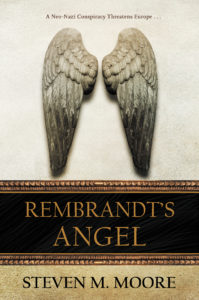
I suppose authors of fantasy, horror, and supernatural stories are more likely to dwell on what comes after death, but most of us avoid that issue because we just don’t know for certain what happens after. People of faith might insist they know, but that’s not really knowledge—it’s belief. And another person’s belief just might be the “certainty” that there’s absolutely nothing, like Esther Brookstone’s last husband in Rembrandt’s Angel. (The art detective herself is a bit more ambivalent, as readers of Son of Thunder know.)

How the living handle death makes more interesting fiction. Most readers and writers have had to handle it in some way (I certainly have)—with family or friends, at accident scenes, in warfare, in violent street altercations, and so forth. And we all have to come to grips with our own immortality. All these provide situations for our characters, ones that make them more human.

An author can’t trivialize these situations even in comedy. Ghosts can be great fun in comical situations, but generally dealing with death is a serious plot device. The detective, CSI, or ME might be accustomed to death, but death is still a serious business, even for them.

Dealing with death is just as important as dealing with life in our prose. We shouldn’t dwell on death as the story progresses, or the story becomes morbid (although that might be a theme, but if it’s the only theme, it’s depressing). We also don’t want to minimize it because that would minimize a lot of emotions many readers have already experienced. Striking that balance is yet another example of the Goldilocks Principle applied to writing.

***

Comments are always welcome.

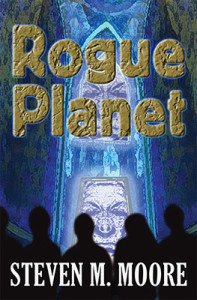
Rogue Planet. A deposed king’s son must fight to win back his planet from a brutal theocracy. No Game-of-Thrones dragons, just hard sci-fi with Game-of-Thrones action and romance. No magic either, although the theocrats of the planet make the oppressed citizens of the planet believe they possess it. Consider this tale a parable for our times, a warning that what could come to pass if religious fanatics take over. Available in print and ebook (Kindle .mobi) format from Amazon, as well as in all ebook formats from Smashwords and all the latter’s affiliated retailers (iBooks, B&N, Kobo, etc.) and library and lending services (Scribd, Overdrive, Baker & Taylor, Gardners, etc.).

Around the world and to the stars! In libris libertas!


ABC Shorts: Where Has the Winter Gone?

March 18th, 2020

[Note from Steve: Most of A.B’s short fiction is archived here in the blog category “ABC Shorts.” Many of his stories can also be found in some collections, free PDFs you can download—see the “Free Stuff & Contests” web page. Of course, don’t forget the “ABC Sci-Fi Mystery Series” books for young adults: The Secret Lab, The Secret of the Urns, and Mind Games.]

Where Has the Winter Gone?

Copyright 2020, A. B. Carolan

Kaylee spotted the polar bear pacing on the ice flow.

“Another one, Dad!”

Leif took the binoculars from his adopted daughter’s hand, found the bear, and waved at the boat’s captain to change course.

“Steer to 1:20 p.m., ice flow dead ahead.”

The boat swung around and the crew got ready to welcome a new guest aboard.

***

Over an hour later, the groggy bear was safe on the mainland and waking up.

“He’ll soon be back in the water looking for food,” Leif told Kaylee, “but at least we can keep track of him with the ear tag. Let’s hope he doesn’t get stranded on another ice flow.”

“I understand. There’s nothing to eat around here.” Kaylee made a sweeping gesture with her hand. “Where are we anyway?”

“About ten klicks inland from where the shore used to be. The ice is gone, the tundra no longer frozen, so it’s all mud. We’re in the middle of winter, and look at what we have.”

“Where has the winter gone?” Kaylee said.

“The bears are asking the same thing,” said Leif. “No self-respecting seal could fail to spot their enemies’ white coats now.”

***

They dropped anchor in a quiet little bay. Only a few decades earlier, it would have been completely iced over all year round.

Kaylee was looking out over the dark waters when Leif found a deck chair and sat down beside her.

He offered her a bag. “Some peanuts to go with your root beer?”

“What are you drinking?”

He looked at his glass half full of amber liquid. “I thought I’d reward myself with some Irish whiskey. We saved several bears today. Lucky seven, hon.”

“Celebrating? Celebrating persons don’t look sad.”

He studied the black face that his wife and he had come to love so much, hoping to see irony, but he only saw sadness to match his.

“You know me too well. We’re too late. We’re butting our heads against a brick wall. Ever since that orange-faced devil killed any chance of stopping global warming, that’s what we’ve been doing—fighting the inevitable. I feel very little satisfaction in knowing his famous Florida resort is now underwater. He took us far beyond the tipping point without any concern for future generations!”

“He was an evil man, Dad.”

“And his supporters bought into that evil. He was the Devil’s tool for planetary destruction, allowing people to kill its flora and fauna, which will eventually include human beings.”

“Why are we doing this then?”

Leif took a sip of his whiskey. “For me, it’s penance for allowing the SOB to get away with it. And penance for not doing more to protect your future. We can slow it down a bit, but there’s no longer any solution because of him.”

***

Comments are always welcome.

The Third Factor. The enemy has recovered the lost Stones of Sumer…. S. P. Brown’s new fantasy and sequel to Veiled Memory (“The Stonehenge Chronicles”) is an epic tour de force (I reviewed the latter book in these pages), continuing the saga. Stan got me to read fantasy again! No dragons, vampires, gremlins, or house elves here—just fantasy that probes the darkness in human beings’ souls and the courage of those who combat it. None of the feckless Rowling verbosity found in her later Potter novels either. Available in print and ebook format at most retail sites….and brought to you by Black Opal Books, “because some stories just have to be told.”

Around the world and to the stars! In libris libertas!