Authors’ backgrounds…

April 28th, 2020

Like it or not, authors’ backgrounds influence their writing. In fact, this is so obvious, why even mention it? After all, perhaps this is mostly transparent or irrelevant to readers—the general theme of good vs. evil, for example, is common to most fiction, not just Christian lit. It might be diluted in some genres—romance and erotica come to mind—but then other universal themes come to the fore that are often dependent on writers’ backgrounds. They experience life; they write about it in their fiction in one way or another.

I’m no sociologist, but practice enough self-analysis that I know my background affects my fiction. That background is so varied that it’s more like an Irish stew and not limited to a particular region, era, ethnicity, and so forth. I suppose that helps make my fiction a bit more universal, but who knows if that’s appealing to readers? I suppose my complex worldview might turn come readers off, but I can’t help it—I write from experience, my own.

Like Asimov, my hero from my early years, I had a career in academia and R&D before I became a full-time author. That might not influence my sci-fi that much—so much of it is outside my scientific specialization—and it certainly doesn’t influence my mystery or thriller writing. Perhaps the only thing notable about that per se is that I tend to spin complex yarns—I don’t coddle lazy readers.

But there’s a lot of diversity in my stories, reflecting my upbringing in California, long sojourn living in Colombia, and travel for work and pleasure around Europe. That’s given me a worldview that can be best summarized as follows: We’re all on spaceship Earth together and had better get along. It also means my characters can cover the whole spectrum of the spaceship’s passengers, including their names. Some readers might think the characters’ names in my stories are difficult, but they are never stereotypes from a different culture—I don’t like stereotypes because my experiences have shown me that everyone is unique.

At a lunch one day, I remember talking to a fellow physicist in Colombia, a Latino and Princeton graduate on sabbatical at the university where I worked. We could have spoken in Spanish at that lunch—he was Colombian and I was fluent in Spanish by then—but he wanted to have a private conversation (the other customers at the restaurant were speaking Spanish), so we spoke in English. During one lull after soup and salad, he leaned toward me. “I can tell you’re from the Midwest,” he said. He was then surprised to learn I was born in California and grew up there. I admitted I had some roots in Kansas because both my parents were from there. I’d spent some time in Indiana too. His conclusion? My English had something of that je-ne-sais-quoi that told him I was a Midwestern chap.

I’ve lived in several places in the US and abroad and traveled to many others. I observe people’s similarities and celebrate their differences. I hope my varied background filters into my stories, even the sci-fi tales. I hope that makes them more appealing to all readers. I insist that my fiction reflects the realities of human experience…and mine. Some readers might object to that. They probably shouldn’t read my stories….

Authors usually don’t shine a spotlight on their backgrounds in their stories. Maybe they used to do so—Jack London’s are about the frozen north and Harper Lee’s magnum opus is quintessentially southern US. But the world seems smaller now, so we all should recognize our similarities and celebrate our differences, if only to appeal to all the readers of the world who can see themselves in our stories.

***

Comments are always welcome.
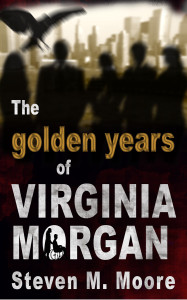
The Golden Years of Virginia Morgan. This is one of my “evergreen books,” a novel as exciting and current as the day it was published; it’s also a bridge between two series, “Detectives Chen & Castilblanco” and “Clones & Mutants.” A DHS agent looking toward retirement finds a lot of excitement as she uncovers a conspiracy and meets a new love. The conspiracy answers the following question: What will a future US government do with its old retirees who know too many secrets? The romance answers the question: Can a divorced woman heading for retirement find love in her golden years? DHS agent Ashley Scott is the main character. She had important supporting roles in the “Chen & Castilblanco” books, so I thought it was only fair to give her a starring role! Available in .mobi (Kindle) ebook format at Amazon and in all ebook formats at Smashwords and all its affiliated retailers (iBooks, B&N, Kobo, etc.) and lending and library services (Scribd, Overdrive, Baker & Taylor, Gardners, etc.)

Around the world and to the stars! In libris libertas!
Steve’s shorts: Dr. Carlos and the Ship of Sleepers, Part Four…

April 24th, 2020

[Note from Steve: This sci-fi story is in four parts. Enjoy.]

Dr. Carlos and the Ship of Sleepers

Copyright 2020, Steven M. Moore

Some of Captain Irving’s crew were stunned by Obregon’s history lesson; others just curious.

“I might speak for the others in saying that we’ve just heard a very long sci-fi saga,” said Betty Liu, Irving’s chief navigator, “and are amazed that it’s all true.”

“Rather incomplete,” said Lester, “but Carlos did a good job. You can fill in the details at your leisure by chatting with Brendan’s AI. By the way, as soon as yours is fixed, we can try to update its database.”

“The question now becomes,” Irving said to his crew, “what do we want to do.”

“This ITUIP has colonies, you say?” Liu asked Carlos and Lester.

Lester shrugged. “Colonies come in many shapes and forms. ITUIP, with the SEB’s catalog of potential colony planets, can be accessed by anyone in the Union. Starships, as they make their rounds through ITUIP, update their databases with data collected by the SEB. Let’s call it organized chaos because the ships are the fastest form of communication within ITUIP, so all databases aren’t equal.”

“That said, we can hardly keep up with the demand for colony planets,” said Obregon. “When a colony has become stable and is beyond those first pioneering decades, it usually becomes a member of ITUIP…but not always. There are benefits, although some colonists don’t see them and are happy to be left alone. ITUIP respects that, and sometimes must enforce the latter by putting colonies into quarantine when strange regimes control them.”

“We were sent here to colonize this planet,” Irving said. “Couldn’t we still do that?”

Liu and the others nodded.

“Makes perfect sense to me,” Lester said, “if that’s what you want.”

Liu looked around the table at her colleagues. “Give us a few minutes,” she said.

***

“Do you think there’ll be a heated discussion?” Lester asked Carlos as they explored the silent, centuries-old starship. Different things interested each man, but the overall experience was as if they were in a historical hologram.

Obregon was about to answer when the voice of one of the techies came into their ear implants.

“Captain, we’ve found the glitch. Some circuits in their AI blew. They corresponded to subroutines that control the cryo process, including its associated sensors. Fortunately everything kept functioning on automatic. Even the failsafe coding locked up.”

“In other words, they had redundancy, but that didn’t work either?”

“Right-o. The crewmembers awake at the time it happened couldn’t wake up those in cryo, and they couldn’t go into cryo either to save themselves. Simple as that. Everything else in the ship continued to function. That’s mostly autonomous systems where the AI’s not needed. It’s in a coma, by the way.”

“Can you repair it? If these people are going to start a colony, they’ll need a functioning AI.”

“We’ll keep working. It’s not a trivial task. This is antiquated stuff. Cutting edge for the times, I suppose, but long ago surpassed.”

“Let’s assume they can fix the AI,” Obregon said to Lester. “If they want a colony, we should help them by completing our survey.”

“Of course.”

They were called back to the ready room.

***

“Some of us would like to hitch a ride on Brendan,” Irving informed Lester and Carlos. “Others want to start a colony. Is that possible?”

“I don’t see why not,” Lester said. “But are there enough of you staying to make the colony viable?”

“Four men and six women are staying,” said Irving.

“The women will be busy,” Obregon observed with a smile.

Liu smiled back at him. “That was the plan we agreed to back on Earth. Only Andy is going with the other women on Brendan.”

“I guess we’d better get busy, Lester, and finish our survey. That will at least give the colonists a running start. Five of these people need a cab, but the other ten need a planet.”

“I’d agree if I knew what a cab was.”

“If I tell you, will you get me another medical staff member when we return to Sanctuary?”

The colonists from Earth smiled at that exchange. They knew what  a cab was. Obregon would win in that barter.

***

Comments are always welcome.

Dr. Carlos, Starship Brendan’s Medical Officer. Want more Dr. Carlos stories? He has had many adventures cruising around different star systems in near-Earth space. I’ve collected earlier ones in this free PDF download. For the complete list of free PDFs, see the “Free Stuff & Contests” web page at this website. And please check out my other sci-fi offerings. I write them to entertain you. That’s especially important in these days of the COVID-19 pandemic when everyone is staying at home and trying to keep from getting bored.

Around the world and to the stars! In libris libertas!
Steve’s shorts: Dr. Carlos and the Ship of Sleepers, Part Three…

April 23rd, 2020

[Note from Steve: This sci-fi story is in four parts. Enjoy.]

Dr. Carlos and the Ship of Sleepers

Copyright 2020, Steven M. Moore

Obregon discovered that the number of people in cryounits was fifteen. Together with the mummified bodies found in Hope’s C&C, that made twenty Humans who had manned shifts where they would periodically wake up and check the ship’s systems and its precious cargo. Unlike the three previous colony ships, Hope carried mostly potential Humans—thousands of frozen fetuses, ova, and sperm would provide ample genetic diversity for a new colony. Only the colonization of the planet had never occurred. And why didn’t it? What went wrong?

He left those questions for the techies. Instead, he selected the first person to wake, Captain Josh Irving. He seemed to be the logical choice.

Obregon had to perform the task manually. The ship’s clock was stuck and its primitive AI dead. While the techies tried to figure out what had happened—better still, why the five awake and on duty couldn’t fix the problem or save themselves—Obregon and his staff had work to do.

***

“I don’t understand,” Irving said.

Obregon was sitting with him in the snack galley of Brendan, having left the other medics in his staff to continue with the process of waking up the other fourteen. The man was sipping tea; Obregon was watching him carefully for side effects. Some people out of cryo could have spasms long after being revived, something doctors called “cold epilepsy”; others could have mental problems, even dementia. Most did well, though.

“Which part?”

Obregon had explained how many centuries had passed since the Tali invasion of Earth, and how Brendan had come upon Hope. He’d also provided an all too brief summary of near-Earth history since Hope had left the Sol system.

“A lot of things. How did this Swarm come into being?”

“Ah.” The first encounter with that collective intelligence had occurred after the invention of the superstring drive. “We don’t exactly know. It’s sealed itself off now, and swallowed the Shipbuilders. We’ve never found another Singer, either.” Obregon had told Irving the story of the Singer and the Swarm, the former collective intelligence serving as a psychiatrist for the latter. “Everyone believes that there are more like Singer, but maybe just not in near-Earth space. Brent Mueller witnessed Singer’s destruction and insisted that was its way of propagating the species.”

“Like dandelions spreading,” said Irving.

Obregon nodded, even though he had no idea what dandelions were. He blamed his ignorance on his laziness about querying the AI; he found it annoying at times. He’d operated and put a standard implant behind Irving’s ear that got them beyond the man’s old Standard to its new incarnation, one that had involved from the old over the centuries.

“I thought you might ask me about the superstring drive. I’m glad you didn’t because I can’t help you there.”

“I’m curious about that, but I’ll probably never understand it.”

“I’m in that fix too. All I care about is that Brendan’s engineering and nav crew understand it, and our AI, of course. The AI is an integral part of that drive technology, in fact.”

“Interesting.”

At that moment, the AI spoke.

“Dr. Obregon, the remainder of Captain Irving’s crew is now awake and asking for him.”

Obregon smiled at Irving. “Perhaps I’ll have to repeat my story. Would you and they feel better having our little meeting in your ready room aboard Hope? I’ll ask Lester to join us.”

***

Comments are always welcome.

Dr. Carlos, Starship Brendan’s Medical Officer. Want more Dr. Carlos stories? He has had many adventures cruising around different star systems in near-Earth space. I’ve collected earlier ones in this free PDF download. For the complete list of free PDFs, see the “Free Stuff & Contests” web page at this website. And please check out my other sci-fi offerings. I write them to entertain you. That’s especially important in these days of the COVID-19 pandemic when everyone is staying at home and trying to keep from getting bored.

Are you curious about those earlier colony ships and all the near-Earth history Dr. Carlos discussed with Captain Irving? There’s a simple solution: The Chaos Chronicles Trilogy Collection is the epic history about the first colonies, the Tali invasion, Swarm and Singer, and beyond. This bargain ebook bundle is available at Amazon in .mobi (Kindle) ebook format, and in all ebook formats at Smashwords and its affiliated retailers (iBooks, B&N, Kobo, etc.) and lending and library services (Scribd, Overdrive, Baker & Taylor, Gardners, etc.).

Around the world and to the stars! In libris libertas!
Steve’s shorts: Dr. Carlos and the Ship of Sleepers, Part Two…

April 22nd, 2020

[Note from Steve: This sci-fi story is in four parts. Enjoy.]

Dr. Carlos and the Ship of Sleepers

Copyright 2020, Steven M. Moore

“There’s a ship in orbit,” the AI announced to Brendan’s crew.

Obregon, who had been standing behind the captain, perked up.

“I thought we were the first ship to visit this solar system,” he reminded everyone in Command & Control.

“Put it on the screen,” the captain said. Lester often ignored Obregon’s observations, sometimes to his detriment.

Historian Obregon recognized the old ship immediately—not the particular ship, but the type. “It’s just like Magellan.”

“The colony ship sent to New Haven?” Lester said.

“Same type. Magellan became an orbital museum after it was retired from active service. But this ship is similar. It’s a big-rig interplanetary ship designed for the Sol system retrofitted to haul colonists somewhere, very slowly compared to modern ships. No superstring FTL drives back then.”

“I confirm Dr. Obregon’s observations,” said the AI. “This ship is named Hope.”

The ship’s AI was multi-purpose. Its most important task was to negotiate the jumps from universe to universe within the multiverse, what gave the appearance of FTL travel and a delicate task that Brendan’s navigation and engineering teams could understand in theory but lacked the computing speed in practice needed to do the job. Coordinating all the ship’s sensors and communications was secondary but also necessary. And the AI also provided an extensive database that was continuously updated at each port of call to contain most knowledge of each ITUIP member’s history.

“When was it sent out?” said Lester.

“That datum isn’t in my database,” said the AI.

“As far as I know,” said Obregon, “only three colony ships were launched before the Tali invasion of the Sol system.”

“Correct,” said the AI. “I have plans for the retrofitting of this one. They’d already christened it Hope. I have no data about its launch, though. There is a possible reason for that: Its projected launch date corresponds to that invasion.”

“Perhaps it was launched before the Tali reached Earth, maybe even during that invasion, out of desperation.” Obregon glanced at Brendan’s Tali navigator. “Sorry, Gor’rak.”

“No problem,” said the Tali. “All that’s ancient history.”

“Very ancient,” said Lester. “Is there any sign of life?”

“Unlikely after all these centuries,” said Obregon.

“It only takes minimal power to maintain orbit,” said the AI. “I have detected thrusters that are making the small orbital corrections necessary for such a low orbit.”

Obregon dove deep into history. The trip to New Haven his ancestors had taken took over a century. New Haven’s star was also G-type, 82 Eridani. He remembered details about that epic journey.

“By the same token, there might be people in cryounits onboard.”

“What?” said Lester. “That’s impossible!”

“Not really,” said the AI. “We still use cryounits along with portadocs in the lifeboats where a superstring drive isn’t available.”

“You’ll want to send a security team over to Hope, Lester,” said Obregon. “And my people should be there too, just in case there are people in the units. If they are, we’ll have to gently wake them up from a very long nap.” He waved a hand to the C&C crew. “I’m done talking. I’m going to get my people ready.”

***

Comments are always welcome.

Dr. Carlos, Starship Brendan’s Medical Officer. Want more Dr. Carlos stories? He has had many adventures cruising around different star systems in near-Earth space. I’ve collected earlier ones in this free PDF download. For the complete list of free PDFs, see the “Free Stuff & Contests” web page at this website. And please check out my other sci-fi offerings. I write them to entertain you. That’s especially important in these days of the COVID-19 pandemic when everyone is staying at home and trying to keep from getting bored.

Around the world and to the stars! In libris libertas!
Steve’s shorts: Dr. Carlos and the Ship of Sleepers, Part One…

April 21st, 2020

[Note from Steve: This sci-fi story is in four parts. Enjoy.]

Dr. Carlos and the Ship of Sleepers

Copyright 2020, Steven M. Moore

Carlos Obregon’s tenure in the Space Exploration Bureau (SEB) was filled with many new and interesting events, but some of the most interesting weren’t experienced on E-type planets already listed in catalogs. Revisiting those listed to check or make a more complete study to ensure they were still suitable for colonization could be boring routine.

Most intelligent species in the Interstellar Trade Union of Independent Planets (ITUIP, pronounced “eye-tweep”), for which SEB was a Union-wide agency, preferred E-type planets and wanted real estate for colonies. That final SEB step, which consisted of a complete mapping, lists of available natural resources, more studies of flora and fauna, and rules for a gentle remodeling to meet colonists’ needs with minimal damage to the environment—what used to be called terraforming—was a necessary one but rarely presented problems for Obregon and his medical staff.

No, he always found it more interesting to make the initial discovery of a new E-type planet and study it only enough to include it in the catalog. Some E-type planets were detectable using extensions of techniques dating all the way back to Earth’s twentieth century but remained unvisited until the starship Brendan visited the solar system; others were in solar systems obscured by galactic debris, requiring a visit, making the initial E and what it stood for in SEB more appropriate.

***

Many systems had E-sized planets, not gas giants but stony worlds like the planets corresponding to the three original Earth colonies, Novo Mondo, Sanctuary, and New Haven, along with Venus, Earth, and Mars in the Sol system. But just Venus and Mars offered evidence that E-sized didn’t necessarily imply livable, at least not without domes, like on Mars. “Livable” in the sense of Earth’s habitat required satisfying the multi-dimensional version of the Goldilocks Principle: Everything had to be just right. Obregon was one of the few on Brendan who knew the origins of the term Goldilocks Principle because of his interest in Earth history, although anyone could ask the ship’s AI for that information.

So Obregon was interested in the solar system they were entering, one never visited before by any SEB starship. The combined knowledge database of several intelligent species—Humans, Rangers, Tali, Usks, and others—contained references only to the G-type star, its gravity well forcing the AI to take the starship back into normal space long before reaching the star’s farthest planet.

Even then, the news was good. There were three E-sized planets with orbits in that zone where liquid water might be found. There were only two gas giants, each with multiple moons, and numerous asteroids between the third E-sized planet and the first gas giant.

They would visit them all. Moons of gas giants sometimes were habitable, and pure science always justified a short visit, if only to collect data.

***

The two gas giants had a lot of moons, but none were E-sized or habitable. They had their share of their massive planet’s gas, mostly frozen methane. Brendan moved on to the third planet after a week in orbit around each gas giant.

That third E-type planet was bigger than Mars, but its sands were dirty yellow from the sulfur, not red. There were polar caps of frozen, unpotable water loaded with chemicals. It was possible to live on such an inhospitable planet—Sanctuary was an example of how to do it—but the atmosphere was just as toxic as Sanctuary’s.

Not choice real estate, thought Obregon when he heard the news. After five weeks in orbit, Brendan moved on the second E-type planet, a blue-like jewel mostly covered by water like New Haven. It looked perfect. There was a problem, though.

***

Comments are always welcome.

Dr. Carlos, Starship Brendan’s Medical Officer. Want more Dr. Carlos stories? He has had many adventures cruising around different star systems in near-Earth space. I’ve collected earlier ones in this free PDF download. For the complete list of free PDFs, see the “Free Stuff & Contests” web page at this website. And please check out my other sci-fi offerings. I write them to entertain you. That’s especially important in these days of the COVID-19 pandemic when everyone is staying at home and trying to keep from getting bored.

Around the world and to the stars! In libris libertas!
News and Notices from the Writing Trenches #180…

April 17th, 2020

A short newsletter… just to say I hope you’re safe and staying at home. We’re social animals, so we might become bored doing what we have to do to beat COVID-19, but it must be done. We can only beat it by working together…by staying apart!

Solutions to boredom. If you’re noting more reruns on network TV, it’s real…and you can expect more. Film crews are no longer working to make new shows. I don’t watch much TV beyond news and cultural shows, so I’m ill-prepared: I don’t have NetFlix, Hulu, or other streaming services. As a consequence, I’m reading and writing a lot more, as you might imagine. With libraries closed, my main source of books has become Amazon (its delivery service has gone downhill, though, so I mostly read ebooks), but I understand many bookstores will take telephone orders that you can pick up. Consider the latter takeout to feed the mind, something to entertain and distract us. The last is less likely with TV, with PBS being the possible exception. Of course, books are excellent for entertaining those children at home too. Give the gift of reading to your stay-at-home kids. (See the next section for some good books.)

Busy reading. I’ve done a lot of reading lately. Here are some new books you might also want to read. I finished the first two and am working on the third. Saralyn Richard’s murder mystery A Palette for Love and Murder is the long-awaited sequel of Murder in the One Percent. Brian Greene’s Until the End of Time is one scientist’s attempt at a theory of everything, even beyond physics…everything! Keith Steinbaum’s mystery/thriller The Poe Consequence is a profound story about gang violence and ghostly revenge. All recently published; all interesting reading. My review of the first book can be found here as a blog post (search for it in the “Book Reviews” and “Mini-Reviews of Books” archives). The review of the second can be found at Bookpleasures; the link is https://waa.ai/T7a8.

Busy writing. I’ve also done a lot of writing lately. I finished A Time-Traveler’s Guide through the Multiverse and submitted the manuscript. It’s the rom-com tale of a physicist who figures out how to time travel by hopping from universe to universe in the multiverse. Also, I’m currently editing (first read through on editing is mine, of course—other edits will follow, by me and others) what will become #3 in the “Esther Brookstone Art Detective Series” titled Death on the Danube (nice alliteration, right?). If you haven’t read the first two books in the series, Rembrandt’s Angel and Son of Thunder, now might be the time to ease your boredom while staying at home by reading these novels. Stay tuned for updates about how these two novels fare in running the publishing gantlet.

Free fiction. While my books and ebooks aren’t expensive, I realize people could be stretched thin. I’m not offering a Smashwords sale this month to my email newsletter subscribers—this newsletter is its cousin that’s published here later—that would require the internet to access the Smashwords website, and frankly it has been in slo-mo for a while (the internet, that is, maybe because everyone’s ZOOMing—Smashwords is probably business as usual). I just want to remind you that there’s a lot of free fiction available at this website, if you can get there from here without your connection freezing—see the “Free Stuff & Contests” web page for the list of free PDFs you can download. I’m also going to keep this blog going as long as I can—you’ll find more free fiction here, as well as book and movie reviews (old ones of the latter, of course); author interviews; and articles about reading, writing, and the publishing business.

That’s all for this month. But three final words: Please stay safe.

Around the world and to the stars! In libris libertas!

Sci-fi reading and writing, part three…

April 16th, 2020

[Note: This article is the third part of a three-part series on the topic of reading and writing sci-fi. In the first part, I discussed my sci-fi blues. In part two, I discussed some non-fiction sci-fi reading—is that possible? You can find out why I think the answer is yes in that article. In this part, I’ll talk about my solution to my sci-fi blues—writing a new sci-fi novel that’s also a rom-com.]

I’m not a good sci-fi writer if “good” is measured by sales numbers of my books. That’s certainly the definition the Big Five and its lackey, the NY Times Book Review, use. I have two consolations at least: First, I don’t give a rat’s ass about being a best-selling author according to the Big Five and the NY Times; and second, I consider each of my books to be a success if it entertains at least one reader. I’ll accept the fame and glory if I become a best-selling author—who wouldn’t? Even more modest success, as determined by commercial considerations, is welcome too. Moreover, I often write stories, especially now when I’m in a more experimental stage of my writing career, because I want to stretch my wings a bit and fly to other realms.

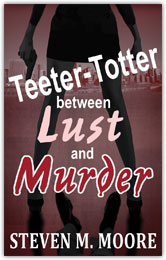
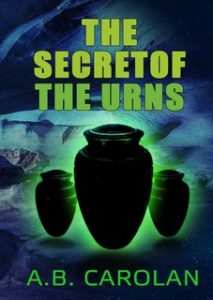
I started publishing in the sci-fi genre. I suppose my first book Full Medical (2006, now with an ebook second edition) might be considered more a thriller than sci-fi, but it and the series it’s part of, is sci-fi. To put that in context, Teeter-Totter between Lust and Murder (2013) was the first book that was more mystery than thriller, although the first two books in the Chen and Castilblanco series certainly have mystery elements. Teeter-Totter was an experiment. Young adult literature was an experiment too, but the “ABC Sci-Fi Mysteries” (from my alter-ego, A.B. Carolan) is sci-fi mystery.

Obviously some experimenting with genres is going on, perhaps more along the lines of crossovers. I’ve never written fantasy, but Rogue Planet has fantasy-like Game-of-Thrones elements (no dragons!). I’ve never written romance or comedy, although almost every novel has some romance simply because fiction has to seem real, according to Tom Clancy (he probably violated his won maxim, though) and romance is definitely part of real life. So my next experiment is a combination of three genres—romance, comedy, and sci-fi! Let’s call it a sci-fi rom-com.

In the second article in this series, I mentioned Brian Greene’s new book. He has a lot of words about quantum mechanics. It’s strange that he only mentions the “Many Worlds Theory of Quantum Mechanics” in the notes at the end. Ever since I learned about Hugh Everett III’s interpretation (in the QM courses I taught, I spent considerable time on interpretation, primarily because I did some research on that and taught the students the Feynman path integral), it has fascinated me. Einstein struggled with those interpretations, but I thought Everett’s was the closest to providing the best, far better than the Copenhagen one that many professors still teach (the wave packet mysteriously collapses because it interacts with the observers conscious mind—I don’t think so, because quantum phenomena even takes place at the center of stars). Everett’s interpretation couched in terms of quantum histories (Feynman’s famous path integral is a complex sum over a particle’s possible trajectories) was used by Hartle and Hawking to discuss quantization of gravity, which would reconcile Einstein’s general relativity with quantum mechanics (still an unsolved problem for the most part, by the way, if you’re looking for something to do).

Read the rest of this entry »

Sci-fi reading and writing, part two…

April 15th, 2020

[Note: This article is the second part of a three-part series on the topic of reading and writing sci-fi. In part one, I discussed my sci-fi blues.  In this part, I’ll discuss some non-fiction sci-fi reading—is that possible? You can find out why I think the answer is yes in this article. In part three, I’ll talk about my solution to my sci-fi blues—writing a new sci-fi novel that’s also a rom-com.]

Asimov wrote the End of Eternity, so you might think Brian Greene’s lengthy tome Until the End of Time, is good sci-fi. (You can find my Bookpleasures review here: https://waa.ai/T7a8.) It’s not fiction, though, but it considers themes that we need to see more of in sci-fi today, where there’s a lack of good novels. And, like all good books, it left me thinking about what I’d read. There is a lot about mind in it—the Human mind. I write that with a capital H here (and in many of my sci-fi stories) to distinguish us from other intelligent species we might encounter if and when we leave Earth to explore the far reaches of our Universe, or if and when ETs come to visit us.

While author Greene has a similar scientific background to mine, he’s a bit myopic when it comes to mind. Better said, he’s anthropomorphic or Human-centered. In his defense, the Human mind is better known to him—he has a fine one of his own, after all. And he’s a fine writer, but he’s not a sci-fi writer. It’s not hard to imagine the powers of Darwinian evolution creating intelligent species where “mind” acquires a strange yet wonderful meaning.

The first sci-fi writer to do this, as far as I know, was Fred Hoyle, an astrophysicist (Greene and I were also trained as physicists) who wrote some good sci-fi. He’s been reviled and ridiculed for creating the steady-state theory of the Universe, but he also created the first example of a collective mind in his novel The Black Cloud, a classic sci-fi novel…and one of the best.

You see, the point Greene misses in his discussion of consciousness and self-awareness is the role complexity plays. No one believes a single computer can become self-aware, but a network of them could, and many computer science papers and sections of books have been written about how complex such a network has to be to become a conscious entity. Indeed, the Human brain is self-aware because it is so complex.

Read the rest of this entry »

Sci-fi reading and writing, part one…

April 14th, 2020

[Note: This article is the first part of a three-part series on the topic of reading and writing sci-fi. In part two, I’ll discuss some non-fiction sci-fi reading—is that possible? You can find out why I think the answer is yes. In part three, I’ll talk about my solution to my sci-fi blues—writing a new sci-fi novel that’s also a rom-com.]

Maybe readers have noted that I haven’t reported on reading a good sci-fi book lately (such reports are often called reviews [chuckle], especially when I like the book). The truth is, I’ve already scraped the bottom of the barrel. Maybe I’m just asking too much, but the sci-fi published today is mostly drivel and/or techno-babble, even the Hugos. The threshold a novel must cross to make me buy a sci-fi novel might be too high, I’ll admit—being a sci-fi writer myself creates that high threshold—but I don’t think so. Let me state what I think is going on—you can always go after me for my hubris in your comments to this post. I accept that your opinions and tastes might differ.

I grew up during the golden era of sci-fi: Asimov, Heinlein, and many others were already well-established novelists, and their novels usually seemed to be reasonable albeit surprising extrapolations of current science and technology. Both Hogan and Pohl considered black holes in their Giants and HeeChee trilogies, respectively (they’re still a subject of scientific inquiry), while the first-named authors were ex-scientists like I am now (with all his pop sci works, Asimov was arguably always a scientist). Theodore Sturgeon, probably more famous now for Sturgeon’s Law (google it), invented the idea of spread-spectrum communications, and Atwood, Bradbury, Dick, Kornbluth, and many others pointed out the sociological dangers of how autocrats can exploit science and technology to further their evil agendas. Some of these novels are being reborn in streaming-video spectaculars that, for all their glitz and special effects, are faded shadows of the original stories.

That golden age of sci-fi has passed, its fantastic authors often considered dinosaurs, and new authors are offering us new sci-fi stories. Most of those stories can’t compare to those of the golden age, though, because first, the writers haven’t read those classic sci-fi tales; second, don’t have the background or skills to write new ones, and third, have been influenced too much by fantasy movies from Hollywood posing as good sci-fi.

Space opera and militaristic sci-fi dominate now—the first is often too close to fantasy, the second often a hidden celebration of nationalism, but making military campaigns against ET armies (Niven and Pournelle’s Footfall is a prime example)—so much so that the central theme of a novel all too often seems like a slap in the face to good sci-fi (I’m guilty of using that militaristic theme myself in some parts of The Chaos Chronicles Trilogy Collection, but, in my defense, there are good ETs fighting with us against the bad ETs, and these parts aren’t fantasy like the Star Wars movies).

And now we come to the usual suspects for the downturn in sci-fi quality—indeed, for the downturn in reading material in general—the Big Five. Sci-fi novels tend to be long. While agents and acquisitions editors often call that verbosity or excess narrative, world-building is required. But some novels are still published, and the Big Five takes advantage of everybody and slaps a huge price on the book, calling it “epic” or a “saga,” code words for overblown verbosity describing real or fake science (Weir’s The Martian is an example—you can learn in excruciating detail how to grow potatoes in your own crap). Moreover, authors with more original stories never get past the slush-pile.

Read the rest of this entry »

Computer games…

April 9th, 2020

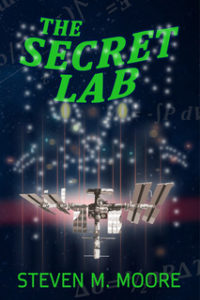
I once played bridge and chess, the latter even on a computer, but found they took too much time away first from courses, then work, and finally my writing. I dabbled in Myst—also time consuming…and maybe too much like writing a novel! But the Fearsome Four in The Secret Lab are into RPGs. How’d I pull that off? (I’m speaking to the first edition. A. B. Carolan, who wrote the previous short story, rewrote and reedited it for the second edition as the first entry in his “ABC Sci-Fi Mysteries” for young adults.)

By RPG, I mean “role-playing game,” not “rocket-propelled grenade,” heaven forbid. Of course, the kids on the International Space Station in the future know all about VR and AI, and that role playing aided by the station’s AI is an intense experience for them, especially when some nefarious person hacks into it. My imagination allowed me to extrapolate today’s situation to that future, and it was far enough into the future that one can’t really check how accurate my extrapolation might be.

Consider The Secret Lab my only bow to computer games. Computers can be found in A.B. and my stories—two main characters in The Chaos Chronicles Trilogy Collection are absorbed by an ET AI—but I don’t care for our current computer games. The reasons are simple: First, their storylines are generally non-existent or extremely limited. They can’t begin to compete with a well-written book. Second, they’re generally all action with no contemplative interludes. The exceptions are those RPGs that take some creative skill on the part of the participants.

Cyberpunk certainly inspired some of my plotting involving computers, but it was more inspired by Frederik Pohl (his HeeChee Trilogy motivated me more than William Gibson’s Neuromancer). In general, I believe that the integration of humans and machines will occur in surprising ways in the future as neuroscience and computer technology advance and the borders separating them become fuzzier. This probably won’t lead to anything as insidious as Star Trek’s Borgs. In fact, it might be driven by health and longevity concerns—the inverse problem of Alzheimer’s is an alert and creative mind trapped in a dying body. Allowing someone like Hawking to continue theorizing for a few more years isn’t a bad goal (in fact, he did so for a while, thanks to technology), although it might seem ghoulish to some.  (This is a major theme in the HeeChee Trilogy.)

There’s one aspect of computer games that’s useful and might have more staying power—virtual reality. That also plays a limited role in my The Chaos Chronicles Trilogy Collection. There a simple meeting can take place with AI assisted VR where the participants can believe they’re together face-to-face, for example, through sophisticated VR and holographic techniques. No games, just VR.

While computer games are mostly frivolous pastimes in spite of the tournaments you used to see on some cable TV channels (there’s a hiatus now because of COVID-19, although I have no idea why they can’t do it remotely), the associated technologies can be generalized. Sci-fi writers’ imaginations can explore those extrapolations farther than game programmers could ever imagine.

***

Comments are always welcome.

In these troubled times, anthologies and collections offer readers small and varied bites of reading entertainment if they’re lacking the time to become immersed in a novel. The #WolfPackAuthors’ Once upon a Wolfpack and Howling at the Moon are anthologies of short fiction and poetry that offer very tasty bites indeed, and all royalties go to good causes. Yours truly has a short story in the second anthology. You can complement those two with some of my own, a few at Amazon and others for free—see the list of PDFs on the “Free Stuff & Contests” web page where you can download with only a few clicks. Enjoy!

Around the world and to the stars! In libris libertas!