“Rage, rage…”

May 20th, 2020

No, this isn’t about the idiots with automatic weapons in Michigan’s capitol rotunda. Nor about the Turtle (McConnell) not wanting to bailout blue states, even though they put more into the Fed than they take out (CA and NY had economies bigger than most nations’), while his state (Kentucky) always takes out more than it puts in (and horse racing and liquor aren’t exactly essential industries!). While those and many other knucklehead antics associated with COVID-19 enrage me, this post is about mortality.

Let me continue the quote in the title: “…against the dying of the light.” Celtic poet Dylan Thomas’s poem is one of the most famous in the English language…and one of my favs. (Yes, he’s Welsh, but Ireland, Scotland, and Wales are all Celtic.) What Thomas is fundamentally protesting is that voyage we must all take to that “undiscovered country from whose bourn no traveler returns….”

Many people (like me), with fewer days ahead of them than behind, become aware of their mortality as the years pass. (In these days of pandemic, probably more so.) People rage at Death in different ways. That rage is quietly evident in their efforts to leave a lasting legacy, for example, to their immediate circle of family and friends, and beyond to the public at large through creative works. The first might be futile if a virus or climate change destroys most human life on Earth. Why waste the time? Those family members and friends might be dead anyway! But the second is futile too. Beethoven’s Fifth is remembered more than Beethoven’s life, after all (and Thomas’s life pales in comparison to his poetry). Some people don’t even know that Beethoven’s last magnificent works were composed when he was deaf, but Beethoven was alive and kicking in Vienna only a few hundred years ago. Will his symphony be remembered in one thousand years? Maybe, if human beings are still around then and are interested in ancient music, but ETs visiting a dead Earth in a thousand years wouldn’t hear it or care. Or even be familiar with any of the instruments he used in his orchestra.

While leaving a lasting legacy might motivate some writers—an expression of their quiet rage at Death—I doubt it motivates true storytellers. No, while these writers are typically reclusive introverts, their storytelling reaches out to human beings in the here and now who read stories that entertain, and yes, discuss grand issues like mortality, morality, and rage at the killer light other evil human beings cause.

While “evergreen books” show that books can live on a bit (they’re “out there” even if no one reads them), far beyond an author’s journey to that “undiscovered country,” good fiction is for the here and now and treats universal themes as they appear in our milieu, their universality understood by all. Evergreen books just do that a bit longer.

I have no delusions. I don’t expect that my stories will live on. I frankly don’t care. I get my kicks telling my stories in the here and now. My rage is more like Thomas’s: I lament that I can’t write them forever.

***
Comments are always welcome!

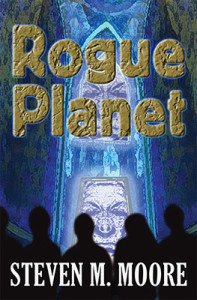
Rogue Planet. A murdered king’s son fights to free his people from an oppressive religious tyranny. An epic military and romantic sci-fi novel with Game-of-Thrones and Star Wars fantasy elements awaits you. Set in the same universe as The Chaos Chronicles Trilogy Collection and A. B. Carolan’s sci-fi mysteries for young adults, this book is available at Amazon in print and ebook versions, and at Smashwords and its affiliated retailers (iBooks, B&N, Kobo, etc.) and lending and library services (Scribd, Overdrive, Baker&Taylor, Gardners, etc.).

Around the world and to the stars! In libris libertas!
Football in the days of pandemic…

May 19th, 2020

I’ll admit it—I’ll miss pro football. Yes, I know, football widows have already realized that greedy NFL owners, to salvage something, are willing to risk players, sportscasters, and support staff’s health to create an anemic season, even if it means playing to empty stands. What’s Bob Kraft going to do? (I won’t mention what first comes to mind—this is a PG-13 rated blog.) If players refuse to play, will he fire them? Will he fire Tom Brady, that chap who put the I back in TEAM? (In spite of that, Brady showed, in spite of himself, that football is indeed all about TEAM.) Oh, right, the GOAT won’t be playing for the Patriots this season…or probably any other! But the Pats’ team play is why I’ll miss football.

As an old chap myself (older than Brady, and on a par with Coach B and Kraft), it was always fun to watch Brady make do with the players he had, Gronk or no Gronk, and shred the opposition’s defenses. (He’ll have the big G as a target at Tampa Bay, though, if they ever get to play a game.) Brady’s not bad for a forty-plus-year-old. I’ll miss him showing the world that getting old can mean getting better, even in the toughest sport there is. (Although Irish rugby might come close—look Mom, no pads!).

But Brady has betrayed the Pats’ fans. I’ve never liked his politics—Brady and Kraft (and Coach B?) are far too cozy with Trump and his policies (although all three are probably a lot smarter). Brady might just run for president someday; he couldn’t be any worse than the current POTUS. But he’s followed the money to Tampa Bay along with Gronk. New England’s fans don’t count for these two, just playing more football to make more truckloads of dollars keep arriving. (Not to mention the free Cads and trips to Disney World for Brady—when will Gronk get his due?)

I no longer live in the Boston area (I did, which is why I’m a Pats, Celtics, Bruins, and Red Sox fan—I’ve been a Celtics fan ever since Bill Russell and Casey Jones went there from USF). But I imagine the folks up Boston way aren’t too happy with either Brady or Gronk “retiring” to Florida. The Pats’ dynasty is over, and Coach B and Kraft don’t have a handy replacement for the GOAT, as far as I know. And with no fans because of COVID-19, who gives a rat’s ass about what happens to the Pats? Or pro football in general? The rest of the country hated the Pats anyway. You can bet I won’t be rooting for Tampa Bay. In fact, I won’t be watching NFL football at all. I’m becoming a football widower!

Maybe UCSB, my alma mater, will finally build a competitive football program? Probably not happening!

***

Comments are always welcome.

Rogue Planet. A murdered king’s son fights to free his people from an oppressive religious tyranny. An epic military and romantic sci-fi novel with Game-of-Thrones and Star Wars fantasy elements awaits you. Set in the same universe as The Chaos Chronicles Trilogy Collection and A. B. Carolan’s sci-fi mysteries for young adults, this book is available at Amazon in print and ebook versions, and at Smashwords and its affiliated retailers (iBooks, B&N, Kobo, etc.) and lending and library services (Scribd, Overdrive, Baker&Taylor, Gardners, etc.).

Around the world and to the stars! In libris libertas!
Out of character…

May 14th, 2020

All elements of storytelling are important, but (to echo Orwell), some are more important than others: plot, themes, characterization, settings, dialogue, narrative, and so forth all need careful attention, but plot is the most important, then characterization. Many authors put characterization on an equal pedestal with plot, though. It takes two to tango, of course, and the marriage of plot with characterization is also important.

Many writers, fiction writers and screenwriters, make mistakes in characterization. Screenwriters are often more guilty of that. Here’s an example (and then I’ll leave the realm of TV and movie land): I watch Magnum occasionally (in its new reincarnation), when my eyes get tired from reading, although its time slot flops around like jello. The entire multi-episode (why do screenwriters want to make crime dramas into soap operas?) substory of Higgins’s forgetting to renew her visa was one big screenwriting mistake (yes, I edit TV shows as I watch!). For those who don’t watch the series (in its new reincarnation), Higgie is a cerebral ex-MI6 agent who acts as the adult in comparison to the more immature and devil-may-care Magnum, so this visa business is completely out of character. And there’s no intentional shock value here to make a mystery-style twist—like I said, it’s just a terrible mistake in screenwriting. In other words, it’s not showing Higgie as more human; it’s just out of character. (With COVID going on, that has to be your movie-review fix from this blog for a while!)

I’ve seen many authors mangle characterization with abrupt changes of point of view (head-hopping), even changes from paragraph to paragraph. That’s most obnoxious when character X had thoughts in one paragraph and Y has them in another (which is why it’s called head-hopping). Even when the point of view (POV) is constant during a section or chapter, as required, there can be changes in POV in one character. This can be intentional, of course—character X isn’t quite the upstanding gentleman the reader thought he was, as the mystery’s plot moves forward—and that’s okay. But in can be damaging to the story when it’s not. The reader has developed an image of a character and his behavior as the prose goes along, and then that character does something completely out of character (like Higgie), showing lack of consistency and story-building skills on the part of the author.

As they develop characters, authors must ensure that each character doesn’t get out of character…unless discovering that is part of the plot. In other words, they shouldn’t create character traits and then contradict them. They should let the characters fill the plot in a consistent, logical fashion, letting the two grow together. An out-of-character action isn’t a shock a reader needs, even if the story is a mystery. The reader can slowly discover the peccadillos of a character ahead of the detective, after all, playing armchair-sleuth. An out-of-character reading experience in the extreme would be like Poirot suddenly becoming a murderer. That’s not a twist; it’s just sloppy writing!

***

Comments are always welcome!

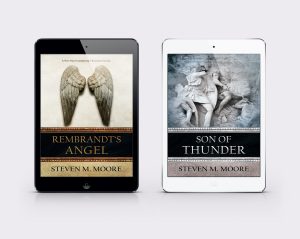
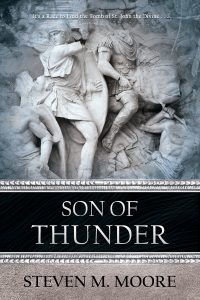
The “Esther Brookstone Art Detective” Series. Do you want to read some mystery/thriller novels that motivate you to keep turning the pages? Wags at Scotland Yard call Esther Brookstone Miss Marple and Bastiann van Coevorden, her beau, Hercule Poirot, but their adventures are very twenty-first century. In Rembrandt’s Angel, Esther obsesses with recovering a painting stolen by the Nazis in WWII. In Son of Thunder, she obsesses with finding the tomb of St. John the Divine. Both obsessions lead her and Bastiann into dangerous situations. Available in print format from your favorite local bookstore, Amazon, and the publisher, Penmore Press; and in ebook format from Amazon and Smashwords and all the latter’s affiliated retailers (iBooks, B&N, Kobo, etc.) and lending and library services (Scribd, Overdrive, Baker&Thomas, Gardners, etc.).  A third novel featuring this crime-fighting duo is in the works.

Around the world and to the stars! In libris libertas!
Review of the Jenny Starling series…

May 13th, 2020

“The Jenny Starling Series.” Faith Martin, author (Joffe Books). I don’t usually review an entire series, but I’ve been binge-reading during the pandemic, so it’s more efficient to review all the books. Because these novels are all republications (pen name to real name?), they’re definitely “evergreen”—no ground-shaking themes here, and pre-Brexit and pre-pandemic, but still as fresh and entertaining as the day they were written.

This seven-book series is all British-mystery storytelling. It takes place in the Thames Valley region, which includes Oxford and other delightful places northwest of London. (My own mystery/thriller, Rembrandt’s Angel, starts in that area as Esther Brookstone visits a school chum in Wantage and a professor at Oxford.)

The protagonist is a cook, a “Junoesque woman” of ample but sculptured feminine proportions, and not a Miss Marple-like old lady at all. I suppose she might take on jobs where a murder isn’t committed, but her posts in the novels are ones where at least one corpse appears. There’s often a Christie-style tell-all denouement at the end where the cook divulges what led her to solve the crime, showing the coppers how proper sleuthing is done. In each book, the authorities have a love-hate relationship with the cook because of this.

There are a few laughs here and there, but these aren’t cozies (heaven forbid!)—they’re deadly serious cerebral mystery/thriller novels. Digging into the first with trepidation—the hype “a mystery with lots of twists and turns” seems superfluous and frankly discouraged me—but I was pleasantly surprised, so I kept going through all seven books! The cook’s menus are interesting in themselves for those readers who also have gastronomic interests, but reading these novels was a lot more fun than seeing more COVID-19 stats on every TV network (I wonder what the BBC is doing). (Don’t get me wrong. The public must be informed, but we also need a break from time to time.)

I have two nits to pick, both of them a bit technical and maybe not important to most readers. First, the author has a bad habit of telegraphing a future event, incorporating teasers in the stories, if you will. These almost need a “spoiler alert” warning. Second, there’s also a lot of head-hopping, i.e. abrupt changes of point of view (POV), that made this reader say, “Huh? How did s/he know that?” Of course, the two nits are related, because the first is just an abrupt transition into the omniscient POV. (It’s interesting that the author attempts to correct this in heer Hillary Greene series, also republished. Someone must have told her to fix this, but the telegraphing still remains and her solution of breaking up prose into tiny sections to solve the second problem is almost comical at times.) Maybe British readers don’t mind these quirks, but I believe it’s sloppy writing and amateurish.

Other than those two nits, I found these novels quite entertaining…and I’m now onto Hillary Greene #3, another series about a clever DI in the Thames Valley PD with a lot of baggage. Stay tuned…but that series is even longer!

***

Comments are always welcome!

The “Esther Brookstone Art Detective” Series. Do you want to read some mystery/thriller novels that motivate you to keep turning the pages? Wags at Scotland Yard call Esther Brookstone Miss Marple and Bastiann van Coevorden, her beau, Hercule Poirot, but their adventures are very twenty-first century. In Rembrandt’s Angel, Esther obsesses with recovering a painting stolen by the Nazis in WWII. In Son of Thunder, she obsesses with finding the tomb of St. John the Divine. Both obsessions lead her and Bastiann into dangerous situations. Available in print format from your favorite local bookstore, Amazon, and the publisher, Penmore Press; and in ebook format from Amazon and Smashwords and all the latter’s affiliated retailers (iBooks, B&N, Kobo, etc.) and lending and library services (Scribd, Overdrive, Baker&Thomas, Gardners, etc.).  A third novel featuring this crime-fighting duo is in the works.

Around the world and to the stars! In libris libertas!
 

Op-ed pages #1: Lessons learned from a nasty virus…

May 12th, 2020

[Note from Steve: As some faithful readers of this blog already know, it originally contained op-ed articles about current issues and events as well as book and movie reviews, author interviews, and articles about reading, writing, and the publishing business (all written in op-ed style). I stopped posting the first type because they often represented too long an investment in time to find the relevant background material and fact-check as much as possible. That said, I believe it’s now time to express my opinions again, so I’ll occasionally post such articles in the future. They’ll all start with the phrase “Op-ed pages” so you can skip over them if you like (I prefer that you comment, though, even if you disagree). Here’s the first post in this new (and old) category….]

Writing about lessons learned from the battle against COVID-19 can seem like finger-pointing, A week ago, I wrote about sci-fi stories with pandemic as a general theme (see the article “I Told You So”). It often seems like we’re living in a sci-fi story now. I just want to put the novel down and get on with my life—the quiet life my wife and I were living before. Many probably feel the same way. But it’s natural to ask questions about this real-life pandemic, and there are many lessons to learn.

Containment. If there’s a vaccine against a virus, it’s the best medicine against it. Anti-vaccine fanatics endanger all of us, as the measles virus has shown, and I never put credence in false religious or paranoid reasons to resist vaccination. For example, every student in a public or private school should be vaccinated against the common diseases or required to stay at home. Period. This isn’t just opinion. It’s a scientific fact: Vaccination programs, when available, are necessary to protect everyone.

But the best medicine against a nasty virus can only be containment if there’s no vaccine. You don’t have to be an infectious disease expert to know to beat a new contagion like COVID-19 is to contain it. That’s just common sense! Unfortunately common sense seems to be in short supply these days.

So the first question is: Why didn’t the Chinese government take steps to contain the virus? Note that I’m not blaming the Chinese people (or all immigrants, as Stephen Miller, Mr. Trump’s Heinrich Himmler, wants you to believe)—the citizens of China have little choice about what their autocratic government does. And that government did very little and covered up how bad things were until it was too late.

The virus quickly spread throughout China and beyond its borders, mostly from business and tourist travel, I suspect (remember Chinese New Year?). Before this plague was declared a pandemic, people died in the state of Washington (due to lack of testing, we didn’t know how early that occurred). It wasn’t difficult to understand even back then that sea- and airports should be closed then and there. And, in one major port, Mardi Gras visitors carried the virus back to their origin points, blanketing the US. There’s every indication that COVID-19 was also widespread in NYC early on too, mostly by European asymptomatic travelers, I surmise; we just didn’t know about it until people started dying.

The virus will continue to spread. Think you’re home free because you live in a rural area? Think again! As I write this, COVID is reaching rural areas, with small numbers of cases and fatalities, to be sure, but large as far as per capita measurements go. We’ve lost the battle of containment. We’re playing catch-up.

Information. Our current federal government dropped the ball and created a lot of misinformation, but they don’t own all the lack of information, in spite of Mr. Trump’s efforts. Why didn’t all those infectious disease experts supposedly in the know scream about the threat of pandemic? Why didn’t journalists pick up that story and blast it out in media outlets? It’s hard to believe that all the so-called experts and pundits just buried their heads in the sand. What happened? Was everyone following China’s lead and covering up the seriousness of this plague?

I don’t think so. Incompetence can be as effective a cover-up as political expediency. Maybe all the people who should have said something didn’t want riot in the streets. Well…now the riots are led by irresponsible knuckleheads who want to go back to the old normal, so those people who should have known better made a bad choice. I don’t know if the idiots who prefer to risk their lives and others for a paycheck, or some perceived freedoms that are being trampled on (the excuse) would have listened to the information, but honesty is always the best policy. Pandemics are serious business and not just themes in sci-fi.

Read the rest of this entry »

Write for your audience?

May 7th, 2020

Writing gurus often say this. While they state many things that are complete garbage, like “write what you know” (I’m not an ET, for example, nor know anything about real ones—that’s also a great rebuttal to all the anti-cultural-appropriation idiots out there), let me give all those so-called gurus the benefit of the doubt here and try to make sense of this advice.

I believe my first published novel Full Medical (2006) is as current and entertaining as my last, Son of Thunder (2019). (There’ll be more, of course.) They’re all fresh because I write stories like those I love to read (for that reason, I do very little fantasy and horror, and eschew pure romance and erotica—I’m just not that interested in reading such stories…or writing them).

And while my main motivation for writing these stories is to tell a good story that entertains my readers, a secondary motivation is to entertain myself while writing them. As a result, I constantly put myself in the readers’ point of view: what turn of phrase will resonate most here, what character’s action is appropriate, what plot twist will wow the reader, and so on? For me, “write for your audience” means to write for those imagined readers, myself included. Fundamentally, that’s all it can mean, all you gurus who read this.

Let me embellish that a bit. For so many authors (including me), our audience is just too varied. While a how-to book or novel about a drug addict might have an audience we can focus on, general fiction usually cuts across many demographics. At a book event, a tween wanted to read The Midas Bomb (I had the print edition on sale). Because it treats some very adult themes, I conferred with the girl’s mother. “Oh, she reads all mysteries and thrillers.” Case closed, because Mommy gave it the okay. (Maybe she wouldn’t be as quick to do so with Teeter-Totter between Lust and Murder, but who knows?) In that same event, or another (they’re all blurs now), an octogenarian wanted me to sign the copy of Rogue Planet she’d just purchased—she loved sci-fi. As I write this article, I can only ask: What would the gurus say about that?

They’d have to admit at least that my audience is rather general. If I twist the gurus’ arms a bit, I could probably get them to admit that my tactic for writing to my audience is correct: Imagine my general reader, from twelve to eighty-two, and without considerations for race, religion, sex or sexual preferences, and so forth, write stories that I believe will entertain that general reader.

As a matter of fact, that’s easy to do! I am one of those readers. I got turned onto writing as a kid because I was an avid reader and figured I could write books like the ones that I enjoyed reading. It took me a while to do it because life events got in the way, but now I’m doing it full time…and loving every minute of it.

***

Comments are always welcome!

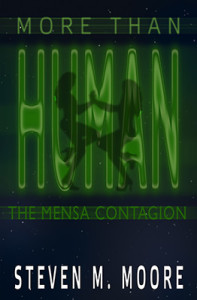
More than Human: The Mensa Contagion. Another “evergreen book” from yours truly, that is, as current and relevant as the day it was published, and just maybe a story that might make you feel better during the pandemic (maybe COVID will force us to make some positive changes in our society?—it has certainly revealed some flaws!). An ET virus comes to Earth and creates Homo sapiens 2.0. What do the new humans do? They don’t go to Disney World after that big win—they colonize Mars! This is an epic sci-fi saga all in one novel. Available in .mobi (Kindle) ebook format at Amazon, and in all ebook formats at Smashwords and its affiliated retailers (iBooks, B&N, Kobo, etc.) and lending and library services (Scribd, Overdrive, Baker & Taylor, Gardners, etc.).

Around the world and to the stars! In libris libertas!
 

Mini-Reviews of Books #47…

May 6th, 2020

Stray Cat Blues. Robert Bucchianeri, author. I often read “evergreen books” because they’re just wonderful, old-fashioned good vs. evil stories, even when they’re without major universal themes. The latter makes them more evergreen, of course. (An “evergreen book” is one that seems as current and relevant as the day it was written.) This novel is in the first category. No reader should find its themes politically or culturally controversial because it’s basically just about good vs. evil.

Frankie is looking for Johnnie. The first girl is a young twelve-year-old (Warning, Will Robinson! This is not a book for tweens!) who has a big sister, Johnnie. The big sister takes care of her, but goes missing. If this sounds a bit like A.B. Carolan’s Mind Games (which is a sci-fi mystery for young adults also featuring another young girl who’s poor, smart, and sassy), congratulations! You’ve discovered how universal good vs. evil stories can be.

Frankie hires Max Plank to find Johnnie, and Max is akin to a PI who likes to solve people’s problems—he doesn’t accept any money, of course (how does he make a living?), but Frankie doesn’t have much anyway. Max lives on a houseboat in San Francisco (that sounds a bit familiar too). He has some lethal friends and even more lethal enemies, like a crook named Poe who loves to recite Edgar Allan. (There are no similarities between this book and Steinbaum’s The Poe Consequence, though—see last week’s review for that.)

Besides the nits I picked above, my major complaint is the name of the protagonist. Maybe I’m one of many reviewers who will recognize the Americanization of the name of the famous German physicist who started the quantum revolution rocking and rolling, turning classical physics on its head. That’s like naming a PI Albert Einstein…just not right. (While a physicist can like to read and write sci-fi, he’s generally not an action hero or villain!) And this Plank doesn’t even look like Planck.

If you’re looking for a great evergreen book that’s a fun read, this is it. If you’re looking for the great American novel, it isn’t (and there’s no such thing, in spite of what your high school English teacher told you). But it’s set in SF, one of my two favorite cities (the other is Boston…in every season except winter). Great characters too, especially Frankie.

***

Comments are always welcome.

More than Human: The Mensa Contagion. Another “evergreen book” from yours truly, that is, as current and relevant as the day it was published, and just maybe a story that might make you feel better during the pandemic (maybe COVID will force us to make some positive changes in our society?—it has certainly revealed some flaws!). An ET virus comes to Earth and creates Homo sapiens 2.0. What do the new humans do? They don’t go to Disney World after that big win—they colonize Mars! This is an epic sci-fi saga all in one novel. Available in .mobi (Kindle) ebook format at Amazon, and in all ebook formats at Smashwords and its affiliated retailers (iBooks, B&N, Kobo, etc.) and lending and library services (Scribd, Overdrive, Baker & Taylor, Gardners, etc.).

Around the world and to the stars! In libris libertas!

“I told you so…”

May 5th, 2020

From Crichton’s The Andromeda Strain to Atwood’s Oryx and Crake, and in many other examples, sci-fi authors have written apocalyptic and post-apocalyptic tales about pandemics. Most can be considered warnings, and I doubt few are popular now. We’re fighting a real pandemic, after all.

Some of these tales are about the outbreak itself, like the first example; others about the aftermath; and still others consider both. The main villain is usually the contagion, although it might only lurk in the background like in the second novel. But human beings can play secondary roles as villains too, even if they’re just incompetent (so much incompetence has been and still is being revealed with COVID-19).

As an ex-scientist and a writer (the authors named above don’t possess that first advantage), I can perhaps examine these tales more objectively and less emotionally than most readers (of course, that might not save me from the virus). These stories invariably contain the ubiquitous thriller elements: the authors put the protagonist through hell on Earth, and they either survive or don’t. The aftermath stories follow that same formula, but they can be a blend of post-apocalyptic and dystopian.

Some of these stories are even examples of noir humor, sarcastic comments on human beings’ foibles. And others can even be uplifting. But all these stories are answers to the fundamental sociological question: What if a pandemic occurs?

Now we are living in times where real-life answers to that question must occur. In a sense, we can conclude that sci-fi authors’ warnings weren’t heeded. There’s a ready villain besides the virus in this case, because China, at the very least, hid the facts and didn’t close their borders until after the virus already escaped (remember Chinese New Year?). But let’s not consider what happened as a biological attack, though (if it was, it backfired big time on China!). Instead, we have to continue to answer that fundamental question.

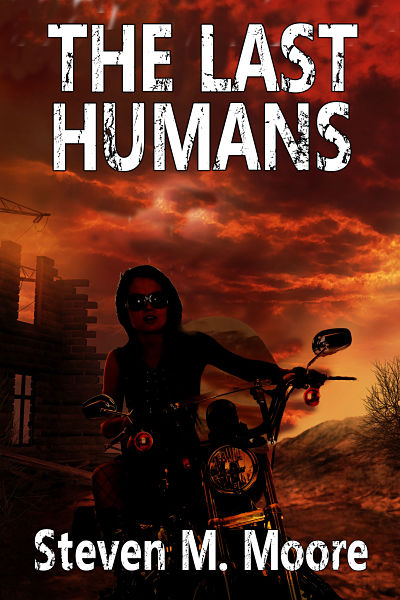
We’re entering the post-apocalyptic story now (by the time you read this, that should be even more true). In my stories, More than Human: The Mensa Contagion (a novel that considers both pandemic periods mentioned in the first paragraph) and The Last Humans (post-apocalyptic, i.e. about the aftermath), the tales end on a positive note.

Let’s make sure the real-life one does too. Mitigation techniques are working—social distancing and staying at home if you can; and using masks, gloves, and hand sanitizer when you can’t—but we have to stay the course. We must do a careful balancing act walking that line between restarting our local, state, national, and global economies, and continuing those good practices.

Please stay the course…and do all you can to keep everyone safe so we can be victorious in this war against this very real menace we’re facing.

***

Comments are always welcome.

More than Human: The Mensa Contagion. Another “evergreen book” from yours truly, that is, as current and relevant as the day it was published, and just maybe a story that might make you feel better during the pandemic (maybe COVID will force us to make some positive changes in our society?—it has certainly revealed some flaws!). An ET virus comes to Earth and creates Homo sapiens 2.0. What do the new humans do? They don’t go to Disney World after that big win—they colonize Mars! This is an epic sci-fi saga all in one novel. Available in .mobi (Kindle) ebook format at Amazon, and in all ebook formats at Smashwords and its affiliated retailers (iBooks, B&N, Kobo, etc.) and lending and library services (Scribd, Overdrive, Baker & Taylor, Gardners, etc.).

Around the world and to the stars! In libris libertas!


Playing vs. watching…

April 30th, 2020

I don’t like to watch baseball games—they’re just too slow—but I liked to play baseball. As a big, clumsy, six-foot-three kid, I didn’t qualify for JV basketball and didn’t even try out for varsity later on, but I still played a lot of basketball half-court games in our high school noon league. I didn’t go out for track, but I could beat my older brother in shotput, who did.

Reading and writing are like that in the sense that writing is more active than reading. In playing a sport, you have to be creative. Writing is playing the game; reading is watching it. Both playing and watching can enrich our lives, but I could hardly wait to progress from watching other authors play as far as books go. Being young and naïve, I decided early on that I could be just as good a storyteller as the authors I was reading. Two things stopped me: (1) I had to provide for my family (that’s hard to do as a writer, especially early in one’s writing career); and (2) there’s a lot that goes on between ideas for a story and a finished manuscript that requires practice, no matter how many skills a writer starts with.

Practice to improve your game is as important in writing as it is in sports. Skills have to be honed so the transitions from ideas to manuscripts become smooth and automatic. Although I often state that storytelling is what makes us human—sitting around a campfire with a mastodon steak sizzling on the spit and telling the story about the hunt is maybe how it all started (apologies to vegan and vegetarian readers, but our ancestors were omnivores)—but the road from ideas to finished manuscript isn’t an easy one today. Each novel is a new adventure, of course, and a writer needs to reset a bit when changing games or playing a new game, but experience counts.

I’m guessing the ladies in my reading audience probably object to these sports analogies, so let me discuss other events in my past. I was a 4-H club member—the San Joaquin Valley where I grew up is where agriculture reigns supreme—and one of my many 4-H projects (not the most time-consuming or most difficult) was to help my mother can that wonderful California fruit or turn it into jellies and jams. I never considered that to be sissy work—it’s work, to be sure, and was a reflection of how my mother helped the family survive the Great Depression and World War II scarcities, and how my father instilled in us a work ethic that focused on providing for the family, ours and others in time of need. There was always extra to give away to people, especially old-timers in the church congregation living on Social Security. Of course, there was an ulterior motive: I liked to eat the canned fruit and jams and jellies, and so did my father and brother.

Those who have done any of that know it’s all like sports: I practiced to improve my game. So it’s also just like writing. Orange marmalade and canned apricots (we had one of each tree in our backyard) are akin to sci-fi and mysteries—different, yes, in that the set of skills are different, but similar in the sense that those skills need to be honed through practice. I never received any trophies for my sports activities, and I haven’t won many writing contests, but my canned fruits, jellies, and jams won blue ribbons at the county and 4-H fairs.

Maybe I’m in the wrong business now. My excuse is that I no longer live in California. Here on the East Coast fruit is too expensive! But my observation remains a valid one: There are many activities in life where playing the game is often more interesting and rewarding than watching, but practicing and honing one’s skills is necessary to improve one’s game. With every word, paragraph, and chapter I write—indeed, with every novel—I’m creating but practicing as well…and enjoying every minute of it!

***

Comments are always welcome!

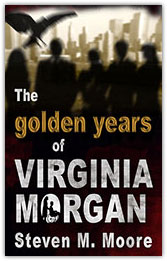
The Golden Years of Virginia Morgan. This is one of my “evergreen books,” a novel as exciting and current as the day it was published; it’s also a bridge between two series, “Detectives Chen & Castilblanco” and “Clones & Mutants.” A DHS agent looking toward retirement finds a lot of excitement as she uncovers a conspiracy and meets a new love. The conspiracy answers the following question: What will a future US government do with its old retirees who know too many secrets? The romance answers the question: Can a divorced woman heading for retirement find love in her golden years? DHS agent Ashley Scott is the main character. She had important supporting roles in the “Chen & Castilblanco” books, so I thought it was only fair to give her a starring role! Available in .mobi (Kindle) ebook format at Amazon and in all ebook formats at Smashwords and all its affiliated retailers (iBooks, B&N, Kobo, etc.) and lending and library services (Scribd, Overdrive, Baker & Taylor, Gardners, etc.)

Around the world and to the stars! In libris libertas!

Mini-Reviews of Books #46…

April 29th, 2020

Prince of Spies. Alex Gerlis, author (Canelo Action, 2020). I’ve reviewed some of the author’s earlier books in this blog. Looks like he has a new publisher that republished those earlier books. This one starts a new series featuring Richard Prince, a smart police officer from Britain who becomes a spy during WWII (the author’s books are all spy novels about that era). Because Prince speaks Danish (his mother was a Dane), he’s a find for Britain’s spy masters.

He’s a reluctant spy, though. He lost his wife and daughter in a motor accident, so he’s the only one left to take care of his small son. After a brief introduction to the spy game in Denmark, his big assignment is to infiltrate the special Nazi base where they’re developing the V-1 and V-2 rockets for the Third Reich. Any student of history knows that’s no trivial assignment with paranoid Nazis always lurking around.

Gerlis’s books are always well researched to the point it’s often hard to tell where historical fact ends and the fiction begins. While this novel isn’t as good as his previous ones, it’s an excellent story on a par with Deaver’s Garden of Beasts and Follett’s Eye of the Needle. This author’s spy stories offer many hours of entertainment for readers loving this genre, including me.

The Poe Consequence. Keith Steinbaum, author (Black Opal Books, 2020). In a tale that is an eerie mix of a Dean Koontz Odd Thomas novel  and a Michael Connelly Harry Bosch crime story, the author delves into East LA gang life, two gangs in particular. It’s a tale of ghostly revenge that’s a thrill ride from beginning to end. It starts with a Tarot card reading that sets the stage for supernatural revenge. It continues with a botched robbery that ends in death for one twin brother. And all the way through you hear the beating of Poe’s “Tell-Tale Heart” that sounds like a primitive drum calling a restless spirit to wreak revenge.

I love this story that conjoins two genres. The plot moves, the characters are complex, and a little boy will rip your heart out but not freeze it. The settings are the mean streets where good people try to survive and bad people try to make sure they don’t, at least not in any safe sense. What’s more, it’s not just a tale of good vs. evil defining two groups of characters, the boy, the uncle, and the cops vs. the two gangs. Each character is very human, and the reader learns their backstories that prove there’s no absolute good or absolute evil, at least in East LA.

The fight against gang violence continues in the US, and it’s worse with Mara Salvatrucha (MS-13—“mara” is Salvadoran slang for “gang,” and “trucha” is slang for “alertness”). That the author can turn the story of LA gangs (MS-13 was created to protect Salvadorans from other LA gangs) into a meaningful novel that transcends the gang story is evidence for his skill. Highly recommended for those readers who want to read something new and profound.

***

Comments are always welcome!

The Golden Years of Virginia Morgan. This is one of my “evergreen books,” a novel as exciting and current as the day it was published; it’s also a bridge between two series, “Detectives Chen & Castilblanco” and “Clones & Mutants.” A DHS agent looking toward retirement finds a lot of excitement as she uncovers a conspiracy and meets a new love. The conspiracy answers the following question: What will a future US government do with its old retirees who know too many secrets? The romance answers the question: Can a divorced woman heading for retirement find love in her golden years? DHS agent Ashley Scott is the main character. She had important supporting roles in the “Chen & Castilblanco” books, so I thought it was only fair to give her a starring role! Available in .mobi (Kindle) ebook format at Amazon and in all ebook formats at Smashwords and all its affiliated retailers (iBooks, B&N, Kobo, etc.) and lending and library services (Scribd, Overdrive, Baker & Taylor, Gardners, etc.)

Around the world and to the stars! In libris libertas!