Coming-of-age tales…

August 28th, 2018

[Note from Steve: This blog post was written by A. B. Carolan.]

We Irish are a hardy lot. We needed that for centuries. Readers of Steve’s blog might wonder why the Irish diaspora is so vast. Cromwell has a lot of responsibility for that, separating children from parents, wives from husbands, and shipping all over God’s creation. He even stabled his army’s horses in our cathedrals, which is why they’re mostly Anglican now. Those who were left behind suffered through various potato famines. The lucky ones died.

Yes, a sad history indeed, but sadder still the wee ones had as they were growing up. Readers might have read about that in the true story Angela’s Ashes.  Childhood during the troubles wasn’t easy either.

That’s why I find coming-of-age stories so fascinating. Our Lord and Savior said “Suffer the little child…to come onto me,” and there are many who suffer, believe me (different meaning of “suffer,” of course, but the Good Lord will forgive me for the play on words, because children’s suffering is a reality in this world). Just the pain of growing into adults—innocence lost, if you will—is prevalent. We have to write about that as authors.  Mysteries, thrillers, paranormal adventures, romances, biopics—you can add your own genres.

The Harry Potter series is a coming-of-age series. Harry is a wizard, so they’re YA fantasy. Robert Heinlein, an eccentric author of many talents, wrote Podkayne of Mars, a YA sci-fi thriller. I prefer YA sci-fi mysteries. Sci-fi allows me to lift readers out of their current milieu, rising above their cultural hang-ups, as it were, to analyze coming-of-age under my microscope.

This is what happens in The Secret Lab. I rewrote and reedited Steven M. Moore’s first edition of this sci-fi mystery. Shashi and friends are growing up fast and get into big problems as they try to discover the origins of a mutant cat. They have growing pains, but they basically discover that adults can be duplicitous—they lose their innocence but rise up to confront their problems.

I took Steve’s short story “Marcello an Me” (it’s contained in his speculative fiction collection Pasodobles in a Quantum Stringscape) and used it as a starting point for the sci-fi mystery The Secret of the Urns. It’s a coming-of-age tale where the young protagonist learns about adults’ bigotry and hatred and does something about it. By setting this story in the distant future, I hope to take these issues out of the emotional context of our current political situations.

Coming-of-age tales often occur when young adults cannot understand their elders. This is the case in these novels. But adults cannot understand tweens and teenagers either. This might explain a lot of the interest in these kinds of stories. Of course, adults might also be looking to understand their own coming-of-age problems they had when growing up.

***

The Secret Lab. Mr. Paws, the mutant cat who loves mathematics, tells most of this tale set on the International Space Station in the future. Shashi Garcia and friends set out to discover his origins. Their sleuthing leads to a genetics conspiracy. Adventures await young adults and adults who are young-at-heart in this fast-paced sci-fi mystery. Set in the same universe as The Chaos Chronicles Trilogy Collection (last few days for 50% off at Smashwords), this novel is available in ebook format at Amazon and Smashwords and all the latter’s affiliated retailers (iBooks, B&N, Kobo, etc), and in print format at Amazon and B&N. Ideal for late summer and fall reading…and those book reports your children will have to write in school! For that, you should also check out the YA sci-fi mystery The Secret of the Urns, another novel by A. B. Carolan.

In libris libertas!

Time-travel redux…

August 23rd, 2018

I saw in the news that Patrick Stewart is going to act in a new Star Trek series that will follow Captain Picard in his later years. I always thought he was the quintessential Starfleet captain, unlike Kirk, who was just a loose cannon most of the time. However, I just watched (how many times now?) Star Trek IV, arguably the best whale movie ever made (sure beats the hell out of Moby Dick, that boring and awful treatise on how to turn whale blubber into lamp oil). Kirk and his minions were a lot of fun in that Star Trek movie, and it speaks to one of my pet issues, species extinction caused by human beings.

The movie also contains the franchise’s version of time travel—something about going Warp 10 around the sun, playing on McCoy’s challenge to Spock to make a guess on how to control the target time (Sheldon’s not around to explain, physicist to ex-physicist, just how this works!). That gets the crew from the 23rd century to the 20th in a Klingon vessel that can cloak, which is convenient for their landing in Golden Gate Park in San Francisco. Probably the best Star Trek movie made so far (the redux versions suffer from Hollywood thriller bloat, although they have their moments).

I’ve also finished the bio of Alan Turing, learning a bit more about his ideas for AI that were far ahead of his time. He was also associated with the Brits actually beating the Americans in making the first functional computer, although the Brits should be prouder of him and more indebted to him for saving their butts in WWII for breaking the Enigma code (Great Britain might be a Third Reich province otherwise). They unfairly rewarded him for that, if you can call what they did a reward, basically forcing him to commit suicide because he was gay (LGBT rights were a longtime coming to Great Britain).

At any rate, I was happy to see that my ideas about digitizing a human mind in Survivors of the Chaos (the second edition is now included in the bundle The Chaos Chronicles Trilogy Collection) might have appealed to the famous mathematician Alan Turing. Two characters’ minds become digitized, and they catch a ride aboard an ET starship, only to reappear in Sing a Zamba Galactica (#2 in the trilogy), where they become human beings again centuries later after they disappeared (they go on to play important roles in all that follows). That’s like a Star Trek transporter operating in slo-mo. (As a matter of fact, why transport the body with the mind when you can just digitize the mind?).

Besides my forced nexus between these two stories thanks to the Star Trek franchise, why in the world (or in the near-Earth regions of the Galaxy) would I consider these disparate tales? Simple! I’ve shied away from time travel in my sci-fi writing (OK, I have a few short stories about the subject, but no novels) because I avoid paradoxes. Time travel can lead to them—the story of the time traveler who steps on a butterfly and changes the future, or another fellow killing his grandfather before he or his father was born, are examples.

Read the rest of this entry »

Mini-Reviews of Books #33…

August 22nd, 2018

Hunter’s Chase. Val Penny, author (Crooked Cat Books, 2018). If you can imagine Ian Rankin writing more of a mystery than a police procedural, you’ll like this book. Yet again the reader sees the seamy side of Edinburgh. DCI Hunter has his flaws and has problems with police and government bureaucracy, but he also has a capable crew of interesting cops to aid him. A series of hit-and-runs have similarities. Forensic work and sleuthing led by Hunter gathers the evidence together, but some case oddities and personal battles add many twists to make things interesting.

Veiled Memory. S. P. Brown, author (Black Opal Books, 2018). Celtic myths and legends, Sumerian clans in Manhattan and around the world, Cornell University and ABC News, and paranormal quantum magic—what great fun! Let’s call this a sci-fi/fantasy/mystery/thriller; most of all, let’s call it interesting and exciting storytelling.

Dr. Madeline Alleyn, professor of Celtic History at Cornell, has a past she’s not quite sure about. Her mother died in childbirth, but not before she hid some rune stones that were the first discovered in the Middle East. How they relate to her triplet daughters’ increasing psi powers and their discovery of their mother and grandmother’s pasts make for intriguing storytelling.

That’s the plot. Characters and venues are interesting too. It’s such a treat to encounter a book that offers fresh ideas. And the author pushed all the right buttons for this reader. I read this in two nights—couldn’t put it down. OK, S. P. Brown, what do you do for an encore? Let’s have the sequel. (See my interview with S. P. Brown—it’s archived in the blog category “Interviews.”)

Requiem. Celina Grace, author. Interesting characters, interesting twists. Kate Redman’s brother has a love interest who’s murdered. In this well-plotted mystery, we find as we follow the case that there’s a lot more to it than meets the eye. I’m a sucker for British mysteries. I think this is the second book by Celina Grace I’ve read. She’s a prolific author, and I’ll be reading more.

***

Rembrandt’s Angel. Mystery, thrills, and romance await the reader of this novel. Scotland Yard Inspector Esther Brookstone is trying to decide whether Interpol Agent Bastiann van Coevorden will become husband #4 as she becomes obsessed with recovering a Rembrandt painting stolen by the Nazis in World War Two. As the case morphs into an international conspiracy, the two become closer as they battle neo-Nazis, a drug cartel, and ISIS. Available in ebook format from Amazon and Smashwords and all the latter’s affiliated retailers, as well as print format at Amazon or your local bookstore (if they don’t have it, ask for it).

Pasodobles in a Quantum Stringscape. This potpourri of speculative fiction contains sci-fi and fantasy short stories and the novella “From the Mother World” (a separate story that explains how the ETs arrived earlier than Humans to the planet featured at the beginning of Sing a Zamba Galactica, now bundled as Book #2 in The Chaos Chronicles Trilogy Collection—last few days for 50% off at Smashwords). ETs, ghosts, zombies, with a bit of comic relief thrown in—what more do you want? Available in ebook format on Amazon.

Reviews and rankings…

August 21st, 2018

We’ve all seen them—reviews for books, movies, restaurants, contractors, tourist spots, hotels, and so forth. To summarize the point I’ll be making here, they’re basically worthless. If you generally agree with that, you might not want to read any farther, but what I have to say about their oft-accompanying rankings might surprise you. I’ve considered this problem a lot, based on my previous experiences with statistics and sampling as a scientist. My conclusions are hard to put into words, but I’m going to try to do so. Smart, educated consumers demand better products, thus improving what we produce. That goes for authors as much as it does for Apple.

Does any reasonable person believe that a ranking system is useful? Amazon does, but they just want to accumulate votes to calculate stats on the products they sale, which aren’t mostly books anymore, so they treat books now just like any other product. And how they do all this is highly questionable. To be fair, how most retailers do it is highly questionable.

You can put the usual ranking systems in scholarly terms, A = 5, B = 4, C = 3, D = 2, and F = 1. In that case, 3 is an average performance, while 5 is excellent. While your professor or teacher might use a curve to assign grades to a large class, retailers do not. In fact, the author of a book, or the product manufacturer in general, has many “teachers” who subjectively assign an arbitrary grade based on an incorrect sampling process. Moreover, those teachers, while they might examine the performance of many “students,” pretend to have some absolute knowledge to define their ranking of many students. This is the first fatal flaw, but it only gets worse.

This subjectivity flaw is accompanied by natural biases. While some influences from cultural wars might come into play in these biases, let’s just concentrate on the mathematical biases. Who do you think writes product reviews? In particular, who reviews books? If you think that reviewers represent a cross-section of the buying public, I have a bridge in Brooklyn I’d like to sale to you. You see, reviewers tend to the extremes: they either generally like or dislike the product. The middle rankings are depleted. And, because retailers like Amazon often weight negative reviews more than negative, the statistics are completely skewed and NEVER can become a normal distribution, something scholastic curves are based on and many people wrongly assume is the case when dealing with large numbers.

Read the rest of this entry »

Movie Reviews #63: review of BlacKkKlansman…

August 17th, 2018

[Note from Steve: This is a special, unannounced posting. I thought it was important to post this review.]

BlacKkKlansman. Spike Lee, dir. Two cops infiltrate the KKK chapter in Colorado Springs. The black cop, Ron Stallworth (played by John David Washington), provides the voice on the telephone; and the white cop, Flip Zimmerman (played by Adam Driver), provides the body. There are some comical moments in this true story based on Stallworth’s book (same title minus the extra K), but this is serious stuff. The KKK chapter is filled with racists, bigots, and haters yearning for a white America where other inferior races are their slaves. The dialogue is filled with the N-word and the K-word (for Jews), and both cops have their heritage attacked consistently and have to grin and bear it. There are some close calls and some sad notes about relationships in politically charged atmospheres even among the same race.

Harry Belafonte has a cameo where he’s telling to a group of blacks the history of a black teen who was tortured by a crowd. The crowd cheered. The organizers of the event made post cards of it and sold them—they were shown, black and white photos of an atrocity racists celebrated.

Spike Lee has done a great job letting the historical events speak for themselves. The acting is a wee bit stereotyped (maybe for this reason?), but the movie is powerful and moving. It’s probably Lee’s best movie. I could have done without the beginning (it seemed to just provide a role for Alec Baldwin) and the end that connects with our current problems (viewers in the audiences will already have made the connections with the current administration’s actions). The movie would have been more powerful, shorter, and still packing a punch without that beginning and end. I know why Lee included the end; I just think it was overkill. Movie goers who couldn’t make those connections have their heads in the sand to begin with; the movie is wasted on them.

As part of the coverage of the first anniversary of the Charlottesville riots, I watched CNN interview the KKK grand wizard who was arrested a year ago for trying to kill a black man during those events. We hear every day Mr. Trump’s MAGA slogan and “America First,” but in the movie we see that David Duke coined those. Times change, but too many problems stay the same. This movie offers both a steamy, historical biopic as well as a current look at the bigotry and hatred that still plague our nation. I’m afraid it won’t be popular with America’s current bigots and haters, but the truth never is.

***

In libris libertas!


News and Notices from the Writing Trenches #162…

August 16th, 2018

Welcome. If this is your first time here, thank you for joining the conversation. If you’re an old hand, thank you for sticking with me. This newsletter is my way of telling you about what’s going on in my writing world. Thank you for reading…and being a reader. Storytelling is what makes us human.

Summertime. I can’t believe we’re already into August. With all the bad weather (heat waves, thunderstorms, etc.), it’s been a good time to get some reading done. Some of my reading is reported on in the “Book Reviews” and “Mini-Reviews of Books” categories of my blog. My favorite bad-weather pastime is to read a book with light classical music in the background. What about you? Maybe a movie? I do that too. You might want to look at the “Movie Reviews” category too. Of course, this was time for me to get a lot of writing done as well (see below).

Upcoming event. I’m looking forward to the annual Holly Berry Show. I’m also using my indoor summertime to prepare for this holiday arts and crafts event sponsored by the Upper Montclair Woman’s Club. It will take place November 3 and 4. It allows those who come to shop for unusual holiday gifts for family and friends. I’ll be there with five of my books ready to talk about reading, writing, and the publishing business with all who stop by. If you live in the Montclair, NJ area, please visit.

Social media. The internet has its pros and cons, but I’m active elsewhere, not just my website. My Facebook page complements my blog–I often post short book reviews there and announce my weekly blog post. I’m also active on Twitter now @StevenMMoore4. Please follow me on either one…or both. You can find me on Goodreads and LinkedIn too, if you are so inclined. All books are listed on my “Books & Short Stories” web page and my Amazon and Smashwords author’s pages.

Free fiction. On the “Free Stuff & Contests” web page, you will see a list of free short fiction—mystery, thriller, and sci-fi novellas and short story collections. It’s all free. Just follow the instructions to download the free PDFs of your choice. Other free fiction can be found in my blog categories “Steve’s Shorts” and “ABC Shorts” (ABC is for A. B. Carolan, my new Irish collaborator for young adult tales). Please share your PDF downloads with friends and family, but respect my copyright.

Blog comments. I fixed the problems, so my blog is open for comments again. You will find articles on reading, writing, and the publishing business, book and movie reviews, and interviews. I accept comments on all of them, but please follow the rules on my “Join the Conversation” web page.

Trilogy on sale. If you’re into ebooks, you might know about bundles. The Chaos Chronicles Trilogy Collection is three books in one, and it takes you from a dystopian Earth to the far reaches of the Galaxy. On sale now at Smashwords all this August.

The Secret of the Urns. My Irish collaborator A. B. Carolan has just published this sci-fi mystery for young adults and adults who are young-at-heart. On a satellite of a Jupiter-like planet, a young girl wants to study the ETs there. She teaches her fellow humans how to conquer their xenophobia. A. B. based this novel on my short story “Marcello and Me” found in Pasodobles in a Quantum Stringscape. It’s available in ebook and print format. A. B. also rewrote and reedited The Secret Lab to make a second edition of this YA sci-fi mystery; it’s also available in ebook and print format.

Coming attractions. I won’t take as long here as those in your movie theater. Goin’ the Extra Mile is #3 in the thriller series “Mary Jo Melendez Mysteries.” Wouldn’t you like to know what became of those nice MECHs (Mechanically Enhanced Cybernetic Humans) from the first two novels? Look for the answers this fall.

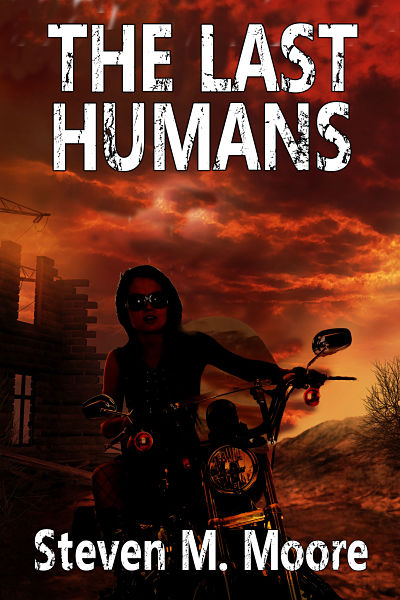
In The Last Humans, an airborne, bio-engineered super-virus is the payload in missiles attacking the West Coast of the U. S. That’s the apocalypse because the virus spreads around the world. This post-apocalyptic thriller is the story of one of the survivors. It will be published by Black Opal Books early in 2019. Please watch for it.

Previews of both books can be found in my blog category “Pre-Release Excerpts.” (The Last Humans excerpt has the working title Oasis Redux.)

Enjoy the rest of the summer!

***

In libris libertas!


Interview with author Cygne duLac…

August 15th, 2018

[Today’s guest is Cygne duLac, a widely acclaimed writer of romance novels. Without further ado, let’s listen to what she says.]

Cygne introduces herself…

SM: Why don’t you tell us about yourself?

CdL: Hello, Steve. Thank you for inviting me to your blog. I’d never considered being a professional writer. In school, I was more inclined toward math and the sciences. Being an ugly duckling, my mother drilled into my head that I wasn’t pretty enough to attract a husband, so I focused on my academics. But a funny thing happened just before high school graduation that changed the direction of my life. A studious boy named Hank invited me to the prom. It was love at first sight, but we both had four years of college ahead of us and at different schools. We wrote weekly, sometimes more often because we rarely saw each other. I had summer jobs in our hometown, but Hank worked in his uncle’s artificial insemination business upstate.

Hank pushed me to get married the Saturday after graduation. Not wanting to lose him, I agreed. My career plans took a major turn when I got pregnant on the honeymoon. After the baby was born, I wasn’t about to put the nurturing of this child I’d assumed I thought I’d never have in strangers’ hands. So, my career switched abruptly to homemaker. The two other children who arrived in the first five years of our marriage sealed my fate to that of a housewife until the children were grown.

SM: So, you started writing after your children were out of the house?

CdL: Out for a good while. I never considered writing, even as a hobby, until Hank died a terrible death from cancer. About a month after his death, with all the activity that accompanied his funeral behind me, I was lonely. And afraid. No way was I going to dive into the dating pool after 30 years of marriage. I’d never be able to compete with the younger women.

SM: You’re selling yourself short there.

CdL:  The problem is that I can’t imagine having feelings toward another man as I did for Hank. Nor can I imagine anyone else loving me as much as he did. It was our emotions that made our sex so great. So, I rechanneled my desires into writing fictional stories about the adventures of a woman much like myself except she’s beautiful and sophisticated. Writing at night serves to keep my mind occupied and protects me from considering things I’d regret later.

Cygne talks about reading and writing…

SM: Were you able to find a publisher for the first book you wrote?

CdL: That’s what surprised me the most. A friend loved my first book The Swan, as I nicknamed my heroine, so much so that she gave my manuscript to a friend of hers who is a literary agent. The agent took me on as a client and demanded I write other Swan books to make me more attractive to publishers. A small publisher gave me a tiny advance and I became a published author. Hank’s discipline in saving and investing a sizeable part of his salary gives me a comfortable living and the freedom to spend my time as I please.

SM: I’m going to shift gears a little now. What is your biggest problem in the writing process? Read the rest of this entry »

No poetry slam here…

August 14th, 2018

I write fiction. I know my limitations, so I don’t write poetry very often. You might have enjoyed my “Ode to Cassini” on the home page of this website; it probably broke all the rules, although it was heartfelt.

That poem was my most recent one—I mean, it’s been several decades since I wrote the last one. I’ve included some old poems in The Collector (the poem there was written for my father, who was a landscape and still life artist who hated abstract art). The Last Humans (to be published by Black Opal Books in 2019) contains another early poem. And the sequel to Rembrandt’s Angel will contain one too. All my ancient attempts to write poetry.

I find old stories and poems in basement boxes I’m just now unpacking from the last move. They all date from high school or college—not written on papyrus, but the paper’s often brittle and yellow.

All these futile attempts taught me that I have no real skill for writing poetry. Long ago, I didn’t even like to read it either, outside of a few limericks that made me laugh. That all changed at UC Santa Barbara when I attended N. Scott Momaday’s English class. Mind you, he’s more of a fiction writer too, but more about that later. Nevertheless, Professor Momaday taught me to love poetry.

Imagine if you will a man of average height, a bit portly, and with generally a happy face and twinkling eyes behind the lectern at times, or pacing the stage, with poetry book in hand, reading poems to about 250 students in a large lecture class. At least two-thirds of the students didn’t care what he was reading or saying about what he read; they just wanted to get through English without doing damage to their GPA. I must say my TA didn’t much care either. He gave everyone an A who found something Freudian to say in their analysis of a poem or short story. I did so. The TA taught me nothing; Professor Momaday taught me a lot.

On the other hand, I was mesmerized by the professor’s performance in every lecture. Most of the time he’d hardly look at the poem. He became the poet; he lived the poem. I wanted to be able to perform on stage like that, but I knew that the professor did it naturally. We disappeared from his mind; what he was reading took over.

Read the rest of this entry »

Making the world small…

August 9th, 2018

[In memory of Anthony Bourdain.]

Anthony Bourdain showed us the world of food. What’s more important, though, is that he showed us places and people there who ate that food. One can make the argument that anything we can do to help people learn that we’re all on spaceship Earth together, and, in spite of our differences, we’re all human beings with similar yet simple goals in life—a good job, good health, and a loving family—that’s a good thing. Bourdain could do that; so can authors when they write their stories.

In our stories, we can do what Bourdain did: visit other countries and their citizens, and portray the variety of our own country’s people and places. By learning about them, the world becomes smaller. We can do this with our research; we can do it through travel and observing what’s going on around us. There is one danger, though: we shouldn’t use stereotypes or write down our own prejudices. This is difficult to avoid in mysteries and thrillers. For example, a cartel leader can be bad because of the effect his upbringing or personal circumstances had on him, not because he’s Mexican.

This takes us into the controversial discussion about “cultural appropriation.” There are some people who say that an author can’t create a Latino character unless the author’s Latino. Worse, that the author can’t create a female character if he’s male (or vice versa, although the reverse isn’t criticized that much). There are many ways to refute this myopic stupidity, but here’s a new one: believing these claims doesn’t allow us to travel the world in our books. How can an author write a book set in country X without characters from country X in the book? Think about it: it’s absurd.

I hate to mention the word, but good books fight tribalism; they help us recognize that bigotry, hatred, and hostility toward others deny our common humanity. There is no genetic support for the concept of race. Supporting the strident calls against cultural appropriation does just the opposite; that supports tribalism.

On the other hand, can cultural differences be mentioned? Sure. We can even celebrate them, as Bourdain did. Although it sounds like a contradiction, by celebrating our small differences, we can see our common humanity clearer. Ignorance about others breeds intolerance.

Authors should accept the challenge of creating characters and putting themselves in their point-of-view. That makes our stories more interesting and universal and allows our readers to travel around the world and beyond. Indeed, sci-fi stories often contain ETs. Can I not write about ETs? My novella “Flight from Mother World,” found in Pasodobles in a Quantum Stringscape, contains NO humans. I must put myself into the POV of the characters nonetheless, and the main character is a female ET! In my new novel The Last Humans (scheduled to be published in 2019 by Black Opal Books), my main character is Penny Castro—she’s Hispanic and female, and I write in the first person! That’s not the first time I’ve done so. Mary Jo Melendez is Hispanic and female and speaks to readers in the first person (the third book in the “Mary Jo Melendez Mysteries,” Goin’ the Extra Mile, will soon be published). Don’t listen to the raucous noise against cultural appropriation.

Most authors don’t worry about any of this. They just tell their wonderful stories. I don’t think readers pay much attention to cultural appropriation either. Authors can take their readers on wonderful adventures abroad and into the far reaches of the galaxy and forget about this nonsense. Those who don’t like it shouldn’t be reading fiction…or watch those amazing Anthony Bourdain reruns!

***

The Chaos Chronicles Trilogy Collection. This trilogy is my version of Asimov’s Foundation trilogy. Unlike the inimitable Isaac’s, my universe is replete with ETs. Starting with dystopia on Earth and in our solar system, the reader heads off to the stars to encounter ET cultures and some strange collective intelligences. Humans have their problems, and not just with ETs. Dystopian, militaristic, and paranormal sci-fi awaits you. (The trilogy’s first book in its second edition is included here; it might remind you of where humanity might be heading right now, which is why it’s dystopian, of course.) This bundle is on sale now at Smashwords—you’ll pay only $2.99 versus the $5.99 retail price during the month of August—just use the coupon code on checkout. (Of course, even $5.99 isn’t a bad price for three full novels of sci-fi adventures.) Great for summer reading!

In libris libertas!


Interviewing author Saralyn Richard…

August 8th, 2018

[Today I have the privilege of interviewing author Saralyn Richard. Saralyn is a mystery and children’s book writer who teaches on the side. Some of her poems and essays have won awards and contests from the time she was in high school. Her children’s picture book, Naughty Nana, has reached thousands of children worldwide. The mystery novel Murder in the One Percent, from Black Opal Books, pulls back the curtain on the privileged and powerful rich. Set on a gentleman’s farm in Pennsylvania and in the tony areas of New York, the book shows what happens when someone comes to a party with murder in his heart and poison in his pocket. A member of International Thriller Writers and Mystery Writers of America, Saralyn is now writing the sequel to Murder in the One Percent. Visit her at her website. Note that you can read my review of Murder in the One Percent in the “Mini-Reviews of Books” category of this blog.]

Saralyn on Reading and Writing:

Steve: Why, how, and when did you start writing?

Saralyn: I started reading when I was two, and I read everything I could get my hands on as a child. I earned the Girl Scout badge for reading, with over 100 books read in a few months, and I plowed through classics, adventures, mysteries, romances, and just-for-fun books. At some point my love for reading crossed over into a love for writing. I wrote faithfully in my diary for years, wrote poems and song lyrics for family occasions, and gradually moved into stories.

My sophomore English teacher, Mari Allmond, was the first to recognize my talent and encourage me to be a writer, and my senior English teacher, Mary Pennington, pushed me to enter writing contests. I am grateful to those two ladies for shaping my ambition to teach and to write.

Later, I taught creative writing to many talented and dedicated students, who went on to become successful professional writers. The creative classroom environment and the close relationships that come from sharing insights and techniques in writing have made a lasting imprint on all, including me, so I am also grateful to my students.

Steve: Did you publish the first book you wrote?

Saralyn: The first book I wrote was a comic book detailing the story of first love. It was full of humorous anecdotes and sentimental memories. [Steve: I also learned to read and write making comic books. I needed to put something in the balloons!]

Steve: What is your biggest problem with the writing process? How do you tackle it?

Saralyn: The biggest problem I had in writing Murder in the One Percent was managing the ensemble cast of characters and the multiple points of view that were necessary for the mystery. So many of the clues come from inside characters’ heads. I needed to “out” them, but had to be vigilant about switching heads too often. It was especially hard in scenes where all the characters were gathered in the same room. I’ll say that those scenes required multiple revisions with a careful eye toward point of view.

Steve: Do you feel writing is something you need to do or want to do?

Saralyn: Writing is something I am driven to do, privileged to do. I’m writing in my head all day long, and many times throughout the night, as well. More than work, it is a joy of my life.

Steve: Have your personal experiences or situations influenced you creatively? If so, how?

Saralyn: Personal experiences and situations have absolutely influenced my writing. There is a piece of me in every character, every setting, and every plot twist. All the rest is research.

Steve: How much of your creative ability do you think is innate and how much is learned?

Saralyn: Whether creativity is innate or learned is a topic I have wrestled with for years as a teacher. Many of my students have complained that they don’t have what it takes to be a successful writer, yet they produce outstanding pieces of writing when prompted and practiced. I’ve seen gifted students who lacked the discipline to bring their talent to fruition, and I’ve seen ordinary students who wrote exceptional stories and flourished as writers. In the end, I think everyone has at least one good story in him, but not everyone has the skill or drive to see the writing project through. [Steve: That’s profound!]

Steve: What is the last book you read? What are you reading now?

Saralyn: I’m currently reading Warlight by Michael Ondaatje. Prior to that I read Witch Wish by Jacqueline Seewald and The Woman in the Window by A.J. Finn.

Steve: Who are your favorite authors?  Whose writing inspires you the most and why?

Saralyn: My list of favorite authors is extensive, but I’ll name a few. The worlds depicted in John Irving’s books draw me in and hold me in suspension throughout my reading and long afterward. Even though some of his plot points are preposterous, they work within the context of the books, and the details with which he paints his characters make them step out of the page and into my brain and heart.

Read the rest of this entry »