Back story versus flashbacks…

August 7th, 2018

They’re very similar but differ enough that I thought I’d go over the two concepts. A flashback is a short narrative where authors, often through one of their characters, thinks back to a previous situation. It’s short. It can be used anywhere in fiction, often to relieve tension, but it can be used in non-fiction too—for example, in a memoir. Back story is a longer narrative that authors often use when new characters are introduced, but again, chapters of it might be in a memoir.

Length is indeed the key determinant here. Think of back story as possibly being chapter length or more; flashbacks are often only a few paragraphs—maybe only one! As a minimalist writer, I like the latter more than the former. I like to break up back story into flashbacks because long narratives often interrupt the flow of a novel too much, which can have disastrous consequences.

Minimalist writing requires authors to write in such a manner that the reader must participate in the creative process. For example, in character description, the author writes just enough of it so the reader can develop his own image of what the character looks like and how the character thinks. As such, it’s part of the Goldilocks Principle: Not too much, not too little, but just right.

Minimalist writing techniques apply to both flashbacks and back stories, of course. But several flashbacks can be used to create back story, to help stitch together the history of characters and what their lives were like before.  Short stories and novellas don’t have much of either one, but novels tend to have flashbacks at least.  And, as I said, several flashbacks can be used to make one (or several) back stories.

They’re also necessary too. When you introduce a new character, you don’t want the reader to ask what that character has to do with the plot. You don’t need flashbacks or back story for each character, of course. Some characters are minor ones. In fact, a reader can often tell in a novel who the principal characters are: they’re the ones with flashbacks and/or back stories. But authors shouldn’t flood their novels with back story when introducing a character either. Like I said, you can create back story with several flashbacks that also serve the purpose of relieving tension—your character often needs a breather from a fast moving plot as much as your reader.

This skipping around on the timeline can be confusing, of course. I think writing schools over-emphasize the two techniques to the point that writers like ones in the TV series Lost get carried away with them, confusing the hell out of everyone (Lost even had flash forwards, which is absurd!). The golden rule for writing: keep most of your audience from getting lost (pardon the pun). If 90% of your audience is lost, you’re in trouble as an author. You can write in a complex fashion (I do) because that intrigues many readers who love complex stories (and who eschew all the fluff that’s published nowadays), but you want to ask yourself from time to time whether what you’re writing will lose your audience (that’s why characters’ POV is so important, but that’s another topic).

In the sequel to Rembrandt’s Angel (I just finished the MS…phew! lots of research!), I used various flashbacks to build a back story about MC Esther Brookstone’s involvement in MI6 during the height of the Cold War. That back story can be considered a prequel within a sequel! (In all modesty, I consider that a new and interesting writing technique.) Early on I debated about whether to write a prequel or sequel first (I’d started both!), but, being a fellow who always looks forward, I decided on the sequel and used flashbacks to create a back story when stitched together.

Fiction writing is fun but not necessarily easy. Like most intellectual and artistic pursuits, it has its own back story: we have to learn the skills to pull it off. That learning process should never stop.

***

The Chaos Chronicles Trilogy Collection. This trilogy is my version of Asimov’s Foundation trilogy. Unlike the inimitable Isaac’s, my universe is replete with ETs. Starting with dystopia on Earth and in our solar system, the reader heads off to the stars to encounter ET cultures and some strange collective intelligences. Humans have their problems, and not just with ETs. Dystopian, militaristic, and paranormal sci-fi awaits you. (The second edition of the first book in the trilogy is included here; it might remind you of where humanity might be heading right now, which is why it’s dystopian, of course.) This bundle is on sale now at Smashwords—you’ll pay only $2.99 versus the $5.99 retail price during the month of August—just use the coupon code on checkout. (Of course, even $5.99 isn’t a bad price for three full novels of sci-fi adventure.) Great for summer reading!

In libris libertas!

Movie Reviews #62…

August 2nd, 2018

Incredibles 2. I’m often a sucker for cartoons and other animated features. I learned to read and write as a pre-schooler “making” my own comic books, and those cartoons sandwiched between Saturday matinee features were a popular pastime as kids (probably my favorite was Bugs Bunny and Elmer Fudd parodying The Barber of Seville, a classic!).

Animation has changed a lot, and I can’t stand a lot of it. My favorite animated features are the Ice Age series (love the prehistoric squirrel); my least favorite is Frozen (mostly for that annoying song “Let It Go,” but also because I don’t like the cold—Jack London’s short story “To Build a Fire” told this California boy he wouldn’t do well in cold climates, yet here I am living in the NYC area after spending almost thirty years in the Boston area). Minions was good too (not so much the others in the series—I like “origin stories”), and so was the first Shrek.

That’s all a preface to explain why I went to see the movie in question with preconceived doubts. Surprise, surprise! I liked this sequel, maybe better than the first. No stupid or annoying songs; no preachy stuff or political correctness taken to the extreme.

The plot appealed to me too: supreheroes are banned, and the Incredibles family struggles to improve their public image as much as fight the nefarious, demented villain (a nice twist that I anticipated with about 60% probability, but I wasn’t sure). Unlike the Marvel movies (I grew up reading Stan Lee, of course), where I often wish the superheroes are banned (I prefer the DC heroes, unless it’s an origin story), I rooted for Mom & Pop Incredible. I liked Craig T. Nelson as Coach; I like his voice as Mr. Incredible too.

This movie is worth seeing (to be honest, at the time, there wasn’t much competition). As is often the case, kids might not get many of the wink-wink jokes, but there’s enough for both kids and grown-ups to have some movie fun. It’s not Ice Age funny, but better than Ant-Man and Wasp.

***

The Chaos Chronicles Trilogy Collection. This trilogy is my version of Asimov’s Foundation trilogy. Unlike the inimitable Isaac’s, my universe is replete with ETs. Starting with dystopia on Earth and in our solar system, the reader heads off to the stars to encounter ET cultures and some strange collective intelligences. Humans have their problems, and not just with ETs. Dystopian, militaristic, and paranormal sci-fi awaits you. (The first book in the trilogy is included here; it might remind you of where humanity might be heading right now, which is why it’s dystopian, of course.) This bundle is on sale now at Smashwords—you’ll pay only $2.99 versus the $5.99 retail price during the month of August—just use the coupon code on checkout. (Of course, even $5.99 isn’t a bad price for three full novels of sci-fi adventures.) Great for summer reading!

In libris libertas…. 

Interviewing author S. P. Brown…

August 1st, 2018

[I’m honored today to interview author S. P. Brown. Like me, Stan writes in various genres. Also, like me, he has an academic background. Without further ado, let’s begin….]

Steve: Stan, let’s start with some back story: why don’t you tell us a little about yourself?

S.P.: My full name is Stanley Paul Brown, but I write fiction as S. P. Brown. Some of my published genres are Political Thrillers/Paranormal Thrillers, Fantasy, Contemporary Fantasy/Sci-Fi, found in the following books: The Legacy (Political Thriller/Paranormal), Veiled Memory (Contemporary Fantasy/Sci-Fi), and Fallen Wizard (Middle Grade Contemporary Fantasy). I just finished the MS for The Captain of Tally Ho (Children’s Chapter Book – Animal Adventure/Fantasy) and The Ruby Ring (Book Two of “The Stonehenge Chronicles”—Book One is Veiled Memory). You mentioned my academic background; I have a Doctorate in Exercise Physiology (Department Head of Kinesiology, Mississippi State University). I’m a Marvel nerd—check my website out for an interesting item here.

S.P. on Reading and Writing:

Steve: Why, how, and when did you start writing?

S.P: As I explain on my website, I started out of boredom. I had been a very successful academic (still am) but cranking out papers and more books after achieving full professor was just blah, so I needed a new challenge. Years ago, in Oxford Mississippi, I attended the same church as John Grisham just before his meteoric rise. At the time I remember ruminating with a friend something like this, “You know, we could do that. Piece of cake.” I didn’t start trying until 2005, and, no, it wasn’t a piece of cake like we thought. But I LOVE a challenge and this was going to be it because I love to read, all sorts of fiction and nonfiction. So, bored, I sat down with a tablet and started jotting down ideas. The first became my second and current published novel, Veiled Memory.

Steve: Did you publish the first book you wrote?

S.P: Yes, Veiled Memory, with Black Opal Books.

Steve: What is your biggest problem with the writing process? How do you tackle it?

S.P: I’ll only say here that I would not characterize it as a problem. It’s a large puzzle that you create in your head and all the parts have to be there for it to work. Everything you mention, each are equally important and I would include plot, because my work is definitely plot driven.

Steve: Do you feel writing is something you need to do or want to do?

S.P: Both really. It is a professional necessity for me and I love storytelling, so it’s something I have also chosen as a pastime that I will continue into retirement (about 5 years away).

Steve: Have your personal experiences or situations influenced you creatively? If so, how?

S.P.: I would say no, other than the fact that I admire creative people. I try to be that too because it’s a challenge.

Steve: How much of your creative ability do you think is innate and how much is learned?

S.P.: Definitely a learned art. Learning the craft is tough. It doesn’t come right away. I read and wrote and read some more on the craft of writing and critical reading of novelists I love.

Steve: What is the last book you read? What are you reading now?

S.P.: Harry Potter (one of them again). Fallen Wizard, releasing August 2018, is in that vein.

Steve: Who are your favorite authors?  Whose writing inspires you the most and why?

S.P.: Michael Connelly, John Grisham, Vince Flynn, JRR Tolkien, Jim Butcher, JK Rowling, Dean Koontz. All these guys are huge wordsmiths. Tolkien is inspiring. I try to create new mythologies like he did. [Steve: they’re certainly all in my list!]

Steve: What’s the last book to make you laugh? Cry?

S.P.: Been a while since I read this, but in one of Grisham’s early books he uses the word “sumbitch.” When I read it I burst out laughing because it’s such a quintessential southern curse and in the context he used it, it struck my funny bone. I use it repeatedly in The Legacy out of the mouth of a quintessential southern sheriff. I’ve cried reading Tolkien, but it’s been a while.

Steve: Should writers read in their genre? Should they be avid readers?

S.P. For the first question: ABSOLUTELY, NO DOUBT. AN ABSOLUTE REQUIREMENT. Same answer for the second question.

Steve: How do you find (discover) your plots?

S.P.: Organic for the story I have in mind, but it is also more fully discovered as I write. Nothing is fully fleshed out when I start—character, plot, nothing. I usually have a general idea of the story and the ending, and I start and edit constantly as I go and let the characters begin to write themselves. Can’t do like Grisham does and write a short synopsis of each chapter/scene before he starts the book. Waste of time for me. I have to begin. And the beginning is the hardest part.

Steve: Are your characters based on real people?

S.P.: No.

Steve: How do you name your characters?

S.P.: Pops into my head. Although, the main characters in The Legacy represent a call out to family and some famous characters others have created.

Steve: Which comes first for you, plot or characters?

S.P.: Plot, always. I have a definite story I want to tell that’s plot driven. I start with a concept, the rudiments of an idea and go from there.

Steve: Any comments about writing dialog?

S.P.: Make it real for the character and genre. But it cannot be how you would talk with all the minutia we speak in real life. Dialogue must further plot too in my opinion. So it is very purposeful.

Steve: How do you handle POV?

S.P.: The worst thing a new writer can do is to strap himself into a mold and never explore. Lots of things can work, so explore. Having said that, my work isn’t experimental at all. I tend to go for a close POV in the third person, although my just finished children’s chapter book, The Captain of Tally Ho, uses an omniscient narrator.

Steve: Do you do fact-finding for (AKA research) your books?  If so, how? What sources do you use?

S.P.: All of my stuff, though paranormal/fantasy/sci-fi, is grounded to the contemporary world we live in. So, I try to be accurate. BUT, this is fiction, so literary license is ok. I do a lot of research via the internet and think about things a lot if I’m striving for accuracy in any scene or situation. I’ve never been to the situation room of the White House, but I have a scene there in one of my books.

Steve: What reference works do you use most? Read the rest of this entry »

When I read large…

July 31st, 2018

What do I mean by this? Peruse the “Steve’s Bookshelf” webpage. You’ll see more non-fiction than fiction. I’m an avid fiction reader; I’m also a fiction writer. Shouldn’t there be more fiction in this list?

No, the list is reserved for books that really resonated with me. Consider Baldacci; his listed books aren’t his thrillers. Consider Deaver; Garden of Beasts and not the Lincoln Rhyme books is listed. That doesn’t mean that I don’t like their other books. While I’ll probably recognize the story if I picked up one of their books not listed that I’ve read, they don’t stick with me like the ones that are mentioned.

I read a lot of fiction, some for R&R, some in my official reviewing capacity at Bookpleasures.com, and some because somebody gives me the books as a gift. The latter source is where most of those non-fiction books come from.

In fact, if you analyze my reviews on Bookpleasures.com, you’ll see I’ve reviewed many non-fiction books. “Large” could refer to the fact that non-fiction books tend to be long—some are real “doorstops” as some readers like to call them. No, that’s not what “large” means. It refers to the “large” topics that are treated. Good fiction contains non-trivial themes that treat some of these large topics, but these themes weave around and through the plots, putting meat on the literary bones, as it were. King belittles themes in his On Writing, but he’s wrong. Fiction only has a chance for greatness when it contains large themes.

But non-fiction books focus on the large themes. I read non-fiction exposes about child porn and human trafficking; they appear as themes in The Collector. I read histories of how the Nazis stole artwork in World War Two, mostly from Jews, sometimes for Hitler and sometimes just to have collateral to finance their retirement after the war. Much of that provided themes in The Collector and Rembrandt’s Angel.

The Bible is a quandary. Whether you interpret it as non-fiction (many people in it ARE historical figures) or fiction (e.g. Ezekiel’s wheel, unless you believe in UFOs), it’s writ large. Along with the Quran and other religious texts, these are all-time bestsellers. (Some themes from the Bible will appear in Son of Thunder, the sequel to Rembrandt’s Angel—that’s the only preview you’ll get for now.)

But finding themes for my fiction isn’t the exclusive reason why I read large. Good non-fiction books are as intriguing to me as fiction books. My interest in popular science books and biographies of scientists isn’t hard to understand—I’m an ex-scientist. Moreover, I was overly specialized, so I’m an ordinary layman outside my specialties. My interests in history, art, and religion have less obvious justifications. Both Segre and Hoerlin’s The Pope of Physics and Isaccson’s Leonardo Da Vinci (reviewed on Bookpleasures) are in “Steve’s Bookshelf.” I’m currently reading Hodges’s Alan Turing: The Enigma; it will probably go on that list. I just finished Rhodes’s The Wold as It Is (also reviewed on Bookpleasures). You might see what connects all these: stories about real human beings who have had a tremendous impact on our lives. Their stories have to be writ large; they’re part of our legacy.

***

The Chaos Chronicles Trilogy Collection. This trilogy is my version of Asimov’s Foundation trilogy. Unlike the inimitable Isaac’s, my universe is replete with ETs. Starting with dystopia on Earth and in our solar system, the reader heads off to the stars to encounter ET cultures and some strange collective intelligences. Humans have their problems, and not just with ETs. Dystopian, militaristic, and paranormal sci-fi awaits you. (The first book in the trilogy is included here; it might remind you of where humanity might be heading right now, which is why it’s dystopian, of course.) This bundle is on sale now at Smashwords—you’ll pay only $2.99 versus the $5.99 retail price during the month of August—just use the coupon code on checkout. (Of course, even $5.99 isn’t a bad price for three full novels of sci-fi adventures.) Great for summer reading!

In libris libertas!

Two summer jobs…

July 26th, 2018

Readers often ask me, “What influenced my writing?” With the hot summer weather upon us, my thoughts often turn to my last high school summer jobs as a partial answer to that question. College costs are onerous for most parents and students now, and still rising, but we forget it’s always been so. Free college tuition at state and community college might alleviate that somewhat, but the incidental costs—food, housing, books, transportation, etc—can still be a hardship. Even when I was a college-bound student, I looked jealously across the pond at their more reasonable approach to higher education.

But there’s something to be said for teaching the young to have a solid work ethic. What might surprise some readers of this blog is that two summer jobs I had would influence a book I wrote decades later. I worked seven days per week to save for college. For five days, I was the foreman (only because I had my driving license) of a surveying crew that took measurements for a civil engineer. On the weekends, I washed road construction equipment—road graders, bulldozers, front-loaders, pickups, dump trucks, and big rigs used to carry the first three.

The job working for the civil engineer taught me about heat and hydration. Most of our work was in the southern San Joaquin Valley just north of Bakersfield. We often joked that that city just over the Grapevine from LA deserved its name. The temperature averaged about 115 degrees F, and sometimes it reached 125. Even if it’s dry heat, that’s hot! Part of my job was to fill up the containers with ice water every morning before heading out to site. Home at night I would take salt pills to replace the salt lost in perspiration. We’d drink a lot of water pounding stakes to mark fields for grading so that irrigation water would have maximum benefit.

Washing road construction equipment had its own challenges. They left the heavy equipment on the big rigs, semis with huge flat-bed trailers. That had its positives and negatives. One positive is that I only had to drive the big rig into position to wash cab, flat bed, and whatever heavy equipment was on the flat bed. One negative is that I sometimes had to back up that big rig from where it was parked before I could drive it into position to be washed. The first day I wasted a lot of time learning to do just that. With some guidance from the owner of the construction company, I managed.

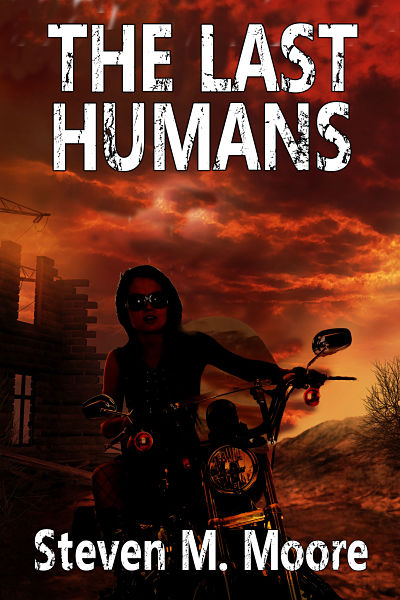
So how did these jobs influence my novel? Some of The Last Humans (it will be published by Black Opal Books in 2019) takes place in that area of the San Joaquin Valley. First, that part of the Valley would be desert if it weren’t for irrigation. Second, with or without irrigation, it’s hot. Third, teamwork can make any job go faster—in fact, sometimes it can’t be done without it. The last is that part of work ethic that some people have trouble learning. Recognizing I couldn’t get that surveying job done without my team is something that many politicians haven’t learned. You can’t be a tyrant; you have to recognize the importance of teamwork. I respected my surveying crew; the owner of the construction company respected me.

All three themes play important roles in The Last Humans. I will forever value that experience obtained under the blazing California sun. The Last Humans isn’t my only book set in California (another one is Silicon Slummin’…and Just Getting’ By), but it’s the only book where my experiences as a college-bound eighteen-year-old play an important role. I hope you enjoy the book when it’s published.

***

The Golden Years of Virginia Morgan. This novel bridges between the “Detectives Chen and Castiblanco Series” and the “Clones and Mutants Trilogy.” The plot revolves around a government program that makes sure elderly ex-government employees don’t divulge national secrets. The main character is from the first series; the villain starts there as a nemesis of the detectives and does his dirty deeds in many of my tales, a modern Moriarty if you will. Mystery, suspense, thriller? You’ll have to decide. Available on Amazon and Smashwords and all its affiliated retailers (iBooks, B&N, Kobo, etc). Great summer reading!

In libris libertas!

Too good to be true…

July 24th, 2018

If you happen to read the NY Times Book Review, you might notice a full page ad with lots of thumbnail cover images from various print-on-demand outfits (PODs)—iUniverse, Author House, Xlibris, etc. If you’re thinking about publishing your first book, you might say, “Geez, I should choose one of these PODs—they advertise in the NY Times Book Review.” Yes, they’ll do that for your book too. What’s in your wallet? In other words, get ready to take out a second mortgage if you’re lucky enough to own a house in this economic environment. And, by the way, these PODs are all associated with Author Solutions, which has a multiple class action lawsuits pending.

Times have changed for The Times. “All the news that’s fit to print” doesn’t necessarily apply to the ads that appear in the venerable paper; they’ll advertise just about anything because they need ad money to survive. Just recently a full-page ad for one of the drug companies named in a Sixty Minutes expose about companies who contribute to the opioid epidemic appeared (it was PR damage control with complicity from The Times, of course: “We’re fighting the opioid epidemic”).

CNN does this too, mimicking their right-wing brethren—you might have seen the ads for Page Publishing among the reverse mortgage and ambulance-chaser ads. If you wonder how a publisher can afford an ad on CNN, you’re not alone. Not even Big Five publishers have ads on CNN. Page Publishing is an old-fashioned vanity press: $295 gets your manuscript in the door, and, if they “accept” it, $3200 over ten months gets your book “published.” They might do a good job in giving you a polished product; I don’t want to find out. For my “indie” books (not vanity as much as Big Five authors and publishers say it), I never spend that much, counting cost centers like editing, formatting, and covert art, and even adding in PR and marketing.

Do The Times and CNN realize that they’re pushing false advertising? OK, “false” might be too strong a word; let’s use “misleading.” Authors starting out, or even seasoned ones wanting to try something different, often don’t realize that these services are too good to be true. “Misleading” means that they’re still dishonest and rank below places like Kirkus and BookBub who are completely honest about the exorbitant prices they’ll charge for their services.

What about that author’s “friend,” Amazon? Go to Smashwords to see CEO Mark Coker’s expose about egregious Amazon practices. Here’s an addendum: Amazon’s nasty little bots are eliminating book reviews, many of them obtained by authors in the internet trenches working hard to scrounge up a few. That’s becoming harder—hence my word “egregious.” (I recently sent out queries for a review of A. B. Carolan’s The Secret of the Urns to bookbloggers in the Indie View list—nary a bite so far.) I’ve lost reviews myself, and have had my own reviews rejected by Amazon because they’re too long (silly me to suppose a review that’s a bit more than the usual two- or three-line review that appears on their website). Many other authors have lost reviews. The replies from Amazon’s “help team” are classic examples of zero-content excuses.

Read the rest of this entry »

The eightfold way revisited, part two…

July 19th, 2018

[I wrote this quite a while ago and have repeated it a few times in this blog. It made the rounds on other blogs somewhere in the past. Why does this zombie rise again out of its grave to persecute you, dear reader? Because I still think it’s good advice about what NOT to do when writing a novel, so I’ve updated that advice a bit and repeated it here yet again. If you’ve been a fan of this blog for a long time, and you’re tired of seeing this, just skip today’s post.]

 (5) Don’t dwell on minutia. That’s the minimalist idea yet again. Moby and 20,000 Leagues again come to mind. Assume the reader already has a good idea about how to brush his teeth, for example—I’m reminded of those websites (do they exist anymore?) where one watches someone go through their day. Boring! I have better ways to spend my time. If a character goes from point X to point Y, the reader doesn’t need to know what happened between X and Y, unless it’s essential to the plot (he sits on a butterfly and changes the space-time continuum?).

(6) Don’t be cute. The TV series Lost had many followers, but most people were turned off by the convoluted pseudo-spiritual and multiple endings, and the many flash-forwards were confusing, to say the least. The writers were too cute. I’ve seen this happen in novels I review. I might be old-fashioned, but I avoid flash-forwards entirely. Garcia-Marquez in one of his novellas, Chronicle of a Death Foretold, gets cute and announces the ending right up front, then spends the rest of the novella telling the reader how that came to pass. He gets away with it—he’s a Nobel prize-winner, after all. Generally speaking, though, you won’t. (Deaver’s worst book was one he wrote in reverse—way too cute! I stopped reading after Chapter Two, i.e. the second chapter from the end.)

(7)  Don’t use clichéd plots. Yeah, I know, there are only so many different story types, but I’ve read about too many twins separated at birth, too many aliens that seem like mafiosos, a plethora of amnesia victims running from bad guys, hordes of star-crossed lovers with families that don’t understand (R & J is not Shakespeare’s best work), and so forth. In particular, if I can map your story into one of Shakespeare’s plays by any stretch of my own fertile imagination, I’m suspicious. Clichés also reduced my enjoyment of the Star Wars trilogy—too many plot elements were lifted straight from Isaac Asimov and Edgar Rice Burroughs’ work, as well as ninja and fairy tales.

Read the rest of this entry »

The eightfold way revisited, part one…

July 17th, 2018

[I wrote this quite a while ago and have repeated it a few times in this blog. It made the rounds on other blogs somewhere in the past. Why does this zombie rise again out of its grave to persecute you, dear reader? Because I still think it’s good advice about what NOT to do when writing a novel, so I’ve updated that advice a bit and repeated it here yet again. If you’ve been a fan of this blog for a long time, and you’re tired of seeing this, just skip today’s post.]

The media once was fixated on spontaneous symmetry breaking and the Higgs boson (the so-called “God particle,” a name that would surely make Mr. Higgs cringe).  The Higgs mechanism (i.e. the spontaneous symmetry breaking) is necessary to give mass to some of the vector bosons in the electroweak or weak and electromagnetic interaction theory. (Can there be more than one God particle?  Interesting question!)  Forgotten in all this media hoopla is the theory that led to the idea of quarks and gluons, the Eightfold Way of symmetries popularized by Professor Gell-Mann.  (Note that I refrain from using the term “discovered.” In theoretical physics, the math is “out there.” You just have to figure out what math matches up to experimental data (not a trivial task by any means). Experimental physics is where “discoveries” are made.) Here’s the update: I’ll concede that maybe the Higgs boson has been found. Now the uproar’s all about whether dark matter and energy exists. (I reviewed a book on Bookpleasures about those two phantasms; the answer is: not yet!)

Now that I’ve had some fun imagining your eyes glazing over as if you’d just had tequila mixed with sleeping pills (not recommended, by the way) while puffing on a few joints (if it’s legal where you are), let me say that this post is not about physics. (My eyes are glazed too, because the above is hardcore physics, and I’ve been sipping my Jameson’s while writing the sequel to Rembrandt’s Angel like a madman.) The Eightfold Way I consider here is the shining path that leads you to a finished novel that someone might want to read. It’s my distillation of rules for writing a novel—a distillation that is not the quality of a fine thrice-distilled Irish whiskey, but I’ve put some thought to it and would like to share (I’d like to share the Jameson’s too, but the internet hasn’t discovered e-drinking yet).

What are the rules for successful novel writing? (Note that the bar for “successful” is low here and is defined as producing a manuscript that someone might want to consider for publishing—of course, that someone might be you if you’re indie.) There are many rules, and everybody has his or her own list. All writers are not equal—what works for one might not for the other.  Moreover, since I’m not David Baldacci or Stephen King, you might think that I’m being a bit presumptuous—I am not a successful novelist.  I might be considered prolific, but, by my own standards, I’m not successful (in the more general sense)—I would certainly like to have more readers. Nevertheless, I’m an avid reader. Since I’m also a novelist, when I read a novel, I read with a critical eye, especially in my capacity as a reviewer (that’s usually two reads, the first as a casual reader, the second as a reviewer—the two hats are different, of course). Readers rule, especially nowadays when there’s a plethora of novels available just waiting to be read. My Eightfold Way is reader-oriented. It’s a list of DON’Ts if the writer wants to keep his readers happy. Are you ready?

(1) Don’t just write about what you know. In fact, the adage “Write about what you know” is completely off base. I don’t know who said it initially, but he or she clearly wanted to eliminate the competition. Here’s the scoop: If you have no imagination, you shouldn’t be a novelist. I’m not just talking about sci-fi, either, where this rule is obvious. If you’re writing a romance novel about vampire love or a thriller about finding a serial killer, I bet you have no direct experience in either (not $10k—how about one of my eBooks?). Your imagination has to rule your writing.  Moreover, what you imagine has to be put into words that move and still make sense to the reader.

(2) Don’t confuse your readers on time, place, or point-of-view (POV).  The action in my novel The Midas Bomb, for example, covers only a week. (That’s the first novel in the “Detectives Chen and Castilblanco Series.”) I had the timeline laid out, of course, but I soon realized that the reader could be confused by the rapid succession of events, especially since flashbacks are mixed in. Consequently, the day and time are a subheading to each chapter. (One reviewer expressed appreciation for this, so I know I made the right choice.)

Read the rest of this entry »

Mini-Reviews of Books #32…

July 12th, 2018

Best of Our Spies. Alex Gerlis, author. (Studio 28, 2012) Most everyone knows the Nazis were fooled into believing the D-Day invasion would occur at Pas de Calais, not Normandy. When the Normandy invasion began, many Nazi forces weren’t there to counter the Allies’ attack. This book is a fictional account about how that occurred.

Not quite as interesting as the author’s Vienna Spies, this is still a gripping and gruesome spy story. Like the best historical fiction, it’s hard to tell fact from fiction. Great plot and characters.

Definitely a great summer read…or anytime.

Murder in the One-Percent. Saralyn Richard, author. (Black Opal Books, 2018) One-percenters attend a birthday party at a country home. No one likes one of the guests very much, so it’s no surprise that he becomes a murder victim. Like a good Christie murder mystery, all the other guests except the hosts become suspects. Ms. Richard’s detective is black, but he holds his own when interrogating his rich and spoiled suspects, some of whom try to stop his investigation.

Part police procedural, part study of how one-percenters live, this novel has little action but a wealth of intrigue. Oh, and one of the characters is a mystery writer, a bit amusing for me. I would have liked to have seen her play a bigger role—a one-percenter Jessica Fletcher, as it were.

Again a great summer read—or anytime, because the plot occurs during the transition to a new year in the Northeast.

***

Rembrandt’s Angel. Scotland Yard Inspector Esther Brookstone’s obsession with recovering a painting stolen by the Nazis in WWII leads to uncovering an international conspiracy. Interpol Agent Bastiann van Coevorden steps in to help her, and their romance blossoms as they travel through Europe and South America in pursuit of the conspirators. Available in print format at Amazon or your favorite bookstore (ask for it if they don’t have it), and in digital format from Amazon and Smashwords and the latter’s associated retailers (iBooks, B&N, Kobo, etc.). A mystery/thriller for great summer reading…or any other time.

In libris libertas! 

Cover art…

July 10th, 2018

First, whether you’re traditionally or indie published, let’s revisit some general advice: (1) Write your story, give it your best edit, and send it to beta-readers, in order to produce a manuscript (MS) that you can do something more with. (2) Leave the rest to the pros: final edits, cover art, and marketing. If you’re indie, that means NEVER be 100% DIY; if you’re going the traditional route, your publisher will take care of everything except s/he won’t help much with marketing.

That doesn’t mean you can’t help out with #2. Here I’ll focus on cover art.

Step One: Develop some ideas for your cover. That shouldn’t be hard. There are scenes in your book that probably could make a good cover. You know your book best, and you’ve imagined those scenes in order to write the words describing them. Choose a few to suggest to your cover artist. S/he might want to go abstract, though. Work with your cover artist to develop those cover ideas.

Step Two: Decide what text you want on the cover. Your title and name (or pen name) are important. I don’t recommend long titles or one-word titles. But I’ve written about titles before (just last week, in fact). Relative font sizes are important—generally your title should be in larger font unless you’re a famous author (in which case you probably won’t be worrying about any of this!). Avoid subtitles on the front cover. They can go inside on the cover page. That goes for series titles (#N in the X series).

For print versions, back cover material is important. Include a blurb and short author bio at the very least; add your pic and a few review extracts if you have them (they can be reviews of previous books in the series, or just reviews of your other books). Don’t make the back cover cluttered, though. And only put the title and author on the spine.

Step Three: Think about how the book will look on online retail sites where thumbnail images are used. That implies simple is better—title and author must be visible even in the thumbnail image. This also implies the cover must look good in multiple resolutions. Your cover artist professional can handle all of this, of course, but the ultimate responsibility rests with you.

Read the rest of this entry »