Movie Reviews #65…

September 14th, 2018

Operation Finale. Chris Weitz, dir. With Ben Kingsley as Eichmann and Oscar Isaac as Malkin, how can you not have a great movie? There’s no mystery here—the story is a true one, and we know how it ends—but there are plenty of thrills and suspense. The viewer gets a glimpse at the spy techniques of Mossad and a hint about how the Argentine Junta learned the dirty tricks for its Dirty War from the right-wing Argentines and German and Italian fascists who fled to South America.

There’s a warning here for all people who bury their heads in the sand, overlooking the bigotry, hatred, and racism practiced by fascist fanatics. I was thinking a lot about events like Charlottesville while watching this film. Fascists took over Germany, Italy, and Japan and murdered millions; they took over Argentina, Chile, Paraguay, and Uruguay and murdered millions; and it could happen in the U.S. and again in Europe where the situation is looking a lot like 1930s Germany and Italy. Something for you too to think about while watching this excellent movie.

I usually don’t like do-overs, but the previous takes on the Eichmann’s capture and trial just weren’t satisfying. This movie is that and more.  The trial was where the world first heard and saw the atrocities committed by the Nazis with their “final solution”; Eichmann was one of the architects of that, if not THE architect.  He was the last main Nazi war criminal—Hitler, Goering, and Himmler committed suicide. Eichmann probably wanted Malkin to do that job for him. Eichmann was first and foremost a mass murderer, but he was also a cowardly weasel. But a quick death for him was too easy. Israel wanted to show the world his crimes. They succeeded.

Both Kingsley and Isaac do great acting jobs in this suspense flick. I hope they’re remembered for awards. We’ll see more from Isaac in the future, I’m sure.

***

Comments? They’re appreciated! Please see the rules on the “Join the Conversation” web page. Note that your first comment has to be approved; from then on, you’re a trusted commentator.

Goin’ the Extra Mile. MECHs = Mechanically Enhanced Cybernetic Humans. Ex-USN Master-at-Arms Mary Jo Melendez, family, and friends, including the MECHs, battle Chinese agents who want the MECH technology. This is #3 in the “Mary Jo Melendez Mysteries.” The action never stops! Coming from Carrick Publishing this fall—look for it!

In libris libertas!


Internet trolls…

September 13th, 2018

[Note from Steve: This is post #2 about my internet woes.]

My life has changed. Once I was participating in discussion groups on Goodreads and LinkedIn. I ended all those associated with the first and will probably do the same with the second. Amazon bought the first; Microsoft bought the second. They allowed the trolls to take over.

I was banned from an old-fashioned authors’ discussion group I’d joined because the trolls objected to my opinions. I’ll admit that 10+ years in the publishing business have caused me to develop strong opinions about reading, writing, and publishing. But what did some members of that indie board object to so vehemently? My statement that having a successful book is like winning the lottery, that’s what! There are many good authors and books in the game, but few winners. The trolls will often punish anyone who speaks the truth.

Facebook has become just as bad. While I admit that I often use my personal feed (never my author’s page) to express some progressive opinions (mine are too varied to call them all progressive, by the way), what really bothered me were the attacks on me for my opinions about how we’re destroying the environment for future generations, a bipartisan positon to my way of thinking (or it should be). That’s when I started “unfriending” some trolls. I don’t have time to read idiotic comments from global warming deniers. I know the facts; I’m an ex-scientist, after all. If trolls don’t want to accept them, or worse, they believe “alternate facts,” I don’t need them as Facebook “friends.” Period!

I recently joined Twitter (there was a marketing campaign too good to pass up that required it). Except for climate control, I avoid all things political there, unlike a certain right-wing troll who’s like Voldemort—I shall not mention his name. I thank everyone for following me, but I don’t follow everyone. People who don’t have a bio are automatically suspect, but so far the trolls seem to be benign, just female members of the “lonely hearts club band.” (They might find romance in some of my stories.  They won’t with me because I’m happily married!)

We have trolls of all sorts: nasty ones, sleazy ones, romantic ones, commercial ones, and political ones. For the average Joe (for many things, that’s what I am), all the trolls are annoying. They’re ruining the internet. That happens in life. We have a good thing going (the internet was invented by physicsists to have an efficient exchange of information, after all), and a small gang of idiots destroy it for the rest of us. I think those tech gurus in Silicon Valley should be able to do something to clean it up, but maybe that’s asking too much. We can’t change human nature…or human stupidity. Einstein said only two things could possibly be infinite: the Universe and human stupidity. But he wasn’t sure about the Universe.  Of course, you can argue whether the internet trolls are really human!

***

Comments? They’re appreciated! Please see the rules on the “Join the Conversation” web page. Note that your first comment has to be approved; from then on, you’re a trusted commentator.

Soldiers of God. In the near future, an FBI agent and a priest fight religious fanatics…and a criminal mastermind who is using them to further his own agenda. More current today than ever before. This mystery/thriller bridges between the “Clones and Mutants Trilogy” and the “Chaos Chronicles Trilogy” (pick up those three latter novels in one bundle). On sale now at 50% off on Smashwords.

In libris libertas!

Mini-Reviews of Books #34…

September 12th, 2018

[Note from Steve: I’ve augmented my book-buying algorithm. Yes, I still avoid a book’s reviews, especially those zero-content ones on Amazon. Yes, I will study the blurb and “peek inside” to see if the author can write. But now I also peruse small presses’ catalogs! The following three books I found doing just that for two small presses, Black Opal Books and EDGE Publishing. Try it. My algorithm now takes a bit longer, but it’s nice to weed out all the dregs on Amazon, so a lot of time is saved!]

Poseidon’s Eye. Trisha O’Keefe, author (Black Opal Books, 2016). Alex is a hot-shot Hispanic when all hell breaks loose after his bachelors’ party. He goes from being engage to the boss’ daughter to being a hunted man, framed for a murder he didn’t commit. He sets out to prove his innocence, not knowing Murray, a detective, already thinks he’s been framed. There’s a parallel story as she tries to prove that as well as prove herself to the men in her department.

Set in SoCal—Alex is from LA; Murray’s based in Bakersfield—the reader will get a glimpse of the Golden State’s area I grew up in, which stretches from the Sierra Nevada to the Pacific Ocean (the last action scene takes place on U.S. 101). The portrayal of the life of migrant workers is all too real, and the picture painted of actions taken against Hispanics and Native Americans by white haters and bigots is tragic.

The major theme here, though, is the duplicity at the highest levels of government and greedy corporate interests. Alex has to cover a lot of ground here to prove he’s innocent; dangerous roadblocks are in the way, as well as many twists and turns in the road.

Read the rest of this entry »

The problem with Google…

September 11th, 2018

Remember those murdered by al Qaeda. The war on terrorists must continue! They corrupt religious beliefs and tear down our sacred institutions. This must end until no terrorist is left standing. That goes for all terrorists, no matter where the infestation grows.

I don’t see any political bias in Google searches, but I see two other problems every day.  I didn’t particularly mind they weren’t present at the congressional hearing with Facebook and Twitter VIPs either (the congressional committee demanded the presence of one of the two CEOs—some nerve from a do-nothing Congress!).  My problems are woes shared by many users.  First, there’s the problem that when I do a search, commercial junk often appears first in the results (the companies pay Google for this, of course). My solution for that is the same one I apply on Facebook and Twitter: I ignore the commercial stuff (as well as anything clearly put there by trolls, especially Russians). (I sometimes “follow” a company if it has something to do with publishing, though.)  Those search results are annoying when I have to far down in the list to get what I need, and I often don’t find it!

Second, there’s the problem that Google pretends to know what my search tastes are. That isn’t in place of the first problem; it adds to it. Based on previous searches, Google fills in even more junk, not commercial necessarily, but still junk of no interest to me in that search.

All this makes my Google searches less efficient. I’m a writer who finds a lot of background material using Google (AKA “researching,” although, as an ex-scientist, my definition of “research” is clearly different). For example, for my last MS, Son of Thunder (sequel/prequel to Rembrandt’s Angel), I spent a lot of time doing that.  For my first novel, Full Medical, same thing (that book is dedicated to a family member lost in the 9/11 attacks). That’s a fifteen-year span. Google was better fifteen years ago than it is today, at least for my purposes, which is why I switched from that old DEC search engine to Google.

Of course, Google isn’t entirely to blame. Wikipedia has some good stuff, but I’m annoyed when Google comes up with Wikipedia articles that warn they’re not complete. Google’s search engine has no brains, apparently (I always check Wikipedia articles because even the ones pretending to be complete often aren’t.)  Same for word definitions. Online encyclopedias, dictionaries, and thesauruses are necessary complements.

I think Google has given birth to a lot of nefarious copiers too.  Amazon’s “Based on your previous searches, you might be interested in…” is often incorrect—I’m mostly not interested in what they show me because my reading choices are wide, or I’m looking for links to some author’s book I’m reviewing. Clothing stores offer products based on ones I’ve previously purchased—I only have so many pairs of socks.  And so forth.

The metatheme here is simple: I’m against any software that tries to second-guess me or interferes with how I work. AI hasn’t advanced far enough to read my mind about what I want. This goes for autocorrection which barely knows English and doesn’t know when I’m writing French, German, Russian, or Spanish amidst the English (as I often do). Another example is MS Word’s continued confusion between “it’s” and “its”—it has just the opposite of what’s correct.  And so forth.

Software and algorithms aren’t any smarter than the people who write them. When people assume they are, they’ll get into trouble. On the other hand, programmers at Google and other places should be smarter about writing them if they don’t want to annoy people like me. Of course, just try to get through to a help desk and read them the riot act about any of this. That’s a whole other level of frustration!

***

Comments? They’re appreciated! Please see the rules on the “Join the Conversation” web page. Note that your first comment has to be approved; from then on, you’re a trusted commentator.

Soldiers of God. In the near future, an FBI agent and a priest fight religious fanatics…and a criminal mastermind who is using them to further his own agenda. More current today than ever before. This mystery/thriller bridges between the “Clones and Mutants Trilogy” and the “Chaos Chronicles Trilogy” (pick up those three latter novels in one bundle). On sale now at 50% off on Smashwords.

In libris libertas!

Movie Reviews #64…

September 7th, 2018

Three Identical Strangers. Tim Wardle, dir. This documentary is disturbingly sinister and strange. Triplets separated at six months are given up for adoption to three different sets of parents by a creepy adoption agency. They are reunited at nineteen. During all that time, they had no idea they were a threesome. They live it up after they reunite, enjoying a long-delayed camaraderie. Then, as one aunt says, things started turning funky. Separation anxiety at six months and possibly an inherited propensity for mental illness causes the good times to unravel.

The movie leaves viewers with more questions than answers. I won’t spoil the experience by mentioning the ones still haunting me. The movie is a conspiracy theorist’s delight. Starting with that adoption agency that misleads the three sets of parents, we learn that the triplets and their parents were unwitting participants in a larger, secret, and unpublished study, its results now squirreled away in an archive at Yale that can’t be opened until 2065. Mind-blowing! You will be thinking about this one for a long while, wondering how this could have happened…and why.

Mission Impossible: Fallout. Christopher McQuarrie, dir. Ho-hum. Boring. More car chases, motorcycle riding, and daring-do with a helicopter. More contrived plot with stupid technology. More Tom Cruise, which is even worse. (I can’t help seeing him as the antithesis of the fictional Jack Reacher.)

I guess this film proves that the summer movie offerings were really bad: I went to see this lengthy, confusing #whatever in the franchise. There’s so little originality coming out of the Hollywood mega-studios anymore…sort of like Big Five publishers and their formulaic and expensive offerings v. small presses and indie authors, who offer fresh voices and original stories. Putting the review of this disastrous movie on the same page as the one above fills me with guilt. Three Identical Strangers took the bad taste out of my mouth that Mission Impossible put there, thank goodness.

***

Soldiers of God. In the future, an FBI agent and a priest must battle religious fanatics…and a criminal mastermind. This stand-alone novel is a bridge between the “Clones and Mutants Trilogy” and the “Chaos Chronicles Trilogy.” Great late summer and fall reading.  On sale now at 50% off on Smashwords.

In libris libertas….   

The end of originality…

September 6th, 2018

When I saw the announcement of James Patterson’s new book Texas Ranger (co-author in small print, of course), my knee-jerk reaction was that this is an example of a current and endemic problem in the world of creative arts. The revival of My Fair Lady on Broadway is another. Disney’s regurgitation of the movie Frozen on Broadway (can’t we let go of that song “Let It Go”?) is yet another. Originality is getting killed, and it’s a slow, agonizing death.

I won’t read Patterson’s book. I haven’t read him for a long time, ever since he started his crusade against indie authors and indie publishers (small presses). (Of course, like all Big Five books, his are too expensive, so I wouldn’t buy them anyway.) The new book I mentioned frankly sounds too much like Jon Land’s Caitlin Strong series, which I very much admire. My Fair Lady is advertised as better than the original.  Huh? That “original” already plagiarized a George Bernard Shaw work and the movie beat it to death. And the last Disney show on Broadway that had some originality was The Lion King (it was much better than the movie, in fact, which is saying a lot—Disney has lost its touch).

I think there are two important causes for this contagion that’s killing the creative arts. First, big money concerns (Patterson’s publishing assembly line, financial backers of My Fair Lady, and Disney’s greed) want to milk the public for all they can when they manage to have a success. Second, big money concerns think the public is stupid enough to want more of the same old thing—formulaic books and regurgitated plays and movies—and not wanting anything new and creative.

Big Five publishers go with the old mares and stallions they feel are sure bets in their stables, mostly formulaic authors with nothing new to say. Broadway has more revivals now than new shows because there’s nothing new to produce. Disney buys rights to Pixar and Marvel because the old Disney has nothing new to present either. Creativity and originality are in peril. Saying something worth saying is too.

Yes, that sounds harsh, but greed is the worst sin next to desiring power. I have no other way to explain the Big Five’s support of assembly lines like Patterson’s, or the many regurgitations on Broadway, film, and in other creative arts today. “Creative arts” is fast becoming an oxymoronic phrase. The contagion is invading all art forms—literature, music, drama, and so forth. It’s a shame.

But let’s talk about books. I get requests for reviews all the time. The people querying haven’t bothered to read my review policies, so I’ll just stop answering them. (Hint: this website is not a book blog!) That’s annoying enough, but I get tired of reading something akin to “If you liked X, you’ll like my Y.” First, I might have hated X, so I would then conclude (perhaps mistakenly) I’ll probably hate Y. Second, the statement makes Y seem like a copy of X.

Read the rest of this entry »

Interviewing Author Sandra Gardner…

September 5th, 2018

Steve: Today we have with us Sandra Gardner, mystery writer and author of the Mother-and-Me Mystery Series.  Without further ado, let’s begin.  Why don’t you introduce yourself, Sandra.

Sandra: Many readers are interested in mysteries, so I’ll start my writing life.  My Mother-and-Me Mystery Series has the following books: Dead Shrinks Don’t Talk (published by Black Opal Books, 5/18) with Grave Expectations and Death of a Nuisance, to follow. These are paranormal cozies. I’m currently revising my new mystery/suspense tale, The Murder Blog, and working on the sequel.  Dead Shrinks Don’t Talk was originally published in 2012 as Mother, Murder and Me, a contest winner, by Swyers Publishing. Halley and Me, a coming-of-age novel, won the Grassic Short Novel Prize and was published by Evening Street Press in 2013.  A poetry chapbook, Mythmaking, was a contest winner and published by Word Journal in 2004.  I’ve received awards for articles in The New York Times and other publications. More information is available on my website: https://sjgardner.wixsite.com/mysite.

Sandra on Reading and Writing:

Steve: Let’s do a wee bit of time travel.  Why, how, and when did you start writing?

Sandra: Seems like forever. Starting with poetry in junior high, I think. Our senior high school English teacher had us write a lot and told me I could write – short fiction pieces. Also wrote for the school magazine. Ditto in college and more poetry.

Steve: Did you publish the first book you wrote?

Sandra: Yes. One of four YA non-fiction books, Six Who Dared (Simon & Schuster), about daredevils; Street Gangs (Franklin Watts) about youth gangs in the New York area; Teenage Suicide (S&S); and Street Gangs in America (Watts), updated and expanded view, gangs in L.A. area.

Steve: What is your biggest problem with the writing process? How do you tackle it?  

Sandra: Biggest problem—doing it! My fiction is character-driven, so it starts with a character(!) and then, what’s going to happen, etc. Setting is a problem for me – I’m an auditory-type person (poetry and play the piano) who could (and has) walk(ed) into walls… not noticing very obvious things in front of me. So I end up with the coffee cup (or the person) hanging in mid-air until I fix it. Voice is my strongest point.

Steve: Do you feel writing is something you need to do or want to do?

Sandra: Need to. Are you kidding? What sane person would want to throw themselves in this agonizing process?

Steve: Have your personal experiences or situations influenced you creatively? If so, how?

Sandra: Oh, yes. Yes. Yes. So much has proved to be grist for the mill. But isn’t that the case with most writers? Besides “write what you know,” I don’t think you can help incorporating bits and pieces of people, experiences, in your work.

Steve: How much of your creative ability do you think is innate and how much is learned? Sandra: Innate? Well, it’s one of two things I’ve been good at, so it must be innate somehow (the other is music). I don’t do sports, am pretty lousy at any kind of craft, don’t much like cooking, etc.

Steve: What is the last book you read? What are you reading now?

Sandra: Just finished Behind Her Eyes by Sarah Pinborough. Very scary. Reading Agatha – the ones I read years ago and don’t remember. The Curiosity Cabinet by Preston & Childs. Magpie Murders by Anthony Horowitz. [I read the last. It was a lot of fun. And, of course, most of Dame Agatha’s books.]

Steve: Who are your favorite authors?  Whose writing inspires you the most and why?

Sandra: Megan Abbott, because she really gets teenage angst; Laura Kasichke, especially her newest one about the Russian adopted child; Hank Phillippi Ryan, for great characterization and plot; Kate Flora—I love her Joe Burgess series because she gets inside the cop mind beautifully. Jenny Milchman has great characterization and exciting plots; Susan Strecker, ditto. Lots more but that’s all I can think of now.

Steve: What’s the last book to make you laugh?  Cry?

Sandra: Interesting question. I don’t usually read funny (have read a couple of Evanovich books—they are hysterical). I don’t usually read tearjerkers either. But some of Megan Abbott’s and Laura Kasichke’s have done that.

Steve: Should writers read in their genre?  Should they be avid readers?

Sandra: Yes, yes. Especially in their genre, for goodness sakes. Otherwise, how can you really know how it’s done?

Steve: How do you find (discover) your plots?

Sandra: They swim around in my head. After the characters do, of course.

Steve: Are your characters based on real people?

Sandra: Yes and no. Like many writers, characters end up as composites.

Steve: How do you name your characters?

Sandra: They usually name themselves. That is, what name comes to mind when I think of the character. They tell me. Exception is: not to name characters (even minor ones) with the same name – or preferably, not even the same initial—as another character. Hank Phillippi Ryan has sometimes posted asking people for good names beginning with certain letters and not others for one of her characters. I’m assuming the “no” list is because of being too similar to other characters.

Steve: Which comes first for you, plot or characters?

Sandra: Oh, character. Always.

Steve: Any comments about writing dialog?

Sandra: Listen to your characters. They’ll tell you.

Steve: How do you handle POV?

Sandra: I’m a much better first-person writer; the voice comes through better, I’ve been told. But in my newest novel (and possible sequel to it), I’ve got multiple POVs. Believe me, it’s a big challenge. And I’m still not quite sure if it works the way it should. The MC, however, is in first person. Everyone else, in third.

Steve: Do you do fact-finding (AKA research) for your books?  If so, how? What sources do you use?

Sandra: Yes, lots, for my first series, the Mother-and-Me Mystery Series (Dead Shrinks Don’t Talk, first book just published by Black Opal Books this May), I went to Rikers Island for the jail scenes. Went online to D.P. Lyle, a forensic pathologist (and writer) for medical questions—about murder, of course! And most of all, consulted with my mystery-writer friend, a retired family court judge, for extensive legal questions. And also online for other questions involving police procedure, etc.

Steve: What reference works do you use most? Read the rest of this entry »
Short-fiction redux…

September 4th, 2018

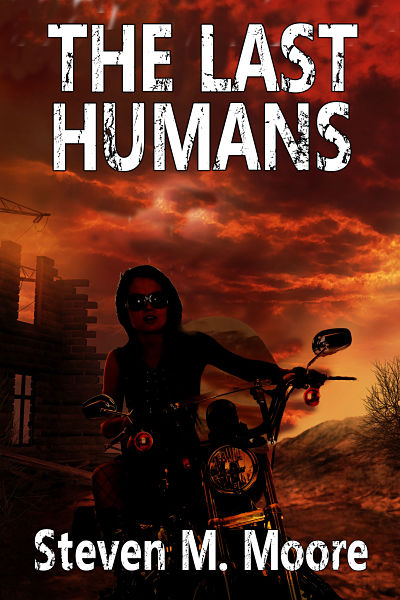
After finishing the manuscripts for The Last Humans (a post-apocalyptic thriller to be published by Black Opal Books in 2019), Goin’ the Extra Mile (“Mary Jo Melendez Mysteries” #3, to be published by Carrick Publishing this fall), and Son of Thunder (sequel/prequel to Rembrandt’s Angel, back from editors and beta-readers and in the submission prcess), I’ve decided to spend a bit more time on short fiction, encouraged by A. B. Carolan, my Irish collaborator.

I just uploaded The Phantom Harvester to my OneDrive folder (see the web page “Free Stuff & Contests” for download directions—there’s more free short fiction PDFs in that folder too). It’s a novella about Cecilia and Pedro Castilblanco, Detective Castilblanco’s adopted kids. They’re not mentioned in either Rembrandt’s Angel or The Golden Years of Virginia Morgan, another two spin-offs from the “Detectives Chen and Castilblanco Series,” so readers might be interested that Ceci becomes a CSI and Pedrito becomes a cop like his father. Here they end up working on the same case.

My short fiction either goes into my OneDrive folder now or the blog category “Steve’s Shorts” (A. B. Carolan has his own blog category for the same purpose, “ABC Shorts”). There are multiple reasons for this, but the major reason is to provide some freebies to readers hoping that they’ll become interested in my novels. (Neither A. B. nor I give away our novels, except to reviewers.)

I’ve had a few authors tell me this is silly. Publishing is a business after all. My counter argument is pretty weak: it’s as much trouble to peddle short fiction as it is to do so for a novel, usually more so. Moreover, ‘zines, whether traditional paper or online, pay very little for short fiction.  Of course, another counter argument is some of these same authors offer free novels, which is even sillier (I’m not speaking to free review copies here).

I’ve always enjoyed writing short fiction, though, and I can speedily write a short story or novella, which I’d rather be doing rather than spending time querying ‘zines and asking them to publish them. And, when I start a story, I never know whether it will end as a novel—a lot of my writing becomes short fiction because I think there’s just not enough there to make a novel.

You might say to me, “Take a bunch of short fiction and make a collection.” Been there, done that (see, for example, Pasodobles in a Quantum Stringscape)—it doesn’t pay either, financially for royalties or for the time and money spent. Moreover, not many people read short fiction anymore. You might read a short story in some ‘zine sometime (at a doctor or dentist’s office?), but its author either had more perseverance than I do, or s/he had good connections, or s/he was very lucky. (‘Zine editors are generally worse than literary agents and acquisition editors for wasting an author’s time.)

So, for now, I’ll be writing short fiction and you can read it for free. If you like the former, please try some of my novels. The same guy is writing them, after all.

***

Pasodobles in a Quantum Stringscape. This collection of speculative fiction contains short stories and a novella. The shorts cover ghosts, zombies, and sci-fi, some humorous, others not so much. Most of the Dr. Carlos stories—he’s the medical officer on the starship Brendan—are also found here.  The novella is “Flight from Mother World,” the story of how the ETs from the second book of the “Chaos Chronicles Trilogy” arrived in the 83 Eridani solar system before human colonists. Great late summer and fall reading.

There’s one review of this collection on Goodreads. Be the first to review on Amazon. How do you review a collection? Maybe select some of your favorite stories from it and tell other readers (and me!) what you liked about them?

In libris libertas…

Is writing gender neutral?

August 30th, 2018

By this question I mean whether readers like books independently of the author’s gender, and whether authors can write books independent of their gender? The second applies to any creative artist—indeed, it applies to any occupation. I have some progressive opinions about that. The first is subjective and might inspire some comments to this post.

Recently I heard that WNBA players are second-class citizens compared to NBA players (of course, I long suspected that). The former share 25% of the profits; the latter 50%. WNBA rookies start at about $44K. You can imagine what some NBA rookies start at!

This is common in many occupations. While CEOs now make 300 times what their average employees do (talk about earnings gap!), female employees make less than their male counterparts in general, CEOs included.

I’m an equal opportunity and equal pay for equal work fan. I don’t have stats on journalists, but I believe fiction reading is gender neutral. I think most readers are like me: we just like a good story, no matter who writes it. In fact, I pay no attention to the gender, religion, political proclivities, and so forth of the author as long as the story’s good.

In my book buying, I look for good stories. Although I market my own books, I’ll admit authors’ marketing efforts don’t have much effect on me. They might move me to look at the book’s page on Amazon for its blurb and “peek inside,” or do the same at a bookstore. If the author’s advertising has some serious review excerpts (hint: too many reviews are zero content, especially on Amazon), that might help the author’s cause, but it’s not likely.

You can see that my book purchases have nothing to do with the author’s gender, religion, politics, and so forth. Genre(s) and other keywords might influence me too (I don’t read fluff, which nixes bodice rippers, fifty shades of anything, and cat mysteries).

In fact, there are more female readers than male, so I wouldn’t be surprised that there are more female writers than male (the one doesn’t follow the other, of course). I certainly read more female writers than male writers (again, I’m not sure there’s any correlation, but it’s a personal fact).

There’s a tendency for protagonists to be male, but I think that gender bias is disappearing. After all, the male protagonist saving the damsel in distress from the clutches of the villain sounds like a silent movie, right? Yet Hollywood often still follows that model! My own stories tend to be a bit biased the other way. I have no problem with a smart, strong woman as protagonist because I’ve know quite a few who can serve as models for those kind of characters.

I don’t know if there are gender biases at publishing companies. Maybe at the top? I don’t know why there would be either, considering the last comments, but these companies might be similar to all the others. (I remember a stereotypical episode of Mike and Molly where Molly confronts a publishing editor…typical and hilarious!). I worked in scientific R&D where there was definitely gender bias. Some of that might be due to parents and teachers giving credence to the debunked theory that girls aren’t good STEM students. That’s malarkey, of course, and I never propagated that myth when I was a professor…or with my own kids.

Let me end this little essay by stating that your gender doesn’t affect your ability to write a good story. The three steps to good writing are create, edit, and persevere. Your gender doesn’t affect any of those steps. It might affect other things like choice of genre, but not that basic trinity. While I try to remember an author’s name whose books I like, that first choice of her or his books is independent of gender. I read for the story.

***

Rembrandt’s Angel. Mystery, thrills, and romance await the reader of this novel. Scotland Yard Inspector Esther Brookstone is trying to decide whether Interpol Agent Bastiann van Coevorden will become husband #4 as she becomes obsessed with recovering a Rembrandt painting stolen by the Nazis in World War Two. As the case morphs into an international conspiracy, the two become closer as they battle neo-Nazis, a drug cartel, and ISIS. Available in ebook format from Amazon and Smashwords and all the latter’s affiliated retailers, as well as print format at Amazon or your local bookstore (if they don’t have it, ask for it). Ideal for later summer and fall reading.

In libris libertas!

Review of “Losing Earth”…

August 29th, 2018

“Losing Earth.” Nathaniel Rich, author, with photographs by George Steinmetz (NY Times Magazine, 8/5/2018). All of the above are fiction. There’s nothing fictional about global warming and its resulting extreme weather events we’re currently experiencing. This is the first time I review a magazine article, but it’s important. I’d have called it “Murdering Gaia.”

The article covers ten years of world history, 1979—1989, describing how science defined the “greenhouse effect” from atmospheric CO2 and how it leads to extreme climatological events. This disaster can’t be simply described as “global warming,” and it’s NOT a hoax.

The article also describes how politicians (mostly Reagan and Papa Bush and their minions), energy companies and their lobbyists, and, yes, even corrupt scientists failed to do a damn thing about it. Motivated by pressures from many sectors who preferred immediate gains to saving the future of generations to come—indeed, creating the distinct possibility that life on our planet will end as Earth becomes a planet like Venus where 800 degree surface temperatures are caused by a CO2 atmosphere—they went about murdering Gaia.

And no one has done anything sense. More carbon has been released into the atmosphere since 1989 than in the entire preceding history of civilization.

Everyone should read this article. There’s a small possibility we can still save the planet enough that future generations can live by adapting to the extremes. It’s time for everyone to rise up and take action. The future for life on Earth is at stake.

***

Gaia and the Goliaths. #7 in the “Detectives Chen and Castilblanco Series,” this novel has murdering Gaia as a theme, both figuratively and literally. Gaia Papadakis, an environmental activist, is assassinated on a street in Manhattan. In following the clues for the case, the two detectives uncover a national and international conspiracy. Arch-villain Vladimir Kalinin is back too, but in a new way, as the twists and turns lead to the climax. (Every ebook in this series can be read independently.) Available on Amazon and Smashwords and all the latter’s retail affiliates (iBooks, B&N, Kobo, etc). Mystery, thrills, and suspense for your late summer and fall reading.