Settings…

October 4th, 2018

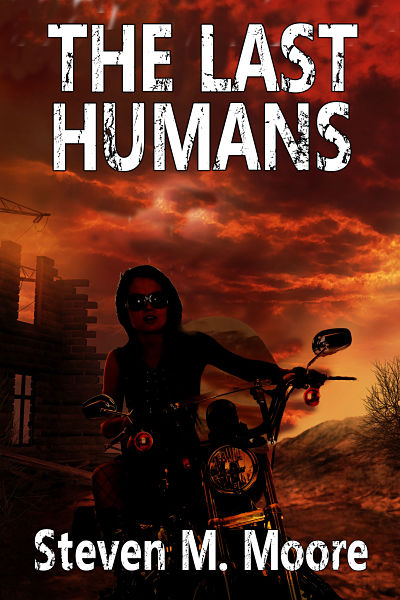
Harry Bosch is an LAPD detective because Michael Connolly lives in the LA area. Inspector Rebus is an Edinburgh detective because Ian Rankin is from there. A lot of Geza Tatrallyay’s thriller Twisted Traffick takes place in Vienna; he doesn’t live there now, but he did (see the previous interview). My new book The Last Humans (to be published by Black Opal Books in 2019) is a post-apocalyptic thriller set in SoCal; I grew up there. Is the best way to come up with realistic settings to live in the place for at least a time?

I’ve lived in many places and visited many more. Maybe it’s unusual that my only novels that take place in California are Silicon Slummin’…and Just Getting’ By (Carrick Publishing, 2015) and The Last Humans. Most of the books in the “Detectives Chen and Castilblanco Series” either take place in the NYC area (where I live now), or start there, although I’ve only lived in this area for about eight years.

What about sci-fi? More than Human: The Mensa Contagion starts in NYC too (it ends up on Mars and beyond). Much of the first part of Survivors of the Chaos takes place in a dystopian NYC.

I’ve lived in the Boston and DC areas as well as Colombia (South America). Part of my first novel, Full Medical (2006), takes place in the Boston and DC areas; parts of Muddlin’ Through (2014) and Soldiers of God (2008) take place in Colombia, and one villain in The Midas Bomb (2009) comes from Venezuela (in both books, I predict the far left chaos produced by dictators in that country). Am I also writing novels with settings corresponding to where I live or have lived?

Not really. I doubt that many writers put settings over plots and characters. In other words, I don’t think any novelist says, “I live here, so I have to make ‘here’ my setting.” Connolly’s Bosch could work in any major city in the U.S.; Rankin’s Rebus could work in any major city in the British Commonwealth. (For example, Jill Patterson’s character, Inspector Fitzsimmons, works in Australia—Rebus could live there too.) Settings can be anywhere, and with Google you can send your readers anywhere in the world. (I dare any reader to determine what places I’ve actually been to in Rembrandt’s Angel. You might be surprised!)

Of course, fiction has to seem real. Part of that fictional reality is setting. When we write our stories, we have to transport the reader to the story’s setting—the more real it seems, the better. Yet there is no doubt that it’s easier to describe the venue of the story if the author has been there. Some authors even couple leisure travel with studies of potential settings. I never had settings in mind for initiating my travels, most of them for business, but I’ve certainly wrote notes and accessed the hard drive in my head about the places I visited.

I know other writers who live in the tristate (NYC) area—Jenny Milchman (Wicked River) and Harlan Coben (the Myron Bolitar series), and many others. I should ask Jenny if her settings are local. I know many of Harlan’s are.

There are settings where readers know I’ve never visited. New Haven, a planet in the 82 Eridani solar system (Sing a Zamba Galactica, 2012) and the planet Eden (Rogue Planet, 2016) are examples. Most places in sci-fi tales weren’t visited by their authors, but they still seem real in a well-written story (Niven’s The Integral Trees is maybe the strangest example). But you never know! Maybe I don’t write about time travel because I’m really from the future!

***

Comments are welcome!

The entire “Clones and Mutants Trilogy” is now on sale at Smashwords. Full Medical, Evil Agenda, and No Amber Waves of Grain are sci-fi thrillers featuring (surprise!) clones and mutants, heroic protagonists, and a criminal mastermind that’s as creepy as he is complex. These books are 50% off on Smashwords. Use the coupon codes for each book to get this discount.

In libris libertas!   


Interview with author Geza Tatrallyay…

October 3rd, 2018

Steve: Today I have the honor of interviewing author Geza Tatrallyay. This man of the world, scholar, and gentleman writes thrillers, memoirs, poetry, and children’s picture storybooks. Readers can visit his website https://www.gezatatrallyay.com/, but this interview will provide even more insight about this talented and versatile writer.

Geza’s essential data:

Steve: Why don’t you tell us about yourself, Geza? You’ve had an interesting life!

Geza: I was born in Budapest, Hungary, and escaped with my family in 1956 during the Hungarian Revolution, immigrating to Canada that same year. I grew up in Toronto, attending the University of Toronto Schools, where I was School Captain.

I graduated from Harvard University with a BA in Human Ecology in 1972 (after taking a break in my studies to work as a host in the Ontario Pavilion at Expo’70 in Osaka, Japan). I was selected as a Rhodes Scholar from Ontario, attending Oxford University and graduating with a BA/MA in Human Sciences in 1974; I completed my studies with a MSc in Economics from the London School of Economics and Politics in 1975. I represented Canada as an epée fencer in the 1976 Olympic Games in Montreal.

My professional experience has included stints in government, international organizations, finance, and environmental entrepreneurship. Since 2004, I have been semi-retired, managing a few investments mainly in the clean energy sector and devoting himself to my family and my writing.

I am a citizen of both Canada and Hungary, a green card holder with an American wife, a daughter living in San Francisco, and a son in Nairobi. I currently divide my time between Barnard, Vermont, and San Francisco.

Steve: Wow! Impressive. You have a lot to write about. Can you describe some of that writing?

Geza: Sure. My first novel was Arctic Meltdown (2011), a political/environmental thriller. My “Twisted” trilogy is comprised of the international crime thrillers Twisted Reasons (Deux Voiliers, 2014), Twisted Traffick (Black Opal Books, 2017), and Twisted Fates (Black Opal Books, 2018). Rainbow Vintner is an international thriller about the rise of jihadist terrorism and the extreme far right in France (to be published by Black Opal Books in late 2018).

The first book in “The Cold War Escape Trilogy,” For the Children, is the narrative memoir of my escape from Hungary and immigration to Canada (Editions Dedicaces, 2015).  Other books in that series are The Expo Affair, a memoir of three Czechoslovak girls who approached me during Expo70, the world’s fair in Osaka, Japan, to help them defect to Canada (Guernica Editions, 2016); and The Fencers, a memoir of a Romanian-Hungarian fencer who approached me to help him defect at the 1976 Montreal Olympics, where I represented Canada as an epee fencer (currently under consideration by several publishers).

Read the rest of this entry »

Motivation…

October 2nd, 2018

“To have faith is to trust yourself to the water.  When you swim, you don’t grab hold of the water because, if you do, you will sink and drown.  Instead you relax…and float.”—Alan Watts

OK, Mr. Watts probably didn’t write this advice for authors. But authors must have faith in their work, that what they’re saying is worthwhile saying. But that’s not enough. That faith builds with your motivation. I see “the water” of our writing lives as that vast ocean of good books and good authors where we’re expected to rise above the average sea level, although most of us want to become a tsunami. We can’t do any of that without motivation. And readers are interested in what motivates us to write a book!

One problem with novels for me is that their authors don’t often go into the motivation for writing the book. Bios only provide general information, and I suppose the more books authors have, the less important they consider the motivation for writing each one. Book reviews rarely talk about an author’s motivation. Interviews focus more on the author than the author’s books, and again there’s less tendency to talk about motivation for a specific book.

When I finish a good novel, I often ask myself, “What was the author’s motivation for writing this? How did s/he ever come up with that story idea?” (The latter question arises because I know that motivation often leads to a story idea in my own writing.) Maybe other readers feel the same way.

If an interviewer asks the interviewee about specific books, that might help readers answer those questions—if they see the interview, of course. An author can discuss motivation in a preface too. That has the advantage that it’s right there in the same book, but extra material before the prologue or Chapter One just gets in readers’ way. And probably won’t answer those questions until they finish the novel.

Because I feel the need to answer those questions in some way as a reader, I do something about it as an author. I generally add at the end of each novel a section titled “Notes, Disclaimers, and Acknowledgements.” The notes inform the reader about my motivations for writing the novel and sources I might have used, the disclaimers do just that (they might be apologies for screw-ups too), and the acknowledgements give the usual credit where credit is due (some authors put them at the beginning, but they belong at the end).

Curious readers like me are bound to read the first part; I might even read it before the novel, but I don’t want to be forced to do so. I write mine to cover both cases (although I write it after the novel is finished, because other motivations might have come along while I’m writing). I write this all down so I don’t forget later why I wrote the book. I ask myself, “Why did I write this?” You’d think I’d remember, but sometimes I need to refresh my memory—for a book event or interview, for example.

What do you think? Readers AND writers are invited to comment. Should authors make their motivation for writing a novel public knowledge? You already know my answer.

***

Comments are welcome!

The entire “Clones and Mutants Trilogy” is now on sale at Smashwords. Full Medical, Evil Agenda, and No Amber Waves of Grain are sci-fi thrillers featuring (surprise!) clones and mutants, heroic protagonists, and a criminal mastermind that’s as creepy as he is complex. These books are 50% off on Smashwords. Use the coupon codes for each book to get this discount.

In libris libertas!

Book review of Bob Woodward’s Fear…

September 28th, 2018

Fear. Bob Woodward, author (Simon and Schuster, 2018). I’ve been a Bob Woodward fan since Nixon. Journalists keep politicians honest and the public informed. (Two at the NY Times made a mistake with their Rosenstein/25th Amendment report, but these are few and far between.) Freedom of the press is one of our most important freedoms, and it distinguishes democracies from the ubiquitous authoritarian regimes around the globe.

That said, this book only stands out because other books of the same flavor are not as trustworthy and prone to sensationalize the Trump administration’s scandals (that’s the worst kind of journalism–do we still call it “yellow journalism”?). We have to face the fact that the American people elected Trump. We’re probably stuck with him for four years, and his supporters are certainly hoping for another four. That too is democracy in action. Democracy isn’t the prettiest way to govern the multitudes and run a government, but it’s better than the alternatives.

This isn’t one of Woodward’s best books. First, I didn’t find many surprises here, at least for me. Maybe there’ll be some for people who only watch Fox News (not a fortress for good journalistic practices, by the way–even Trump watches CNN and MSNBC); these people either have their head in the sand, or they’re ardent Trump supporters who think he walks on water (he’s on a mission to ruin the environment, so that water will soon be polluted, I suspect). Oh, my bad! Those people, if they read books, don’t read books like this. (Hey, I’m open-minded; I even watch Fox News—Hannity’s always good for a few laughs—and I read McCain’s book, because he’s a true conservative and American hero, not a “populist” AKA fascist.) But think what you will. It’s still a free country, and I’ll respect your opinion even if it clashes with mine. (I couldn’t be a reader or writer if I didn’t.)

Second, the book has its flaws and ups and downs. There are some nice details, though. Trump running between two White House rooms ranting and raving about Rosenstein’s naming Mueller, Trump acting like a complete psychotic paranoid while yelling, “They’re out to get me!”  (You have to admit that’s funny at least.) Trump not worried about creating more national debt because Mnunchin could just print more money. (He doesn’t understand economics; I’m not sure he even understands real estate. He went bankrupt many times. Maybe he wants to solve our problems by making the country do the same?) Ivanka exploding to the Chief of Staff Kelly that she doesn’t have to report to him because she’s the first daughter. (And she wants to be president? Of course, she was a friend of Chelsea Clinton’s, who seems to have the same aspirations. Infectious mental disease of first daughters?) Tillerson exploding to those who remained in the Pentagon SCIF that Trump is a “f%$&ing moron” (the actual quote doesn’t soften the f-bomb) after Cohn and Mattis and others tried to control him and Trump stomps out.

Read the rest of this entry »

Hook…

September 27th, 2018

I’m not talking about Peter Pan’s nemesis here. I’m talking about the beginning of a novel. In a way, “hook” is an insulting term.  It refers to the first chapter, first paragraphs, first words even, of a novel that can get a reader interested in the story. Readers aren’t fish, though, and an author can’t hook them and reel them in. That said, all fiction has to interest the reader at the beginning. Readers usually don’t start reading in the middle of the book, after all.

There is only one basic question an author must answer for the reader at the beginning: Is this interesting enough to continue? Writers answer that question in various ways. There might be action that’s gripping and suspenseful. The reader gets into the mindset of a main character. There’s an unusual, even weird, setting to grab the reader’s attention. So many others, but they all have to answer that basic question.

In my very first novel Full Medical (2006), I started with a Prelude. Whether Prelude, Prologue, or first chapter, that’s where an author must answer that basic question. My prelude describes the escape of three young people from a secret facility that’s part of the government conspiracy that unravels in the rest of the book. I wrote it in a way that lets the reader know that these young people are victims of that conspiracy. (It’s the first book in the “Clones and Mutants Trilogy,” so you can probably make an educated guess about what the conspiracy is—the cover provides a hint too.) This prelude was designed to answer that basic question and maybe replace it with another: who are these escapees? We only them at first as FS2, HJ1, and SW1.

That first novel was mostly pre-apocalyptic, not post, the trilogy eventually leading to the chaos that beset Earth at the beginning of the “Chaos Chronicles Trilogy.” In the second book of that trilogy, Sing a Zamba Galactica (2012), a child falls off a bridge in a pioneer town of a new colony on a planet in the 82 Eridani system; the child is carried way by the swift current, but the colonists find her sitting on the riverbank downstream with something like rope burns all over her body. Who saved the kid? I won’t say.  You should read the book…or the full trilogy. The point is that yet again I try to provide an answer by suggesting another question to the reader. There’s a mystery afoot, even if we’re far from Earth.

I particularly liked the beginning of The Golden Years of Virginia Morgan. Most of the plot is based on one of my short stories (found in Pasodobles in a Quantum Stringscape), but I knew that most readers hadn’t read that story. I worked on that beginning a lot. I wanted it to imply another government conspiracy, involve the protagonist immediately, and shock the reader into asking, “What’s going on?” The shock element isn’t uncommon in thrillers. Here a woman is killed in a park in Hoboken, NJ, and the protagonist is a witness. Coincidence, yes, but the victim is on a nurse who works in a nursing home, the killer seems to be a professional assassin, and the witness is an older government agent who is divorced and on her first date after a long time. (She’s DHS agent Ashely Scott who’s an old friend of NYPD homicide detective Castilblanco; he makes a cameo appearance in the novel.)

I thought this beginning was good—not exactly as good as three G’s and an E-flat (Beethoven’s Fifth), but it did exactly what I wanted. Most readers would want to know why this murder took place and more about the characters, including the victim. But one critic (not a reviewer) said he didn’t care why that murder occurred, didn’t like Hoboken (maybe he didn’t like Frank Sinatra?), and couldn’t connect with the protagonist or the victim. He also said I should stop writing! If you read the book, see if you agree. Or you might just agree with me: opening scenes don’t work for some readers. That was an important lesson, of course—a crushing one, because I’d spent so much time on that opening.  I’ve gotten over it. (You have to have a thick skin in this business!)

The Midas Bomb provides a similar opening, only with two murders. The first murder victim is an economics-modeling expert working on Wall Street (hence “Midas”); that’s Detective Chen’s case. The second murder is a Navy SEAL on assignment (working for the DHS agent just mentioned but in her younger days)—you only hear her first name during a com contact—and that victim becomes Detective Castilblanco’s case, who’s an ex-SEAL and knows the victim. The reader hopefully has her or his interest piqued and asks, “What’s the connection?” If s/he does, s/he’ll be satisfied later on because Castilblanco eventually makes one, but that’s only the beginning (the “Bomb” comes later). Read the rest of this entry »

Interviewing author Jacqueline Seewald…

September 26th, 2018

Steve: Today I have the pleasure of interviewing multiple award-winning author, Jacqueline Seewald. Nineteen of her fiction books have been published to critical praise, including books for adults, teens, and children. Her short stories, poems, essays, reviews, and articles have appeared in hundreds of diverse publications and numerous anthologies such as: The Writer, L.A. Times, Reader’s Digest, Pedestal, Sherlock Holmes Mystery Magazine, Over My Dead Body!, Gumshoe Review, Library Journal, Publishers Weekly, and The Christian Science Monitor.

She’s taught creative, expository, and technical writing at Rutgers University as well as high school English. She also worked as both an academic librarian and an educational media specialist. Her writer’s blog can be found at: http://jacquelineseewald.blogspot.com.

Without further ado, let’s hear from Jacqueline.

Jacqueline on Reading and Writing:

Steve: Why, how, and when did you start writing?

Jacqueline: I started writing stories back in elementary school. I was always into reading and wanted to try my hand at writing. I won some writing contests and that encouraged me to continue.

Steve: Did you publish the first book you wrote?

Jacqueline: No, it sat in a drawer. I showed it to several people including my mother who didn’t much care for it. So I decided eventually to start a different work.

Steve: What is your biggest problem with the writing process? How do you tackle it?

Jacqueline: For me, the hardest part is getting the beginning right. I agonize over beginnings, writing and rewriting until I’m satisfied. I know how important it is to create a strong narrative hook to catch the reader’s attention from the start.

Steve: Do you feel writing is something you need to do or want to do?

Jacqueline: Writing is definitely something I need to do. When I finish writing a work that I consider really good, I’m on a high.

Steve: Have your personal experiences or situations influenced you creatively? If so, how?

Jacqueline: Yes, real life does influence my writing. For example, my first novel in the “Kim Reynolds Mystery Series,” The Inferno Collection, was inspired by a speaker/university librarian who lectured on the unique topic of inferno collections while I was studying for my library science degree. I was fascinated and thought this would provide the perfect backdrop for a murder mystery.

Steve: How much of your creative ability do you think is innate and how much is learned?

Jacqueline: It’s definitely a combination. Because my mother loved to read, I became an avid reader as well. That encouraged me to write my own thoughts, stories and ideas. I took a creative writing course in college and when I became an English teacher, I also taught creative writing. As I taught, I continued to learn myself.

Steve: Who are your favorite authors?  Whose writing inspires you the most and why?

Jacqueline: Jane Austen is a longtime favorite. I was also inspired by Biblical stories.

Steve: Should writers read in their genre?  Should they be avid readers?

Jacqueline: I believe writers should read in their favorite genre and also be avid readers of infinite variety—fiction, non-fiction, short stories, poetry, plays—I’ve read and written them all. I respect and embrace diversity. I’ve written for adults, teens and children. For instance, in the last few months my adult romantic mystery thriller Death Promise was published by Encircle to very good reviews, followed by my young adult novel Witch Wish from Black Opal Books. Although I’m best known for romantic mystery thrillers, I don’t just read or write in that genre.

Steve: Are your characters based on real people? Read the rest of this entry »

Internet PR and marketing…

September 25th, 2018

Writers are doing it too. Most people I follow on Twitter are writers doing their own PR and marketing. Is this efficient?  They want to sell their books to me and aren’t particularly interested in buying mine.  But many retweet to their own followers, so maybe it all comes together.

I used to think Gookreads was the place to be. That’s where a lot of readers congregate, so you’d guess they’d be interested in new books, right? GR ads don’t work, though. And GR suffers from the same problem that damages internet PR and marketing for indie authors and authors published by small presses, especially since Amazon purchased GR: the Big Five has a lot more money to throw into PR and marketing for their sure-bet old mares and stallions in their stables, a lot more money than the previously mentioned authors can spend.

Internet PR and marketing works for the Big Five. In a recent GR ad blitz, I saw three ebooks that I liked on sale (all less than $6, my cut-off price), all from Big Five publishers. I bought all three, not without remorse: I’ll never be able to afford ads like that! (Same for full-page NY Times ads and trailers on TV, of course. But maybe only James Patterson is offered those?).

For every book launch, I spend something on PR and marketing using a publicist. That’s the least we have to do in order to tell the reading public we’re still writing and we’ve released a new book. But none of this really works for me…not much anyway. The campaigns are good for a few reviews and a few sales, but I couldn’t live off my writing. Far from it! (And glad I don’t have to do so.)

That’s the sad fate of most authors. There are many good books and good authors writing them, but they’re not recognized enough because (1) readership is down (and biased toward older people who are the readers—young people don’t read as much), (2) there’s a glut of books creating a low signal-to-noise ratio (our signals are lost in that noisy glut), and (3) and publicists rake in money by telling us we just don’t do enough advertising, but what they propose does NOT work.

The latter is true, in a sense, because we can’t compete with the Big Five when they decide to market a book from one of those old mares or stallions.  The above “enough” would mean advertise more than them, I’m guessing, and we can’t do that.  Indie authors can’t—they’re one person (with mnay books, it becomes worse).  Authors with small presses can’t either—they’re still only one person, because small presses can’t afford lots of PR and marketing help either. Even big traditional publishers don’t help (unless you’re one of their faves lik James Patterson).

Read the rest of this entry »

Getting in on the ground floor…

September 20th, 2018

In my old day-job, the projects where I was most comfortable were those where I got in on the ground floor. In other words, I was in it from the start, analyzing the data available and initiating its theoretical explanation.

I couldn’t do that with writing. I’d decided long ago to postpone my storytelling in order to put food on the table for my family, just like my father had done before me with his painting. Few people can make a decent living in arts and crafts, and my parents had taught me financial responsiblility. All this “follow your dream” stuff is nonsense. You can’t forget about your dreams, but you can postpone them while you take care of your loved ones.

People who get in on the ground floor still might have a tough time at first, but trailblazing has its satisfactions if not rewards. The old mares and stallions in the Big Five’s stables, their current “sure bets” in the race to successful novels, didn’t have much competition when they started. Emphasis should be on the word “old,” meaning they’ve been publishing solid, marketable stuff for years. One author, James Patterson, even invented an assemblyline approach to publishing.

But I think even Patterson had a few rejections at first. Tom Clancy and J. K. Rowling also had a hard time in the beginning. I bet none of them can beat my record, though. Not getting in on the ground floor led to over 1000 rejections from agents and publishers as I tried to go the traditional route. I was the “Cancer-Stick Man” from X-Files without that cancer stick.  No one had heard of me, no one believed in me, and probably no one wanted to hear from me again.

Thank God for self-publishing and traditionally publishing via small presses. For all who just want to spin a good yarn or two, they take away that advantage all those old mares and stallions have by having started on the ground floor. The odds are still stacked against us—from authors, bookstores, and critics (the dreaded ABC’s of the publishing establishment) shunning us, to disparaging remarks against indie books and those from small presses that we always hear or read about. But we’re still writing, putting our stories out there for all to read. Maybe we just changed that ground floor to some higher level with a ceiling determined by uninformed and prejudicial opinions, but we’re writing and publishing. They can try to take that away from us, but they won’t succeed.

Read the rest of this entry »

News and Notices from the Writing Trenches #163…

September 19th, 2018

Summer’s over. Well, not officially yet, but some leaves are starting to change around here. Family vacations are over. Kids are back in school.

The weather was bad, and Mother Nature smacked us around for our pecadillos. As I write this, hurricane Florence is pounding the coast of the Carolinas. Be safe, fellow readers and writers!

Make reading a part of your life and for your friends and family. Reading and literacy are the keys to civilization and intelligent, informed discourse. Reading is also entertainment, as in my books, but I’ll first mention a few other cultural things to do around my neck of woods this autumn that are also entertaining. Because people are still visiting the tri-state area, either for vacations or holiday events, some of these might work for visitors to our area.

Local News…

Two favorite places. If you live in or visit the Montclair, NJ area, you might know them already. The Montclair Public Library is a quiet place where you can browse the stacks (you might see some of my books—I’ve donated a few). The library also has many events of interest to the cultural community (last year I participated in the Indie Authors’ Day, for example)—talks, meetings, and courses.

Another favorite place for reading aficionados is Watchung Booksellers. You can browse their stacks in a quiet, intimate setting, looking for those new releases you’ve heard about.  I haven’t had the privilege of doing a book signing there yet (the queue is long, I suppose), but the bookstore has a lot of them too.

Montclair events. Since I’m on this shtick about places for cultural events, I’ll mention some more.

Don’t forget Montclair State University’s events.  We’ve seen some excellent performances there—the drama and music students are very talented. At this writing, school has just started there too, and the program circulars aren’t available yet. If the programs are anything like last year, though, you won’t be disappointed. And the price is right.

The Papermill Playhouse often has plays that end up on Broadway. You can see them before that. We’ve seen some good ones, and we weren’t surprised when they ended up on the Great White Way.

The Montclair Orchestra is new this year with four programs, I believe. Some MSU students and faculty belong. You’ll see their flyers if you’re out and about in Montclair.  Keep it in mind.

You don’t have to go into NYC for cultural events—the burbs have plenty.  Here’s another one:

Holly Berry Show. Is it too soon to think of the holidays? No. You’re probably lining up visits to family and friends already. The fourth event I’ll mention is one you shouldn’t forget if you’re in northern New Jersey, the Upper Montclair Women’s Club’s annual Holly Berry Show, Nov. 3-4.

This is an arts and crafts show where you can find many homemade items for your holiday gifts and decorations, from decorations and stocking stuffers to larger and more expensive items like jewelry. Writing is a craft, and I’ll be there ready to discuss reading, writing, and the publishing business with all who stop by.

I’ll also be offering five books this year at special show prices. A. B. Carolan’s two sci-fi mysteries, The Secret Lab and The Secret of the Urns, will make fine gifts for your young adult readers (and also for adults who are young at heart). The mystery/thriller, The Midas Bomb, and the sci-fi novel, Rogue Planet, will be good diversions for your snowy nights by the fire.  And the mystery/thriller, Rembrandt’s Angel, will bring fond memories of Dame Agatha’s Miss Marple and Hercule Poirot to the fore as Scotland Yard Inspector Esther Brookstone and Interpol Agent Bastiann van Coevorden try to recover a Rembrandt stolen by the Nazis in World War Two. Their mission becomes much larger.

See you at the Holly Berry Show November 3 and 4 in Upper Montclair, NJ. Encourage your family and friends to come. Kids are always welcome.

Other activities in northern NJ. One of my great pleasures is wining and dining in Montclair and environs. There are great restaurants with ethnic foods and cooking styles from all over the world. Because Montclair has so many trees (in spite of the summer’s bad thuderstorms), autumn provides a beautiful palette of fall colors just to be out and about, and fall weather, like spring, is usually better, especially after this summer we’ve had! If you’re a bit more adventurous, make a day trip out to the Delaware Water Gap to see the fall colors and visit the Lakota Wolf Preserve (reservations needed).

General news…

How do you find the books you read? A lot of the venues mentioned above—book fairs and events or art shows, libraries, and bookstores—are ideal for browsing. I’ve discovered a new way to do it online without Jeff Bezos lurking over me, thanks to my affiliation with Black Opal Books. What do http://www.tor.com and https://blackopalbooks.com have in common? Those sites feature publishers’ catalogs.

I can’t browse much on Amazon anymore. Their stupid bots think they know what I like to read, but they base everything on my past reading history. I avoid getting into ruts, so that past history doesn’t mean much.

You’re probably like me. We like to browse and find new books to tickle our reading fancies. If you like online shopping, visit a few publishers’ catalogs, especially small presses or indies’ lists (I just bought three ebooks from the Goodreads list I receive), where those golden nuggets can be easily panned in that great wilderness of all the books now available.

Read the rest of this entry »

The great American novel?

September 18th, 2018

I’ve read so many books in my life that it’s hard to pick one that’s better than all others, even when I narrow the list down to American-authored novels. (The list is only a phantasm in my mind—I don’t keep track, and I often find myself reading something I’ve read before.) I know the books I’d exclude, probably incurring the wrath of English teachers and professors everywhere: Moby Dick, To Kill a Mockingbird, Giants in the Earth, For Whom the Bell Tolls, and many other plodding stories in that catch-all non-genre “literary fiction.” You can add to that list just about any book Hollywood has ruined for me, although tinsel town often reaches beyond our shores to ruin other novels too.

We often joke abut writing “the great American novel,” but it hasn’t been written yet, and probably never will be.  Streaming videos, computer games, and other distractions keep people from reading now, kill whatever extra time they have in this killer economy, and replace books where participation is more active with crap where people can be passive zombies. Despite a universal education paradigm to reach whatever level is required now in the U.S., and the need to go beyond that for any decent paying job that higher ed doesn’t train anyone for, Americans are less literate today than ever before. I see it on the banners running at the bottom of newscasts; I hear it at social events; and I read it in emails and text messages. How could “the great American novel” arise in such a wasteland?

That novel would have to be great in all the story elements: plot, characters, settings, dialogue, and themes, to name a few. Writers who excel in all thse elements and tell a damn good story while doing it are as rare as a T-Rex. (I make no pretensions.  I do my best to entertain my readers and have fun doing so, but I’d never have the hubris to call any story of mine great.) That infamous dinosaur actually existed millions of years ago; I’m not sure any such writers ever did…or will.

Most writers just muddle along, doing their best, myself included. There are so many books produced every year now, you’d think that the great American novel would have been published (or at least a few candidates), but I’m afraid it’s not going to happen. And, in spite of accolades from erudite critics or the NY Times Book Review, any declaration to the contrary is automatically suspect of being marketing hyperbole. Pulitzers, Nobels, and other famous book awards are determined by troglodytes sitting on some erudite committee and not the reading public, and that public’s numbers are shrinking with every passing year.

Read the rest of this entry »