Readers and writers helping authors…

October 23rd, 2018

I don’t know about other readers, but I have a vested interest in increasing the number of good books written by good authors. In my article “Internet PR and Marketing” (9/25/2018), I lamented that self-published authors and authors published by small presses have a tough time getting their work known. In spite of Big Five claims to the contrary, ALL authors have a tough time nowadays unless they’re among the ones pampered by those big publishing houses. And a reader who likes a good book shouldn’t limit themselves to those Big Five faves.

What can readers do? For a start, if you read a good book, tell other readers about it. Word-of-mouth advertising is still the most important form of advertising, whether face-to-face or on the internet, and telling just friends and family can start a snowball effect for our favorite authors and their books. You can also write a review for a book you like. It doesn’t have to be an MBA thesis. Just say what you like and dislike and why. You can be brief and still convey information to readers and the author. Your motivation? Stimulating that author to write more books!

What can writers do? The Big Five’s prima donnas don’t do much. They’re not very accessible to readers, rarely write a review other than some endorsement for other members of their exclusive club, and don’t care much about not doing much because they already have name recognition. Other writers? Don’t be like that! Support your fellow authors. You should all be avid readers, so you should share my vested interest. Yes, I know, helping other authors takes time from our writing. But think about this: promoting other authors and their books helps your own name recognition. The more it’s “out there,” the better.

I do my best to promote other authors. Sure, Amazon makes it difficult for authors to review other writers’ books. For some reason, the Amazon bots think authors shouldn’t be reviewing books. Excuse me! We’re probably the most qualified to review a book, outside of some academic critic in an ivory tower who has lost all contact with today’s publishing realities. Anyone should be able to review books, so Amazon is doing readers a huge disservice. When Amazon rejects your review, put it on your blog. That’s what I do. Or post it on Goodreads; although Amazon owns that site, their bots seem absent there. (I’m sure Amazon will get around to “fixing” that.)

But enough about Amazon and their nefarious ways. I do more than write reviews (formally for Bookpleasures and informally for my blog). I interview authors. Both reviews and interviews take time, but once I got in the habit, they’re just part of my writing life. And good karma is sometimes returned—I can be invited to do an interview on other websites. Or go after that elusive combo of interview plus review.

These are low-cost ways for readers and writers to help their favorite authors, and for authors to help themselves. All they cost is a wee bit of time. Except for book launches, paid marketing is probably a waste of time in comparison, and costs money.

But one last thing readers and writers can do for authors: go to local book events where the authors participate. First, for readers, it’s a good way to meet a favorite author; and for writers, it’s a good way to talk shop with authors. Moreover, our attendance at these events encourages the events’ sponsors to have more of them. Finally, our participation promotes the greatest gift we human beings have, the gift of reading and literacy. Books ensure human freedoms and discuss human weaknesses, not to mention the sheer joy of reading a good story well told.

***

Comments are always welcome!

The entire “Clones and Mutants Trilogy,” Full Medical, Evil Agenda, and No Amber Waves of Grain, is now 50% off on Smashwords. The first novel introduces the clones; the second has a mutant help them battle a criminal mastermind; and the third has the mutant and clones battle another criminal mastermind and Russians and their mutant. Hours of exciting mystery, thrills, and suspense reading to entertain you.

In libris libertas!

Mini-Reviews of Books #36…

October 19th, 2018

Twisted Traffick. Geza Tetrallyay, author (Black Opal Books, 2017). Author/professor Greg Martens and his wife, ex-Interpol agent Anne Rossiter, are called back to Vienna to help find Julia Saparova, physicist and IAEA monitor, who is responsible for monitoring several sites in Russia. Trying to find her leads to an international gang of cutthroats that specialize in human trafficking and arms smuggling, including obtaining enriched uranium for terrorists.

The good: This book is well-plotted with well-drawn characters, on both the good and bad guys side. The action cycles between the young Russian women, the victims and their plight, and the bad guys’ techniques used to elude the authorities. Some history is included about the evil Beria, head of the Soviet Union’s secret police and second only to Stalin. Settings include one of my favorite cities, Vienna. This is a great book for these reasons and more.

The bad (but nothing serious): I think the author over-explains some things, especially toward the end, and under-explains other things, like how will the terrorists make bombs out of enriched uranium? Maybe dirty bombs? I would have liked to know more about the twins who lead the bad guys and their ascension in the criminal underworld (one is second-in-command of FSB, Russia’s equivalent of the FBI—they supposedly leave out-of-country assassinations to the SVR, but who knows?).

The ugly: In this case, there’s none. Of course, the bad guys are ugly monsters who don’t even deserve to be called human. There are no editing problems, and the cover is rich and attractive.

This is another example where I found a great read in a small publisher’s catalog. I thoroughly enjoyed this thriller and will try the author’s other books ASAP.

Last Gasp. Howard Levine, author (Black Opal Books, 2018). The disaster has occurred: thousands are gassed at a rock concert in the Bronx. Frank Tedeschi, owner of a hardware store who still fights his demons from ‘Nam, and his brother Rob, a cop who lost his daughter in the attack, don’t believe Islamic radicals are reponsible, primarily because Frank’s helper in the store talked about carrying out just such an attack. More motivation for their reaction comes from a fascism-trending regime run by a president who is not a champion of diversity, to say the least. His name is Flowers, and he uses the permanent campaign motto “Flower Power.”

What ensues is more a crime novel than a thriller. We know the perpetrator of the crime, so the only thing left for Frank, Rob, and FBI agent Fowlkes to do is apprehend the criminal (the FBI agent served in ‘Nam with Frank). Or is something else going on?…

Some side stories are interesting too. The Tedeschi family is torn apart by partisan differences, Frank is still fighting his Viet Nam devils, the U.S. is still embroiled in endless wars where politicians feel no remorse in sending others’ sons and daughters off to fight, and American Muslims are one step away from being put in concentration camps or kicked out of the country by Flowers and his cohorts.

It’s worth elaborating on Frank fighting his Vietnam devils. Vietnam tore the U.S. apart because the country’s leaders felt the need to pound rivals into the ground. Now similar leaders are tearing the country apart. The author creates parallels in his fictional setting that mirror our reality today. Tom Clancy would be proud: this fiction seems all too real.

Read the rest of this entry »

Steve’s shorts: Militia Hostage…

October 18th, 2018

Militia Hostage

Copyright 2018, Steven M. Moore

Sullie saw the Jeep Cherokee winding its way along the dirt road, often hidden by pine trees and leaving a dust cloud behind it when visible. He looked at his dog lying on his old throw rug; Fang wagged his tail.

“Looks like we have visitors, old boy.” He reached for his shoulder holster containing his Glock and slipped it on while still sitting in the wicker rocker.

The dog then sensed the approaching vehicle, sprang to a sitting position, and faced the road. Sullie heard the low growl. His dog was a gentle soul—the name was a joke—but Fang didn’t like visitors either. Mostly because he thinks he owns me, not vice versa, thought Sullie.

“Easy, boy. Let’s not assume everyone’s out to get us.”

The Jeep’s driver didn’t seem to be lost. There was only one thing at the end of the road, Sullie’s cabin. He watched it come to a stop, do a three-point in the gravel, and park facing back in the direction from where it had come.

Sullie left the gun in the holster but disconnected its restraining leather strap. He had no neighbors with a car like that, and none could drive like that either. He squinted against the sun and saw a small man get out of the Jeep. Correction: not a man.

“Patrick Sullivan?” said the woman as she approached the porch.

“Maybe. Who’s asking?”

“Victoria Sandoval.” She climbed the steps and offered a hand. “Boston Globe reporter.”

Sullie gave her the once over. Perky. I don’t like perky. She had short brown hair and long legs accentuated by the tight blue jeans stuffed into hiking books. She wore a flannel shirt. Not much makeup. Expressive eyes. I like that. He then was embarrassed. He hadn’t even bothered to shower that morning and had two-day stubble. He wiped some residual bacon grease off his hand and shook hers.

“What do they say? If I knew you were coming, I’d have baked a cake. You’ve come a long ways for nothin’, ma’am. I don’t do interviews. Especially here.”

“I know I’m invading your privacy, but it’s important. It’s not about the scandal. It’s about your daughter.”

“Laura? Have they found her? Is she alive?”

“I think I’ve found her. A woman in Michigan matches the image we’ve generated using age progression software. And, if it’s her, she’s alive.”

Sullie stood, dusted off the pad in the wicker rocker, and motioned for her to sit down. He took a pot of geraniums off an old kitchen chair, dusted it off, and sat sideways to her.

“Give me the whole story.”

“Not much to tell yet. Sheriff from Michigan called me and sent the picture. They’ve been watching a militia up there for gun running, drugs. and human trafficking. In a video, he saw someone who reminded him of the pics in our paper. I sent him the age-progression image, and now he’s even more sure it’s Laura.”

“My God. That was luck.” He thought a moment. “Why are you interested in this case?”

“Two reasons. My Dad was a cop, and he thought you were wrongly accused. No evidence. Just a hunch. The second reason is that Laura’s case caught my attention. Young girl who had no reason to leave is taken right out of her home.”

He stared into the trees. “I always thought she might have had a reason. I was a single father and, as a cop, I wasn’t home all that much. She stepped up and cooked and did other housework when her mother left, but it wasn’t a normal life for a twelve-year-old. And she was starting to flirt with guys. Kind of hard for a father to talk about dating and protecting yourself and things like that. And after the scandal and I was fired, I drank a lot. Didn’t seem to bother her as much as the divorce, but it couldn’t have been good to be around a drunk all the time.”

“That’s quite a confession, but I don’t think she left because of you. All her friends said that she thought of you as her hero for standing up to city hall and BPD brass, not to mention being there for her when her mother left.”

“Some of the drinking was for that too.” He slapped his knees. “That’s past. Where abouts in Michigan? I need to go there.”

“You need to see Sheriff Willis first. He told me that he’s afraid you’ll blast into that militia camp and get yourself killed. That wouldn’t help Laura, you know.”

“What have they done to her?”

Read the rest of this entry »

Interviewing author Howard Levine…

October 17th, 2018

Steve: Today I’m interviewing author Howard Levine. Because he’s written a new thriller, Last Gasp, we have a lot in common. I bought the new book the moment I saw it. Without further ado, let’s hear from Howard.

Howard on Reading and Writing:

Steve: Why, how, and when did you start writing?

Howard: I’ve always enjoyed writing, but I started writing in earnest because I wanted to express some ideas regarding life as a whole in a fictional context.  I did that with my first published novel, Leaving This Life Behind.  I was hooked on writing thereafter.

Steve: Did you publish the first book you wrote?

Howard: The first book I wrote would have to be entirely rewritten before I would want to publish it.  It did get some positive feedback, and constructive criticism was helpful going forward.

Steve: What is your biggest problem with the writing process? How do you tackle it?

Howard: I struggle sometimes with descriptions of faces and facial expressions.  Sometimes descriptions of emotions—or finding ways of varying those descriptions—can be a challenge as well.

Steve: Do you feel writing is something you need to do or want to do?

Howard: Both.  However I might feel at a given time, the process of writing engages me.

Steve: Have your personal experiences or situations influenced you creatively? If so, how?

Howard: I think that my life experiences have a tremendous amount to do with the way I characterize people.  I feel that if I can relate to what they’re going through personally, my depictions of their reactions to events in their lives will be more real, more powerful.  This holds true with both male and female characters.

Steve: How much of your creative ability do you think is innate and how much is learned?

Howard: I think that with any person who exhibits creativity, some of it is probably innate. In my case, I definitely feel that I’ve learned from feedback from readers.  Also, I think that my long-term practice of Transcendental Meditation has helped me to access more of my creative potential.

Steve: What is the last book you read? What are you reading now?

Howard: The last book I read was Jennifer Egan’s Manhattan Beach, an absorbing read with excellent historical details.  Currently I’m reading The Underground Railroad by Colson Whitehead.

Steve: Who are your favorite authors?  Whose writing inspires you the most and why?

Howard: Richard Russo has a great facility for evoking the lives of ordinary people in a realistic and insightful way.  I try to do the same in my writing.  T.C. Boyle is a master at the use of language, of evoking time, place, and characters with dazzling prose, even as he moves his story along in a way that engrosses the reader.  Jennifer Egan is another author whose skills I admire.  She tells gripping stories, and her writing is both accessible and beautifully descriptive.

Steve: What’s the last book to make you laugh?  Cry?

Howard: The last book to make me laugh was The Nix by Nathan Hill, with its hilarious, manipulative college student.  I don’t remember the last book that made me cry, though.  Some have, for sure.

Steve: Should writers read in their genre?  Should they be avid readers?

Howard: I don’t write in any particular genre.  I had an idea for a thriller with Last Gasp, but other books I’ve written would not fit in that genre.  Reading, I think, is of great value in terms of improving one’s own writing skills.

Steve: How do you find (discover) your plots?

Howard: That’s hard to say. Two novels I’ve written—as yet unpublished—stemmed from articles I read in the New Yorker, one concerning a welfare mother in New York, the other profiling two Mormon missionaries.  The idea for Last Gasp just popped up, more or less.  Once the central idea was there, plot details unfolded as I went along.

Steve: Are your characters based on real people?

Howard: The characters’ personality traits and experiences may or may not have roots in my own experiences.  None of my characters are reproductions of anyone I know. Read the rest of this entry »

Real people, real things…

October 16th, 2018

You’ve probably read something like this after the copyright in every fiction book you’ve read: “This is a work of fiction. Any resemblance to real persons, living or dead, is purely coincidental.” Something to that effect, at least. The publisher or author might add something about settings and products, if real, are only used in a fictional context.

Such statements are made by authors and publishers to protect them against lawsuits for libel and/or slander for the most part. Most characters are well-tempered amalgams of people the author knows, of course, accentuating certain traits here and diminishing them there. Same for places of business, products, and so forth. Authors do this unconsciously, and there’s usually no problem. Below I’ll focus on the characters, but most of what I say also applies to things.

Some authors often don’t understand that they can write real people into their books. That’s obvious for biographies and autobiographies. Even memoirs, if there’s evidence for anything negative you say about other people (consult a lawyer?). Historical fiction usually has a mix. But can genre fiction use real people and stay out of legal trouble?

I’m no legal scholar, but the answer to the last question is yes! I worried about this when I was writing Aristocrats and Assassins. Many of the aristocrats are real. I didn’t use their real names, opting instead for Shakespeare’s solution of calling them Denmark and so forth (not really Shakespearean, simply a reflection of old royal tradition—the king or queen IS the state!). There were two reasons for that: it wouldn’t be clear who I’m referring to exactly, and it wouldn’t date the novel (the two reasons are related, of course). You can make a guess about the person because the Chen and Castilblanco novels are linearly ordered in time, but that timeline is fictional if you consider that the events in The Midas Bomb supposedly took place in 2014. (Maybe they did, and the government just didn’t tell us about them? They certainly involved Mr. Obama.)

As I neared the end of the novel writing marathon with Aristocrats and Assassins and after further thought, I realized that I didn’t need to worry. Clancy had used Prince Charles in Clear and Present Danger, and, as far as I know, received no blow-back from the British royal’s lawyers. You might know about other cases involving books in the mystery and thriller genres.

You can use real people if they have no reason to sue you, i.e. you show them in a good light. Clancy did that with Prince Charles. I did it for all the real royals in my novel (the fake ones had some questionable character traits, but don’t come off too badly either). In fact, some of the royals in my novel performed the role of hero in various parts of the tale.

In that sense, I could categorize Aristocrats and Assassins as historical fiction, but it’s set in a fictional future! Beyond mystery and thriller, that’s a good way to describe it (illustrating once again that genre labels nowadays can be nothing more than keywords). And that probably makes the novel unusual enough that I’m surprised other authors haven’t jumped on that bandwagon. It might even make a good movie. Nah! Hollywood would probably destroy it, just like they have the Jack Reacher stories.

***

Comments are welcome!

The entire “Clones and Mutants Trilogy,” Full Medical, Evil Agenda, and No Amber Waves of Grain, is now 50% off on Smashwords. The first novel introduces the clones; the second has a mutant help them battle a criminal mastermind; and the third has the mutant and clones battle another criminal mastermind and Russians with their own mutant. Hours of exciting mystery, thrills, and suspense reading to entertain you.

In libris libertas!

Movie Reviews #66…

October 12th, 2018

The House with a Clock in Its Walls. Eli Roth, dir. Based on the classic 1973 book by John Bellairs (1938-1991). Do you have Harry Potter withdrawal symptoms? Looking for a magical movie that’s fantastic fun and not full of dark, adult-level angst? Trying to find a movie based on a good book that was a fun read? Then this movie is an answer to all three questions.

Lewis Barnavelt (Owen Vaccaro) loses his parents in a traffic accident and goes to live with his uncle Jonathan (Jack Black) in Michigan. The uncle is a warlock; his neighbor Florence (Cate Blanchett) is a witch who lost most of her powers. The boy wants to be like his uncle, but he becomes a bit too eager to try some magic.

There’s not a slow moment in this movie that’s perfect to get you in the spirit for Halloween—a good time will be had by all kids from 9 to 90 (it might be a bit frightening for the wee ones, though). Although Owen overacts in spots, Black and Blanchett do a great job, as do some of the little kids at Lewis’s school. The special effects are what you might expect in a film where pumpkins and a lion topiary come to life, and the music was just right.

Before and during the writing of the first edition of The Secret Lab (A. B. Carolan rewrote and reedited the second edition), I studied many young adult books. This book was one of those, and I thought it was decades ahead and much better than Rowling’s verbose Harry Potter series that becomes pedantic with all the spells and encantations. My research covered most of the YA genres—sci-fi, fantasy, horror, mystery, and thrillers (but no romance)—yet The Secret Lab was more inspired by Heinlein’s Podkayne of Mars. Still, I think I owe some of the flavors in my book to the ones I perused, and I remember this one. Even if you haven’t read it, see the movie. You’ll be delighted.

As an aside, will I have to wait until I’m dead to have Hollywood make a movie based on one of my books? Just askin’. Bellairs, who was born in Michigan and died in my beloved Massachusetts, left this world nearly three decades ago. And it’s interesting that Disney’s Mary Poppins sequel is being made after both Walt Disney (1901-1966) and P. L. Travers (1899-1996) are dead. The duo, who developed such a good rapport, if you believe the movie Saving Mr. Banks, now have no say about the sequel! And did Lee Child really approve of Tom Cruise taking the role of Jack Reacher?

***

Comments are welcome!

A. B. Carolan, The Secret Lab and The Secret of the Urns. Both these YA sci-fi mysteries are set millennia apart in the same fictional universe as my Chaos Chronicles Trilogy Collection and Rogue Planet. The first book is A. B.’s rewriting and editing of my original novel. The second book is all his great work. These are excellent holiday gifts for the young adults in your family…or yourself, because we’re all young at heart!

In libris libertas!

Steve’s Shorts: P. Arnold Crandall’s Old Book Emporium…

October 11th, 2018

[An author on Twitter—sorry, I can’t remember her name—gave me the idea for this. Well, not exactly the details, because I changed the story plot a lot while writing it.  We were chatting about Zafon’s two novels involving a bookstore (highly recommended). Stan Brown’s The Legacy, reviewed last week, was a bit of inspiration too. I love bookstores, and I even have some cameos in my novels where I’m a bookstore owner!]

P. Arnold Crandall’s Old Book Emporium

Copyright 2018, Steven M. Moore

Arnie Crandall looked up as the customer put the books down on the counter.  Most of my clients are so old, but she’s not, he thought.  “Can I help you find anything else, Miss?”

“What’s the P stand for?” she said with a smile.

In spite of himself, Arnie glanced at the lettering painted on his shop’s entrance door: P. Arnold Crandall’s Old Book Emporium.  Not a particularly catchy name, but it seemed fitting for that tiny street in Brooklyn.

“Peter,” he said. “My father’s name was Peter Arnold. I’m a junior. I prefer Arnie.”

“An emporium is supposed to be larger than this, you know. I’m lucky you have only a few customers.”

“You’re the only one so far today, and I thank you for coming.” He began totaling her purchases. “This one’s a bit damaged,” he said, showing her the water marks on Spells and Encantations by Ronald Q. Huxley.  All her selections had a similar theme.

“That’s OK. It’s marked down quite a bit, and I’ve been looking a long time for it.”

Interesting.  “You do know these books are only curiosities, right?  None of this works.”

She winked at him.  “Maybe you have to believe it works.”

She gave him a business card.  Agatha Breton-Calais, Attorney at Law.  He figured the office address was about twenty blocks away.

“R&R reading then, I imagine.  That will be $37.63 including tax.”

“You never know, P. Arnold.”

He watched her walk out the door.  The bell only tinkled on entry.  Why is there now a sulphorous odor in my shop?  He took a can of air freshener from under the counter and sprayed a bit.  Maybe it’s the acid found in the paper of those old books?

***

Arnie looked older than his years.  He was only thirty-seven, but with his vest, pocket watch and chain, and wire-rimmed glasses, he could have passed for a non-descript European gentleman from 1925.  His whole life was centered on books.  Even as a kid he was reading when his father wasn’t beating him.  Not that he blamed his father.  Arnie’s mother had disappeared one day, and his father was stuck raising Arnie and his sister.

She was the normal one—not bookish at all.  She worked in an ad firm in Manhattan. She had two masters degrees; he had a PhD in philosophy.  He knew that they had been motivated to study so much to get away from their father.  Neither sibling had married.  Arnie was too shy; Shana was too busy.

He’d found Agatha Breton-Calais attractive, though.  He wondered if she was born Agatha Breton and Calais was her husband’s name. He hadn’t noticed a wedding ring.

He promptly forgot about her as he resumed reading the book he’d been perusing when she’d entered the store.

But she returned three days later.

***

“Mr. Crandall, do you know if Ronald Huxley has written any other books about magic?”

“I can check some databases I use.  I don’t have any in-house.  Please give me a moment, Mrs. Breton-Calais.”  To Arnie, it felt clumsy to say the full name.

“It’s Miss, to use a more genteel terminology than Miz.  My father is a Breton-Calais, and my mother loved Agatha Christie.”

“My error.  Let me check for your author.”  He perched on a stool and logged onto his old laptop.  There were two old comfortable chairs in front of the shop for readers who wanted to lounge a bit or work on their computers or smart phones, so the shop had a Wi-Fi network people could use.  He used it too.  “There are three more books by Ronald Q. Huxley in the public library’s main branch on 42nd and Fifth.  I don’t know if the author is the same Ronald Q, though.  If so, you might find the books there, not checked out.  I can’t imagine they’re very popular.  Only readers with some strange tastes like ours would read them, I suppose.”

“Correction: my tastes aren’t strange.  His is the only book I bought from you that seems to have authentic material.  I’d like to find this Ronald Q. Huxley.”

Authentic material? “For a case?”

“Yes, in a way.”

Arnie checked his computer again after brushing back his thinning hair.  “I suggest you try a cemetery then.  He’s buried in Boston just off the Freedom Trail before you turn toward the old South Church.”

“I don’t talk to dead people.”

Just checking.  “I was making a joke. About the talking to him, not about where he’s buried.”

“I see.  Does he have any descendants?”

“I have no idea.  He was a Presbyterian minister.  They can marry, so he might have had children, and so on.”

She frowned. “Maybe his descendants could answer my questions.”  She thought a moment.  “Where did you get the book?”

“Let me check on that.  Because I have so many old books, I keep a record of their provenance. Many are first editions.”  He hammered at the keys.  “Loretta Huxley.  I remember her.  A nice old lady trying to make a few bucks from what she called junk before she went into the retirement home.  Hmm.  Huxley?  She could be related.  A distant relative for sure.  Maybe the book came down to her through various generations of Huxleys.”

“You would make a good Hercule Poirot, Arnie.”  He blushed.  “Do you have an address for Mrs. Huxley?”

“She wouldn’t be there if she went into a retirement home.  But we can go check.”

“We?”

“Her apartment building is only a few blocks from mine.  We can ask the super if she left a forwarding address for the retirement home.”  Arnie looked at his watch.  “I’m five minutes beyond closing time.  I’ll walk you there.”

Bold of you, Arnie, to think she’ll want your company.

“That would be peachy, Arnie.”

Peachy?  The last time he heard that word was in the ice cream shop down the street.

***

“Offer me your arm, Arnie,” Agatha said outside the bookstore. He hesitated but then offered his arm. “You’re such a gentleman!”

Arnie noticed some of the other shop owners were watching, those outside smiling and those inside staring in disbelief. He patted her captive arm with his other hand. “It’s a nice evening to walk, and it will be quicker than waiting to catch a taxi on the avenue.”

Read the rest of this entry »

Interviewing author Leonardus G. Rougoor…

October 10th, 2018

Steve: I’m honored to interview author Leonardus G. Rougoor today. He writes mystery/thriller novels, among them Waiting in the Shadows, The Chase, The Revelation, The Clock, and The Murderer and the Lost Treasures. Our reading interests are also similar, so we have lots in common. Without further ado and with great pleasure, let’s hear from Leonardus.

Leonardus on reading and writing…

Steve: Why, how, and when did you start writing?

Leonardus: I never wrote much my entire life, except for music in my late 50’s. I started writing a novel one week after retiring in 2013. I wrote it because I had a story I wanted to tell. When I used to watch the news before going to bed and saw reports of rape and abuse, it bothered me so much that I had a difficult time getting to sleep. I would lie in bed thinking of ways to stop the abuse.

My first book dealt with a young man taking the law into his own hands, after his mother was raped and murdered. The criminal was not prosecuted.

Steve: Did you publish that first book you wrote?

Leonardus: Yes, I published it with the title Waiting in the Shadows (trilogy).

Steve: What is your biggest problem with the writing process? How do you tackle it?

Leonardus: My biggest problem writing was learning to tell a story by showing, not telling. Grammar was a big hurdle too. I learned how to deal with the showing part by rewriting my first novel nine times, and using the internet to give me examples. It helped that I had read at least a thousand books in my life. This showed me somewhat how to write a novel.

I hired a publishing consultant in New Zealand ($2,000). It was almost a total waste of money. I got one idea from her, and that was all.

I am very fortunate in the fact that I have never had writer’s block. I have written nine novels in five years. My problem is turning it off. I sometimes lay awake in bed thinking about plots and characters.

Steve: Do you feel writing is something you need to do or want to do?

Leonardus: Since I started writing, I feel driven to get on the computer and write more. My wife isn’t always as enthusiastic about it as I am, so I get off and spend time with her now and then—after all, happy wife….

Steve: Have your personal experiences or situations influenced you creatively? If so, how?

Leonardus: I have used quite a number of my experiences with people in my life and created stories from them. I especially use them for cases in my private-eye series. Some people that I have had a dislike for, but have been unable to tell them what I really think, I’ve done so in my stories. I sometimes wonder if they will ever read my works, hopefully.

Steve: How much of your creative ability do you think is innate and how much is learned?

Leonardus: My creativity, for the most part is innate with me. I have an overactive imagination. I have been told that when I mow the lawn, my mouth is quite often moving, as I talk to myself. Yeah, right.

I worked as a quality control inspector, among other things, in the steel fabrication industry. I was good at it because I was able to think on the run, coming up with new ideas as I needed them. Putting them down on paper properly has been a learned skill.

Steve: What is the last book you read? What are you reading now?

Leonardus: The last book I read was The Buchanan Campaign by Rick Shelly. Right now, I’m reading The Mutant Season by Karen Haber and Robert Silverberg. Both are science fiction, my favorite genre.

Steve: Who are your favorite authors?  Whose writing inspires you the most and why?

Leonardus: I like science fiction. My absolute favorite author is Isaac Asimov. I loved Caves of Steel, the Foundation series, and all his books that were written in this genre. His stories were set in the future, and many were murder mysteries, or just mysteries.

Read the rest of this entry »

Story evolution…

October 9th, 2018

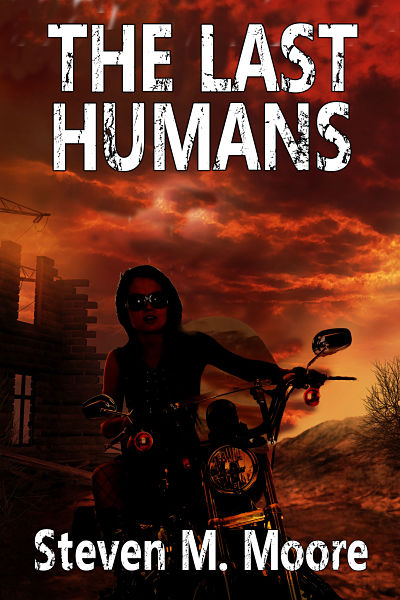
Because I’m taking a breather after three novel-writing marathons by writing short fiction (the novels are: The Last Humans, to be published by Black Opal Books in 2019; Goin’ the Extra Mile, #3 in the Mary Jo Melendez/MECHs trilogy, to be published by Carrick Publishing this fall; and Son of Thunder, the sequel to Rembrandt’s Angel), I decided to take the time to analyze how my short fiction often morphs into a novel later on. The reason is simple and probably applies to many authors: I decide I have more to add to the story.

This evolutionary journey often takes several years. I wrote the short story “Responsibility” even before my first novel Full Medical (2006); it eventually became the second part of the novel Survivors of the Chaos (2011) (now with a second edition contained in the Chaos Chronicles Trilogy Collection). I wrote the story “Retiree 114 at Pine Hills Manor” just after that; it inspired one plot line of The Golden Years of Virginia Morgan (2013). And my short story “Marcello and Me” won some kind of contest and appeared in the collection Pasodobles in a Quantum Stringscape (2013) long before A. B. Carolan turned it into The Secret of the Urns (2018) (Volume Two of the Pasodobles collection is now a free downloadable PDF; see my list on the web page “Free Stuff & Contests”).

There are probably other examples—I write a lot of short fiction. And it sometimes goes the other way. When I start a story, I’m never sure whether it will be a dash, middle distance, or marathon race (corresponding to short story, novella, or novel). I thought Phantom Harvester and other novellas in the list of free fiction might become novels (excluding the ones I resurrected from moving boxes, zombies from their temporary tombs). They just didn’t make the grade. More than short stories, to be sure, but I made the decision that there just wasn’t enough material there to run the marathon. Maybe I’ll make them into novels in the future (or someone else will do so after I’m dead!).

This is an important point: authors have to have motivation to endure the marathon run of a novel. Persistence, yes; ideas and material, yes. But you can’t do it without the motivation. Short fiction can provide this motivation years later. The corollary to this is simple: You can always come back to a short story or novella and make it into a full novel, and you can always extend a novel by creating a series. We’re the engineers at the controls of our writing trains. We just have to make sure we implement positive train control at all times!

***

Comments are welcome!

Free fiction? As I said, I’ve written a lot of short fiction…and still am. So has A. B. Carolan. Download some from my web page “Free Stuff & Contests”—The Phantom Harvester (crime novella) and Pasodobles in a Quantum Stringscape, Volume Two (collection of speculative fiction stories) are new additions to the list. You will also find free short stories archived in the blog categories “Steve’s Shorts” and “ABC Shorts.” Enjoy.

In libris libertas!

Mini-Reviews #35…

October 5th, 2018

Quiet. Susan Cain, author. (Broadway Books, 2012, 2013.) Goodreads (AKA Amazon) offered this on sale, and I grabbed it. I’m glad I did. What it’s about in a nutshell is the quiet anti-social people who do the creative things in the world, the introverts, as opposed to the extroverts, those blustering, often narcissistic, and outgoing people who often do nothing creative, unless putting down the nerds and pounding their own chests can be called creative.

OK, I’m being excessive maybe, and certainly biased. I’ve led a creative life, whether in science or in my writing, and I felt vindicated while reading this. I also came to understand myself a lot better. Writers are introverts in general. We sit behind our laptops creating our prose and poetry, quietly persisting until the job is done—at least for that story or poem we’ve been working on. Then on to the next. It seems contradictory that nowadays we’re also expected to be extroverts, meeting and chatting with readers and marketing our books in book events and on social media. Maybe that’s why writers become neurotic.

Everyone should read this book, though. It’s enlightening and shows, for example, that our educational systems are completely crazy. I’m glad I read it!

The Legacy. S. P. Brown, author. (Black Opal Books, 2017.) This book illustrates S. P. Brown’s breadth for mystery/thriller/fantasy/paranormal/horror storytelling. I previously reviewed his Veiled Memory. While there are some similarities, this tale starts out more strangely and becomes weirder at a galloping rate.

The protagonist’s grandmother, the matriarch of a rich southern family, is dying, and she has some secrets she wants to share. At first, her grandson is only interested in his inheritance. He soon learns that his legacy goes far beyond material wealth as a centuries-old feud rears its ugly head and changes his life.

This book is the perfect example of how fiction, no matter how fantastic, must follow Clancy’s dictum: fiction must seem real. In sci-fi, fantasy, paranormal, and horror, world-building narrative must also establish a set of rules everyone has to play by. Here the rules are exposed during the tale, giving it the necessary air of mystery, but they’re logically consistent albeit fantastic.

I had a great time reading this book. Not for the squemish, but certainly a great read. Kudos to this author for bringing me back to genres and subgenres I’ve neglected in my reading. The plot is a wild ride, and the characters are complex and entertaining. Adult fiction at its best!

Rescue at Waverly. T. J. Mott, author. Time for some space opera? Except for the title that could signal one of Dame Agatha’s mysteries, this sci-fi story has a lot going for it. Thaddeus Marshall wants to find Earth. He’s from there, you see, was kidnapped there, wants to know why the galaxy was already filled with humans bent on enslaving Terrans, and how this came to pass. I would have liked this quest better if I knew more about it towards the beginning of the novel. Thad’s motivations alluded me until then.

The admiral was an engineer by training (i.e. back in the Sol system that’s lost in legend). Now he’s a renegade, mercenary, and pirate with his own fleets ready to plunder and kill to finance his obsession. In this novel, he learns to hate himself for that.

If that sounds bleak, it’s not. Thad’s a flawed protagonist, a complex but interesting and entertaining SOB. While this is space opera for the most part, most of the principal characters are as complex and interesting as the action is intense. I can imagine Matt Damon playing Thad; Jennifer Lawrence playing the Earth woman he saves from slavery, Adelia Devaux; and Ben Kingsley as Reynolds, the commander of Thad’s personal fleet that carries out the raid to save her. I’m not sure which actor I’d choose for the evil prince who’s put a huge bounty on Thad’s head that causes everyone else to pursue him. This prince is a narcissistic, deranged tyrant. While there’s someone everyone knows with these exact characteristics who could play the role because of his TV experience, he’s not available right now, so maybe Arnold would help out. Doesn’t he play that role in some computer game commercials?

I had great fun with this book. It’s not hard sci-fi, but maybe militaristic sci-fi in addition to space opera? (Of course, a lot of the former is the latter.) It’s not for the squeamish, by the way, and provides a glimpse of a galaxy wrecked by humans (isn’t Earth enough?). And where are the ETs?

***

Comments are welcome!

The entire Clones and Mutants Trilogy is now on sale at Smashwords. Full Medical, Evil Agenda, and No Amber Waves of Grain are sci-fi thrillers featuring (surprise!) clones and mutants, heroic protagonists, and a criminal mastermind that’s as creepy as he is complex. These books are 50% off on Smashwords. Use the coupon codes for each book to get this discount.

In libris libertas….