The Martian v. First Man…

November 9th, 2018

[Note from Steve: Not exactly a movie review…or is it a review of two?]

While I reviewed Andy Weir’s book (Oct. 16, 2015), I don’t think I reviewed the movie with Matt Damon, which I saw (readers can confirm that by perusing the movie review archive—I couldn’t find one). I’m sure I won’t see First Man. Ryan Gosling can’t compare to everyman Matt Damon, but that’s not the main point of this article. My intention is to compare the focus of these two movies.

Although The Martian is clearly fiction, both movies are fictional, the second being historical fiction, of course. They’re both about space exploration, the first about exploring Mars and the second about exploring Luna. That’s where the similarities end.

First Man focuses on the past, namely astronaut Neil Armstrong. It’s a screen biopic. Nothing against Armstrong, who has been made into a folk hero, but it’s the focus on the past that bothers me. The U.S. government has all but destroyed NASA. They shut down the shuttle program and didn’t replace it. We’ve been forced to pay Russia to haul our astronauts to the ISS. Now that Russia’s rockets are having problems (the last one failed and came close to killing a cosmonaut and astronaut), we are basically excluded from manned spaceflight for the present. All of this is due to ill-advised budget cutting by various administrations, and public opinion seems to have gone along with it, saying we can no longer afford space exploration. Many of us have shed a few tears—space is the last frontier, and our pioneering spirit is dead!

A similar thing happened to the SSC (“Superconducting Super Collider”), cancelled by Congress. We have ceded our lead in space exploration to the Europeans and Russia; we have ceded our lead in particle physics to the Europeans (CERN). Per capita, other countries are spending far more on non-military R&D than the U.S. Worse, that parallels huge U.S. increases in military R&D.

All that looks backward at an ignoble past where past glories are forgotten as scientific research takes a back seat. Sure, it was great to step on the moon in 1969, but can we swallow the bitter pill of knowing we couldn’t reproduce that feat now, even if there was a desire to do so?

The Martian has a more positive outlook. Forget about the moon. Let’s look to Mars and beyond. While the book and the movie still tells the tale of budget-cutting bureaucrats fighting those who want scientific progress, it shows that a few plucky heroes can still get it done! The Martian is positive and First Man is negative exactly for those reasons.

Of course, Weir’s story suffers the same failings as Jules Verne’s Twenty Thousand Leagues under the Sea. The latter has pages and pages of narrative about undersea flora and fauna. Excess narrative is characteristic of many 19th century novels, from Moby Dick to Pride and Prejudice, and it’s damn boring. Weir’s narrative is too—worse than a manual for turning whale blubber into lamp oil (Moby Dick), it’s a manual for growing potatoes in human excrement.

But The Martian looks forward in a positive way that First Man can never do. That makes a big difference. Both movies are sad. First Man looks sadly back at NASA’s glory days. The Martian sadly reminds us of what might have been if our leaders weren’t so stupid. Yet looking forward is always better than looking backward. We can’t change the past, but maybe we can change the future? You don’t have to see either movie to make a choice here.

***

Comments are always welcome!

More than Human: The Mensa Contagion. One reviewer compared this novel to Kim Stanley Robinson’s Mars series. The first part is about how an ET virus creates homo sapiens version 2.0 on Earth, though. The second is about how these new humans colonize Mars and discover a starship of ETs who sent the virus to Earth. The ebook is available on Amazon and Smashwords and all its affiliates.

In libris libertas!

Steve’s shorts…

November 8th, 2018

[Note from Steve: I haven’t written a Dr. Carlos story for a while. You’ll find plenty in Pasodobles in a Quantum Stringscape and Fantastic Encores!, but here’s another one. It tidies up some things in my sci-fi novels too.]

Old Planet

Copyright 2018, Steven M. Moore

“What’s your take on this, Obregon?”

Carlos Obregon, Chief Medical Officer in the crew of the survey ship Brendan, looked up from his tablet where he’d been watching a demo of a new surgical technique for the ETs called Rangers. It didn’t matter to him that the starship didn’t currently have any of the little fellows among its crewmembers. The doctor liked to keep up with techniques to prepare for all eventualities, and he had saved ET lives as well as Human lives because of this preparation.

Captain Lester Wilson wasn’t smiling on the ship-to-planet widescreen that filled most of one wall in the tent that served as temporary galley and meeting place for the planetary survey team.

“Too early to tell, but Zoltan’s probably right.” He winked at the new Chief Science Officer Zoltan Karnoy. “Team’s going to have to do some precise dating, but the ruins are thousands of years old at least. But why ask me?”

“You’re the senior person down there,” said Lester. “Zoltan’s new at this.”

Obregon saw Zoltan’s frown. New as Chief Science Officer, but the fellow has experience. What’s with Lester? “He’s expressed the general consensus of the scientific team.”

“There’s no residual radiation,” said Zoltan. “There would be, even if a nuclear exchange occurred a million years ago. Self-destruction is out. And it looks to be a good climate for an ITUIP colony.”

ITUIP was the International Trade Union of Independent Planets, a loose confederation. Being a history buff, Obregon considered it modeled after the old European Union on Earth, the Humans’ home planet. But I also know how that ended!

“If it’s such a good E-type planet, why did the previous owners abandon it?” said the captain.

“Maybe they joined the Swarm?” said Zoltan, smiling at the huge screen.

Obregon blasted his own frown toward the scientist. And they say I’m too much the historian! He hadn’t heard that collective intelligence mentioned for a long time. It had played an important role in early near-Earth history.

Lester didn’t ignore the comment, though. “That’s a possibility. Keep checking the planet out for future colinization, but also have some people figure out what happened to the previous inhabitants. We need to be thorough.”

***

“Meeting in the main tent,” Zoltan said, sticking his head into the tent that Obregon used as a temporary sick bay.

Obregon had just finished up a minor surgical procedure on Tialok, their Tali shuttle pilot who also flew one of the three small tricopters used for optical and SAR mapping, among other things.  He smiled at the pilot who was now recuperating in the portadoc. “Lucky you. You’re missing what surely will be another boring meeting.” He patted the big, furry head and tweaked the Teddy Bear ears, but the Tali was still under anesthesia. “Not that I would want to take that kind of fall to get out of a meeting.”

Obregon walked there with Zoltan. George Edgerton, their xenosociologist, was at the head of the table, shuffling some handwritten notes and glancing at his tablet. He had served on Brendan almost as long as Obregon.

The doctor was prepared for a boring session where the science team presented data and tenative analyses of the same. Normally he would stay on board Brendan and send his intern down to a planet’s surface, but Julie Chen, who had been with him for years, had just left to become Chief Medical Officer on another survey ship. They still didn’t have a replacement. Lester’s answer was always, “I’m working on it,” but Obregon hadn’t even seen a list of candidates. He expected it to be a slow process, though. The starships were the fastest mode of communication in near-Earth space, and Obregon compared that to the Pony Express, something else he’d studied about Earth’s history.

George began with his analysis of the ruins, reporting on results from his subteam that included xenoarchaeologists and other social scientists with whom Obregon chewed the fat because of his interest in history, which often related to archaeology.

“We’ve located the ruins of some large buildings that might have been temples,” George said. He described the site in detail and their plans to excavate there for a while. When he finished, Zoltan passed the baton to the survey team leader, a Tali named Wotang.

That was when Obregon took out his tablet and started reading some medical articles. He only looked up when Zoltan directly asked him a question.

“How is Tialock?”

Obregon put the tablet in sleep mode and looked around the table. “He’ll be able to fly us back up to Brendan, but don’t look for him to help with the survey piloting a tricopter. We’ll have to ground one.”

Zoltan nodded. “No problem. There’s more ocean area than land. We’ll cover all of it before George and his minions finish their dig.”

“I can speed that up,” said Riley, the Security Chief. “I can pilot a tricopter.”

“You’ll have to put someone else in charge of the security detail here,” said Obregon. “I don’t want to walk around armed to the teeth.”

Zoltan smiled. “Not much on this planet that’s dangerous, except the terrain at times. By the way, the whole survey team should take Tialock’s fall to be a lesson. Loose shale and stones can be tricky in a 1.2 gravity field.” He looked around the group. “Let’s get back to work. The quicker we finish, the quicker we’ll be back aboard Brendan.”

***

While Obregon did his duty by checking Tialock from time to time, he went out with Edgerton and his group too. He sat on one of the massive marble stones and watched others dig.

“You could help, you know,” said Edgerton, sitting beside him after a few hours work.

Obregon held up his hands. “These do fine work, my friend. None of the crew would want me to hazard any damage to them, not while I’m the only medic in a many parsecs diameter sphere around this planet.”

“Most of the time, only the portadoc’s all that’s needed.”

“And Tialok is an example of when we need more. I need an intern. You should put some pressure on Lester.”

“The captain doesn’t listen to me much. He’s chomping at the bit to get on to the next planet.”

“Now there’s an interesting expression. I don’t suppose you know what it means.”

“As a matter of fact, I do. You’re not the only history buff around here. I’m comparing Lester to an ancient Earth animal called a horse. With the bit and reins, Humans would steer them. I guess the primitives tortured animals back then.”

“When they weren’t torturing their fellow Humans. What’s Xena found?”

A tall woman with short brown hair was waving wildly at Edgerton and yelling something.

“Too far away. If you can get off your butt, let’s go and see what they found.”

***

“I’ll be damned,” said Obregon, admiring the mural on a wall in the temple room the scientists had broken into. “You say you’re a historian, George. Do you recognize these people? Zoltan was right.”

“I don’t, so how do you know he was right?”

“These little fellows called themselves the shipbuilders—in their language, of course. Brent Mueller’s wife Jenny Wong was kidnapped by one of their ships, and they were instrumental in saving ITUIP from that criminal mastermind Dimitri Negrini. After that, they just disappeared. Looks like they made a habit of that. This must be their home planet.”

“That’s quite a bit of extrapolation from very little data,” said George. “And you’re suggesting they joined Swarm?”

“They disappeared somewhere. What’s interesting is that they played important roles in Human history, from the nuclear exchange between Colombia and Venezuela in 2078, old calendar, to stopping Negrini in 3073.”

Read the rest of this entry »

Interviewing author Laura Elvebak…

November 7th, 2018

Steve: I have the honor and privilege of interviewing author Laura Elvebak today. She writes mystery, thrillers, suspense, and noir. Among her published books, the reader of this blog will find: Less Dead, Lost Witness, A Matter of Revenge, The Flawed Dance, and The Past Never Dies. She has just submitted to Black Opal Books She Said No. This talented writer is also a screenwriter and has optioned two screenplays. Without further ado, let’s hear from Laura.

Some personal background about Laura…

Steve: You are certainly a prolific writer. What about some personal stats?

Laura: I presently reside in Houston, Texas, with my adult son, one dog name Sherlock, and twelve rescued cats. I am happily unmarried. My grown daughters live close by, as do my grandchildren. [More information can be obtained at http://lauraelvebak.wordpress.com or https://blackopalbooks.com/laura-elvebak/.]

Laura on Reading and Writing:

Steve: Why, how, and when did you start writing?

Laura: When I was five and living with my paternal grandparents in Los Angeles, my mother died of cancer in the back bedroom. My father left to deal with his sorrow and returned three years later with a stepmom. That’s when I escaped into a pretend world. I had a girlfriend who lived across the street. She also had lost her mother and lived with her grandmother. We were always acting out stories. When I started school, I wrote stories all the time. I was an avid reader, thanks to my grandparents who always provided me with books.

Steve: Did you publish the first book you wrote?

Laura: No, but the first story I sent out was to the Ladies Home Journal. I think I was ten years old. They rejected my handwritten effort.

Steve: What is your biggest problem with the writing process? How do you tackle it? 

Laura: My biggest problem is overwriting. I’m learning to take out all extra words to make the prose spare and hit the hardest. My critique group helps with this. They’re always crossing out words or making them more concise.

Steve: Do you feel writing is something you need to do or want to do?

Laura: Absolutely need to do. When I’m writing and into another world, I am most energized.

Steve: Have your personal experiences or situations influenced you creatively? If so, how?

Laura: I can’t help but draw on personal experience. I lived my life believing I needed to experience everything so I can write about it. I believe that’s why I chose my six husbands. The first was a motorcycle racer and ten years older. I was nineteen. The second husband was thirty years my senior, a former hard hat diver who’d lived all over the world. When I met him, he was in a wheelchair with two fractured feet he got from jumping from a third story building to get away from a mob hit man. We traveled to several states and changed our name in each new location. I finally ran away and made a living as a go-go dancer. This was in the late sixties in Philadelphia. My fourth book, The Flawed Dance, is the fictionalized version of my life running from him and becoming a go-go dancer.

Steve: How much of your creative ability do you think is innate and how much is learned?

Laura: I would say my creative self is innate but setting it down in writing is definitely learned. I took a class taught by Richard Walter at UCLA on fiction, also classes at USC, and screenwriting classes at Beyond Baroque in Venice, California. I took mystery writing and screenwriting classes at Rice University. But I credit most of my progress with my critique groups (two) that meet weekly.

Steve: What is the last book you read? What are you reading now?

Laura: The last book I read was Jeffery Deaver’s The Cutting Edge. I am presently listening to Karen Slaughter’s Pieces of Her and reading Peter James’ Not Dead Yet.

Steve: Who are your favorite authors?  Whose writing inspires you the most and why?

Laura: There are so many, but the authors who top the list are: Karen Slaughter, James Lee Burke, Megan Abbott, Reed Farrel Coleman, and Jo Nesbo. I learn from all of them—their use of language and how they reach into their characters and make the reader know them intimately.

Steve: What’s the last book to make you laugh?  Cry?

Laura: Dean “Miranda” James always makes me laugh with his A Cat in the Stacks Mystery. The last one I read was Classified as Murder. I don’t read many cozy mysteries. The exceptions are the books by Dean “Miranda” James, Leann Sweeney, and Kay Finch.

Steve: Should writers read in their genre?  Should they be avid readers?

Laura: Definitely. In fiction, I read mysteries, thrillers, and noir almost exclusively. Each book teaches me about writing—what to do and what not to do.

Steve: How do you find (discover) your plots?

Laura: It has to be something I am passionate about that will keep me writing all the way to the end. In writing the Niki Alexander series, my children let me see the world of homeless teens— the runaways and throwaways. I wanted to write about their world and what they were going through. Less Dead dealt with child abandonment; Lost Witness dealt with the drug world; A Matter of Revenge death with pedophiles. The Past Never Dies came about because my boss at an oil and gas company told me about a man he once did business with who had murdered his wife and gotten away with it. He kept urging me to write it. I finally figured out a way of doing it so it wasn’t evident who I was writing about. The book I just submitted, She Said No, originated from something that happened to me many years ago and resonates today with today’s #MeToo movement, about which I am passionate.

Steve: Are your characters based on real people?

Laura: I had one character in the Niki Alexander books, Tara, who gave me permission to use her. She introduced me to several homeless boys and girls. Tara was once homeless and knew that world very well. Otherwise, most of them are fictional. A few times my second husband appears in different forms.

Steve: How do you name your characters?

Laura: I have a real hard time with names. I sometimes change them several times. It’s whatever pops into my head at the time.

Steve: Which comes first for you, plot or characters?

Laura: Characters, usually. Unless there is something that really bothers me. I don’t write message books, but I don’t shy away from controversial subjects that I’m passionate about.

Steve: Any comments about writing dialog?

Laura: I just transcribe what I hear the characters say. Their voices are in my head when I’m writing.

Steve: How do you handle POV?

Laura: I usually write a close third person. In the Niki Alexander books, the POV from the teenager in trouble and switches to Niki. The Past Never Dies has two narrators in separate chapters. The Flawed Dance is told in first person.

Steve: Do you do fact-finding for (AKA research) your books?  If so, how? What sources do you use? Read the rest of this entry »

Completed novel projects…

November 6th, 2018

I’ve just finished three novel-writing marathons. One has the length of most of my novels; the other two are really longer. All three required a lot of digging for background material (research), more so than usual—something like running up “Heartbreak Hill” in Boston (the NYC Marathon run last weekend is flat in comparison).

Let me describe the novels and some of their background material.

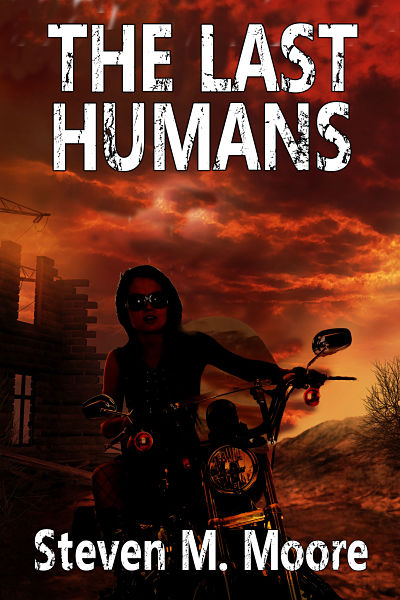
The Last Humans. While my Survivors of the Chaos (#1 in The Chaos Chronicles Trilogy Collection) is dystopian sci-fi, I’ve never written a post-apocalyptic sci-fi novel before. In this post-apocalyptic thriller, the main character Penny Castro, an ex-USN diver working for the LA County Sheriff’s Department, survives the apocalypse but then has to survive many other dangers as her world goes to hell.

Background material involved studying everything from airborne contagions and extreme weather conditions to comsats and saltwater desalination platforms, along with a lot of California geography from my past and its more recent changes (I’m a native Californian, but I haven’t lived there for years). In other words, in this case, I knew the settings, but I had to refresh my memory.

That was marathon #1. (Black Opal Books will publish this novel in 2019.)

Goin’ the Extra Mile. This novel is #3 in the “Mary Jo Melendez Mysteries.” Ex-USN Master-at-Arms Mary Jo Melendez fought off U.S. and Russian government agents in the first two books. They were after the MECHs (“Mechanically Enhanced Cybernetic Humans”), super-soldier cyborgs with Top Secret hardware and software improvements created in a U.S. government project. In #3, China wants the MECH tech, and they’re willing to kidnap Mary Jo and her family to get it.

I’ve never been to China. I’ve read about it a lot, and not only in non-fiction—one of Ludlum’s Bourne books takes place there (maybe also #3?), and so does Donna Carrick’s The First Excellence (both great books, by the way). (I think one of Barry Eisler’s thrillers takes place there too.) My lack of personal knowledge about the country made gathering background material more difficult.

That was marathon #1. (Carrick Publishing has just published this novel—it’s available at Amazon and Smashwords and their affiliates.)

Son of Thunder. This sequel to Rembrandt’s Angel can be described as Esther Brookstone and Bastiann van Coevorden meeting the artist Sandro Botticelli and the disciple St. John the Divine…with no time travel involved! If that sounds too quirky for you, let me describe it as the novel Dan Brown should have written in place of The Da Vinci Code in the sense that there’s no bungled historical references (in Mr. Brown’s defense, most of those came out after he published his book).

All that history created the background problem. While bringing all these characters together challenged my historical sleuthing, the farther I went back in time, the less is known historically. Like most historical fiction, I had to fill in many gaps in the historicaal records. But it’s still a mystery/thriller novel even with all the historical and religious content.

That was marathon #3. (I’ve submitted the manuscript.)

Phew! Readers can understand why I’m now taking a little break by writing short fiction and articles for this blog. Call it the cooling off period after the last marathon. Or a training period of sprints and middle distance runs to prepare for the next marathon?

***

Comments are always welcome!

Books on sale. To whet your appetite for Goin’ the Extra Mile, #1 in the Mary Jo trilogy is now on sale for $0.99 at Smashwords for a limited time. Also, for the month of November, the mystery/thriller The Golden Years of Virginia Morgan is 50% off on Smashwords.

In libris libertas!

Book events…

November 2nd, 2018

I love them. Being at them, participating in them. Sounds weird, doesn’t it? Like many authors, I’m an introverted and shy guy who sits down at his laptop a lot to pound the keys and do my storytelling. (I couldn’t finish all those novel-writing marathons any other way.) But I also enjoy discussing reading, writing, and the book business with readers who honor me by attending these events. Sometimes I’m alone; other times not, and then I can also have those same discussions with other authors in attendance. Beats socializing with doctors, that’s for sure!

Book events come in all flavors—not exactly 31, but enough to test an author’s creativity and insecurity. Much more so than an art show. While every painting tells a visible story and has its own story (my father exhibited his art work a lot), a book contains the quintessential story between its covers. Words on its pages are the modern equivalent of words uttered around an ancient campfire during human prehistory.

Book signings come to mind first. I like them least, although signings are often included in my other book events. Sitting behind a table stacked with a bunch of books, pen in  hand, with readers lining up in front of the table, doesn’t appeal to me as much as other events…and too many celebs do them. And, contrary to book marketing gurus’ opinions, standing up behind the table doesn’t bring you any closer to your readers either, and I get tired too easily doing it.

I prefer events where I have a chance to chat with readers. The Q&A at the end of a lecture, a panel discussion, a book fair with its wonderful chaos of readers and writers mingling together—that’s all more appealing to me.

Read the rest of this entry »

Steve’s shorts: Retiree Number 114 at Pine Hills Manor…

November 1st, 2018

Retiree Number 114 at Pine Hills Manor

Virginia, 2030

Copyright 2008, 2013, Steven M. Moore

Brenda moved along the dim corridor and stopped at room 114.  After checking off the visit on her list, she peeked into the room at her patient.

Rafael, the old retiree, sat in his rocker, muttering to himself.  As usual, he was smiling and staring out the window between thick, wrought iron bars at the bleak Virginia countryside.

She thought he might like winter because he used to ski, but she couldn’t be sure.  Most retirees didn’t remember much with all the drugs they took.  He often drew pictures of skiers, though, especially of children on skis.

“Ready to start your day, Rafael?”  She always tried to be cheery with her patients.

He gave her a dour look.  She knew he was a warm and caring person—he just hated to be rushed.

“What’re they having for breakfast?”

“Oatmeal, OJ and coffee, what else?  Do you want me to come back?”

“No.  I don’t want to disturb either my routine or yours.  Besides, my daughter is coming to visit today.  I’d better spruce up.”

She nodded.  She had known Rafael Reyes for four years.  It was what he said nearly every morning.  The drugs had that effect.  All her patients were docile.

She helped him dress.  He was in better shape than the average retiree in the nursing home.  Lean body, flat abs, not confined to a wheel chair—at seventy-seven Rafael Reyes could pass for early sixties.  Without drugs, he would have been a handful.  With drugs, it was like dressing a sleepy baby.  Under their influence, he would often start muttering in Spanish.  She wondered if those were his secrets.

* * *

Brenda Morgan was Rafael’s only true friend at the nursing home.  He hadn’t established any lasting friendships with other retirees.  Most of them were pleasant enough.

Men outnumbered women.  Both sexes separated into groups as if they were cliques of little schoolchildren.  Some men and women hooked up, visiting one another at odd hours during the night.  The orderlies were happy to provide the necessary pills to make all their parts work.  They preferred happy retirees—drugged, but happy.

Some women would try flirting with him or men would try to involve him in a poker game.  Without being rude, he made them understand he only wanted to be alone.  Most of the time he couldn’t even remember why.  Other times he would remember Gabriela, his ex-wife, or Patricia, his daughter, and know why.  Still other times he would remember his work of a lifetime and know they should avoid him as if he had a contagion brought back from Mars.

Rafael had always been a loner.  About the time new pills were due, he would sometimes have flashbacks to his previous life and knew it had been lonely.  Some of that had been work related, but mainly it was his personality.  Gabriela became a part of that life somewhere along the line and briefly swept away some loneliness, but that hadn’t lasted long.  He had driven her away and his daughter with her.  He wondered where his daughter was and why she didn’t visit him.

As an engineering graduate from Carnegie-Mellon, he possessed skills and credentials that brought him into what Eisenhower, with remarkable prescience for a leader, had called the military-industrial complex.  Its golden era after 9/11 had sent him from SCIF to SCIF, working on a number of black programs, endearing him to the Pentagon, and ruining his marriage.

In less confused moments, he would often find it amusing to remember his travels when he ran into people with whom he had worked closely for a time.  They would not even acknowledge they knew him.  He saw some of those same people here at the nursing home and wondered about that.  He did not find the latter amusing, though; the prevalent emotion was a foreboding he couldn’t shake.

Brenda had encouraged him to work out.  Often, at the end of a workout, and especially when new pills were due, he had his most lucid moments.  It was at those times he knew he must escape.

* * *

“Retiree 114 seems to be having more moments of lucidity.”

Dr. Harold Barnes studied the chart the orderly handed him.  They randomly tested all retirees.  Rafael Reyes’ peaks in lucidity correlated well with dips in the drug levels in his blood.

“Good catch.  I’ll increase dosage a little.”

“Yeah, not too much, doc.  We wouldn’t want to kill him.”

The orderly winked at Barnes who reacted to the man’s insensitive banter with a glare.  He had little use for these people.  They were not nurses in any sense of the word.  Most were lowlifes and cutthroats taken off the street and given basic training.

After he signed a new drug order and the orderly departed, Barnes looked at the pile of folders underneath Rafael’s and sighed.  He hated the job for many reasons, but its paperwork was one of them.

He had 187 patients to look after.  “Retirees,” the National Intelligence Director had called them, but the government said their retirement implied a risk to national security—the knowledge inside their heads was too sensitive.  A new program had been established to make sure that knowledge didn’t fall into wrong hands.

Barnes never worried about the justification for such a program.  For him it was just a good job in bad economic times.  There weren’t many medical jobs they would give a doctor who had lost his license to practice.  And he didn’t have to think too much about being a real doctor, either, because most patients were healthy.  The unhealthy ones were often helped along a little toward a quiet death.  They could only take care of a maximum of 200 patients, so the number had to be controlled.

* * *

Nighttime brought bad dreams.  Rafael would often wake up with a start.  Each dream was a guilt trip.  In them, he could see maimed bodies and sometimes wonder why.  Other times he knew: he had designed weapons.  Weapons to end a war that shouldn’t have started.  Weapons now necessary because the rest of the world no longer liked the U.S.  Maybe the people, but not its policies.

One night he left his room.  Cameras and motion detectors in the room and in the hall alerted security to where he was and what he was doing.  They found him muttering curses in Spanish and took him down.  They beat him, injected him with more drugs, and put him back in bed.

Brenda wondered about the bruises the next day because she asked him about them.  He couldn’t remember.  He seemed to be in a daze.  She had to wonder if he was getting Alzheimer’s.

* * *

Rafael’s desire to escape finally overcame his fear of confiding in someone.  He decided to approach Brenda, his friend.  She wasn’t the only one giving him his pills, so Rafael waited until it was her turn.

He grabbed her arm.

“Which one makes me stupid?”

“Don’t ask me that,” she said.  “I can lose my job.”

“You’re the only one I trust.  I need to escape.”

He waited a few beats as she considered the request.

“It’s two—white and blue,” she said.  “Don’t leave them in the cup.  Pretend to take them but spit them down the toilet.”

“They have a camera in there too.”

Rafael was an observant patient.  She obviously hadn’t known about the cameras in the bathrooms.

“Where?”

“Light fixture.  Covers a full 360 degrees.  Tiny little devils.  Motion sensors too.  We used to have them in some of our SCIFs.”

“You’re going to make trouble for me.”

“Don’t worry.  I can pretend to do number two and flush them down.  I need to stay alert to escape.”

“You’re too old.  You can’t run.”

“But I can walk fast.  I’ve been on the treadmill, rowing machine—“

“OK, OK.  Don’t do anything yet.  I’ll see if I can help you.”

* * *

That night Brenda finished brushing her teeth, stared at her image in the mirror, and made up her mind.  She didn’t like the frown on her face or the lines of worry.  For a long time, what they did at the nursing home seemed wrong to her.

She possessed a top-secret clearance, vetted by the FBI.  As a registered nurse, she could easily find work, but the job at Pine Hills Manor paid thirty percent more, had full medical benefits, and was a half-mile drive from her townhouse.  Unlike the orderlies, she was a full-fledged member of the medical staff.  Dr. Barnes trusted her.

Read the rest of this entry »

Interviewing author Yvonne Rediger…

October 31st, 2018

Steve: It’s my privilege today to interview author Yvonne Rediger. Many readers know that urban fantasy is a hot new subgenre of fantasy, and Yvonne has started a fantastic series called the “VIC Shapeshifter” series, starting with The Shape of Us and continuing with Hell Cat (to be published this fall) and Trusting the Wolf (for 2019). But, like yours truly and many other authors, Yvonne writes in several genres. This prolific author has written two mystery novels in the “Musgrave Landing Mysteries,” Death and Cupcakes (fall 2018) and Fun with Funerals (2019). She also has written the romantic suspense novels Diving in Heart First and The Common Touch (2019). Without further ado, lets’s hear from Yvonne.

Yvonne on Reading and Writing:

Steve: Why, how, and when did you start writing?

Yvonne: Thank you for inviting me, Steve. I’ve always made up stories as a kid. Later, by about ten-years-old, I began writing them down. Fan-fic for TV shows and then later in high school I wrote my own fiction. After that, I took an introductory course in journalism, and that really got me going on the writing track.

Steve: Did you publish the first book you wrote?

Yvonne: Yes, it is called The Shape of Us, from the “VIC Shapeshifters” series. It is urban fantasy with a strong moral theme: people are born different. Well, and with some mystery, romance, magic, and adventure too.

Steve: What is your biggest problem with the writing process? How do you tackle it?

Yvonne: If the well runs dry up, I will back track to milestone events and do the ‘what if thing.’ Instead of something good happening, maybe something bad does, and I’ll see where it goes.

Steve: Do you feel writing is something you need to do or want to do?

Yvonne: I need to write. I get cranky if I haven’t met my daily word count. I love to see the work progress.

Steve: Have your personal experiences or situations influenced you creatively? If so, how?

Yvonne: Oh, yes. I use all sorts of things I’ve done and places I’ve been to base my stories on. The “VIC Shapeshifter” series is based in my neighbourhood on Vancouver Island. My cozy mystery series, “Musgrave Landing Mysteries,” are based on Salt Spring Island, just across the strait from the village I live in.

Steve: How much of your creative ability do you think is innate and how much is learned?

Yvonne: I’m a born storyteller. However, finding my voice and telling the stories in a form and style which appeals to the reader, those skills were learned.

Steve: What is the last book you read? What are you reading now?

Yvonne: Shannon Mayer’s Priceless was the last book I read. Picked it up at our writers’ conference; Shannon was the workshop’s guest presenter. Currently, I’m reading Linwood Barkley’s A Tap on the Window. I also have Five Minute Mysteries by Ken Webb in progress.

Steve: Who are your favorite authors?  Whose writing inspires you the most and why?

Yvonne: Linwood  Barkley, Harlan Coben, Robert Ludlum, Tanya Huff, Jim Butcher, Lois McMaster Bujold, Robert J. Sawyer, Sir Terry Pratchett, Dave Duncan, and…oh, so many. I learn something new from each book.

Steve: What’s the last book to make you laugh?  Cry? Read the rest of this entry »

Book formats…

October 30th, 2018

Some authors are traditionally published and have their book formats determined by their publishers. Others must decide. (Being a mongrel author, I know both sides well.) A minority must decide on the print formats for their books. Each format has particular followers, but there’s a lot of overlap among those groups.

The “classic formats” are now hardbounds, trade paperbacks, and small paperbacks, among the print versions, various ebook formats (mostly .mobi and .epub), and audiobooks. The media in each case is different; the content is the same: short story collections, novellas, and novels, for fiction, and novel-length or longer tomes for nonfiction.

Every author needs print versions for book events. I suppose there’s some way to hand out a card or something with website info where readers can go to retrieve “electronically signed” ebook copies, but that seems clumsy to me. At book events, readers want to hold a physical copy in their hands. I’ve watched them peruse them—the interest, the wonder, the love for books, from age nine to ninety. If authors don’t do book events (many don’t for lack of events in their area, or the time and money required to set up these events), they can get away with just ebooks, but they’ll be missing out on older readers if they don’t have some available in their oeuvre. Preferences for print might be mixed too. In my case, for example, I like my nonfiction in print and my fiction in ebooks. The latter save my bookshelves from sagging and crashing (I buy a lot more fiction) and are easier for me to send to reviewers, especially overseas (the postage is often onerous). I also know many commuters who prize audiobooks for their long commutes.

I have more ebook-only novels and short story collections than  print/ebook titles. I have no problem with this because there are enough in my list of print/ebook titles in my oeuvre that I can cover my book events. Novels from small presses (I now work with two) are invariably print/ebook titles. Indie authors and those published by small presses usually don’t have audiobooks unless the authors finance them themselves. The reason is simple: audiobooks are expensive to produce if done right, that is, a professional reader is a must, and those readers are expensive!

The cost criterion often means that hardbounds are a rarity for indie authors and authors published by small presses. What about those small paperbacks you find in airporsts?  It’s possible that some small presses are missing market share here—many travelers still pick up a paperback in an airport store before a long flight, although I just load up my Kindle before long trips (mostly cruises now, and not travel for a day-job—I’ve done my share of that!).

Read the rest of this entry »

ABC shorts: Return Visit…

October 25th, 2018

[Note from Steve: A. B. Carolan doesn’t always write for young adults. I suspect this pithy little tale he sent me from Donegal is motivated by how the rest of the world now sees the U.S., but you can ask him.]

Return Visit

Copyright 2018, A. B. Carolan

Nalek turned the stun field on and walked into the cave. The furry male with the deep set eyes must have heard him coming because he was frozen into position but staring at the cave’s entrance. The female—his mate?—was frozen in her sitting position where she’d been sewing some skins with a crude stone needle and a strip of animal hide. The little one, who was completely naked, was playing with some polished stones.

Nalek crouched and closed his eyes so he could store every detail of the scene in his memory. He then stood, turned, and walked out of the cave.

“Primitives,” he told the starship’s crew. He turned toward the cave’s entrance again and turned the stun field off.  “We should return later to see how they’ve developed.”

“Acknowledged. Meet the shuttle on the lake shore.”

***

On their return visit, after fifty-three thousand orbits of the strange planet around its star, Nalek stood in a park across the street from a large white mansion. He was dressed in apparel suitable for that hot, stormy environment on that early morning. Undeterred by the weather, people were marching back and forth screaming in their strange language. They looked angry.

He set the stun field’s generator on wide coverage and moved across the street to the side entrance of the fenced-in area containing the mansion, tipping his hat to the frozen sentries as he entered the grounds.

“Good morning, gentlemen.”

Of course, they didn’t answer.

He went through the gate and into the mansion. He found his way to the bedroom of the large tribe’s leader.

They had decided this yellow-haired male had to be examined. Nalek found him in bed playing with some kind of electronic apparatus, a savage expression making his face into a caricature as he was frozen in place ready to press an icon that would send a message. Nalek squatted and studied this “leader of the free world.” He then stood and shook his head sadly.

“Not much progress,” he announced to his shipmates. “They’re still primitives. He’s sending out cryptic messages on a device, but he might as well be beating a skin drum like the natives we visited here long ago. Mental capacities might even have deteriorated. There’s no hope for this planet if he’s the smartest native as he claims, and we have no reason to doubt him. Why would he be in this position if he lied?”

“Acknowledged. We’ll quarantine the planet. It will soon be a polluted wasteland anyway. Meet the shuttle back in the park.”

Nalek crossed the street again, stopped to look back at the mansion, and shook his head sadly. He turned off the stun field and entered the shuttle. To the natives, he simply disappeared; he’d turn off the cloaking device high in the atmosphere.

The search for intelligent life in the universe would continue, just not on this planet.

***

Comments are always welcome!

A. B. Carolan, The Secret Lab. In the far future, Shashi and her young friends are determined to discover the origins of a mutant cat they find on the International Space Station. In the process, they uncover a conspiracy. My Irish friend A. B. Carolan rewrote and reedited my original sci-fi mystery for young adults to make a second edition. 50% off now on Smashwords. This is a perfect holiday gift for the young adult in your family…or for any adult who is young at heart. And, while you’re there on Smashwords, check out A. B.’s new sci-fi mystery The Secret of the Urns. Both books are also available in ebook and print format on Amazon.

In libris libertas!


Interviewing author June Trop…

October 24th, 2018

Steve: Today I have the pleasure of interviewing author June Trop, who has written an outstanding historical mystery series set in first-century CE Roman Alexandria, an interesting combination of the historical fiction and mystery genres. Without further ado, why don’t you tell the readers of this blog a bit about yourself.

June: I’ll discuss the series first. It contains the following novels: The Deadliest Lie (Bell Bridge, 2013), praised by the Historical Novel Society; The Deadliest Hate (Bell Bridge, 2015), honorable mention for fiction at the 2016 New York Book Festival; The Deadliest Sport (Black Opal Books, 2017); The Deadliest Fever (Black Opal Books, 2018), placed in the Readers’ Choice cover contest; and The Deadliest Thief (Black Opal Books, in press).

My academic background from my previous life as a teacher contains the following high points: a BA in biology/chemistry magna cum laude from Rutgers University, where I was elected to Phi Beta Kappa; and teaching science in the public secondary schools of New Jersey and New York State. I received an award from Jersey Central Power and Light for NJ Science Teacher of the Year; an MS in Ed. in teaching biology from the State University of New York, New Paltz; and an Ed.D. in the education of teachers of science from Teachers College, Columbia University. I was professor of Secondary Science Teacher Education at the State University of New York, New Paltz.

June on Reading and Writing:

Steve: Why, how, and when did you start writing?

June: Although I’ve enjoyed language, putting words together to make sense, I started writing professionally as an academic. But it was only when I retired that I began to write fiction. That was eleven years ago.

Steve: Did you publish the first book you wrote?

June: The first book I wrote was for and about novice teachers, From Lesson Plans to Power Struggles (Corwin, 2009). I wanted novice teachers, based on their own stories, to understand that, although they might be alone in their classroom, they are not alone in their struggles and fears. Moreover, I wanted their mentors, those seasoned veteran teachers who supervise them, to be able to put on the goggles of their charges to understand how to guide them better. When that book was finished and accepted for publication, I began to think I could actually write another book.

Steve: Do you feel writing is something you need to do or want to do?

June: Writing is something I want to do. I look forward to the time I can spend listening to my characters as they share their adventures with me in the world my research and imagination have created.

Steve: Have your personal experiences or situations influenced you creatively? If so, how?

June: Starting with Nancy Drew and graduating to Sherlock Holmes, Agatha Christie, Lawrence Block, and Walter Mosley among others, I’ve been living a life of crime almost my entire life. I myself wanted to be an amateur detective, but alas, no mysteries whispered in my ear; no secret passages, clues, or unclaimed treasures beckoned me. So, I had to use my imagination. In that sense, I would say that my lack of personal experiences influenced my creativity.

Steve: How much of your creative ability do you think is innate and how much is learned?

June: I think creativity emerges from knowledge. That is, a deep knowledge base is necessary for creativity to develop.

Steve: What is the last book you read? What are you reading now?

June: I always have a book to read, something to keep me company during those calms in the storm, like when I’m about to go to sleep or waiting for someone. Right now, I’m reading Little Green by Walter Mosley. I read a variety of books, my choices of literary fiction driven by the book club I belong to and my crime fiction choices based on my interest in studying the techniques of particular authors.

Steve: Who is your favorite author and why?

June: My favorite author is Arthur Conan Doyle. Aside from his memorable Sherlock Holmes stories, he wrote a host of other tales of horror and mystery. I enjoy reading and re-reading them for the atmosphere he created. Whenever I read The Hound of the Baskervilles, my favorite, my nerves still tingle in the evocative landscape of Dartmoor.

Steve: How do you find (discover) your plots?

June: Now that I know my characters well—I am now writing the sixth book in the Miriam bat Isaac Series—they are more likely to direct me, or so it seems. Right now, I am focusing on a subgenre, the locked room mystery, but it is still the situations and personality of my characters that determine how the plot will develop. Since the beginning, I’ve been keeping a journal of plot ideas. I let them simmer and see how my characters take to them. Most I discard; some I save; a few I develop.

Steve: Are your characters based on real people?

June: My characters are composites of people I know, with a little of me mixed in as well.

Steve: How do you name your characters?

June: I have mainly Greek, Roman, and Jewish characters. Using a list of names that were common in each culture, I’m guided by their meanings, those that suit my character or for comical effect, those that are the antithesis. But I also impose my own rules: The names should be simple to pronounce; no two characters should have names that sound similar (unless that’s part of the mystery); and the way others address the character, should reflect his or her status.

Steve: Any comments about writing dialog?

June: Lawrence Block, to me, writes the best dialog. That is, he can make the written word sound like the spoken word. And so, I read everything he writes, and aside from enjoying his plots, setting, and characters, I study the way he writes dialog.

Steve: How do you handle POV?

June: I write in the first person. My protagonist, Miriam bat Isaac, narrates the stories. I’ve set my books in a place none of my readers have visited. I use the first-person POV to bring readers close to Miriam and her world, to make her and her setting more credible.

Steve: Do you do fact-finding for (AKA research) your books?  If so, how? What sources do you use?

June: I check and double check everything! I rely on journals (e.g., of archaeology, alchemy); and maps of first-century Alexandria as well as of Caesarea, Ephesus, and Tarsus, where pieces of my plots take the characters. All these cities were important in the first century so there are many books about their neighborhoods and architecture, flora and fauna, games and sports, religion and culture, business and commerce, food and drinks, language and customs, politics and government. You name it. That’s part of the fun for me. I never know what detail I’ll be researching on a given day. For example, when writing The Deadliest Hate, I had an Egyptian cobra break out of its urn and make its way toward Miriam across a marble floor. How did snakes of that class crawl on such a smooth surface? I needed to know that.

Steve: What reference works do you use most?

June: No matter what I write, no matter what programs are built into my computer, I always have beside me Hayakawa’s book, Choosing the Right Word; Strunk and White’s The Elements of Style; and my Webster’s New World Dictionary. Always!

June on the Writing Business:

Steve: Do you use a formatter?  Editor?  Agent?

June: I am a good-enough editor until the final draft, when I rely on my twin sister, Gail Trop Kushner’s eagle eye and unvarnished criticism. On matters of antiquity, I rely on my friend, Lewis M. Greenberg, professor emeritus of art history and culture, for his expertise. I have never had an agent.

Steve: Do you self-publish or traditionally publish?

June: My works have been traditionally published, first by Bell Bridge Books and then by Black Opal Books.

Steve: What are your most effective marketing techniques?  Where would you like to improve?  Do you go it alone or seek professional help (outside what your publisher provides, if appropriate).

June: There is no magic bullet for marketing. It’s 99% persistence and 1% luck. I seem to do better with my own initiative than with professional promoters. So, I use some combination of social media, personal appearances, broadcasts, and podcasts. Read the rest of this entry »