Interviewing author Lisanne Harrington…

November 28th, 2018

Steve: I’m honored today to interview Lisanne Harrington, author of the “Wolf Creek Mysteries.” Welcome to the blog, Lisanne. Why don’t you tell us a little about yourself.

Lisanne: Hey, there, Steve. Thanks for hosting me. Well, let’s see. After nearly twenty years as a paralegal, I staged a coup and left the straight-laced corporate world—and hideously ugly pant suits—behind forever. I now pander to my muse, a sarcastic little so-and-so. Only copious amounts of Diet Cherry Dr. Pepper and hamburgers will get him to fill my head with stories of serial killers, werewolves, and the things that live under your bed.
I live in SoCal with my husband and rowdy, always-has-to-have-the-last-word miniature pinscher, Fiona. When not writing, I love to watch reruns of Gilmore Girls (although I hated the movies), horror movies like Young Frankenstein and Fido, and true crime shows. I like scary clowns, coffee with flavored creamer, and hot, salty French fries. Lots and lots of French fries.

When not hanging with “The Girls,” I write paranormal mysteries and murder mysteries.

Steve: Can you describe some of them?

Lisanne: My “Wolf Creek Mysteries” trilogy is available online (Amazon and B&N). It takes place in a fictional small Southern California town, where in Book 1 (Moonspell) a serial killer is stalking and killing the townspeople. But only at certain times, and it falls upon main character James to figure out who—or what—the killer is, and catch him. Book 2 (Moon Watch) plays off that as another series of murders takes place that centers around James. Then, in Book 3 (Moon Shadows), James wakes up to a town shrouded in a strange fog. Everyone has disappeared, and it is up to James to find them. All the while avoiding the strange creatures that lurk in the shadows….

My zombie story, “That Twin Thing,” is included in an amazing anthology called Murder, Mystery, and Mayhem, by the OC Fictionaires.

Steve: What’s on the horizon?

Lisanne: My next book, Murder in the Family, due out early in 2019, is a murder mystery. Orange County Deputy Sheriff Dana S. Sinclair longs for two things: more action on the job so she can earn a promotion like her father before her, and a better relationship with her estranged mother. When her mother is murdered and it appears that her dead father has come back from the grave to do it, Dana does everything she can to uncover the truth. As she investigates the murder, Dana uncovers a plethora of suspects, strange warnings, bizarre happenings that seem designed to drive her crazy, and the truth about her dead father.

After that, I return to the paranormal with Gravelings, the story about what happens when a disturbed little girl encounters strange creatures living in the basement. Of course, the adults around her don’t believe her. She is, after all, on medication for hearing voices and other mental health issues. But as the gravelings become more and more aggressive and violent, they begin to wonder if the creatures are real. And if the gravelings are going to kill them.

Currently, I’ve finished a first draft of a story involving killer clowns, and am halfway through a story about a mythological Chinese monster and the destruction of the family charged with keeping it at bay.

Lisanne on reading and writing:

Steve: Why, how, and when did you start writing?

Lisanne: I’ve always been a big reader, so it just seemed a natural transition to begin writing. I started with short stories as a small child, and co-wrote my first novel when I was eleven. It then progressed from there, and has become a part of me. When not writing, I feel incomplete.

Steve: Did you publish the first book you wrote?

Lisanne: No way! Not even the first one I wrote as an adult. It was a hot mess, and my first real attempt at a mystery. Thank God, I took lots of classes and really sharpened the tools in my toolbox before I began marketing Murder in the Family, which was my second attempt at a murder mystery.

Steve: What is your biggest problem with the writing process? How do you tackle it?

Lisanne: Actually, my biggest problem is being interrupted, either by family members or my barking dog, who always seems to find the exact WRONG time to bring me her ball.

Steve: Do you feel writing is something you need to do or want to do?

Lisanne: It’s like breathing. I couldn’t live without it.

Steve: Have your personal experiences or situations influenced you creatively? If so, how?

Lisanne: I think all writers are influenced by life. While I don’t necessarily believe in the adage “write what you know,” (isn’t that what research is for?), I think we writers can’t help but draw on our own experiences when we write.

Steve: How much of your creative ability do you think is innate and how much is learned?

Lisanne: It’s an equal mixture. Without the ability and desire, there’s no real point in learning the ins and outs of writing. It’s just like any other job. You have to train yourself before you can really do a good job. Even cashiers at fast food joints train to work the register. Why shouldn’t a writer train as well?

Steve: What is the last book you read? What are you reading now?

Lisanne: I just finished The Human Predator: A Historical Chronicle of Serial Murder and Forensic Investigation by Katherine Ramsland, Ph.D.  I’m about halfway through Member of the Family: My Story of Charles Manson, Life Inside His Cult, and the Darkness that Ended the Sixties, by Dianne Lake and Deborah Herman. Just a little light reading (wink).

Steve: Who are your favorite authors?  Whose writing inspires you the most and why?

Lisanne: Alex Kava for murder mysteries, and Stephen King, Bentley Little, and Joe Hill for horror. Alex really delves into the characters as much as the mystery. King and Hill for their descriptions of the monsters inside us, characters who could be our friends and neighbors—or even us. Little for his straight-out supernatural monsters.

Steve: What’s the last book to make you laugh?  Cry?

Lisanne: That’s a tough one. I don’t read a lot of comedy or tragedy. Lisa Scottoline and Francesca Serritella’s My Nest Isn’t Empty, It Just Has More Closet Space made me laugh. Marley and Me by John Grogan brought a few tears to my eyes, but those were from allergies. (giggle)

Steve: Should writers read in their genre?  Should they be avid readers?

Lisanne: A wholehearted YES! to both. If you don’t read in your chosen genre, how will you know all the tropes and stereotypes? And a writer should read as much as possible in as many genres as possible to gain knowledge about how stories are formed.

Steve: How do you find (discover) your plots?

Lisanne: Well, let’s see. Normally, I get my ideas while doing mundane chores, like washing dishes or folding laundry. The characters come to me for a chat. They talk to me, sometimes for months before they trust me enough to tell me their story.

Read the rest of this entry »

Prospection v. meditation…

November 27th, 2018

“Relax. Become one with your present. Make your mind empty.” These are some meditation recommendations among many you might find on YouTube (or hear from a certain weekend anchor on ABC’s GMA—like many celebs, he has a book, and it’s about meditation). It’s all malarkey, especially if you want to write fiction.

As a student of theoretical physics, I was attracted to Zen Buddhism, maybe the ultimate meditation protocol. There’s a strong nexus between it and modern astrophysics, for example. I wanted to seek enlightenment after hearing about its precepts back in the sixties. Call it my religious studies period (if you can call reading many works on religion and Heinlein’s Stranger in a Strange Land religious studies), although my math and physics courses took up a bit of time too.

Don’t get me wrong. I wasn’t into hallucinogenic substances or becoming a complete sot (I was more of a bourbon fan—now it’s Jameson Irish whiskey). I’ve always valued a clear mind—it’s about all that’s ever worked well enough to set me a wee bit above my peers. And not being able to get into a lotus position wasn’t why I failed at Zen.

The reason for my failure was more profound as it turns out: When I was supposed to get into that restful state and put all worldly concerns aside, I couldn’t. My mind would start a burst of activity where I “explored” solutions to Einstein’s general relativity equation (never could remember the solutions, though), or created clever story plots (some of those I remembered and used much later), or wondered what the statistical mechanics exam two weeks in the future would contain (remembered only dread there because the prof was an ogre). I failed at “transcendental meditation” (or whatever Allan Watts called it).

Now I don’t feel guilty about flunking Zen, as it were. In Steven Johnson’s article “Time Travelers” in the NY Times Magazine (11/18), all was explained to me. The author quotes UPenn psychologist Martin Seligman: “What best distinguishes our species is an ability that scientists are just beginning to appreciate: we contemplate the future. A more apt name for our species would be Homo prospectus because we thrive by considering our prospects. The power of prospection is what makes us wise.” In their resting state, human beings naturally do what I was doing. Meditation in the Zen style or any other style is contrary to human nature if the expectation is to empty your mind of all your cares!

Read the rest of this entry »

Movie Reviews #67…

November 23rd, 2018

Can You Ever Forgive Me? Marielle Heller, dir. Maybe all frustrated authors should see this movie as a lesson on what NOT to do when they feel unappreciated. It was funny at times but also often sad. Melissa McCarthy has a very different role as Lee Israel, and she delivers her finest performance. Richard Grant, as Lee’s gay friend Jack Hock, is marvelous too.

The movie is also a portrayal of the seamier side of the NYC art scene and the hypocrisy and unethical criminals who prey on people by selling fake memorabilia who enabled Lee. The snarky attitudes of Lee’s agent and the bookstore owner were painfully real too, looking down their noses at an author who’s no longer popular.

Not recommended for action movie fans, this one is for a more cerebral audience who appreciate a great story and great acting.

Bohemian Rhapsody. Bryan Singer, dir. Freddy Mercury (played here by Rami Malek) was the larger-than-life lead singer of Queen, but what I liked about this movie was that it showed both that this rock group was a team of geniuses working, squabbling, and expanding the frontiers of the rock genre. Queen needed Freddy and every other member of that band.

For a Hollywood biopic, this portrayal of Mercury’s life from bag boy at Heathrow to the best known rock star of the pre-internet era is better than most. Of course, there are always the Hollywood distortions of history (e.g. the movie has Freddy diagnosed with AIDS just before the Live Aid concert in 1985, when in fact he was diagnosed in 1987). There was never a dull moment in this movie, whether in the portrayal of Mercury’s tortured existence or in the encore of some of the group’s best hits and their origins.

I also learned more things about Mercury (assuming they’re not Hollywood distortions)—a talented man who died too young, a true showman and musician. The Steinway at Wembley everyone used was his, and that twenty-minute gig there will be remembered for a long time.

I’m afraid in this internet era music fans don’t know Queen. Maybe the movie will help them discover the group and help others rediscover them. We old folks can relive our youth through this marvelous biopic, but it’s worth seeing by everyone.

***

Comments are always welcome!

Goin’ the Extra Mile. The U.S. made the MECHs (“Mechanically Enhanced Cybernetic Humans”), Russia stole them, and now China wants them…and will kidnap Mary Jo Melendez and her family to get them. Returning to the globe-trotting suspense and action of #1 with many of the same actors as #2, this third book in the “Mary Jo Melendez Mysteries” is a rousing finale for this trilogy. Available on Amazon and Smashwords and all the latter’s affiliates (Apple iBooks, B&N, Kobo, and so forth).

In libris libertas!

The best sci-fi novels…

November 22nd, 2018

Have a safe and happy Thanksgiving, everyone! Remember the reason for this holiday. And please drive carefully.

***

Most sci-fi readers have their own list of novels they remember with fondness. While yours might be different, I want to offer you mine. For younger readers, there are probably some oldies in my list you could enjoy. Maybe you’ve seen some of the writers acknowledged on classic Star Trek episodes. Maybe you’ve heard old geezers like me mention them fondly. In any case, many are classics now. Without further ado, here’s my list in alphabetical order according to author:

Isaac Asimov, Caves of Steel

Isaac Asimov, Foundation

Isaac Asimov, The End of Eternity (1956)

Isaac Asimov, The Naked Sun

Ray Bradbury, Fahrenheit 451

Orson Scott Card, Ender’s Game (1985)

  1. J. Cherryh, Downbelow Station (1981)

Arthur C. Clarke, Rendezvous with Rama (1973)

William Gibson, Neuromancer (1984)

Joe Haldeman, The Forever War (1975)

Robert A. Heinlein, Stranger in a Strange Land (1961)

Robert A. Heinlein, The Moon is a Harsh Mistress (1966)

Frank Herbert, Dune (1965)

Fred Hoyle, The Black Cloud

Aldous Huxley, Brave New World

C. M. Kornbluth, Not This August

Larry Niven, Ringworld (1970)

George Orwell, 1984

Frederik Pohl, Gateway (1977)

Clifford D. Simak, Way Station (1963)

H. G. Wells, The Time Machine

(The years in parentheses indicate the date the novel received the Hugo Award.)

Most of these novels are either hard sci-fi (i.e. they use reasonable extrapolations of current science and technology, no matter how tenous), dystopian, apocalyptic, or post-apocalyptic. There is no fantasy or horror, and military and space operatic sci-fi are generally absent. The only “punk” novel is Neuromancer (Gibson invented the cyberpunk subgenre); the only militaristic sci-fi novel is Haldeman’s The Forever War. Note that not all the books listed received the Hugo Award, either because the award didn’t exist at the time, or because they were overlooked and shouldn’t have been.

Also note that there are no books after 1985. Why is that? 1985, when Card’s book Ender’s Game won the Hugo, was a cutoff date for great sci-fi. It’s not that good sci-fi-like tales haven’t been told after that date, they just aren’t “great.” Modesty aside, I’d like to call some of mine “good,” but objectively I can’t call them “great” either. The list of authors listed here were trailblazers in the genre. Those who have followed them (myself included) have very big hurdles to leap over.

All of these books should be considered classics (assuming snooty critics can ever consider genre fiction novels as classics—they tend to limit themselves only to those books in the catch-all genre “literary fiction”). I’ll admit I might have missed some classic sci-fi (I neither included all Hugos nor only Hugos, and I depended on my memory for authors and titles). I can state without reservation that I read every one of these novels and enjoyed them all (and a lot more than these, of course). Any list like this is subjective. You can make your own, but I’d expect a lot of overlap. (Maybe you’ll have some after 1985 to include.)

I seriously doubt that more classics will be written. The sci-fi genre has been weakened by many new subgenres; it has been weakened by mixing genres, particularly with romance and erotica, but also with a whole new list of “punk” genres and fantasy-oriented tales with little or incorrect science in them. Streaming video, computer games, and movies have changed what the reading population means when the label “sci-fi” is used (the SyFy channel regularly programs Harry Potter movies—what’s with the name?); they have also reduced readership. What Hollywood calls sci-fi is usually questionable (for example, all shows in the Star Trek franchise after the first classic series are poorly written and shouldn’t be called sci-fi, while the Star Wars movies are pure fantasy if they’re not plagiarizing Edgar Rice Burroughs). In this kind of entertainment environment, classics cannot be written.

All the novels in my list are like dinosaurs. We might view them fondly like we view a brontosaurus or T-Rex, but they’re part of our distant past now. That’s sad. But like Mozart’s “Jupiter” Symphony or Beethoven’s Fifth, maybe they’ll live forever…as long as human beings walk the Earth and don’t themselves become extinct like the dinosaurs.

***

Comments are always welcome!

Goin’ the Extra Mile. The U.S. made the MECHs (“Mechanically Enhanced Cybernetic Humans”), Russia stole them, and now China wants them…and will kidnap Mary Jo Melendez and her family to get them. Returning to the globe-trotting suspense and action of #1 with many of the same actors as #2, this third book in the “Mary Jo Melendez Mysteries” is a rousing finale for this trilogy. Available on Amazon and Smashwords and all the latter’s affiliates (Apple iBooks, B&N, Kobo, and so forth).

In libris libertas!

Interviewing author Robert E. Goswitz…

November 21st, 2018

Steve: It’s my honor and pleasure to interview today historical fantasy author Robert E. Goswitz. The Dragon Soldier’s Good Fortune is his debut novel. Robert, why don’t you tell us a bit about yourself?

Robert: First, let me say something about my family. I’ve been married to my lovely wife Jody for thirty-nine years. We live on the banks of the beautiful Bark River in Hartland, Wisconsin. We have two adult children. Son Rob is engaged to be married next summer—he is a supervisor at Whole Foods in Minneapolis, Minnesota. Daughter Andrea is a married law student at the University of Wyoming, Laramie.

I was a special education teacher in the Waukesha and Wauwatosa School Districts for thirty-five years. I was awarded the U.S. Army Bronze Star and Combat Infantry Badge for my service in Vietnam.

Black Opal Books published my debut novel, The Dragon Soldier’s Good Fortune, on July 21, 2018.

Robert on reading and writing…

Steve: Why did you decide to write The Dragon Soldier’s Good Fortune?

Robert: I came back from Vietnam in August of 1972 with a headful of stories and no particular notion of how to write them. But I knew I had a great story to tell. I got out of the Army on a Friday and started graduate school on a Monday. I became a student, a teacher, a lover, a husband, a homeowner, a father—all fulfilling and wonderful things. I lived a great life but had little time for writing.

My story ideas sat in a desk drawer for decades. I was able to sketch out twenty memorable Vietnam episodes but never really had the time to develop the writing chops that would do justice to my stories. When I retired in 2007, my wife encouraged me to get back to the story.

I traveled the nation for six years, going to writer’s conferences to learn my craft. I joined writer’s groups and began getting feedback on what I had. The Military Writer’s Society of America allowed me to connect with published writers in my genre and opened doors for me I would not have found on my own. I met my editor and literary agent through friends at Military Writer’s Conferences.

Steve: What problems did you encounter in the writing process?

Robert: My story started out as a memoir. Once, an agent in a pitch session stopped me in mid-sentence to ask, “Tell me how your memoir is different from the one hundred Vietnam memoirs already published?”

Not having a good answer made me realize the story needed a distinguishing quality. Vietnamese folklore became a rich resource for story elements. No one else I had read in the Vietnam War literature space was using it.

The challenge was to make the dragon believable. Early readers approved of the dragon, and I was encouraged to give her a larger role. My memoir was morphing into a work of magical realism. I began pitching it as infantry action with a mystical twist.

Read the rest of this entry »

Ruts in the road…

November 20th, 2018

I admire J. Michael Straczynski for his screenwriting associated with Babylon Five, the TV series. He considered the five years of episodes just chapters in a novel, but I considered them five novels forming a series of books (yeah, some would have cliffhangers, something I eshew). In any case, he set out with a finite constraint in mind. That’s wonderful restraint that Hollywood rarely exhibits with TV series or franchise films like Mission Impossible or Star Wars, as they try to extend a good run ad infinitum.

Many authors write book series; for some, that’s all they write, e.g. Sue Grafton. Straczynski knew when to quit; he planned when and how to quit! Last time I checked, Grafton hadn’t made it to Z, but I stopped reading her alphabet series long before that. For me, Sue got in a rut, and I suspect her publisher helped keep her in it. Perhaps Sue is the exception, but do series authors know when to end a series?

I suppose we can call a book series the opposite of writer’s block, especially if we take publishers out of the picture, making it only the author’s choice to continue a series. Each book in a series appears because the author has more stories to tell about the main characters in the series and/or wants to develop the main characters more. The danger is that the writer gets in a rut.

While I might add another novel to the “Detectives Chen and Castilblanco Series” (seven novels now, with The Midas Bomb as #1 and Gaia and the Goliaths as #7), I’m aware of that danger. I thought the novella The Phantom Harvester (free download found on my “Free Stuff & Contests” web page) might be another one featuring Castilblanco’s adopted kids, a new novella You Know I’m Watching will appear here in installments, and the main characters Castilblanco and Chen have cameos elsewhere (and short stories about their other cases), but I’m leery of jumping back into the series right now. I don’t think I’m in the proverbial rut, but I’m afraid of risking it. But who knows?

That “who knows?” is key, of course. If I can convince myself that the rut isn’t there, I might do it. To consider another genre, some nice readers and reviewers have compared my sci-fi to Dr. Asimov’s, but that’s a stretch. However, Dr. Asimov provides a good example in that sci-fi genre. He wrote the famous Foundation trilogy (clearly George Lucas read it); he also wrote the robot novels Caves of Steel and The Naked Sun (really sci-fi mysteries, the second featured in a previous post), and the time-travel novel End of Eternity. He then stopped writing fiction for a few decades—maybe not in a rut, but temporarily tired of fiction—and wrote many popular science books. When he returned to fiction, he made the extended Foundation series, adding many books to those six already written and masterfully tying everything together (four of them are mentioned in Thursday’s post).

I definitely can’t repeat Dr. Asimov’s performance! First and foremost, I don’t have decades to wait! Second, three of my series are already connected, although many readers don’t realize it: the detective series, the “Clones and Mutants Trilogy,” and the “Chaos Chronicles Trilogy,” with The Golden Years of Virginia Morgan as a bridge between the first two, Soldiers of God a bridge between the second two, and Rogue Planet as a tag to the whole thing (readers can follow this in “The Future History Timeline,” a free PDF they can download). A. B. Carolan’s The Secret Lab and The Secret of the Urns fit in there too.

Of course, more novels can fit in that very long series, and short stories and novellas already have and will continue to do so (for example, the Dr. Carlos stories—a new one just appeared here—and the aforementioned two novellas). But will I write more novels in that huge series? Again, who knows?

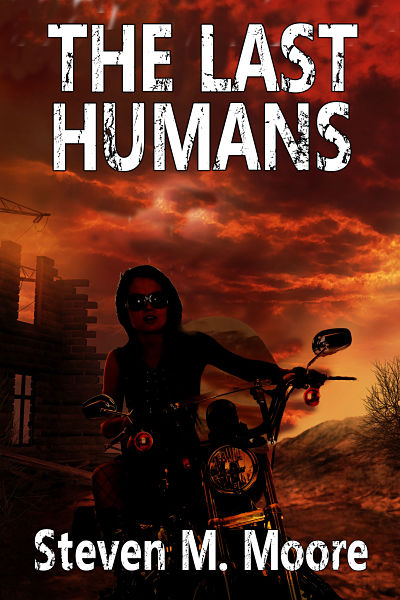
I don’t see any ruts in the road ahead. However, my readers are the passengers in my speeding car, and they might see some I don’t. From my point of view, I just see a reluctance for more travel on that one particular road. Rembrandt’s Angel is becoming a series with its sequel Son of Thunder (OK, it could be considered a spin-off from the detective series); Goin’ the Extra Mile makes the “Mary Jo Melendez Mysteries” into a trilogy; and my new book The Last Humans definitely (to be published by Black Opal Books) has series potential. We’ll see how it goes. My muses (banshees with Tasers) just “insist” I keep writing. I will, as long as I can.

Maybe authors should just avoid series altogether to avoid ruts in their writing roads? What do you think?

***

Comments are always welcome.

Goin’ the Extra Mile. The U.S. made the MECHs (“Mechanically Enhanced Cybernetic Humans”), Russia stole them, and now China wants them…and will kidnap Mary Jo Melendez and her family to get them. Returning to the globe-trotting suspense and action of #1 with many of the same actors as #2, this third book in the “Mary Jo Melendez Mysteries” is a rousing finale for this trilogy. Available on Amazon and Smashwords and all the latter’s affiliates (Apple iBooks, B&N, Kobo, and so forth).

In libris libertas!

Mini-Reviews of Books #37…

November 16th, 2018

Red Rising. Pierce Brown, author. (Del Rey/Random House, 2014.) I don’t buy Big Five ebooks much anymore; they often cost as much as the print versions! I fell into a trap on this one, though. The publisher has learned to set the trap of offering the first book in a series at a very low price. Sometimes that works, and readers buy more books in the series, so the trap is good for the publisher, author, and readers. In this case, that trap didn’t work. Let me explain why.

The book is a mixed bag. At times it seems like alternate history, a sci-fi subgenre I detest for the most part (the only exception if memory serves is Hogan’s The Proteus Operation). Here the evil Roman Empire is alive and well and dominates our solar system. The novel is almost dystopian too, not necessarily a bad thing, but it doesn’t work here. The cruelty of the Golds, the rulers of this futuristic empire, seems worse than any oppressors’ in known history, primarily because they have some fancy tech to back up their oppression. And they have lied to the Reds, the Martian miners, and other low-colored castes so they will believe they are creating a new home for humans by terraforming Mars.

I don’t buy into the concept. It seems as unbelievable as the Hunger Games concept (but Hollywood’s idea of good, believable science fiction is often questionable). Clancy said fiction has to seem real, and this story fails that test. The sociological aspects just don’t make sense either. The author needs to understand that world building also requires creating an alien or futuristic society that makes sense. The Roman Empire lasted a long time because it had layers of complexity underneath the emperors and generals that supported the ruling classes. That’s missing here because the book features lots of blood, gore, and guts as if all of Mars is dominated by gladiator dominance.

Yes, there is a lot of fighting among these sci-fi Romans, and this narrative becomes old rather quickly because of it. Old Rome was filled with intrigue and murder, but readers who like that sort of thing should read historical chronicles about Caesar and Nero instead. I get tired of the blood and gore here. Moreover, the setting of a terraformed Mars is absolutely absurd—at 0.37g in the valley where a lot of action takes place (the Colloseum?), why does Mars now hold onto its atmosphere and have grasslands and forests? There’s not much science in this sci-fi, to say the least.

Yet you can’t help but be sympathetic to the main character Darrow, the ex-miner who watched the Golds murder his wife. Darrow is a Red who becomes a Gold to infiltrate that caste and bring it down. The transformation is accomplished via a painful body reconstruction. What happens after that could have made an interesting read if it weren’t so much about warring Romans who pit their children against each other. Darrow’s quest is lost. I won’t touch the other books in the series—Book Two is $9.99—because this one fails so miserably. And I’m glad I didn’t spend a lot of money on it! (Hey, Big Five staffers, an ebook is just a computer file. I won’t spend more than $6 on one! And this is probably one review I should repost to Amazon, but it would just be lost among all the readers who swallowed this drivel.)

Die 6. Scott Dyson, author (Deadlock Press, 2014). To end on a much more positive note, let me consider this collection of extremely interesting short stories—speculative fiction but not necessarily sci-fi, and a pleasant respite from the blood and gore of the novel above for the most part. Short fiction collections are becoming rarities, but writing short fiction represents interesting dashes and mid-distant races compared to the marathon of novel writing. As such, they’re often gems with the excitement of Usain Bolt in the hundred meters.

This little collection of six short stories is a good example of what I mean. The stories range from the humorous to the serious. In the first, a man is seduced by a digitized woman (OK, maybe that is sci-fi)—an unusual love story. In the second, a real psychic gives fake readings, and gets into a lot of trouble—very humorous. In #3, a real tooth fairy gets into trouble—fantasy, yes, but humorous and thought provoking. In #4, a fun house at a carnival is not so much fun—the author here is channeling Stephen King (It comes to mind in comparison, but the short story is more concise and frankly scarier, and that King novel proves the point I made above—the ebook version is $12.99 and the print version is $14.99!). The fifth story is a beautiful romance with a sad twist—a good time-travel tale that ably avoids the paradoxes (OK, that’s sci-fi too). And the sixth story, the longest, features an old train accident from the 19th century and its effect on three kids from the 20th, a powerful and cautionary tale about overpowering guilt.

Mr. Dyson’s breadth here is surprising—every story is interesting. I just wish he’d write more stories!

***

Comments are always welcome.

More than Human: The Mensa Contagion. One reviewer compared this novel to Kim Stanley Robinson’s Mars series. The first part is about how an ET virus creates homo sapiens version 2.0, though. The second is about how these new humans colonize Mars and discover a starship filled with the same ETs who sent the virus to Earth. The ebook is available on Amazon and Smashwords and all its affiliates.

In libris libertas!

ABC Shorts: Timmy and Me…

November 15th, 2018

Timmy and Me

Copyright 2018, A. B. Carolan

“James, you seem in a foul mood tonight,” said Sam MacAllister.

Bradford had taken a pub stool next to Mac and ordered a pint.  After a lengthy sip, he said, “How can you tell?”

“Not a wink at the barmaid, me lad, even though she’s flirting with you. She never flirts with me.”

“You’re married. And leave me alone, Sam. You’d not understand.”

“Try me. Girlfriend problems?”

“No. I just talked to Beatrice on my mobile. She’s still at the office.”

“You arrest them, she defends them. It’ll make a good family business if you ever commit, I’d say.”

“You say a lot of things that shouldn’t be said.”

“Like I said, moody.”

“If you saw what I just saw, you’d be moody too.”

“Tell me about it. I need a good story.”

“A true story. I was at the scene of a robbery. Grocer over by Piccadilly. Morgan and I were interviewing witnesses when the thieves returned.”

“Stupid of them. We need more dumb ones to better our statistics. I’m guessing Morgan and you arrested them.”

“Not exactly….”

***

The scruffy lad had some kind of gun. So did the thing beside him. The clerk and two cops raised their hands. Other witnesses waiting for their turn to be interviewed rushed for cover.

“You don’t want to shoot that,” Bradford warned the lad who seemed to be in his early teens.

“He forgot something,” the thing said to Bradford in a deep baritone voice emanating from somewhere. The Queen’s English was clear and precise. “Go get it, Timmy. I’ll cover the coppers.”

The lad named Timmy disappeared down one aisle but soon returned with a box of bandages. He showed them to the thing.

“That should work,” it said.

The two backed out of the establishment. Outside, they turned and ran.

Everyone started talking at once, but Bradford had the presence of mind to dash out and give chase. The lad was fast, but his companion was slow. It turned and shot Bradford.

He was hit by some kind of field, though, not a bullet. He felt like a net of electricity had been thrown over him, causing him to lose control of his muscles. He slumped to the ground like a pile of mud from the Thames.

He was still conscious when Morgan dragged him to the wall of a building and put him into a sitting position against it.

“Did those two kids attack you, sir?”

Bradford was barely able to shake his head in the negative. He managed to raise his index finger.

“I think you have a concussion, or something worse. There were two of them. Are you saying there was just one?”

***

“Sounds weird,” MacAllister said. “But Morgan’s probably right. You took a hit to the head. Bloody wild kids.”

“There was only one kid, Mac. And this thing. Just like I said. I didn’t imagine it. Morgan and all the rest are confused.”

MacAllister raised his hands. “OK, OK, if you say so.”

Bradford sighed, through some money down on the bar, and left the pub, still watching Mac shake his head in the mirror on the wall as he walked out.

***

Bradford’s only recourse was to find Timmy. He knew the urchin. He was a pickpocket with his worst previous crime being slicing the straps of a tourist’s handbag and making off with it.

He also knew the lad was basically homeless. He was supposed to be living with his uncle, but he was drunk most of the time. He’d send Timmy out to steal food and drink for him. Timmy usually hung out in an alleyway not far from the grocer. Is his uncle injured?

Bradford checked there the next morning. Sure enough, the disheveled urchin was there. He strode toward Bradford and stopped in front of him, standing on tiptoes to make himself appear taller.

Read the rest of this entry »

Interviewing author Carole Price…

November 14th, 2018

Steve: Today I’m honored to interview mystery and thriller author Carole Price. Why don’t you tell us a bit about yourself to start out.

Carole: I’m a Buckeye born and raised in Columbus, Ohio, and I attended The Ohio State University. I worked for a national laboratory in northern California before turning to writing mysteries.

Steve: Tell us about your novels.

Carole: I write the “Shakespeare in the Vineyard Series.” I fell in love with the Bard after attending plays at the Oregon Shakespeare Festival in Ashland.

Steve: This is a mystery series. That must have required some background beyond a love for Shakespeare.

Carole: I graduated from the Citizens Police Academy, and I’m an active police volunteer for the Livermore Police Department. I’m also a member of Mystery Writers of America, Sisters in Crime, and International Thriller Writers. I actively promote my books at conferences, literary groups, and many other venues.

Steve: Sounds like you have a lot on your plate.

Carole: I multitask, writing both fiction and creating stained glass art. My husband and I reside in the San Francisco Bay area in the middle of wine country, so there’s plenty to do in the area.

Carole on Reading and Writing:

Steve: Why, how, and when did you start writing?

Carole: I arrived late on the writing scene. It wasn’t until I retired, invited to join a critique group, that I started my first book. Although an avid reader, it hadn’t occurred to me to try my hand at writing novels, but when I began to rewrite sentences/phrases in whatever book I was reading, I realized how much fun it was. That first book, still not yet titled, takes place on Martha’s Vineyard, where I’d vacationed a few times and loved. I’m currently editing that book.

Steve: Did you publish the first book you wrote?

Carole: Not yet, but I hope to.

Steve: What is your biggest problem with the writing process? How do you tackle it?

Carole: Ideas seem to dry up by the middle of the book. There are approximately sixty wineries in Livermore. I thought the familiar setting would make it easier to describe, but I learned readers are alert and careful about details, and I must be too. One reader let me know that she had driven around looking for the fictitious estate my character had inherited, including a vineyard and two Shakespearean theaters, from an aunt she’d never heard of. So far, I’ve stayed with one POV.

Steve: Do you feel writing is something you need to do or want to do?

Carole: Writing is something I want to do because I enjoy it and have made new friends.

Steve: How much of your creative ability do you think is innate and how much is learned?

Carole: My mother was a professional classical violinist and singer. There was always music in our house, but I didn’t get any of her talent except for an appreciation of music. Most of my writing creativity has been learned by doing it.

Steve: What is the last book you read? What are you reading now?

Carole: The last book I read was House of Lies by Daniel Silva. I’m currently reading The Outsider by Stephen King.

Steve: Who are your favorite authors?  Whose writing inspires you the most and why?

Carole: My favorite authors are Daniel Silva and Catherine Coulter. There are many writers who inspire me because of their originality with descriptions and dialogue. They know how to move the story along, something I always need help with. I learn by reading other authors. Read the rest of this entry »

The best mystery & thriller novels…

November 13th, 2018

Most mystery and thriller readers have their own list of novels they remember with fondness. While yours might be different, I want to offer you mine. For younger readers, there are probably some oldies in my list you might have missed and could enjoy. Maybe you’ve heard old geezers like me mention them fondly. In any case, many are classics now. Without further ado, here’s my list in alphabetical order according to author:

Isaac Asimov, The Naked Sun

David Baldacci, Absolute Power

John le Carré, Tinker Taylor Soldier Spy

Raymond Chandler, The Long Goodbye (1955)

Lee Child, The Affair

Agatha Christie, Death on the Nile

Arthur Conan Doyle, The Hound of the Baskervilles

Michael Connelly, The Narrows

Jeffery Deaver, Garden of Beasts

Ken Follett, Eye of the Needle (1979)

Frederick Forsyth, The Day of the Jackal (1972)

Dashell Hammet, The Maltese Falcon

PD. James, Death in Holy Orders

Elmore Leonard, Get Shorty

Robert Ludlum, The Bourne Identity

Robert Parker, The Godwulf Manuscript

Douglas Preston and Lincoln Child, Relic

Ian Rankin, Resurrection Men (2004)

H. Rider Haggard, She

John Sandford, Bad Blood (2011)

Georges Simenon, A Battle of Nerves

With the exception of Sandford’s book, the years indicate when an Edgar Award was rewarded to the novel (Sandford’s is a best thriller award). I haven’t always chosen every author’s Edgar or thriller award novel if there is one because sometimes I don’t consider it the best! And many of the books in my list were unfortunately overlooked by the award committees.

I also should emphasize that most of the writers have authored many more books than the one that appears here for them. Baldacci produces bestseller after bestseller, but the one listed, his first, is his best. Deaver is more famous for his Lincoln Rhyme series, but I also think the one listed is his best. Follett has broadened his horizons, especially to more lengthy historical fiction, but none can beat the one listed here (also historical fiction in a sense and akin to Deaver’s in a way).

Many authors listed here were trailblazers in the genres. Those who followed them have a very big hurdle to leap over. All of these books should be considered classics (assuming snooty critics can ever consider genre fiction novels as classics—they tend to limit themselves only to those books in that catch-all genre “literary fiction”). I’ll admit I might have missed some classic mysteries and thrillers. I can state without reservation that I read every one of these novels and enjoyed them all (and a lot more than these, of course).

Some books here have influenced my own work in the mystery and thriller genres. Hard-boiled mystery writers like Chandler, Hammett, and Parker influenced my “Detectives Chen and Castilblanco Series,” but its spin-off, Rembrandt’s Angel, was influenced by Christie (the main characters are a modern version of Miss Marple and Hercule Poirot, together at last!), and by P. D. James and Ian Rankin. Jame’s Death in Holy Orders influenced my sequel Son of Thunder much more than Dan Brown’s The Da Vinci Code (the latter’s influence was more limited to doing such a story the correct way, without controversy and sloppy historical research).

Any list like this is subjective. You can make your own, but I’d expect at least some overlap.

***

Comments are welcome!

Goin’ the Extra Mile. Hot off the press and available on Amazon and Smashwords and its affiliated retailers (iBooks, B&N, Kobo, etc). The U.S. made the MECHs (“Mechanically Enhanced Cybernetic Humans”), the Russians stole them, and now the Chinese are after the MECH tech and are willing to kidnap Mary Jo and her family to get it. #3 in the “Mary Jo Melendez Mysteries” puts Mary Jo and her MECH friends through the paces as the action and suspense takes the reader from the U.S. to Europe and China, returning to the globe-trotting thrills of the first novel, Muddlin’ Through, which is also now on sale for $0.99 at Smashwords for a short time.

In libris libertas!