The author’s conundrums…

May 9th, 2019

Most authors hesitate when they first think about publishing, whether it is a traditionally or self-published book. Second thoughts are inevitable. We ask ourselves: Will anyone like my book? Will those who don’t attack me? How much marketing should I do? Will I regret publishing this book?

I posed these questions in 2006 with my first book, Full Medical. With every book since then, they rear their heads like some Greek chorus announcing pending doom. The last general question is the most important because it summarizes the others. Even marketing our books exposes us to public opinion, which moves lightning fast these days and often reflects knee-jerk reactions to stimuli. We can rationalize everything by saying that it’s all about our books, not us. Well, yes, but they’re our books. A book just doesn’t materialize out of thin air. An author wrote that book, a real person, not an android or robot (I suppose that day will come). And that person, whether s/he likes it or not, is in the public spotlight. It might be a small one, but more people will know about that author than they would fifty years ago because of social media and online marketing. It’s a zany, new world of publishing now, and no author can escape the public and be a complete recluse.

Let’s put it another way: Any author who puts her or his books out there cannot hide. We’re all visible, some more, some less, just because we publish books. Maybe not enough authors realize this.

Or do we? Are we all closet narcissists now searching for the spotlight? I think we’re both, in a sense—torn between introverted and extroverted behavior. We write our stories alone, but we want validation of our storytelling, so we publish those stories. This is a tricky psychological and sociological balancing act. It’s one all creative people endure, from scientists and engineers to storytellers and song writers.

Fortunately the tightrope where we do this balancing act isn’t thin. Introverts and extroverts can balance on it, and everyone in between. We can pick how much that spotlight shines on us, avoiding what makes us uncomfortable. Reasonable readers respect our privacy, just as we respect theirs. We an chat with readers and among ourselves online and publicly as much as we want, and most everyone gets by.

But how should we respond to those who attack us? Depends on our personalities and how tough our skins are. We shouldn’t look for fights, but there’s always some troll who wants to be confrontational. But is this any different from real life? Maybe there are more trolls because we publish our books, but it’s best to ignore them. Let them stew in their own juices. Be assured that most of them couldn’t tell a good story even if their life depended on it. We can usually tell that from their criticism.

On the other hand, the way we handle praise is key too. First, we must be modest. It’s nice to receive accolades for a book and our writing in general, but we should always realize that there are many good authors and good books out there and count ourselves lucky that those readers sending accolades our way chose our books to read. Also as in real life, a little humility can go a long way.

***

Comments are always welcome!

Mind Games. You know A. B. Carolan as the writer of The Secret Lab and The Secret of the Urns. Those novels are sci-fi mysteries for young adults (and adults who are young at heart). In Mind Games, A. B. tells a new story that’s set a bit farther into the future than his first two books. Della Dos Toros is a young girl with psi powers living in the Dark Domes of the planet Sanctuary. Her adopted father doesn’t let her use those powers, but she must do so to find his killer. This story about ESP and androids adds another action-packed novel to the ABC Sci-Fi Mystery series. Coming soon in both print and ebook versions. An excerpt will appear in tomorrow’s newsletter. (Note: the first two books are on sale, but only for my email newsletter subscribers.)

Around the world and to the stars! In libris libertas!


News and Notices from the Writing Trenches #169…

May 8th, 2019

Spring rain. Inevitable I guess. Maybe April showers will bring May flowers. At least it’s not snow. (Okay, some have had a few late winter storms, but here in NJ, it’s just a lot of rain.) I’m always going out with a hat now—serves as an umbrella I don’t have to carry. And speaking of hats, see my post last week on them.

Recent reads. I’m an avid reader as well as a full-time writer. I thought I’d mention some books I recently read: Cherubs 2 by Marc Liebman is a military thriller about a helicopter SAR pilot (search and rescue pilot) during the Vietnam War; You Say Goodbye by Keith Steinbaum is a mystery/crime story about a washed up rock musician who struggles to find his girlfriend’s killer, and Kilts and Catnip by Zoe Tasia is a romantic/fantasy with a splash of mystery about the happenings on a mysterious island just off the coast of Scotland. I think I wrote reviews for all these on my blog. Check them out.

Is it fantasy or is it sci-fi? My novel Rogue Planet was inspired by John G. Stockmyer’s Under the Stairs series. It’s a hard sci-fi thriller with Game-of-Thrones-style fantasy elements. A. B. Carolan’s new sci-fi mystery for young adults, titled Mind Games (soon available in ebook and print versions), will mix ESP and android manufacture (see the excerpt immediately below). All these books should appeal to both sci-fi and fantasy lovers.

Excerpt from Mind Games. The main character is Della, a fourteen-year-old with psi powers. Her adopted father was murdered and she is trying to discover who the killer is. So, just to whet your appetite….

The puzzle’s loose pieces were starting to come together. But Androids Incorporated plus SISA plus Psi Corps equaled what? Was there some kind of conspiracy? If so, why had the people involved needed to kill Ferdie? Realized I didn’t know that much about Ferdie although we’d been so close. Had they asked him to participate in something he couldn’t morally do, so he turned them down? If so, had they killed him because they were afraid he’d expose them? Or was I only a paranoid schoolgirl who should leave such weighty issues to adults?

All these thoughts swirled around in my head as I fought off mind-probes sent out by three strange men. They easily detected my firewall just as I’d detected theirs. Why didn’t they attack? I decided to find out.

Picked the agent who seemed to be the weakest fellow. Followed his probe right back to the source and hit his mind hard. Broke through his firewall and, before he collapsed, read everything in his mind. Sweeping aside his confusion about the attack wasn’t easy, but I knew I could make sense of all that chaotic information later. Didn’t feel sorry about it, but he would need a psych’s help. Tough, I thought. I had acquired some information in the process, and he at least would have mind-wiped me.

Smashwords sale. To celebrate A. B. Carolan’s third book (see above), he’s putting the first two on sale at Smashwords. Great summer reading for young adults and adults who are young-at-heart. As usual, only subscribers to my email newsletter have access to these sales. You can subscribe by contacting me at steve@stevenmmoore.com.

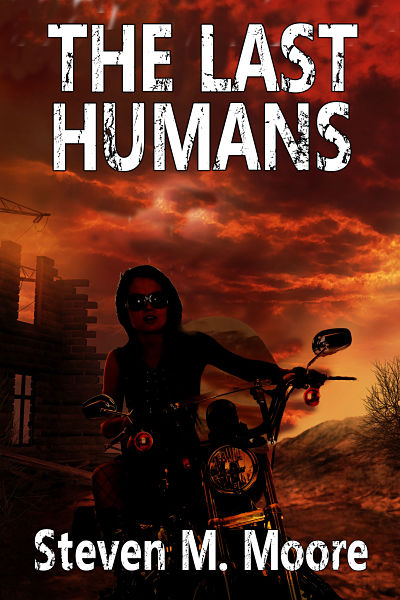
Reviews for The Last Humans are coming in. This recent book from Black Opal Books is a post-apocalyptic thriller for our times. Lots of action that will keep you thinking, “Can this really happen?” Did you miss it? Available in ebook and print versions online and at your favorite bookstore (if they don’t have it, ask for it). FYI: The sequel is almost finished!

Also coming soon. In addition to Mind Games (see announcement and excerpt above), Penmore Press will soon publish Son of Thunder. It features the principals from Rembrandt’s Angel, Esther Brookstone and Bastiann van Coevorden, along with Sandro Botticelli, the Renaissance painter, and St. John the Divine, Christ’s most beloved disciple…and there’s no time travel involved. This mystery/thriller will keep you guessing, just like the first book. Look for it.

***

Around the world and to the stars! In libris libertas!

POV vs. person…

May 7th, 2019

I thought I knew about point of view (POV), but I learned I didn’t the hard way, from a review of one of my books. I consider myself a man of logic and reason, so I accepted the critique and learned from it. I now watch my use of POV like a hawk.

I was confusing person with POV, among other things. They’re related, but they’re not the same. POV can be omniscient, i.e. the viewpoint of someone who’s not a character in the story “looking down” as it were and telling the reader what’s happening. Some narrative (world building in sci-fi, for example) requires this POV. Omniscient POV isn’t recommended in general, though.

Usually the story is written from some character’s POV. An author shouldn’t change that frequently AKA “head-jumping.” The POV should at least be constant in each section of a chapter. Sometimes it’s constant throughout an entire novel (especially if there’s just one character). I’ve seen authors switching POVs within sections and even within paragraphs. Not recommended either.

My sins weren’t terrible ones, and I learned my lesson. I still have to watch for POV, though. Flubbing POV is one of my writing quirks I have to look for when content editing.

What about person? A character’s POV can be in first (pronoun “I”), second (pronoun “you”), or third person (pronouns “she” or “he” or “it”—for the latter, we have to get fantasy creatures and ETs in the prose sometimes), all singular because it’s just one character (I used “we” in the Chaos Chronicles Trilogy, though, for collective intelligences). The choice of person is therefore distinct from POV. For stretches of prose written in first person, they have to be in that person’s POV, of course, which might add to the confusion. But POV can jump around various characters in a book. All those different POVs can be in third person, for example.

Choosing POV and person are selections writers make in their storytelling. They shouldn’t be taken lightly or ignored. When I wrote The Last Humans, I first had the plot idea and choice of main character; other characters came along as I wrote. But I chose person and POV early on. The key is in the subtitle: The Adventures of Penny Castro. (Somehow that got lost in publication. Probably my bad.) I chose Penny’s POV, writing in first person. That worked best in the first parts of the book where it’s mostly Penny against the post-apocalyptic world. I stuck with it in later parts too, even when other characters (i.e. survivors) came into her life.

In the sequel (I’m still thinking about the title), Penny will share the POV with other characters. She’ll be in first person still, but, because many events don’t involve her, the characters involved in those events will be third person. I’ve used this mix before—most notably in my detective series—but I wasn’t the first author to do so (and probably not the last) because I first saw it in James Patterson’s Alex Cross books.

Handling POV and person are two skills a writer must have. For some, it comes naturally; and for some, who think it comes naturally, they make some gaffes. I was one of the latter long ago and pay special attention to it now. It ranks with a getaway car turning from red to blue in mid-chase for its potential in confusing readers.

***

Comments are always welcome.

Mind Games. You know A. B. Carolan as the writer of The Secret Lab and The Secret of the Urns. Those novels are sci-fi mysteries for young adults (and adults who are young at heart). In Mind Games, A. B. tells a new story that’s set a bit farther into the future than his first two books. Della Dos Toros is a young girl with psi powers living in the Dark Domes of the planet Sanctuary. Her adopted father doesn’t let her use those powers, but she must do so to find his killer. This story about ESP and androids adds another action-packed novel to the ABC Sci-Fi Mystery series. Coming soon in both print and ebook versions. An excerpt will appear in tomorrow’s newsletter. (Note: A. B.’s first two books are on sale now, but only for email newsletter subscribers.)

Around the world and to the stars! In libris libertas!

Living with my name…

May 2nd, 2019

I happen to like my name. We’ve been friends since birth. No, I’m not that economist currently in the news. Even Google Alerts got confused. Hey Google, the economist is Stephen—that’s with a “ph” not a “v.” I’m Steven. I’m no relation to Mark Moore either. And I’ve never played with the New England Patriots. And I’m not that other author Steven Moore or the felon Steven Moore. Etc. Etc.

I am an ex-scientist who once worked with terabytes of data and tried to make sense of them (something that economist Stephen never has done, I’m sure). That work often involved statistical analysis (maybe the economist understands stats?). Now I’d like to know some other stats, though: Is Steve Moore more common than Joe Smith? I’ve never personally known a Joe Smith (or John Doe, for that matter), but I once knew a Joel Smee—we competed for the first trombone chair in high school.

Because I like my name, even though it’s common, I chose to use it in my writing. Some people choose a pseudonym. I chose to stick with my given name—never thought much about a pseudonym when I was getting ready to publish my prose. (Maybe I should have? Something like Lee Child? Hmm. That one was already taken.) They say hindsight is twenty-twenty, so at times during my writing career I’ve wondered if I could have done better and become better known with a fake name. But maybe hindsight needs corrective lenses, and it sure isn’t a time machine—I can’t go back and change that decision.

When I wonder about pen names, I can rationalize my choice by asking; Would it have made any difference? I’ll rephrase that question: Does a reader choose a book by an unknown author on the basis of the author’s name? Yeah, maybe, if the name is very unusual, but not if it’s a common name, maybe just a symbol (I throw that in for “Purple Rain” fans—I like that song too). A reader will choose a new book by an already known author because s/he liked that author’s previous books, but they’ll be attracted to the unknown author’s book by other things, all related to the book itself. One exception might be a memoir after the reader peruses an interesting bio, an extreme case being an autobiography. (Some unknown authors might write these, but that would be unusual.)

Read the rest of this entry »

Small press catalogs…

May 1st, 2019

One of the unexpected pleasures I’ve received from my association with small presses is confirming my old opinion that they have catalogs with many good books written by many good authors. Of course, the author’s negative in this is that it also confirms that competition is stiff, but the pleasure is augmented when the author, like me, is an avid reader. I always knew this, of course, and often perused specific publisher’s catalogs. But I’m doing it more often now.

Let me hasten to add that there’s no one pressuring me to do this. But, as an author, I know my own books get buried in the thousands of books available at big retail sites. I hate to browse on Amazon and Smashwords for that reason, knowing that other authors must surely suffer the same fate…and their books can be interesting reading.

Black Opal Books and Penmore Press, two small presses that have morphed me into a mongrel (a traditionally published as well as a self-published author), have catalogs with many interesting books that might get buried in the lists of the giant retail sites. I’ve read many books listed therein, and I’m sure I’ll read many more. (Some are already on my TBR list, either already purchased and waiting patiently for me on my Kindle, or waiting to be purchased.)

So I thought in this blog post I’d list some of these books. Most I have reviewed, either in my “official reviewing capacity” on Bookpleasures (before I became associated with the two publishers, mind you) and/or on this blog (see the “Book Reviews” and “Mini-Reviews of Books” archives).

Read the rest of this entry »

Hats…

April 30th, 2019

Like bumper stickers, hats are used to make political statements, acknowledge where their wearers have been or want to go, what their wearers would rather be doing, or expressing support for some sports team. Mine generally do none of that. (I don’t display bumper stickers either.)

I generally wear three types of hats: baseball caps, Panama hats, and Irish wool hats. My reasons for doing so might seem unusual. While the hat itself might make a statement, my main purpose for wearing them is, in fact, utilitarian.

Baseball caps have the disadvantage that they don’t protect the tops of my ears from sunburn. I use them more in rainy weather, preferring them to an umbrella unless it’s  a torrential downpour. Some of them promote something (Guinness stout or Jameson whiskey; Spring Lake, NJ—you might have seen my pic where I wear one), but they’re generally neutral in color—brown or gray, and never red or blue. I’ve lost quite a few baseball caps in my life, many more than a sock from a pair.

I finally found a Panama hat. I’ll confess my ignorance. I discovered hey’re made in Ecuador, not Panama. I think other South American countries make reasonable facsimiles, though (maybe like champagne, they’re not allowed to call them “Panama hats”?). I can’t imagine coffee growers in Colombia paying for an imported hat, even if Ecuador is a next-door neighbor, and they invariably wear one. Of course, the iconic Juan Valdes isn’t a determining factor in this controversy—he wasn’t even Colombian! (Of course, the name is an advertising creation, but the original Juan Valdes  was portrayed by Cuban opera singer Jose Duval.) Those “Panama hats” are pliable, practical, and cool (in both senses of the word), and the wide brim keeps my ears from burning.

Read the rest of this entry »

Steve’s shorts: Fascist Tango, Part Five…

April 26th, 2019

Fascist Tango

Copyright 2019, Steven M. Moore

Chapter Thirteen

At Rodrigo’s Club

Before Rodrigo returned to the club to take me to his mansion, I inspected the safe in his club office. All the material in there had to do with club business, so that sleuthing campaign was a bust. Lots of guaranis and other South American cash too, as well as other currency from everywhere else. I resisted the temptation to “borrow” some of that just to stick it to Rodrigo—I didn’t need the money, of course.

In the WC, I called Juan Carlos and told him about my plans for later on at the mansion.

“Be careful, Jasmine. You’re walking into the Devil’s lair.”

“I’m sure there’s a tango about that.”

“Piazzolla’s ‘Libertango’ is often called the ‘Devil’s Tango.’ And the latter often means humping it in bed, so that’s appropriate when it comes to Rodrigo. If you can, take a weapon.”

I tingled a bit in my lady parts when he spoke of humping it, thinking about Juan Carlos, not Rodrigo. OK, Jasmine, you’re no longer a teen. Still it was nice to know those parts still functioned. I ignored my colleague’s advice. I was sure I’d be roughly frisked by Rodrigo’s security staff.

“There was nothing of interest in the safe here, so it must be at the mansion. It’s the only logical place where he could have easy access.”

“Get anywhere near that vault, and he might kill you. Slowly, because he’s a sadist.”

“I’m a big girl. I can take care of yourself.”

“I know about some of your skills. They might not be enough. Plug into the group’s AI network so I can provide backup.”

“From outside the mansion? Don’t be naïve. But connecting is a good idea. I can scan everything I find and upload it to the network. No matter what happens to me, the group will get something. I hope it’s good enough to bring Rodrigo down.”

***

Asuncion isn’t a big city—about three-quarters of a million now, smaller than Montevideo and Buenos Aires, also fascist capitals. Rodrigo’s limo driver soon took us out of the city proper to the mansion. Surrounding it was a wall with metal slats and barbed wire on top, all set in a rock/concrete base. Looked like the FSA’s southern border wall—I had to scale that once—but this one was a lot newer. Videocams were everywhere. The main gate opened with a squeal of hinges.

“The place is old,” said Rodrigo. “People tell me it was Stroessner’s son Freddy’s modest country estate. Just rumors, I suppose. There are plenty of old-timers here from Paraguay’s golden era who gossip about the good old days.”

Golden era? Papa Stroessner’s cohorts took advantage of the power the dictator wielded. Fascismo uber alles! That was their credo.

Colombian citizens were also Paraguayan citizens, but the two countries were linked in other ways. Rojas Pinilla came to power in Colombia in 1953; Stroessner came to power in Paraguay in 1954. They were both generals who became despots long before the generals of the Dirty War in Argentina and Pinochet in Chile. The latter were helped by the CIA; the former were self-made autocrats. Hard to choose between them all, not that I’d want to do so.

“You’ve landscaped it nicely,” I said, just to say something, as we drove up the long driveway.

“Maintaining this place is always a challenge. We made a lot of improvements after I purchased the property.” He put his hands on my thigh. “Like special bedrooms.”

And a vault in your study! I smiled at him—a smile as seductive as I could make it. I must lead you on, you old bastard!

“First I want a tour. I’ve never been inside a mansion.”

“It’s just my home outside the city. But of course, you shall have your tour.”

After a burly security guard frisked me and gave me a lecherous wink—how many women had he turned over to his boss?—we entered through the double front doors. I saw the double stairway to the second level, a sitting room to the right side of the stairway, and what looked like an old English library to the left.

“Is that your study now?”

“The walls are lined with first editions, so technically it’s still a library. Sometime I must read some of those books. There’s also a grand piano where I occasionally host soirees. But yes, I often work at the large desk that’s tucked into a corner. I need quiet when I think about plans and strategies.”

“For your businesses? I’m impressed.”

“Let’s visit the sitting room first.”

***

We entered the sitting room, and I immediately admired the artwork. There were a few family portraits, but most were paintings from the Renaissance forward to the early twentieth century. I wondered if some of them were paintings stolen by the Nazis in World War Two. Paraguay and other countries in the Southern Cone had been havens for Nazis fleeing the allies’ justice.

I sent several images of paintings to our AI network while I pretended to study them.

“Are you a connoisseur of artwork?” said Rodrigo.

“I like it. The modern stuff too, like Botero and Obregon.”

“Famous Colombian artists. Of course. As you can see, I don’t have much room left here for paintings, and my tastes end at the impressionist movement.”

“Shouldn’t some of these be in a climate-controlled environment?”

“Those you think should be are copies. The originals are in a vault where only I can view them. I’m sorry.”

I shrugged. “Guess I’m too dumb to know the difference.”

He made no comment. Maybe he thought I was dumb to even be at his mansion?

“Next we tour my study.”

There I took note of some first editions. Or were they just copies too? But I saw an old edition of Cervantes’ Don Quixote, for example—not a first edition, but in good condition. I didn’t dare touch them.

I also saw a fake book in a bookcase where the cracks around it were a bit too wide compared to the other cases lining the walls, easy to confirm with my sensors. I knew it had to be the entrance to Rodrigo’s vault. I was lucky that Lulu had told me about it so I could look for it. Again I sent the image to the AI network. At least Juan Carlos or others would know the exact location of the vault.

Chapter Fourteen

The Mansion’s Second Level

            Instead of the debutante coming down one of the stairways, Rodrigo chaperoned me up the stairs, even offering his arm to help because the risers were high.

More paintings adorned the walls of the halls off the landing. There were busts and statues too. The artworks were now all erotic. To set the mood?

We stopped in front of a closed bedroom door. He eyed me.

“I think I have a negligee that will fit you perfectly.”

“Good. I think it’s time to get comfortable, don’t you think?”

He opened the door to a bedroom that looked like one from an exclusive bordello. The large four-poster bed had pink lace curtains and many fat pillows. I could see a large attached bathroom from where we were standing.

“Show me the negligee. I need to freshen up, Rodrigo.”

“Of course. I will also dress more comfortably in my own bedroom. I will return.” He winked at me. Never doubted it, I thought.            Read the rest of this entry »

Mini-Reviews of Books #41…

April 25th, 2019

You Say Goodbye. Keith Steinbaum, author (Black Opal Books, 2019). I’ve always appreciated a good murder mystery, and this one met my expectations. Lots of possible suspects, lots of clues and misdirects, and some interesting themes weaving in and around the plot, all making a complete whodunit tapestry.

One theme is music. The victim’s boyfriend, Sean Hightower, is an aging one-hit-wonder rock musician who spends his days selling cars and has nights performing gigs where annoying night clubbers always ask for his famous song, “Looking Glass.” This is a neutral role for music, even though Sean wants to rekindle his fame.

But music plays an evil and good role too. First the good: the little girl next door, Kayleigh, has cancer, and music permits the two to develop a bond. Sean first meets his little friend when she interrupts his plans for suicide, driven to that state by his girlfriend’s death. That first meeting leads to an enduring relationship.

Now for music’s bad role: The girlfriend’s murderer is a serial killer, known as the Beatles’ Song Murderer, who has been terrorizing the area. Detective Ray Maldonado knows this from the “Hello, Goodbye” messages taped to a wall in the victim’s apartment. Ray’s convinced the killer is someone Sean knows and recruits the musician to help him solve the crime. Tension builds as Sean battles his personal demons and plays amateur detective. And the murderer is observing it all.

Those who love the mystery genre will love this tale. ‘Nough said.

Kilts and Catnip. Zoe Tasia, author (Black Opal Books, 2019). When Rebecca lost her husband, she moved to Scotland—not as big a change as you might think because she’d lived there before. With her two daughters, Jess and Tate, she returns to teaching. And, during the summer vacation, she rents a small cottage on the Shrouded Isle.

Thus begins a tale full of fantasy, thrills, and mystery. A strange man helps Becca and her children in some strange situations that are often weird and threatening. And other weird events occur too. Becca discovers her neighbor is a shapeshifter who can become a cat. The grocer and his nephew can become wolves. All three aren’t really threatening, though. But other magical beings appear who are, and that strange man, Greg Gillie, seems to be involved with all of them.

Becca seems to take this all in stride, maybe too much. Most people would be at their wit’s end, but she plods on like Miss Marple in a fantasy world, trying to figure out what’s going on. I want to emphasize that mystery aspect here, especially considering the first book reviewed above—a reader can find mystery and suspense in fantasy too. Becca receives many clues on her strange journey of discovering who Greg Gillie really is. There is also a wee bit of romance as her relationship with Greg matures, but these multi-genre descriptions only illustrate the complexity of this novel.

I’m not much of a fantasy fan, but I’m a sucker for Celtic legends and myths involving the fae and other magical creatures. This is a fascinating tale that kept me reading, weird in a great way. Because it’s “Book 1,” I’m hoping for a sequel. More mischief from the fae?

[Note from Steve: Please read yesterday’s interview for more information about the author.]

***

Comments are always welcome.

“Mary Jo Melendez Mysteries.” Who are the MECHs? Find out in this trilogy featuring the novels Muddlin’ Through, Silicon Slummin’…and Just Gettin’ By, and Goin’ the Extra Mile. These action-packed stories of mystery, thrills, and suspense will provide hours of reading pleasure. Available on Amazon and Smashwords and at the latter’s affiliated retailers (iBooks, B&N, Kobo, Walmart, etc.).

Around the world and to the stars! In libris libertas!

Interviewing author Zoe Tasia…

April 24th, 2019

Steve: I have the great pleasure today of interviewing author Zoe Tasia. She’s a multi-genre writer of fantasy, romance, and psychological thriller novels. Some of her books are co-written with Minette Lauren under the pseudonym Zari Reede. I just finished reading her Kilts and Catnip (The Shrouded Isle Book 1), which is a fantasy that includes Celtic myths and magic, but it also adds mystery to that genre list. [Note from Steve: A review of this book will be posted tomorrow.]

Without further ado, let’s begin.

Zoe on Reading and Writing:

Steve: Why, how, and when did you start writing?  

Zoe: I have admired authors my entire life and can’t imagine a more perfect vocation for me. One of my most vivid memories is the moment of awe and joy I felt when I was proficient enough to read a “proper” book. Joy, because I have always loved books, and I was so excited to be at a reading level that I could tackle pretty much anything I desired. Awe, because of the implications. I could read anything—what a head rush! I realized very early that knowledge is power and the ability to read opens that door. From that point on, I scribbled down the stories in my head that beforehand, I could only share verbally with my friends and family.

Steve: Did you publish the first book you wrote?

Zoe: Oh dear, no. I still have it, though. It’s a very primitive, young adult novel written by hand.

Steve: What is your biggest problem with the writing process? How do you tackle it?  

Zoe: Switching between POVs is tough. When I was writing Kilts and Catnip in first person POV, I was also writing a third person POV book. That was a difficult experience.

Steve: Do you feel writing is something you need to do or want to do?

Zoe: Need to do. I can’t help it. Even before I could read and write, I would tell my sister and cousin stories. I was born a storyteller.

Steve: Have your personal experiences or situations influenced you creatively? If so, how?

Zoe: Definitely. I lived in Scotland for years and knew I would write a book taking place there.  After the West Nile virus scare, I penned a book about a boy who came down with it. (I lost a portion of it when my computer died and haven’t had the heart to get back to it, but I will.) I majored in psychology, which very much influenced my writing while working on a co-authored psychological thriller.

Steve: How much of your creative ability do you think is innate and how much is learned?

Zoe: My creativity is mostly innate; however, I work hard to use it to the best of my ability.

Steve: What is the last book you read? What are you reading now?

Zoe: The last book I read was Strange Days by Rick Gualtieri. I’m currently reading a couple of books. The Night Mark by Tiffany Reisz for my book discussion group; she’s a fantasy author who is new to me. And I keep a book of poetry on my end table that, when I have a spare moment, I read a poem or two.

Steve: Who are your favorite authors?  Whose writing inspires you the most and why?

Zoe: Anne McCaffrey, Carol Shields, Kate Atkinson, Tolkien, Sheri S. Tepper, Asimov, Mercedes Lackey—suffice to say, I could go on for pages. I recently met one of my favorite authors, Jasper Fforde. I love the unique formatting of his Thursday Next series and hope to write something in that vein someday.

Steve: What’s the last book to make you laugh? Cry?

Zoe: The last book I read, Strange Days, had many humorous scenes that made me chuckle.

Steve: Should writers read in their genre?  Should they be avid readers? 

Zoe: A writer who doesn’t read? Weird. I read my genre. I’ve read fantasy since I was a child. I read it because I love it and because it’s good to know what’s selling.

Steve: How do you find (discover) your plots?

Zoe: The Plot Fairy? Neil Gaiman answered that question in a hilarious manner. He basically, owned up that nobody knows, but when asked, writers feel compelled to answer the question in some manner. My problem isn’t finding plots. My problem is that I have too many floating around in my head and keep discovering more. I don’t know where they come from. Or is it, “from whence they come?” Whence is an underused word. (Oops, one of my ADD moments, sorry.) Here’s my theory. In our minds, there are doors. Most people read the sign on the front of the door and move on. I open the door. When I do, I see a maze. Now if other people open the door, most, when faced with a maze, back out and shut the door. Me, nope. I skip down the path and, unlike Theseus, I don’t bring a string to find my way back.

Steve: Are your characters based on real people?

Zoe: No. My sister lost her husband when her daughter was a teenager like one of my main characters. But Becca from Kilts and Catnip is definitely not my sis, Martha.

Steve: How do you name your characters?

Zoe: I’ve made up names, used baby names sites, heck, skimmed the phone book. (Remember those?)

Read the rest of this entry »

Climate control and all that…

April 23rd, 2019

I think climate control should be a bipartisan concern: we’re now ruining the planet for future generations, so it should be the number one concern that goes beyond election cycles and partisan politics. What we’re doing now is an evil worldwide attack on Gaia, but certain countries are guiltier than others, especially industrialized nations who are dependent and continue their dependence on fossil fuels without remorse. The melting glacier on the bio page of this website symbolizes all that.

While these themes sporadically occur in my fiction (dikes on NYC’s Hudson and East Rivers, toxic mining residues, dependence on fossil fuels, water shortages, endangered species and extinctions, etc.), I usually don’t make a big deal out of them. Frankly, they ARE a big deal, so I shouldn’t have to mention them at all!

My new novel The Last Humans (Black Opal Books, March, 2019) considers water shortages and steps to prevent them. That was the main theme in what started as a short story, but it was reduced to weaving in and around only one of main character Penny Castro’s many adventures in that novel, leading to a climax. My very first novel, Full Medical (Xlibris, 2006, now with a 2011 ebook second edition from Carrick Publishing), mentions the dikes on the Hudson and East Rivers. Later books, for example, Soldiers of God (Infinity, 2008, now with a 2014 second edition from  Carrick Publishing), mention the perfidious influence of fossil fuels.

Only one novel, though, Gaia and the Goliaths (Carrick Publishing, 2017), makes environmental concerns a main theme. Many readers know that Gaia is the Greek goddess representing Earth and her name is often used to indicate that our planet is a living organism that deserves to survive—no, she must survive if human beings are going to survive! In my novel, Gaia is also the name of an environmental activist who becomes a homicide case for my two detectives, Chen and Castilblanco. Yes, I intended her murder to be symbolic (the working title while I wrote the novel was Killing Gaia).

One thing the pragmatic progressive Castilblanco defends both literally and philosophically, much to the consternation of his conservative partner Chen, is nuclear power (yes, a wee bit of role reversal!). His arguments are better stated in the NY Times Sunday Review article “Nuclear Power Can Save the World” by Joshua Goldstein et al (4/7/2019). The argument made there is so scientifically convincing and so succinct that I won’t try to summarize it here. Everyone should read it.

I’ll only emphasize that the article does mention how France and Sweden, by championing nuclear power, have greatly reduced their carbon emissions from fossil fuel use without hurting their economies. That didn’t happen overnight, of course, but it does show how myopic some countries are being, among them the US. And it does point to a path forward far more effective than hydroelectric (most dams have already been built), solar, and wind energy sources for other countries (neither of which are efficient energy producers like nuclear reactors).

In the novel, an American petroleum company conspires with a Russian oligarch to undermine France’s revolution in using nuclear power reactors so that the French will become consumers of fossil fuels again, something that interests the Russians, of course. Several European countries like Germany have already fallen into that trap. You’ll have to read the novel to see how it all turns out.

My novel is but one example of how a general theme can inspire and wind into and around a plot to make it more interesting. The themes often come first to me as part of a what-if, then the plot, and finally the characters who carry the plot forward. Chen and Castilblanco often do a good job in the latter.

I don’t know why I waited so long to consider climate control as a major theme. For years I’ve realized it’s the most important problem that human beings now face. We might have already gone beyond the tipping point now. I hope not. We need all the non-fossil-fuel energy sources we can get. Frankenstein-like fears of nuclear energy as a boogey man are misplaced. As France and Sweden have proven, power reactors are safe as long as those who build and run them aren’t incompetent. ‘Nough said.

***

Comments are always welcome.

“Mary Jo Melendez Mysteries.” Who are the MECHs? Find out in this trilogy featuring the novels Muddlin’ Through, Silicon Slummin’…and Just Gettin’ By, and Goin’ the Extra Mile. These action-packed stories of mystery, thrills, and suspense will provide hours of reading pleasure. Available on Amazon and Smashwords and at the latter’s affiliated retailers (iBooks, B&N, Kobo, Walmart, etc.).

Around the world and to the stars! In libris libertas!