Movie Reviews #76…

July 26th, 2019

Spiderman: Far From Home. John Watts, director. Fair warning to fans of the Marvel Universe: About the only good thing I can say about this movie is found in the few good glimpses I saw of Prague, a European capital I haven’t been to yet. Even for that, I would have been better off buying a Frommer’s tour guide.

The title comes from Peter Parker/Spider-Man’s visits to Venice, Prague, and London with his high school science group. I never understood how that came about, but I was ready to flee from the beginning. The professors are doofuses (or is that doofusi?), and the classmates are ignoramuses (same comment), except for MJ and Parker. Huh? These are STEM students? Parker also seems like a hapless nerd, even as Spider-Man–smitten by MJ and incapable of expressing it. Hey, you’re Spider-Man! No one can compete with you, so what’s your problem?

Yeah, something bad Marvel/Disney screenwriters conjured up called “the blip” changed the whole Marvel Universe of superheroes. In other words, Disney managed to destroy it with a do-over/sequel to End Game that just doesn’t work, creating a real Avengers’ end game. They should have stopped while they were ahead. I really hope this bombs to teach them a lesson!

Jake Gyllenhaal was terrible as Beck/Mysterio; likewise Marisa Tomei as Aunt May (she’s a young hotty now…instead of an old woman because of the blip, I think—not very clear). Samuel L. Jackson was old reliable as Nick Fury. Maybe he could have saved the show if they’d given him more screen time; he brought some maturity to the screen at least instead of banal pandering to teenagers.

A mediocre and illogical script added to this unmitigated disaster. Disney/Marvel should be ashamed. Definitely the worst of all the Spider-Man movies; even that animated Spider-Verse chaos beats it. And I yearn for #2 in the series.

I only recommend this for people addicted to Marvel and yearning for another fix, or tweens/teens who play terribly incoherent and infantile videogames in hypnotic states. How I wish I’d kept my old comics! I could fall back on them now and wipe this disaster from my mind. I walked out of this one stunned with how bad it is. Stan Lee’s probably turning over in his grave!

***

Comments are always welcome.
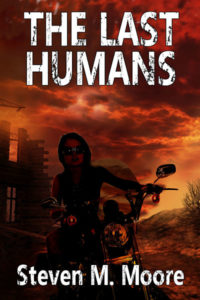
The Last Humans. “Life’s nice little moments sometimes follow bad ones…or vice versa. Does it even out? Probably not, considering my present situation. Why did I survive?” Ex-USN Search and Rescue and current LA County Sheriff’s Department diver goes on a forensics dive off SoCal shores and surfaces to find herself in a post-apocalyptic world. A bioengineered and airborne contagion has been delivered to the West Coast and will be carried around the world, killing billions. Her adventures trying to survive in this new world will make you ask, “Could this really happen?” Published by Black Opal Books, this post-apocalyptic thriller is available in ebook and print format from Amazon and as an ebook version from Smashwords and its affiliated retailers (iBooks, B&N, Kobo, etc.) Also available from the publisher or your local bookstore (if they don’t have it, ask for it). A sequel is coming.

Around the world and to the stars! In libris libertas!
ABC Shorts: The Double…

July 25th, 2019

[Note from Steve: Leave it to A.B. Carolan to turn an ordinary business trip into a space adventure. A wee bit of Irish humor….]

The Double

Copyright 2019, A. B. Carolan

Filton hated spaceports on backward planets. As head of regional sales for the planet Sanctuary’s largest android factory, he had to visit them, even some outside of the trade union.

He also hated it when his wife Dal and daughter Shalin accompanied him on a business trip. Even though he often enjoyed their company at meals during the few subjective days the starliner hopped among the multiverses, popping out light-years away from their home planet, his usual corporate stateroom seemed to be a lot more crowded with them along.

He always used the same old beat-up suitcase, putting a few extra toiletry items in his briefcase. He had that briefcase in hand now, but his little suitcase would be lost among their luggage. They all crashed out of the tube onto the carousel. Not an android porter in sight, he thought. He started to load the luggage onto a cart.

“I need my makeup bag,” Dal said. “I need to touch up.”

He looked at all the suitcases on the cart. “Which suitcase is it in? And how long will that take?”

“The green one. And I’ll only be a moment.”

There were two green bags, both toward the bottom of his orderly pile on the cart. He offloaded all that were on top of one and handed it to her. She rummaged around and shook her head. Naturally, it’s in the other one.

“I think Mom brought too much stuff,” Shalin said, watching her mother head for the bathroom. “And why didn’t she fix her face before we disembarked?”

Filton just turned a suitcase on its end and sat down, assuming a pose he’d seen once in some ancient Earth bronze statue. “The Tinkerer”? Shalin is at the age where she criticizes her parents. In this case, Shalin’s critique was appropriate. He wrote it off as Dal not traveling much. Guess that’s my fault.

He looked at his watch. It was still on ship’s time. He’d have to find out what the local time was. Good thing I don’t have any appointments until tomorrow.

***

When Dal returned, they looked for the tram, the first leg of their journey into the main terminal, unless you counted the shuttle ride down to its dock in the spaceport. After waiting twenty minutes, a car screeched to a halt in front of them. The doors slid open. A huge Tali female exited the otherwise empty car; she was pushing a wide stroller. She blocked the entrance to the car as she began talking with someone on the comlink device surgically attached to the side of her head.

Triplets. Triple trouble. He smiled at Shalin, knowing his daughter would think the three little Tali were cute. He had to admit that it was hard to imagine the Tali as Humans and Rangers’ worst enemies so long ago.

Dal and Shalin squeezed around the stroller, but Filton couldn’t manage it with the luggage cart.

The tram car took off.

***

The next tram car pulled up fifteen minutes later. In the interim, the Tali mother had disappeared. The car was empty. Filton had a clear shot. But the car’s floor level was higher than the platform’s; it blocked the wheels of the luggage cart. He decide to make a running start, but the wheels caught, and all the luggage spilled into the car. He pushed the cart aside, entered, and began making a pile of luggage in the center of the car, which toppled over when the tram car took off.

The car stopped one more time at a landing pad. An Usk entered the car, carrying a shiny gizmo in his hand and conversing with someone via his comlink. He tripped on Filton’s briefcase and lost the gizmo in the pile of luggage.

“I’ll find it,” Filton said.

As Filton bent over to peer among the suitcases, the Usk grabbed his briefcase and pushed him into the pile. The Usk exited as the tram’s door whooshed open at a stop inside the main terminal.

Filton chased the Usk, yelling, “Stop thief!”

But passengers from another ship poured into the corridor ahead of him.

“Papi?” Filton turned to see Shalin.

“Where’s your mother?”

“I lost her. She probably went ahead to the hotel. I decided to stay and help you with the luggage.”

Filton spun and looked back along the corridor. The tram car was gone!

***

“I’m sorry, sir,” said the AI terminal at the hotel’s check-in counter. “We have no reservation for you.”

“Okay. That’s happened before. My company sends them out weeks ahead of time, but maybe that information came on the very ship we were on.” The dangers of doing interstellar business. Communications were slow in the Union because starships were the fastest way to communicate between star systems. “Do you have any rooms available?”

“All suites are taken. Do you want me to see if there’s one available in our hotel on the other side of the city?”

Filton shook his head. I always use this hotel because it’s near the planetary HQ. “We’ll take any room.”

“There is one room for Humans with a double bed and a cot. Would you like that?”

Filton looked at Dal. She nodded. Shalin looked at the ceiling.

Read the rest of this entry »

Mini-Reviews of Books #42…

July 24th, 2019

A Matter of Trust. Nancy Hughes, author (Black Opal Books, 2017). Kingsley’s husband goes farther than his usual trip to the convenience store and ends up in a horrible accident. She moves away from where they were living to take a job in a different bank. There she meets Todd, another new employee who’s a VIP. As head of the commercial loans department, she comes across some strange loans and wonders what’s afoot. He sleuthing becomes dangerous for her health.

Kingsley is a strong, smart female, the kind of character I like to read and write about. She takes too many chances, though, playing against her position as a staid bank-manager type. Romantic interest Todd, who has his own history along with Kingsley’s causing the romance to move forward by fits and starts, isn’t a strong character. I’m not surprised when he’s essentially absent from the story’s denouement. Kingsley’s two female friends she makes among the bank’s staff are wonderful characters on the other hand, and they join Kingsley in her sleuthing to make three musketeers who fight crime.

To limit calling the plot a classical mystery/crime story would be doing a disservice to it. I’ve never come across a similar one in my reading, it’s so original. Even with her husband’s death, it begins peacefully but builds up to a resounding climax like Ravel’s “Bolero” where this reader couldn’t flip the pages fast enough on his Kindle.

I’d call this an “evergreen” book—it will always be current. I hope other readers enjoy it as much as I did, and I’m looking forward to reading other books in the series.

Hunter’s Force. Val Penny, author (Crooked Cat Books, 2019). I’ve called Val Penny’s books the “economical Ian Rankin.” (She shouldn’t be confused with Louise Penny. Val’s inspector is Hunter Wilson; Louise’s is Gamache. Val’s stories take place in Edinburgh; Louise’s in Quebec.) First, they also take place in Edinburgh where Rankin’s Inspector Rebus hangs out. Second, they’re both mysteries and police procedurals. And third, I can’t afford Rankin (or Louise Penny, for that matter), but I can afford Val Penny. Unfortunately this third book in the series isn’t as good as the first two.

A Ukrainian crime boss’ daughter ends up living in Hunter’s son’s flat, and then she ends up dead there. The father learned American English, not British, so he mixed up the floor numbers (Americans say ground level is the first floor while Brits just call it the ground floor, with American’s number two being the Brits’ number one, etc.)

There are multiple subplots weaving in and around the main one of finding who killed the daughter—the mobster’s business interests in Edinburgh, and the continuing sagas of coppers and lowlifes from previous books. Somehow the author is losing the grittiness that made me compare her writing favorably with Rankin’s. I hope she recovers that.

Hunter’s force is the group of coppers who set out to solve the crime, led by Hunter Wilson. They have to work within a new system now because the Scots integrated all the police forces. It’s a bit like the NYPD being a local group that’s part of the FBI, ATF, and so forth. I wonder how Rankin deals with this.

This is still a fun read, though, that gave me an acceptable fix in my addiction to Brit-style crime mysteries. It’s also gritty enough not to be on Hallmark or PBS.

Landfall. John McWilliams, author (John McWilliams, 2015). I found this one night searching for “space opera” on Amazon. It’s a lot of fun, but you might guess it’s not great sci-fi—no reasonable extrapolations o current technology here (but believers in the power of crystals might love it).

Jan Lee is a scientist-industrialist (channeling Elon Musk?) in the near future—rich, brilliant, and the main character, in that near future and thirty years later. He comes up with a theory that uses both advanced and retarded waves (yep, you can describe any electromagnetic wave as a superposition of them) to send messages between the present and the future.  He even designs an experiment to test the theory. The story is about the experiment, which becomes very complicated.

Surprise! Both the Americans and Russians want this technology and the experimental results—the Message—believing that it will allow them to download advance tech from the future and rule the world. Of course, in the past, that near future, Jan Lee must fight them. He’s a martial arts expert as well as a scientist-industrialist (Bruce Lee in space? Iron Man?). He blows up the International Space Station so neither Americans nor Russians can have the tech.

Thirty years in the future from that near future, Lauren and Ellis, two FBI agents, are on a special mission to find the reentry vehicle that Jan Lee made his escape in. Is Jan Lee alive? The agents and readers will ask that.

Ignoring the advanced/retarded wave nonsense and the Monty Hall references, there are many things wrong with this story. First, Amazon can’t decide whether it’s sci-fi or a thriller—there’s nothing wrong with the combo, but it isn’t the definition of “space opera” (Amazon strikes again?). Second, the jumping back and forth between near and far future is a bit confusing. The near-future part is written in the present tense and the far-future part is written in the past tense. Third, the time-travel paradoxes aren’t avoided here. Finally, the ending isn’t done well—the author essentially creates a cliff-hanger so readers will buy the books that follow (that doesn’t work with me).

If you can live with all this, have at it.

***

Comments are always welcome.

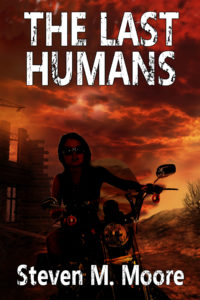
The Last Humans. “I found it amazing how many murderers think weighing a body in deep water or tossing a murder weapon there will hide their nefarious deeds. Not if Penny can help it!” Ex-USN Search and Rescue and current LA County Sheriff’s Department diver Penny Castro goes on a forensics dive off SoCal shores and surfaces to find herself in a post-apocalyptic world. A bioengineered and airborne contagion has been delivered to the West Coast and will be carried around the world, killing billions. Her adventures trying to survive in this new world will make you ask, “Could this really happen?” Published by Black Opal Books, this post-apocalyptic thriller is available in ebook and print format from Amazon and as an ebook version from Smashwords and its affiliated retailers (iBooks, B&N, Kobo, etc.) Also available from the publisher or your local bookstore (if they don’t have it, ask for it). A sequel is coming.

Around the world and to the stars! In libris libertas!


Summer reading…

July 23rd, 2019

Summer arrived at a perfect time in my publishing journey this year…right after three novel-writing marathons when I need some serious R&R, which included the writing plus corresponding edits for A.B. Carolan’s Mind Games (just published by Carrick Publishing) and my sequel to Rembrandt’s Angel titled Son of Thunder (soon to be published by Penmore Press). “Whoa! That’s only two marathons,” you say. No, I also finished the sequel to The Last Humans and will submit it to Black Opal Books; it’s title is The Last Humans: A New Dawn. (Carol Shetler is editor/beta-reader for most of my books before I submit them—kudos to her for always doing a great job that generally keeps me on the good side of editors after submission.)
I do a lot more reading in summer anyway, and this summer I’ll probably do more. You might realize I’m still writing a bit of short fiction too (one of those stories might motivate me for yet another novel)—that’s R&R too, but the true R&R comes from reading, and always has. I read a lot more than I write.

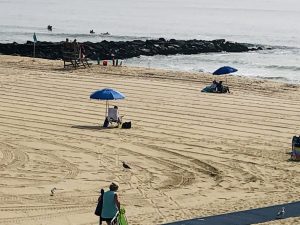
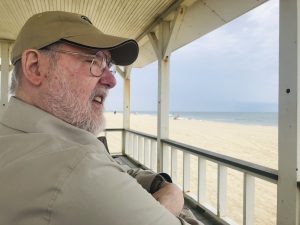
In the beach scenes accompanying this post, you won’t see my Kindle or books, but they’re with me. I love natural settings when I read. It’s great to hear the waves and beach-goers off in the distance. Every so often, my eyes leave the printed page to enjoy the scenery too. What kind of books do I read in that kind of environment?

The answer is a bit nebulous: Almost anything that catches my fancy! I’m still working on several ebooks stored on my Kindle (I’ve reviewed a few of those lately)—“working” isn’t the right word, of course; “enjoying” is more appropriate.  (You can peruse my recent reviews to find some summer reading for yourself.) I also enjoy print books. On a recent trip to the NJ shore where these pics were taken (thanks to my wife), I started Patrick Radden Keefe’s Say Nothing: A True Story of Murder and Memory in Northern Island. I had also started Angela Stent’s Putin’s World: Russia Against the West and with the Rest, but I thought it was a wee bit too heavy to lug around, so I’ll read it at home. I’m also working on Mayor Pete Buttigieg’s biopic; he’s an interesting and smart fellow who has done a lot for one so young. Print books are gifts; ebooks I buy myself.

Although Keefe’s book is a true story written in novelistic fashion, you can see that I do both non-fiction and fiction. Historical fiction is a bridge between the two (two of my all-time favorite’s are Follett’s Eye of the Needle and Forsyth’s Day of the Jackal, which I classify as historical fiction—you might disagree).

I’ve been reading most of my life. Agatha and Asimov were read under the covers when I was a kid, my flashlight disturbing the family cat’s slumbers. Burroughs and Haggard were also much more interesting than the drivel they had us read in school (Silas Marner? Ugh!). I even made my way through Michener’s Hawaii—now there’s historical fiction par excellence…fascinating!

I believe a reading life can lead to a writing life. It doesn’t have to do so, of course, but let’s turn it around: I can’t imagine being a writer without first having been an avid reader. Of course, reading, especially in the summertime, provides quality R&R for anyone, especially for this old writer after his novel-writing marathons. I wonder how many more of those I can run? Of course, the speed isn’t all that important, but eventually getting across the finish line is.

***

Comments are always welcome.

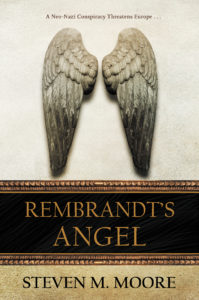
Rembrandt’s Angel. “One Yard inspector had called her Miss Marple. The nickname stuck in spite of her discouraging it, but she had never dealt with homicides.” Ex-MI6 agent and current Scotland Yard Inspector Esther Brookstone becomes obsessed with recovering a Rembrandt painting stolen by the Nazis in World War II. Interpol agent and paramour Bastiann van Coevorden tries to control her obsession and keep her safe. Their quest to recover the painting leads them to an international conspiracy that threatens Europe. Published by Penmore Press, this mystery/thriller is available in ebook and print format from Amazon and as an ebook version from Smashwords and its affiliated retailers (iBooks, B&N, Kobo, etc.) Also available from the publisher or your local bookstore (if they don’t have it, ask for it). A sequel is coming.

Around the world and to the stars! In libris libertas!

A message from the Moon muted over the years…

July 20th, 2019

Today is a solemn but sad day, full of nostalgia and yearning. Fifty years ago, I was part of the party-like atmosphere in College Park, Maryland, as Neil Armstrong and Buzz Aldrin became the first human being to set foot on the Moon. No good and wonderful event since then has brought the US and the world so much together to share our common humanity and hope for the future.

Space is the final frontier., but we have shied away from it and Armstrong’s hopeful and inspiring message, putting our petty and tribal squabbles ahead of that great adventure, going where no human has gone before. Will we return to space? The way into that final frontier is not to be found with militarized space commands, seeking to sully space with political saber rattling, but via a motivated and concerted effort by all human beings to go into that great beyond out of scientific curiosity. I don’t imagine that it will happen in my lifetime, if ever, which makes today doubly sad for me.

My heartfelt thanks goes out to all those courageous and intelligent space pioneers of the past. I regret that our collective myopia and efforts to further more trivial agendas have inhibited human beings’ reach for the stars. Hopefully we will come to our senses…sometime.

“Humanity has the stars in its future, and that future is too important to be lost under the burden of juvenile folly and ignorant superstition.”—Isaac Asimov


The news…

July 18th, 2019

Although media people are often featured as characters on TV shows, movies, and now on the Broadway stage, they’re not main characters in my books. Pam Stuart, Detective Castilblanco’s wife, is almost one—she had the crime beat for a NYC TV station for a long time, which is how she met Castilblanco (see The Midas Bomb). A similar relationship is found between DHS agent Ashley Scott and a freelance journalist in The Golden Years of Virginia Morgan. And I poke fun at a TV reporter in More than Human: The Mensa Contagion.

This lack of including media people in my books might seem odd considering I’m a person who believes a journalism degree is a better one to have than an MFA for writing fiction, especially in the mystery, crime, suspense, and thriller genres. A legal or medical degree might be better for legal and medical thrillers, respectively, but I believe a journalism degree or experience in journalism works best in general. That background provides practice in writing minimalist prose that moves a story along and allows the future writer of fiction to become acquainted with many personalities and situations. Journalism was one career I considered early on. I never thought of doing an MFA.

Pam Stuart centers Castilblanco while performing that delicate balancing act so many women have to do—juggling career, wife, and mother roles. You can add to Pam’s resume being married to a cop who has a dangerous job, one that sometimes puts her in danger as well. Ashley Scott is done with her juggling in Virginia Morgan. She has another problem: retirement looms and she is alone, having divorced early on. Sparks fly when she meets the journalist, though. They experience romance as well as danger in the novel.

But what about news cycles? My stories tend to be ahead of them. In The Midas Bomb, where Pam and Castilblanco’s romance takes off, a dirty bomb is featured. This possible terrorist weapon has never been set off in NYC fortunately, although there have been some close calls. It’s always been in the NYPD’s list of WMDs to watch out for. The book also considers Wall Street excesses too, which still continue. (That’s one of my best titles, by the way. In three words, I summarize two of the book’s important themes. Titles are important.)

My sci-fi oeuvre is obviously ahead of news cycles. Written at the same time as Andy Weir’s The Martian, both More than Human and his book predated the news about plans for future Mars colonies. That’s in the second part of my book (Weir never actually establishes a colony); the first part deals with a worldwide pandemic. The virus produces Homo sapiens 2.0 in More than Human is created by ETs. In other words, in contrast to The Last Humans, where the virus is man-made, the virus in More than Human is beneficial in the long run. Still, let’s hope that neither case becomes a real news cycle!

In a sense, Virginia Morgan is sci-fi too, and it forms a bridge between my detective series (the main character Ashley Scott is an old friend of Chen and Castilblanco’s) and the “Clones and Mutants Trilogy.” It’s more thriller than sci-fi, though, and considers an important question: What if a future US government decides to protect state secrets they think elderly agents might divulge?

I do have some ideas for stories about a main character who’s a journalist. I might write a novel with one yet!

***

Comments are always welcome.

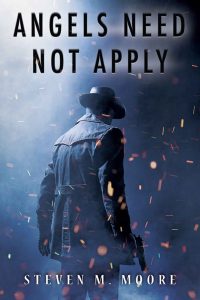
Detectives Chen and Castilblanco Series,” the National and International Novels. In Angels Need Not Apply, the two NYPD homicide detectives join a national task force to go after a drug cartel leader who has an insidious plan. In Aristocrats and Assassins, the detectives are in Europe, fighting a terrorist who is kidnapping European aristocrats. In Gaia and the Goliaths, they learn about a plot conjured up by a US energy company and a Russian oligarch and set out to stop it. All these ebooks are available on Amazon and Smashwords and the latter’s affiliated retailers (Apple iBooks, B&N, Kobo, etc.). Current, pithy, and exciting, this is great summer reading!

Around the world and to the stars! In libris libertas!

Review of Leonardus G. Rougoor’s The Clock…

July 17th, 2019

The Clock. Leonardus G. Rougoor, author (Black Opal Books, 2017). Siblings Elizabeth and Matthew Janssen, seventeen and eighteen, take a long summer vacation on Cape Cod with their parents. On their arrival, they start to explore their vacation cottage and discover a secret room containing an old grandfather clock with instructions inside on how to operate it as a time machine.

The time-travelers eventually discover two past murders and one suicide, the murders committed against Alice and John, kids living in the 1920s. Is Alice’s irascible uncle responsible and feeling so guilty he commits suicide? Are two evil strangers his accomplices?

In speculative fiction literature, a reader can find time-travel romances, fantasies, thrillers, and horror stories. This novel could be called a time-travel mystery for young adults. It reminded me a bit of The House with a Clock in Its Walls without the nightmarish and slimy stuff. The murders are treated in an antiseptic fashion without a lot of blood and gore—minimalist writing at its best because young readers with active imaginations can visualize them easily enough.

The author uses the present tense with an omniscient point of view, even to describe the past. That was a little bit quirky, but I quickly became accustomed to it; it works. The plot moves along from its idyllic beginnings to its harried climax. There were a few missing things in the denouement that left me dissatisfied (I won’t go into them—no spoilers here). The characters aren’t very complex, though, and the Janssen family is a bit too perfect. Alice’s uncle is the most complex character and therefore the most interesting, but we don’t see enough of him.

The novel is very enjoyable and almost seemed to transport me to that simpler 1920s life from the present of Elizabeth and Matthew—tranquil horror, if you will. Well worth the read for any young adult or adult who is young at heart. It made this old curmudgeon feel young again…and brought back fond memories I’ve had with rentals on Cape Cod!

***

Comments are always welcome.

Detectives Chen and Castilblanco Series,” the National and International Novels. In Angels Need Not Apply, the two NYPD homicide detectives join a national task force to go after a drug cartel leader who has an insidious plan. In Aristocrats and Assassins, the detectives are in Europe, fighting a terrorist who is kidnapping European aristocrats. In Gaia and the Goliaths, they learn about a plot conjured up by a US energy company and a Russian oligarch and set out to stop it. All these ebooks are available on Amazon and Smashwords and the latter’s affiliated retailers (Apple iBooks, B&N, Kobo, etc.). Current, pithy, and exciting, this is great summer reading!

Around the world and to the stars! In libris libertas! 

An online retail giant, but not a distributor…

July 16th, 2019

We just finished Prime Weekend. Did you have any fun? While I have a long list of complaints about Amazon, the main one is about their arrogance in thinking they’re the only book retailer in the world. They’re not, but how can authors and publishers get to the others?

For print versions, authors and publishers often do this the traditional way via bookstores, preferably independent ones. (Big book barns like Barnes & Noble are like Amazon—a book gets lost in them. One B&N put my mystery/thriller Rembrandt’s Angel in the art section. Yes, one BISAC Subject Heading was ART015080ART/History/Renaissance—which is wrong because Rembrandt’s art is technically classified as Baroque—but no one looking for mysteries or thrillers would ever find the book where B&N shelved it!). I suppose some bookstores sell or will order ebook versions if the customer asks for one, but that’s an unusual request.

In fact, most ebooks are sold online. But there are many online retailers besides Amazon, and there are other ebook formats besides Amazon’s .mobi. Amazon doesn’t distribute to other retailers either; they ignore them. (No wonder bookstores are hesitant to deal with Create Space, although many small presses use that printer, if only to store printed books in their warehouses.) Most people don’t like monopolies; authors and publishers shouldn’t either.

A huge competitor to Amazon in just about everything retail is Walmart (even in groceries, which is why Amazon bought Whole Foods). They’re competing with Amazon on many fronts, and one of them is ebooks. (Twenty-five years ago Bezos started selling books out of his garage. Now books are just one of many product lines for him.) Walmart has signed a deal with Kobo, a large ebook retailer that’s a subsidiary of Rakuten. A book buyer can purchase an ebook in most Walmart stores or online with Walmart. In other words, Kobo distributes to Walmart. You can bet Amazon never will!

But who distributes to Kobo? Authors and publishers can do it directly (some small presses and self-published authors do this). Or they can do it indirectly by putting an ebook on Smashwords, which distributes to Kobo as well as Apple’s iBooks and Barnes & Noble. In either case, authors and publishers enjoy Rakuten’s worldwide retail reach, providing an alternative to Amazon’s. And Smashwords increases that worldwide reach, distributing to both retailers and lending services.

There’s a meta-theorem in merchandising: Maximizing the places where your product is sold maximizes your sales. The reason is simple: Even without advertising, more people can see your product.  An additional plus to maximizing your number of retail outlets is that Amazon only sells ebooks with their proprietary ebook format .mobi. Many readers want .epub or .pdf formatted ebooks. I’d avoid the latter—it’s too easy to pirate. But .epub is an important and popular format. (Visit the Smashwords website to see the possible formats for ebooks.)

These ebook retail tactics come with a price. You can’t choose them if you want to have access to Amazon marketing; you have to be exclusive to Amazon for that. That doesn’t bother me—Amazon’s marketing options never did anything for me. I’d rather promote my books to all readers, not just those who buy books from Amazon! Especially overseas, where readers often frequent other retailers.

***

Comments are always welcome.

“Detectives Chen and Castilblanco Series,” the National and International Novels. In Angels Need Not Apply, the two NYPD homicide detectives join a national task force to go after a drug cartel leader who has an insidious plan. In Aristocrats and Assassins, the detectives are in Europe, fighting a terrorist who is kidnapping European aristocrats. In Gaia and the Goliaths, they learn about a plot conjured up by a US energy company and a Russian oligarch and set out to stop it. All these ebooks are available on Amazon and Smashwords and the latter’s affiliated retailers (Apple iBooks, B&N, Kobo, etc.). Current, pithy, and exciting, this is great summer reading!

Around the world and to the stars! In libris libertas!

Happy Bastille Day!

July 14th, 2019

The 18th century saw the beginning of many independence movements waged against aristocratic excess and oppressive colonialism. Americans are forever linked to France due to their help in the colonies’ war against the British. The hero Lafayette comes to mind. Perhaps motivated by that war as well as their own plight, the French threw off the chains of aristocratic oppression, starting at that famous Paris prison. Democracy was on the move. Later the nexus between Americans and French was further sealed by the gift of the Statue of Liberty, a symbol for all those invading those beaches in Normandy to help free France from Nazi oppression. That statue is still the most shining light of freedom today. Thank you, France, for that gift…and your support over the centuries. Vive la France! May our friendship and democracies forever remain bastions against tyrannies around the world!

Hello. How are you?

July 11th, 2019

“Fine. Thank you.” Seven words travelers often learn when visiting countries outside the US. Maybe even more if they’re brushing up on a language learned long ago, either in courses or via total immersion somewhere. It’s a polyglot world.

There are over 800 languages spoken in NYC.  This polyglot nature of the Big Apple can cause problems for the foreign traveler to the city. Most signage is in both English and Spanish, but what do speakers of other languages do? Most who live in the NYC urban area speak some English, but visitors? Maybe not.

So let’s consider “cultural appropriation.” Is including snippets from other languages in our books wrong? If you answer yes, will you go even further and call it cultural appropriation? And what about characters with a cultural background who speak those other languages…or anything but English?

Language is part of culture, and fiction writers consider all sorts of cultures in their books. I often include snippets of Spanish, but there’s even some Russian in No Amber Waves of Grain. I even consider ET cultures—Rangers, Tali, and Usk in The Chaos Chronicles Trilogy Collection, and Fistians in The Secret of the Urns (A.B. Carolan was inspired by one of my short stories). They have their own languages and cultures. The Rangers’ language is so complex that a speedy AI is needed to translate it.

I don’t apologize for these snippets, and I don’t apologize about creating characters with other cultural backgrounds. In fact, I insist the snippets add necessary cultural background to the story. I don’t expect the reader to know the languages either. No one needs a translation of “Hasta la vista, baby,” but, if a snippet is obscure, I’ll translate it in some way that integrates into the story.

Common food names often aren’t English. “Baklava” is used in Rembrandt’s Angel; “strudel” is used in the sequel, Son of Thunder (soon to be published by Penmore Press). That brings us full circle to NYC where most people know both words.

Okay, you’re not from the NYC area. If I were writing fifty years ago, I might not want to use those words. But America has become more homogeneous over the last five decades, via TV, movies, the internet—and yes, books. Like it or not, globalism exists. We cannot ignore other cultures. English has grown accordingly, as has every language, because business, cultural events, and many other things depend on it.

Books aren’t the only ways to travel around the world. They provide a means to understand the world. I learned more about Chinese culture in the third Bourne book (not the movie), Donna Carrick’s The First Excellence, and Cixin Liu’s The Three-Body Problem than I could ever learn by any other means except going to that country and living there for a time. Truth be told, I never want to go to China because of its political conditions, not even as a tourist, but I can try to understand Chinese culture through books.

I embrace other cultures in my reading and writing. They fascinate me. That doesn’t mean that I practice cultural appropriation. It means that I recognize we are all humans flying along on Spaceship Earth, each one of us an individual with a cultural background. The latter might be disappearing as the planet becomes more homogenized, but we can still celebrate the cultural differences…and those include language.

***

Comments are always welcome.

“Detectives Chen & Castilblanco Series,” the NYC novels. In The Midas Bomb, terrorism and Wall Street excesses go hand-in-hand, with an evil genius lurking in the wings. In Teeter-Totter Between Lust and Murder, Castilblanco is out to prove that Chen is innocent of murder. In The Collector, the detectives find that sex trafficking and stolen art provide an unusual mix. And in Family Affairs, Castilblanco helps some family members who are in trouble. All these ebooks are available on Amazon and Smashwords and the latter’s affiliated retailers (Apple iBooks, B&N, Kobo, etc.). Current, pithy, and exciting, this is great summer reading!

Around the world and to the stars! In libris libertas!