The vagaries of English…

January 14th, 2020

Perhaps English is the most changeable of all human languages, especially if you discount how English words creep into other languages. Yet it gives everyone a headache, from native speakers to those struggling to learn it. There are many reasons for this, but I’ll toss out two to start.

This topic occurred to me when I found that I’d written “reign” for “rein.” Rain, rein, reign—same sound, different spellings and meanings. Coincidentally I saw my error again on TV, although in this case it was intentional: In an ad for Draft King, an online gambling app (no, I don’t play because I hate any kind of gambling, except for publishing my stories), they ended with “Let It Reign.” While maybe the publicist just made an error, it could be a clever play on the name. Doesn’t excuse the error, of course.

Here’s one I often told to physics students about doing practice problems in Colombia: “They’re rough and tough, and though it’s hard, take a breath, cough if you have to, and get through it.” Rough, tough, though, cough, and through—all “-ough” words that are pronounced differently.

Sound-alikes with different spellings and meanings, look-alikes with different sounds and meanings—two vagaries of the English language. Native English speakers often don’t realize the problems other people might have learning English, but acceptable spoken English doesn’t imply English mastery for even native speakers. It’s a difficult language to master, period.

I’ve heard people complain about the multilingual signs used in transit in major cities in the U.S. They might say, “Why don’t they just learn English?!” (I’ll be nice and just say that “they” means anyone who has trouble speaking correct English or understanding it, a class that includes many Americans, even pros who do it for a living.) Imagine if the Dutch or Italians asked a similar question: “Why don’t these crazy American tourists just learn our language?!” European countries recognize that many people don’t speak the local language. Across the EU, and for many reasons, they recognize the diversity that’s bound to be found in 300+ million people (that might decrease a bit with BREXIT, but a lot of Brits don’t speak English either–is Cockney English, or was ‘Enry ‘Iggins just wrong?). The same goes for the U.S. with its 300+ million people, most of them immigrants (although some don’t want to recognize that). In New York City, over 800 languages and dialects are spoken. There’s a need for a universal language.

It’s not just tourist dollars at stake in Europe or ICE’s purification efforts in the U.S. Tourism is only part of business, and international business has adopted English as the universal language. Arguably it might not be the best choice for that, but that’s what we have. That ad where some guy claims to know Dutch—“Just OK is not good enough”—is telling. You either need sharp translators, or you need a common language. If he can negotiate at all, I doubt that Mr. Trump could negotiate in any other language besides English (he doesn’t speak or write even that well—maybe his native language is Twitterspeak?). That doesn’t mean we should ignore other languages outside of business circles. And speaking only a few words in another language at any meeting or event can make people feel good. I doubt that Kennedy spoke German, but that “Ich bin ein Berliner” speech probably did as much to end the Cold War than anything Reagan did…and it was loved by the Germans.

Consider all this as segue to a concern of mine: Does English prevent genre friction written in that language from having an international audience? Of course, many more people worldwide read it than speak it fluently—my physics students in Colombia used texts in English, for example—but are international readers missing out on some good storytelling because translations take so long? (It can go the other way too, of course. I read Gabo’s One Hundred Years of Solitude in Spanish long before it came out in English.)

Like many sci-fi writers, I’ve imagined a universal language that links planets. In my novels, they’re planets in an interstellar trade union (ITUIP = “Interstellar Trade Union of Independent Planets”). I just call it Standard; it evolves from various Earth languages, including Chinese and English. And ETs “speak it” too using implant devices hooked up to powerful AIs that provide quick translations of hard-to-learn ET languages and Standard, that amalgam and successor to English, hopefully with simplifications.

Those implant devices are descendants of current cochlear implant devices that have allowed some deaf children to hear their parents for the first time. They would also have the benefit of allowing any intelligent being to enjoy our genre fiction. Probably not sci-fi, though. They’re living in that sci-fi world, so why read it?

Languages will continue to evolve. (The interested reader can follow the evolution of English in David Crystal’s The Stories of English, one of the recommended non-fiction books listed on the “Steve’s Bookshelf” web page at this website.) As with many advances, sci-fi writers can write about this evolution too. I don’t think such advances will put any translators out of business anytime soon, though.

***
Comments are always welcome.

Chaos Chronicles Trilogy Collection. This bargain bundle of three complete sci-fi novels follows the future history of human beings from a dystopian Earth in the grips of multinational corporations and their mercenaries to the first contact with ETs on a colony planet…and far beyond. The development of Standard, that amalgam descendant of various earthly languages, is part of these epic tales. Available on Amazon and Smashwords and all the latter’s affiliated retailers (iBooks, B&N, Kobo, etc.) and lenders (Overdrive, etc.)

Around the world and to the stars! In libris libertas!
Space Force…

January 9th, 2020

(Note: While science and sci-fi writing motivated this post, some readers might find the following material offensive. Tough.)

The U.S. president wanted a Space Force. The U.S. military capitulated. And the U.S. Congress gave it to him on December 20. Sounds neat. Does it make sense?

Traditionally the USAF took care of most things happening above the Earth’s surface, including spy satellites and whatever secret weapons are up there (yep, and they’re just as dangerous as the U.N.’s black helicopters that will invade the U.S.). Astronauts have generally been a mix of USAF and Navy pilots, discounting civilian scientists, so there was already a lot of overlap with other services. And the U.S. NASA wasn’t above getting into the militaristic aspects either. So forget tradition. Maybe we should call a spade a spade? The military is in space, so maybe we should admit it and wrap it up in one tidy package?

Is there some savings to be had? Even if the answer were yes, that’s probably not an argument most reasonable persons would make…or believe. The current administration will have created a trillion dollar U.S. debt very soon, so what’s a few more dollars here and there? A precedent might be the moving of the Coast Guard into Homeland Security, but the creation of Homeland Security also increased federal bureaucracy and incompetence (not to mention murderous enforcement on the southern border where thousand of illegals are invading). Maybe they should have put anything to do with protecting the U.S., including what’s now in Space Force, into Homeland Security? Isn’t Space Force about protecting the homeland and not invading ETs or killer asteroids? U.S. of A., uber alles!

Bigger isn’t necessarily better. Smaller isn’t either. (Seems like the Goldilocks Principle needs to be applied here, but the Pentagon’s good ole boys would never listen to a girl.) And where does the Earth’s atmosphere become space? Where does it end and space start? I can’t wait for scramjet technology, where intercontinental flights hop and skip across the atmosphere, going from the USAF’s domain to the USSF’s and back. Who will have authority over those flights? Or might that be the FSA (not to be confused with the Russian equivalent of the FBI) instead of the FAA?

Read the rest of this entry »

Movie Reviews #82…

January 8th, 2020

Little Women. Greta Gerwig, dir. (Note: This movie was praised by other critics, so it’s significant that Greta also wrote the screenplay, meaning that she got snubbed in both categories, as 2019 ends with Hollywood snubbing females in the movie arts.)

Nothing like starting 2020’s movie reviews with the movie version of a successful book. Of course, Little Women has been interpreted on the silver screen since 1917 and 1918’s silent movies (the first is lost). The 1933 version (B&W but a talkie) featured Katharine Hepburn as Jo March, the sister who’s also a writer. 1949 and 1994 versions followed. And now the 2019 version (as if we needed more, but maybe this one is “definitive”?). And those are just the movies. PBS viewers know that network had its own Masterpiece Theatre version.

I never saw those earlier movies. I was reluctant to see the 2019 version. I never read the book either, although many people consider it a classic. And I’m glad I did none of that. The story is typical nineteenth century romantic schlock—not quite as bad as Jane Austen and Charlotte Bronte’s oeuvre, but right up there. (I can probably find an author beginning with C to make it the ABC’s of old romantic schlock, although I presume Nicholas Sparks can provide some stiff competition by being much worse.)

That said, here we have Jo (Saoirse Ronan), older sister Meg (Emma Watson), Beth (Eliza Scanlen), and the jealous Amy (Florence Pugh) yet again…and I watched this version. Having nothing in my personal experience to compare it too, I’ll just say it’s a mixed bag. I’m sure the dream sequences (an especially poignant one occurs when Jo dreams that Beth has recovered—at least I don’t have to worry about spoilers here) and many flashbacks (sometimes confusing, but they keep things moving by waking you up) do a lot to modernize this famous story of female empowerment. They probably weren’t in the original novel (a thanks due to Greta is here?). This and excellent acting by the women who play the March girls kept me interested throughout this very long movie.

But only a few scenes made me nod and smile. The first was the scene at the end where they put together Jo’s book—brief but symbolic. The second, also at the end, was where Jo’s earlier beau, Prof. Bhaer (Lous Garrel), who told her in that NYC boarding house she can write but should write better, informs everyone in Concord that he’s heading for California where they treat immigrants better (no border walls back then). Back at that boarding house and early on in the movie, by the way, I just knew he and Jo would be an item—and, mind you, I never read the book! (One of the best things you can say about nineteenth century romantic schlock is that it’s predictable.) I’m sure there are other nice moments that will resonate with modern moviegoers too, especially those rabid fans of the book.

Read the rest of this entry »

Antiquity’s roadshow…

January 7th, 2020

In spite of the obvious play on the title of the PBS series (I got the idea for the auction in Son of Thunder by watching it one night!), this post is about a particular fiction plot, the road trip. From Homer’s classic Odyssey to Kornbluth’s sci-fi novel Not This August and the movie Thelma and Louise, I’ve enjoyed these types of stories (I’ve only named a few, of course). So I’ve also written a few.

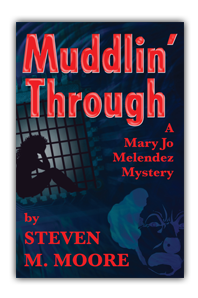
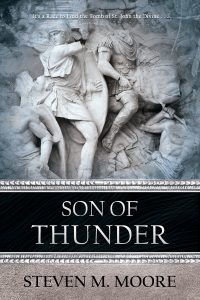
Muddlin’ Through, #1 in the “Mary Jo Melendez Mysteries,” is essentially a road trip; so is the first part of my recent post-apocalyptic thriller The Last Humans. But the one that is very different is St. John’s in Son of Thunder, #2 in the “Esther Brookstone Art Detective Series.” It’s a tale of three centuries, and I can call St. John’s story antiquity’s roadshow.

What St. John the Divine did as the longest living disciple between the Resurrection and his death is lost in antiquity. Some say he wrote the Book of Revelation (should that have quotes around it…or just around the word Revelation?). His authorship of the apocalyptic climax to the Bible isn’t clear, especially because it’s so different from his gospel. The Book of Revelation is a return to the fire and brimstone of the Old Testament’s vengeful God, not the loving and forgiving message of God the Christ from John’s gospel. But whatever occurred near the end of John’s life, all those middle years are lost.

So I put John, one of the disciples Christ called the sons of thunder (his brother James was the other one), on the road, a missionary and rebel (as far as the Roman Empire was concerned) who promoted Christianity and thwarted the will of the Empire. A holy road trip, and with his preaching, a roadshow for the people who needed to hear Christ’s message (it might be blasphemous, but Neil Diamond’s “Brother Love’s Traveling Salvation Show” could be playing in the background). I’d like to think that was what he was doing; I have no proof for it.

In Son of Thunder, John has a willing accomplice in Mary Magdalene. She’s an even more mysterious person lost in antiquity. (Her gospel only exists in a Coptic translation as far as I know.) Her real role during Christ’s time is a bit obscure—Dan Brown’s and Martin Scorsese’s wild (and maybe blasphemous?) conjectures aside, there’s some evidence that she was a rich benefactor for His movement—so I also made her into a missionary and rebel whose own roadshow in the novel often intersects with John’s. She’s also the right woman to provide contrast with the old boys’ club of early Church leaders (she was the first one at the tomb, after all) who cemented their male dominance by making her into a loose woman (I still hear homilies from the pulpits claiming that). That old boys’ club still exists, of course, but there are some holes now in the ancient dikes of tradition and intransigence.

Historical fiction’s goal is to fill in the gaps in the historical records and make an interesting story, guesses about what really happened. I tried to do that in Son of Thunder, partly the tale of John and Mary Magdalene’s road trips. Could something like this tale be true? I’d like to think so because it would add to the heroic nature of these two characters from the time of Christ.

I know some people will object and say that I take historical fiction too far because I make up a tale involving a saint. Hmm. How should I respond to that? Why are gaps in our knowledge about the saints taboo for historical fiction writers? Isn’t missionary work a noble calling for a saint? Couldn’t early saints become rebels in a movement to topple an autocratic empire, not fighting with weapons but with their words? Or writings, the pen being mightier than the sword? Or should I just state that those naysayers don’t have to read my novel and be done with it?

I hope this book doesn’t create such controversy, though. That was never really my intention when writing it. On the contrary, it was my way to become closer to St. John, that historic figure, and his complicated historical milieu. If further archaeological research proves me wrong, so be it. My story will still be valid historical fiction.

***

Comments are always welcome.

Son of Thunder. In this sequel to Rembrandt’s Angel, art detective Esther Brookstone is asked by her old MI6 handler to authenticate a Botticelli painting. She finds a parchment tucked into the frame, a word map to St. John the Divine’s tomb. The saint’s story, Botticelli’s journey to find the tomb, and Esther’s obsession with finding it too, are three parallel stories that come together to make this stand-alone novel a mystery/thriller where history plays such an important role. Readers can also peek into Esther’s MI6 past and follow the progression of her romance with Interpol agent Bastiann van Coevorden. Available in ebook and print format from Amazon and the publisher, Penmore Press, and in ebook format from Smashwords and its affiliated retailers (iBooks, B&N, Kobo, etc.).

Around the world and to the stars! In libris libertas!
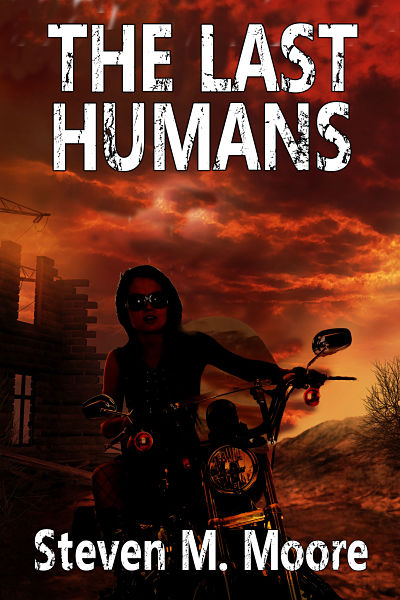
The Last Humans: A New Dawn…

January 1st, 2020

This sequel is now in the pipeline with Black Opal Books, so I thought I’d give it a bit of publicity long before it’s published to create some anticipation. Didn’t read the first book? Okay, you can do it in this new year and decade. You’ll have plenty of time too. It takes a while to get a book through the pipeline.

Unlike most sequels, this one can be read independently if you’re so inclined to read out of order (I often do that myself as a reader). It’s also very different, something I’ll analyze a bit in this post.

First, Penny Castro has an established family now. After everything I put the ex-USN diver and LA County Sheriff’s deputy through in the post-apocalyptic thriller The Last Humans, she deserved a bit of normalcy and R&R, although I’m sure some moms will beat me up for saying that giving birth to two kids is R&R (a non-fictional apocalypse might occur if suddenly men were the ones who had to give birth!). Husband Alex is the proud papa of those young ones, and Penny and he are adopted parents for the orphaned Sammy. Old Ben, who has become the adopted patriarch of the family, is still around too. They’re living the post-apocalyptic Californian and American dream on their own citrus ranch in the San Joaquin Valley.

Their idyllic lives at El Ranchito are turned upside down when what remains of the US government now decides it wants revenge against the country that launched the bio attack on the US West Coast in the first book. That went around the world on the prevailing winds killing billions, including most people in the country that launched the attack. Penny and Alex don’t volunteer for that revenge mission. They’re forced to participate in the plan, though, because the government kidnaps their small children to make them sign on. Goodbye R&R and normalcy; hello mission prep and chaos. The rest of the story is about how this all plays out.

Second, whereas the first book was a post-apocalyptic thriller, the sequel is more a classical thriller. The first book was written in the first person because it’s the story about Penny’s survival adventures. The sequel is in the third person from multiple characters’ point-of-view because it’s not only the story about Penny and Alex but involves those in the US government and the new leaders of that country that attacked the US.

In fact, the extensive cast of characters make this new novel an epic tale of war and peace. Okay, its length isn’t even close to the one for Tolstoy’s magnum opus that I’ve never been able to finish (I’ve read Dostoyevsky and Pasternak, though—parts of the latter even in Russian, a language I’ve mostly forgotten now although I can still read Cyrillic because it’s largely phonetic, like Spanish). But this new story has epic proportions in my mind—call it a condensed epic. Readers already know how Penny’s mind works from the first book. Here they can peek into the minds of people who make future history in their attempts to save a world…or sometimes attempting to destroy it even more. It’s also about war and peace and power struggles. Human beings don’t seem to learn.

I hope this brief description tempts you. I also hope you have patience and add this book to your TBR (“To Be Read”) list right now. I’m sure I will write more about this sequel in this blog, so stay tuned as it moves along Black Opal’s pipeline toward publication.

***

Comments are always welcome.

The Last Humans.  LA Sheriff’s Deputy Penny Castro surfaces from a forensic dive and finds the apocalypse: a bio attack on the US’s West Coast is carried around the world, killing billions. Penny’s struggles in the post-apocalyptic world aren’t pretty but represent that quintessential human will to survive even the worst calamities. Follow her adventures in this tale that will make you ask, “Could this really happen?” Available at Amazon and the publisher, Black Opal Books; also at Smashwords and all its affiliated retailers (iBooks, B&N, Kobo, etc.)

Around the world and to the stars! In libris libertas!
 

Old and new New Year’s resolutions…

January 1st, 2020

Toni Morrison once said: “A writer’s life and work are not a gift to mankind, they are its necessity.” May I be so bold to qualify that with a bit of selfish thought? Our lives and works are gifts to ourselves and only become gifts to mankind if mankind pays any attention to them. We paid attention to Toni and many other famous writers, but many other authors write because they must tell their stories.

This is the time of year to make resolutions, maybe all the more important this year that starts a new decade. For authors, probably some of them involve their writing and publishing those works. Here are a few of mine:

Read more. I’m already an avid reader, always have been, and I have a good start on reading more, individual new books that are out and binge reading complete series of older ones, those evergreen books that never grow old and mulched like this season’s Yule trees. Let’s face it: TV offers poor entertainment these days, and I refuse to watch streaming video because, like movies, most of what Hollywood’s big studios produce these days is a waste of my time. Frankly, many books are too, but I still find ones that strike my fancy and are a delight to read—more than enough to provide me good reading material throughout the year—so why not take advantage of them?

Keep writing. Like many authors, I get discouraged. Book reviews (or their absence), poor royalties, neglect of my evergreen books, and many other things about my writing and publishing activities discourage me. That discouragement started after my very first sci-fi thriller Full Medical was published (2006) and continues to the present day. I’ve thought of calling it quits many times, yet I keep going. I can describe it jokingly as my muses (banshees with Tasers) coming after me because they know I have more stories in me, but the truth is that I’m addicted to storytelling. I might adjust how I go about publishing a bit—my short fiction is now free on my website, for example, and complete novels might come next—but I’ll keep writing. As N. Scott Momaday said: “I simply kept my goal in mind and persisted.  Perseverance is a large part of writing.” My goal, by the way, is always the same: Tell a good story.

Write more personally. Too many times we authors get caught up in the royalties blues, whether they come from self-published works or traditionally published ones. Don’t all those publishing wonks who’ve never written a book themselves advise us to find our niche audience and pander to it? I’ve always known that’s bad advice. I resolve to pay less attention to any advice like that. It has nothing to do with storytelling, only with what happens after the story is told. Here’s what Robert Heinlein said: “…maybe I should study the market and try like hell to tailor something which fits current styles. But…if I am to turn out work of fairly permanent value, my own taste…is what I must follow.” I’m not sure my work will have permanent value, although they say ebooks are forever, but I resolve to pay less attention to what the marketing gurus say and write what the hell I want to write. Read the rest of this entry »

I’m not Dr. Asimov, Part Two…

December 31st, 2019

I’ve mentioned settings before, and I’ve mentioned Science News before too—where I often start when developing settings and background information for my sci-fi stories (one can dive deeper into the topics of their articles by using the references at the end). Recently I wrote an article explaining why I’m not Dr. Asimov. Consider this article a fun continuation.

First, let me provide two excerpts taken from end notes of two of my sci-fi novels, More than Human: The Mensa Contagion and The Last Humans.

“I’ve read about Mars colonies since my junior high days—I’ve always thought that the space opera adventures were a bit too optimistic—but reports about recent advances were taken into consideration too.  Among these are:

Bruce Bower, “Extreme Teams,” Science News, 11/29/2014.

NY Times special issue on Mars, 12/9/2014: “On Mars,” by Kenneth Chang; “A One-Way Trip? Many Would Sign Up”; “Looking to a Neighbor for Help,” by Dennis Overbye; “Covering Mars Opened a New World,” by John Noble Wilford; and “Rover Finds Stronger Potential for Life,” by Marc Kaufman.

Christopher Crockett, “Martian Aurora, High-Altitude Dust Surprise Scientists,” Science News, 4/18/2015.”

“There will be water shortages in the future as climate change marches inexorably on. One possible partial answer can be found in desalination plants like those considered in this novel. The briefing Penny received about them was modeled after an article in Science News; that article, “Quenching Society’s Thirst” (8/20/2016 issue, p. 22), is an up-to-date presentation of issues involved and possible future development of necessary technologies. Without water there is no life.”

These excerpts illustrate how important Science News is to me in my writing.

I’m often surprised at how weirdly my mind works. I’d just posted that first article about Dr. Asimov, and I mentioned that like him, I use Science News. Somewhere I’d read that he was a subscriber, but I began to wonder if I was remembering incorrectly.

The next issue of Science News came out perfectly timed with an editorial about longtime subscribers. Some dots were connected in my mind. I decided to ask them if they could confirm that he was a longtime subscriber.

Their answer starts with, “Thanks for writing us! You prompted a fun search in our archives. We were able to confirm that Isaac Asimov was, in fact, a longtime Science News subscriber.”

They sent me a PDF from their March 13, 1982 issue. (I was still in Colombia at the time and didn’t subscribe.) They were celebrating their 60th anniversary, and the grand master of sci-fi sent them congratulations and notes, “I am pleased that for one-third of this stretch of time, I have been (and still am) a subscriber.” He signs his note “Isaac Asimov, Author, Professor of Biochemistry, Boston Univ. School of Medicine.” He’d just resumed writing sci-fi with Foundation’s Edge, but I guess he wanted to display his academic credentials more, and he’d authored several popular science books.

So now I only have to remember where I saw that Isaac was a Science News subscriber. It certainly wasn’t in that congratulatory note. Dr. Asimov gave several interviews over his productive writing life, though, so maybe one of those was the source.

In any case, Happy New Year to Science News and all readers of this blog. End this decade in grand style, but safely.

***

Comments are always welcome.

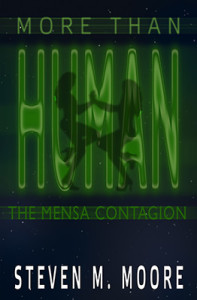
More than Human: The Mensa Contagion. An ET virus lands on Earth and creates Homo sapiens 2.0—not the kind of ET invasion imagined by the classic sci-fi writers! But the story doesn’t end there. The new humans create a new society that will leave readers of sci-fi smiling…and they decide to colonize Mars. One reviewer compared this single novel, an epic glance at a possible future for human beings, to the Mars stories of Kim Stanley Robinson, an exceptional honor. Available on Amazon and Smashwords and all the latter’s affiliated retailers (iBooks, B&N, Kobo, etc.).

Around the world and to the stars! In libris libertas!!


Action: romance, thrills, or both?

December 26th, 2019

I suppose authors writing in the romance genre will disagree, but I consider romantic and thriller scenes different aspects of the action that might be contained in a fiction story. Sure, there’s the quiet build-up to the romance, but that also occurs for thrills. And it’s all a fictional representation of our human experience.

Romance is part of our lives, thrills maybe not so much. (Maybe that’s why rides in theme parks are so popular?) I’m not addressing thrills at the gym, on a sports field, or on the dance floor, which might also involve a bit of romance (although it’s hard to imagine sweating together being romantic as some gym commercials portray). Car chases, physical altercations, gun or knife fights, and other plot devices are common in thrillers, but they also occur in other genres too, including romance, especially historical romances where gallant knights battle to impress young maids, and so forth.

Yes, we generally have a dearth of romance and thrills in our lives, which led to people seeking it in books…before streaming video and computer games. This might be more prevalent now. Escapism sells. Avid readers still find romance and thrills in books, though, primarily because reading, especially minimal writing, allows readers to participate in the creative experience by imagining they’re taking part.

Romance is a more common human activity, and romantic scenes from flirting to torrid sexual encounters, are often found in today’s fiction, sometimes with a heat index that would go far beyond any movie’s X-rating. The romance genre is big on today’s literary scene, and some books have little else to offer the reader. But romance, as part of human nature, belongs in most genres. It just has to occur in the right place and at the right time. It must not distract or intrude; it must fit smoothly into the normal plot development; and it must not make principal characters become caricatures.

Similar things can be said about that other part of action, namely the thrills found in many genres, not just thrillers. Like steamy sex scenes, they’re often not part of our ordinary lives, but readers can immerse themselves in a book and participate vicariously in the thrills. Yet to seem real, thrills can’t intrude, characters must experience them seamlessly as part of the plot, and they must seem like possible experiences rather than prose that gratuitously seeks readers’ emotional adrenaline rushes.

I’ve seen reviewers state about a book, “A real adrenaline rush,” whether talking about romance or thrills, or “page-turning excitement.” Whether these are comments in a review or found in hype about a book, they do no service to a writer who manages romance and thrills skillfully. As a reader, I take such comments with a grain of salt. As an author, I’m a minimalist writer. That in particular means I strive to make my prose as realistic as possible.

Tom Clancy stated, “The difference between fiction and reality? Fiction has to make sense.” It doesn’t make sense or seem real when every page is full of steamy sex or fantastic thrills or any other action that represents extreme outliers in the spectrum of human experience. While there are genres where this is the norm (erotica and fantasy are examples), the more serious readers can relate to the action in a book, the better the book will be received. That might not motivate people who see reading as escapism, but is it possible that they have now migrated to streaming video and video games? Perhaps the best fiction books are both escapist and seem real? If so, that’s hard tightrope for a writer to walk, and represents a real challenge in writing genre fiction.

***

Comments are always welcome.

The Last Humans. LA County Sheriff’s deputy Penny Castro surfaces from a forensics dive and finds the apocalypse—a biological weapons attack on the West Coast has sped around the world on prevailing winds and killed billions. Follow Penny’s adventures as she tries to survive in the aftermath. This novel and other books from Black Opal Books are great cures for readers’ winter blahs. In Penny’s case, they will learn that they don’t have it so bad! Black Opal and its authors offer readers a world of adventure “because some stories just have to be told.” All available in ebook or print format from the publisher or anywhere else books are sold. A sequel, The Last Humans: A New Dawn, is in the production pipeline.

Around the world and to the stars! In libris libertas!
 

Crosswords…

December 24th, 2019

A cousin, Clement Clarke Moore, wrote “The Night before Christmas.” Not really a cousin, but who knows? Another cousin, Archie Moore, was heavyweight champion of the world. I can still see cousin Mary Tyler Moore tossing her hat into the air when she came in from the cold for Christmas dinner, but maybe not in celebration of that other cousin Stephen, the economist (Google often thinks I’m him). The Moore clan is a diverse one! (More evidence for why I should be writing with a pseudonym?)

The entire Moore clan wishes you happy holidays to everyone, though! Enjoy them, but be safe and stay warm. Like Thanksgiving, they’re a time for family and friends and reflections on the year 2019 that has passed. May you also have a prosperous and enjoyable 2020.

There will be no post tomorrow. Like you, I plan to spend the day with family and friends. And now a word from our sponsor…

***

I’m a fan of crosswords…sort of. The best ones test my vocabulary and teach me new words, although I learn more of the latter from reading other authors’ books. The NY Times crosswords have been going downhill in recent years because they have too much pop culture in them (e.g. first names of a pop artist as a clue for the last name) and slang phrases that are popular in only some segments of society (the Times is East Coast centric, of course, so tennis shoes are sneakers).

I suppose we all have our techniques for solving crosswords. I start with the top “across” line and its corresponding “downs”; that seems to get things rolling, if they roll at all. I then try the rest of the “across” lines, leaving blanks when I’m unsure—it’s surprising how many clues lead to several valid options, so I jot down some of them for later. I then work through all the “downs.” (I write like that too—first across then down.) Is that optimal? Who cares?

Unlike some people, I don’t have to finish a puzzle or get frustrated when I can’t. And I don’t pay any attention to advice that attacking these puzzles will keep my mind active and healthy—my reading and writing do that quite well and compensate for the mind-numbing drivel on TV (which includes politics from often mindless politicians—that’s a bipartisan statement, by the way) and from Hollywood (which has nothing to do with reality…just like politics). The puzzles are something fun to do that only require the puzzle and a pen or pencil (I don’t sit down to do one with a thesaurus—I don’t have one anyway).

It might seem strange that I ignore sudokus, kenkens (a Times invention?), and other numerical puzzles. Math was a major part of my previous scientific life, but I’ve never had much patience with arithmetic—although some silly people think otherwise, the two are entirely different, even for number theorists. And doing arithmetic, especially paying bills, is really boring—probably a lot more than solving numerical puzzles, come to think of it—and it still stressful, calling for more stress relief from crosswords.

Read the rest of this entry »

The year’s top books…

December 19th, 2019

In “Another Year in the Books,” the NY Times’s critics confirmed once again that they don’t know much about books people read (article on Friday, 12/6/2019). First, let me state that I haven’t read any books they listed—they just don’t appeal to me. Second, they’re all Big Five books—the Times’s editors and critics ignore small press and self-published books. Third, the latter books feature less trite and formulaic works and more new voices—it’s rare that anyone in the latter group gets past the Big Five’s gatekeepers AKA agents these days.

Other people’s lists of 2019’s top books are even more questionable. GMA came out with one, and I suppose Oprah will pontificate about her choices too. These are often more about PR for the people making the lists, so they’re doubly worthless. The people making them don’t have any qualifications at all.

Of course, most book critics are like literary agents: they don’t recognize their biases (I probably should call them prejudices) as they arrogantly pontificate about what readers should be reading and pretend to be the only ones who know the marketplace for books. Avid readers like me generally ignore them and for good reason.

It’s not that Big Five books are overpriced—they are, of course. Like I said, good, exciting storytellers are less likely to be found among Big Five authors now. We want stories that grab us and make us think. And none of us like to be told what to read.

Have you ever heard of Dwight Garner, Parul Segal, and Jennifer Szalai? How about Holland Cotter and other Times critics? No? That’s because they’re not writers. Yet they have the audacity to tell us what to read. That’s stooping even lower than literary agents in a sense, who are only prejudicial toward authors’ manuscripts and not books already published (they don’t care about them then—they mostly just look for their commissions).

I can paraphrase that adage about teaching: Those who can write a novel do so; those who can’t become book critics. That’s true for most artistic disciplines, more so than about teachers who get a bum rap–some people (like me) just love to work with young people. It also means critics might be frustrated people like many agents, so another agenda might be taking out their frustrations on real authors as well. Whether intentional or not, that seems to be the effect. Nothing personal about that agenda, I suppose, but it doesn’t help the people who actually write books.

In science, one’s critics are one’s fellow scientists. That makes it easier for a scientist to accept a paper’s rejection—at least it did for me. My fellow scientists were peers; I had some respect for them. Book critics and literary agents are not writers’ peers because they’re not writers; I have little respect for most of them. It’s hard to accept rejections from people who have never written a novel. Readers can reject me, but they should also reject the critics and their questionable choices.

I suppose book critics are readers, but let’s consider some statistics. Each book critic in that Times article chose maybe ten books. Let’s say that each critic read one hundred books during 2019 (that’s probably being generous, but it’s maybe the right order of magnitude—ten is obviously too few, and one thousand is out of the question). But many thousands of books were published in 2019!

Read the rest of this entry »