Archive for the ‘Writing’ Category

The Eightfold Way (#1 in a series of “classic posts” about writing)…

Wednesday, July 23rd, 2014

[I wrote this quite a while ago and have repeated it once in this blog.  It made the rounds on other blogs somewhere in the dark past.  Why does this zombie rise again out of its grave to persecute you, dear reader?  Because I’m taking a brief hiatus from writing.  I’ve released Aristocrats and Assassins; finished Muddlin’ Through—it’s off to my formatter and cover artist; I’m in final editing mode for the new Chen and Castilblanco novel, The Collector; and I’ve finished Part I of a new sci-fi novel.  I need a break, so I thought I’d catch up on summer reading and veg a bit.

That said, in order not to deprive you of my rambling and varied blog posts, I’ve resurrected a few of what I consider to be my best essays about the writing trade.  You might remember some of them, but new visitors here might not have looked through my archives (there’s a lot there, including short stories).  I am a full-time writer now.  After fifteen books plus the ones in the works, I do have opinions about the writing business, running from cynical to maybe motivational.  You might agree or disagree, but comments are always welcome.]

The media has become fixated on spontaneous symmetry breaking and the Higgs boson (the so-called “God particle,” a name that would surely make Mr. Higgs cringe).  The Higgs mechanism (i.e. the spontaneous symmetry breaking) is necessary to give mass to some of the vector bosons in the electroweak or weak and electromagnetic interaction theory.  [Note from Steve: Can there be more than one God particle?  Interesting question!]  Forgotten in all this media hoopla is the theory that led to the idea of quarks and gluons, the Eightfold Way of symmetries popularized by Mr. Gell-Mann.  (Note that I refrain from using the term “discovered.”  In theoretical physics, the math is “out there.”  You just have to figure out what math matches up to experimental data [not a trivial task by any means].  Experimental physics is where “discoveries” are made.)

Now that I’ve had some fun imagining your eyes glazing over as if you’d just had tequila mixed with sleeping pills [not recommended, by the way], let me say that this post is not about physics.  (My eyes are glazed too, because the above is hardcore physics and I’ve been sipping my Jameson’s while writing like a madman.)  [Little did I know back then how crazy I’d become.  I blame my muses who wield tasers.]  The Eightfold Way I consider here is the shining path that leads you to a finished novel that someone might want to read. It’s my distillation of rules for writing a novel—a distillation that is not the quality of a fine Irish whiskey, but I’ve put some thought to it and would like to share (I’d like to share the Jameson’s too, but the internet hasn’t discovered e-drinking yet).  [Only a matter of time, I suppose, for e-drinking to occur, even on your smart phone.]
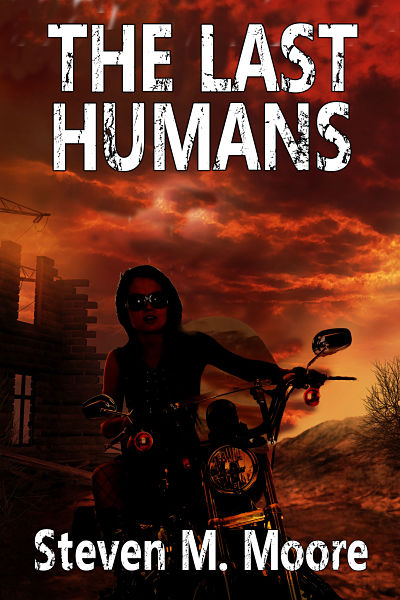
(more…)

Statistics, reader categories, and book genres…

Thursday, July 17th, 2014

This post is for writers…and readers!  Let me start by saying that men suck at reading.  Statistically, women beat us hands down.  This is a modern phenomenon.  You’ve all seen those movies and TV shows that are period pieces about the 1700s and 1800s, even early 20th century.  The rich old boys had their impressive libraries filled with leather-bound classics and even recent “popular works,” all in good order in exquisitely carved cases and shielded with sliding glass doors to keep them from the servants.  I don’t know how much those rich old boys actually read—the real reading might have been done by the wives and children or—heaven forbid!—those sneaky servants.

I’d guess that not much real reading was done back then.  They say Jefferson read every book in his extensive library (donated after the War of 1812 to help replace the Library of Congress’ decimated collection), but he most certainly was an exception.  But you never know—maybe Davy Crockett was reading Gargantua and Pantugrel as he waited for the Mexican army to attack the Alamo.  I think the Boomer years probably saw more male readers percentage-wise than now because women still didn’t have that much free time back in the fifties and early sixties—only rich women with servants and nannies found real time to read, if they weren’t playing tennis and croquet at the country club.  Women have a bit more time now for leisure activities, even working women and even some single mothers, and they’re doing more reading than men because men now spend their leisure time elsewhere .

(more…)

Outside, looking in…

Thursday, June 12th, 2014

I’ve been a bit distracted by the Amazon-Hachette foofaraw, just like everyone else.  More as an amused spectator, I suppose, but I thought I’d finish my more personal take on the subject today—well, at least a related subject, the discussion about whether a creative person should also be an astute business person.  PR and marketing people, ready to take that creative person’s money, come down on one side of this question obviously.  Ignoring them and their agendas, let’s still take a look at the issue.

Artists, musicians, and writers—if not complete misanthropes, we’re often introverted and avoid other human beings.  We’re standing outside a window looking into that big house that contains the rest of humanity.  Is it any wonder most of us aren’t good business people?  Do we need to break the window pane, avoid the shards of glass, and become something of a self-taught MBA to succeed?  These are tough questions.

I’ve mentioned James Patterson in recent posts.  If anything, you have to admire this author’s business acumen.  He’s an exception among writers.  He’s like the painter Thomas Kincaid, who never could be called a starving artist.  Or Neil Diamond, a performer in his own right, but also the composer of an incredible number of hits made popular by many other famous singers.  All exceptions.  Many creative people might want to be better business people but are just bad at it.  I’m in the latter group.  I’m addicted to writing and entertaining my readers.  I don’t want to spend time in PR and marketing, let alone the money.

(more…)

How authors can beat both Amazon and Hachette…

Tuesday, June 10th, 2014

I was tempted to make this a humorous post too, a parody of “How Book Publishers Can Beat Amazon,” an op-ed column (two or three columns, in fact) written by lawyer Bob Kohn in last Saturday’s (May 31) NY Times.  Last Wednesday (June 4), the lead editorial in the Times also attacked Amazon.  Pretty clear where their sympathies lie.  Moreover, they’re clearly not on the side of readers or writers!  Of course, they claim they’re protecting them…bla-bla-bla.  Back to that temptation: it occurred because I already said pretty much all I wanted to say about this storm-in-a-tea-cup in my “News and Notices” a week ago Friday.  But I’ve been watching the debates on LinkedIn and elsewhere in my general internet lurking mode.

It’s amusing to watch people come down on either side.  We’re talking about two behemoths here—Amazon, a rip-snorting, fire-breathing Yankee company in pitched battle against a greedy French member of the Big Five, conglomerate Hachette—you’re supposed to pronounce this name the same way you sneeze, by the way, but I like the pronunciation “hatchet” better because it’s a more appropriate description of their questionable business practices.  In fact, it’s also fun to remind people that Hachette is the only company in this new dispute ever accused of unfair business practices—they settled with the government because they knew they’d not win the lawsuit involving them, other publishers, and that other behemoth and corporate bully, Apple (I hate to speak badly of the dead, but Jobs introduced that bullying philosophy into Apple management).

(more…)

Is magical realism dead?

Tuesday, April 22nd, 2014

Probably not.  Its champion is.  Colombian Gabriel Garcia Marquez, 1982 Nobel Prize winner, died at 87 in Mexico City.  His word mastery and acerbic humor will be missed.

Magical realism is seeing a fantasy-world amidst stark reality, a technique that intertwines the mystical and sensual with the everyday trials and tribulations of ordinary people, making their lives extraordinary.  It has influenced many authors since Garcia Marquez, and not just Hispanic authors.  He wasn’t the first either.  Kafka and some of the early dystopian sci-fi writers practiced magical realism—nowadays King and Koontz practice it in their cross-genre alloying of horror and sci-fi.  Many tales about drug addiction and mental cases contain elements of magical realism, but it can creep into mysteries, thrillers, and that nebulous and catch-all genre we call literary fiction.

My personal discovery of Garcia Marquez was probably a bit different than your average gringo’s.  While my sojourn in Colombia led to a cultural immersion so profound that I soon found myself dreaming in Spanish, I didn’t feel capable of tackling the grand master’s tomes until late in that sojourn.  I’m not going to claim that one must read a great author in his own language—modern translators are rarely literal and often profoundly capture the author’s true meaning—but I’ve never read Gabby in English.  You’re probably familiar with the great trio—One Hundred Years of Solitude, Autumn of the Patriarch, and Love During the Time of Cholera (these are my title translations that don’t necessarily agree with accepted ones)—each novel a masterpiece and each novel totally different.

(more…)

How British sci-fi influenced my writing…

Thursday, April 10th, 2014

[Note from Steve: I wrote this a while ago as a guest post for Shah Wharton’s WordsInSync website.  It seemed appropriate to dust it off and repost it here with a few edits that make it more contemporary.]

Many writers are avid readers, at least in their own genre.  In fact, I can’t understand how anyone can be a writer without being an avid reader.  I suppose there are exceptions.  I am also a reviewer, but I read many more books than I review.  Some of my reading is information-oriented; most is just entertainment—TV for the most part has few good programs.  Consequently, as a native Californian, it’s obvious that American sci-fi has influenced my writing.  Less obvious is the influence of British sci-fi authors.  There is a reason for that—dystopian vision.

Some of my novels, especially Soldiers of God and “The Chaos Chronicles Trilogy,” have lurking in the background what I call “the social singularity”; my novel Survivors of the Chaos moves through it, for example.  Unlike a black hole, this singularity is diffuse in space and time.  It represents a particular state in world affairs where social problems become so complex that politicians and political institutions are incapable of solving them; where fundamentalist attitudes and local xenophobia have become so prevalent and ingrained that traditional empires break up into more homogeneous, almost tribal units; and where multinational corporations, ever greedy for new markets and more profits, hire mercenary armies in an attempt to keep order.  This state I call the Chaos.  In brief, it’s my dystopian vision of humanity’s future.  It’s not all bleak—I always sprinkle in a bit of hope here and there, created by heroic individuals, of course!

(more…)

Writing the thriller…a discussion…part two…

Wednesday, April 9th, 2014

[Tom Pope is a writing teacher—see the interview with him in a post from a few days ago—and yours truly writes thrillers.  We put our emails together to produce this Socratic discussion about several elements associated with writing thrillers.  This is part two of that discussion.  Enjoy.]

Steve: What you call third person internal is just a temporary lapse into first person.  Putting the thoughts into italics allows the writer to make it present tense: What’s my partner doing? Instead of, What was that partner doing?  The first moves the prose along more.  However, if italics aren’t used in the first, readers are justifiably confused due to the tense change.  Moreover, many authors make the mistake of putting italicized thoughts into past tense, which is also confusing to the reader.

I’m even more of a minimalist writer.  In one of your dialogue lines, it’s clear who’s talking to whom.  You’ve replaced “Are you tracking badges now?” with “You collecting badges now?” while I’d replace it with “Collecting badges now?”  The first might be appropriate for that nebulous genre of “literary fiction,” the second for a thriller, and the third for a hard-boiled mystery or police procedural.  Depending on the person with whom I’m conversing, I might say any of the three in an office situation, but the last really moves the dialogue forward.

These examples are minutia, of course, but over the length of a novel, probably 60 to 80 kwords, the minutia can add up.  Same goes for slang and street jive.  If there’s a lot of dialogue—I mean pages and pages of it—and the slang or street jive used isn’t found in my normal conversational quirks, I’ll eventually tire of it as a reader.  There’s nothing bigoted or hypocritical about this.  When I lived in the Boston area, I found the ubiquitous accent there tiresome at times.  This is a cultural phenomenon.  Same goes for foreign language terms—I use those more than most authors, but I’ve become more careful.  The Goldilocks rule applies here: use just enough to provide color, but not too much.  Of course, too little and too much depend on the reader—you have to aim for the average person in your targeted audience.

(more…)

Writing the thriller…a discussion…part one…

Wednesday, April 2nd, 2014

[Tom Pope is a writing teacher—see the interview with him in a post from a few days ago—and yours truly writes thrillers.  We put our emails together to produce this Socratic discussion about several elements associated with writing thrillers.  This is the first part of that discussion.  Enjoy.]

Tom: What are your impressions on the role of the clock with the threat?  I think that a threat should be a major one and the protagonist should face some time limit before all havoc breaks out.  Example: The protagonist has to stop a nanite infection of fifty cases in a major hospital within twelve hours or the infection spreads to the entire country.

However, the role of the clock does not end there. I think the clock can work with segmenting the conflict into mini conflicts.  Example: Your protagonist has one hour to find the exact nature of the nanite, but doctors block every step.  He solves the nature of the nanite, but then faces a two hour window to find how the nanites are being activated by outside EM frequencies.

Of course, those are just the beginnings of the major problem, but the use of the clock and threat seem to work hand in hand.

Steve: The first movie I ever saw was High Noon, the quintessential “clock movie” and a thriller in its own right (my father let me tag along—he was a Gary Cooper fan).  Of course, there was that famous Fox series too.  In my thriller, The Midas Bomb, Detectives Chen and Castilblanco are working against the clock to stop a terrorist strike.  In the last tale of my short story anthology, Pop Two Antacids and Have Some Java, Castilblanco is waiting for a drug-crazed killer to return home.  The clock is almost a protagonist in this yarn.

A thriller without any time crunch lacks suspense.  It’s a critical element.  It also provides a key distinction between mystery and thriller.  In the former, something bad has already happened and the protagonist has to figure out the how’s, why’s, and who’s.  In the latter, something bad is going to happen and the protagonist has to try to stop it, usually with a time constraint.  Of course, there are other differences between the two genres, but these are key.  In brief, the time crunch makes a thriller differ from a mystery.

(more…)

Where have all the readers gone?

Wednesday, March 26th, 2014

[Note from Steve: This is the third post in preparation for Tom Pope’s and my Socratic dialogue on writing thrillers.  It’s more about reading, though, not writing.  The title is a bow to Pete Seeger.]

I read and review in many genres, including non-fiction.  Every author should be an avid reviewer.  And, if you want to give something back to the community of readers and writers, honest reviews help those readers who are looking for new and interesting books to read.  Of course, they help writers too, but I’m pleased when I receive that note from Amazon saying that one of my reviews helped a reader make a reading decision.  That’s my reward.  (I never charge for reviews because money can’t beat that kind of reward.)

Many writers don’t share my views on reviews!  Some will say that they’re busy writing and that they can’t take time to write a review.  Some will say that they have a policy of not reviewing other authors because they’re afraid of being accused of practicing review exchanges, aka a you-scratch-my-back-I’ll-scratch-yours review policy.  Whatever the reasons, I respectfully disagree with them.  Authors should write reviews.  They can do them on review websites or places like Amazon and Smashwords and avoid the review exchange criticism (many accept clever pseudonyms for their reviewers).  They can be technical without being erudite.  And their reviews will be useful to the reading public.  Above all, writing reviews shows that the author is also a reader and not just a person interested in selling books.

(more…)

Writing secrets…

Friday, March 14th, 2014

[Second post leading up to Tom Pope and my Socratic to-and-fro about writing the thriller.  In “The Eightfold Way” I listed eight things a writer should NOT do.  Here I take the tack of analyzing what he or she can do.]

Given my sales and/or my number of readers (easy to measure the first, hard the second), any secrets I might reveal about the writing business are probably suspect.  Caveat emptor: The word “secrets” implies that there are magical actions you can take to become a successful writer—in other words, that there exist sufficient conditions for success.  (Let’s agree to measure “success” as a book that has had N readers since its release, where you pick N > 1000 to fit your own criteria.)  I hate to say it.  There are NO SECRETS—there are no sufficient conditions.  There seem to be necessary ones, but some outliers often don’t satisfy many of those either.

Take the Fifty Shades trilogy.  It doesn’t meet any of the necessary conditions I outline below, yet you can’t argue that it wasn’t successful.  Call it prurient interest among readers; a rebirth of sloppily written, commercial erotica; a naïve, 19th century portrayal of S&M; or something else—but the books fail to satisfy so many necessary conditions that they leave me shaking my head in wonder.  If you ever needed proof that having a successful book is akin to winning the lottery, this is it.  While many authors including me are turned off by this badly written drivel, readers read it—maybe not you, but plenty of others.  Each book in that trilogy is what I call an outlier.  Authors in general shouldn’t worry about them—they’re statistically improbable events.  You should worry about the necessary conditions, unlike the author of that trilogy, who didn’t, but still won the lottery.  She won the big prize.  Writers in general should be content to go after the smaller prizes in the lottery—as many times as possible.

(more…)