Steve’s shorts: Marci…

August 30th, 2017

Marci

Copyright 2017, Steven M. Moore

Anjum opened the invitation, read it, and then tore it up. No way am I going to send my daughter to a party to be bullied by those brats!

She smiled as her daughter started to play another piece. Her birth-mother had rejected her; Anjum and her husband had adopted her. I think that’s a Debussy étude.

She’d always wanted to give Hakeem a son or daughter, but she couldn’t. Now all their parental love was for their adopted daughter, who came with the name Marcia, but they called her Marci. It was the only name the child recognized.

Perhaps the parents inviting her child meant well. Perhaps they didn’t understand that Marci’s differences with other children were a blessing. Perhaps they didn’t know that so-called “normal children” picked on her.

Anjum and Hakeem knew their child had special talents. She had started to play the piano at three and they found her drawing complicated geometrical shapes and constructing elaborate sequences of numbers when she was four. Hakeem showed some of the latter to a mathematician where they both worked. The mathematician told Hakeem that one sequence was a list containing natural numbers with more and more crossed out revealing the prime numbers. “She’s mentally applying Eratosthenes’s sieve,” the mathematician had said.

What will my daughter’s future be like?

***

Marci took out her tablet and typed, “Are you nervous?”

Her husband looked at his iPhone and shook his head. “I’m just reading your speech, hon,” he texted back to her.

When the time came, they went on stage together. He gave her a hug and a kiss on the cheek and began reading her speech to the audience.

“Mathematics and music were my faithful friends. I love them almost as much as I love my husband.” He paused and winked at her. “I am humbled that you have decided to award me the Fields Medal, often considered to be the Nobel Prize of mathematics. As Newton said, though, I was fortunate to be able to stand on the shoulders of giants, in particular Ramanujan. My work only continued the work of many mathematicians, so this award is also their award. Thank you.”

The applause was so deafening that she wanted to cover her ears. But she only smiled at Anjum and Hakeem in the front row. The “thank you” was mostly for them. Her old mother and father smiled back.

***

Rembrandt’s Angel (a mystery/thriller from Penmore Press). To what lengths would you go to recover a stolen masterpiece? Scotland Yard’s Art and Antiques Inspector Esther Brookstone goes the extra mile. She and paramour/sidekick Bastiann van Coevorden, an Interpol agent, set out to outwit the dealers of stolen art and recover “An Angel with Titus’ Features,” a Rembrandt painting stolen by the Nazis in the Second World War. Their efforts lead to much more, as they uncover an international conspiracy that threatens Europe. During their dangerous adventures, their relationship solidifies and becomes a full-blown romance. This book is available in ebook format at Amazon and at Smashwords and its affiliate retailers. It’s also available as a print version at Amazon, B&N, or your favorite bookstore (if not there, ask for it). See the review and interview at Feathered Quill.

In libris libertas…


Monday words of wisdom…

August 28th, 2017

The word for “fake news” in Putin’s Russia is simply “news.”—Garry Kasparov

***

Rogue Planet. Hard sci-fi with Game-of-Thrones fantasy, shaken and stirred. This sequel to the “Chaos Chronicles Trilogy” is a stand-alone that differs from the trilogy’s novels. Prince Kaushal of the Second Tribe is a survivor of the First Tribe’s rebellion and creation of a theocracy so brutal that the Interstellar Trade Union of Independent Planets (ITUIP) has quarantined his home planet Eden. He and his companions struggle to change that. This sci-fi adventure is available in both ebook format on Amazon and Smashwords (and their affiliated retailers like Apple, B&N, Kobo, and others), and in print book format on Amazon. Great summer reading!

In libris libertas.

Mini-Reviews of Books #31…

August 25th, 2017

Ice Cold. Tess Gerritsen, author. I usually can’t afford Ms. Gerritsen’s books, so I snap one up when I see them on sale. The Rizzoli and Isles TV show doesn’t do justice to them, and this one is a gripper and a fun read.

While R & I are the main characters, it’s more about Isles than Rizzoli. The good M.E. is attending a convention in Wyoming, and she and some casual friends she encounters there get lost in a snowstorm. Surviving the cold is only part of the story, though, as we discover there are some violent bad guys in them thar hills—OK, the action mostly occurs in a valley, but you get the idea.

I always wind a good theme or two around and through my own plots, but here an important theme is the story, and to talk about it would be a spoiler. It’s a well written novel that will take you on an enjoyable roller coaster ride (maybe I should say skis and snowshoes), but don’t look for those TV characters here: they’re completely different and much more interesting.

Hey, since when does Jane have a kid? (Part of the difference, of course.)

Shoulders of Giants. Jim Cliff, author. I found this novel less serious than the above but very enjoyable too. It’s a standard mystery written in a tongue-in-cheek Parker-style (lots of name droppings of American crime fiction writers and TV shows). The main character is a new PI who gets quite a first case. There’s a love interest a la Hollywood too (I could have done without that) and a cop-buddy for the newly minted sleuth. A search for an old cop’s daughter turns into a search for a serial killer, and the killings seem random.

Good plotting, characterization, and snappy dialogue make for interesting reading, but unfortunately the editing was a wee bit lacking. And the use of a few very British terms made me wonder why Chicago was picked for the setting. Mr. Cliff is from Essex, England, so they were bound to creep in, I suppose, and I can’t and shouldn’t complain because he could probably say the same thing about my Rembrandt’s Angel with its English and Scottish settings. Maybe the anti-cultural appropriation crowd hates it when an author sets his story in another culture; I think it’s a skill to be admired and congratulate Mr. Cliff for doing the job so well.

Lots of fun, this novel makes me want to try some more of the young sleuth’s cases. Never figured out whether the title had to do with anything, though. (Maybe because I’m an ex-physicist?)

***

The Midas Bomb (Second Edition). With a plot motivated by signs of the impending financial collapse of 2007-2008, Ponzi plots, and international terrorism, this first novel in the “Detectives Chen and Castilblanco Series” is as current today as it was back then. The story connects an unscrupulous hedge fund CEO with two Manhattan murders and terrorist attacks. The two detectives team up for the first time. Connecting the two murders undercovers the larger conspiracy. Available in ebook format from Amazon, Apple, B&N, Kobo, and Smashwords (and its lending affiliates) as well as in paper format from Amazon, this novel starts off the series with a bang. Good summer reading!

In libris libertas…

Waiting for Hollywood?

August 24th, 2017

If you read this blog regularly, you know I see quite a few movies—some blockbusters, others more artistic films that don’t draw crowds. In spite of Hollywood’s attempts to halt its influence, my favorite review site is Rotten Tomatoes, but to be honest, I don’t put much stock in either book or movie reviews, except my own, of course. That’s not being smug; it’s simply a recognition that anyone’s opinion of a book or film is subjective.

As an author, though, I can’t help wondering how my many novels would fare on the silver screen. I’ve been asked that a lot. I’d like to include m short stories and novellas for consideration too. Phillip K. Dick probably holds the Guinness record for the number of stories that became movies, and many of these weren’t novels. Short fiction is probably better matched to a two-hour movie.

Most authors are just happy to have a successful book, however that’s defined. Hollywood has two sources for its screenplays: popular stories and original screenplays. The second are often weak in plot and overloaded with sex, violence, and action, especially if they’re of the blockbuster type. The plots are often non-existent. The first, if they’re novels, are often too complex and Hollywood dumbs them down and misses most of the plot, characterization, themes, settings, and dialogue that the fiction author worked so hard on.

My novels tend to be complex; I don’t do simple. I’m almost certain that Hollywood wouldn’t know what to do with them. In Rembrandt’s Angel, I even provided a cast of main characters, more because some of their names are also complicated and hard to remember (Bastiann van Coevorden, the Dutch Interpol agent, is an example). That might help the reader with the complex plot too. Maybe the George Bernard Shaw quotes introducing the theme of each part of the novel could help as well.

The next question I sometimes get is: Who should play character X? Because I’ve never expected Hollywood to make a movie based on one of my stories, this is always a tough question. I don’t imagine an actor and mold my character to that person. Actors really don’t have personalities—they portray different ones. The question is really about which actor looks like my character. Taken in that way, the question is better suited to a casting professional. I’m not that person, although I could have fun imagining the actor who plays one of my characters…or working with a casting professional to find one.

These questions are common but probably wasted on most novelists. Maybe a movie based on one of their books will bring them more fame and income, but they shouldn’t be sad when it doesn’t happen. In fact, it might be a good thing.

***

Rembrandt’s Angel (a mystery/thriller from Penmore Press). To what lengths would you go to recover a stolen masterpiece? Scotland Yard’s Arts and Antiques Inspector Esther Brookstone goes the extra mile. She and paramour/sidekick Bastiann van Coevorden, an Interpol agent, set out to outwit the dealers of stolen art and recover “An Angel with Titus’ Features,” a Rembrandt painting stolen by the Nazis in World War Two. Their efforts lead to much more, as they uncover an international conspiracy that threatens Europe. During their dangerous adventures, their relationship solidifies and becomes a full-blown romance. See the review and interview at Feathered Quill. This book is available in ebook format at Amazon and at Smashwords and its affiliate retailers. It’s available as a print version at Amazon, B&N, or your favorite bookstore (if not there, ask for it).

In libris libertas….


Steve’s shorts: Siege…

August 23rd, 2017

Siege

Copyright 2017, Steven M. Moore

“Have you heard, Josefina?”

The woman put the paper plates in front of her small children. She watched them begin to devour the PB&J sandwiches.

“Heard what, Father Sullivan?”

“The police have said they’re outnumbered. They’re letting the mad dogs take over the city.”

Josefina paled, caught her breath, and sat down on the fourth chair at the little table.

“Will we still be safe here?”

The young priest shook his head. “Your case has been in the local news. They know you’re here. I don’t know if any of us are safe. Mob rule isn’t pretty. They are thugs and killers.”

“Where else could we go?”

“Everywhere will be dangerous. Our only hope is that they respect the church as sanctuary. I suspect we might have other guests, refugees from the terror.”

Josefina wrung her hands, looking from angelic face to angelic face. The violence in her home country had been followed by years of peace in her new one. All her children were born in the U.S., but she was still an illegal. If they had just offered her some route to a green card and then citizenship.

When ICE started tearing apart the immigrant families, she had to leave her good-paying job and seek refuge in her church. Her children, ages three, five, and eight, were too young to leave on the outside even though they weren’t in danger.

Now they were all in danger, including the priests, nuns, and deacons who had given them shelter. The neo-Nazis now in control of the city would run amok.

“You should all join us here in the basement,” she said. “We’ll barricade the doors.”

Father Sullivan nodded. “That’s a good idea if it works. I’ll tell the others. We need to bring all our food supplies down here.”

She glanced around the huge basement used in better times for church social functions and overflow from the holiday masses. The large TV was connected to cable as well as a feed from the old cathedral above them.

“They might burn it all down,” she said. “We’d all be trapped.”

“Not if our barricade is strong enough and the ceiling holds.” He paused at the stairs. “It’s possible that the police will come to their senses and hold them off until the National Guard can be deployed to stop them, but we need to be prepared. Can Antonio take care of the other two if you help us?”

Josefina looked at her oldest child. With wide eyes, he nodded.

“Tranquilla, mamacita, los cuideré.”

It took them half a day to prepare. When the barricades went up blocking the entrances into the basement, Juanita’s family had been joined by the four priests, nearly a dozen nuns, and more than the Hispanic families, all citizens or green-card holders. They had come to seek refuge because no one needed to tell them what the skinheads would do to them if they were caught.

“The governor is calling in the National Guard,” said Father Sullivan.

“Too little, too late,” said a nun. “This is our Kristallnacht.”

They sat around holding hands and awaiting their fate.

***

Rembrandt’s Angel (a mystery/thriller from Penmore Press). To what lengths would you go to recover a stolen masterpiece? Scotland Yard’s Arts and Antiques Inspector Esther Brookstone goes the extra mile. She and paramour/sidekick Bastiann van Coevorden, an Interpol agent, set out to outwit the dealers of stolen art and recover “An Angel with Titus’ Features,” a Rembrandt painting stolen by the Nazis in World War Two. Their efforts lead to much more, as they uncover an international conspiracy that threatens Europe. During their dangerous adventures, their relationship solidifies and becomes a full-blown romance. See the review and interview at Feathered Quill. This book is available in ebook format at Amazon and at Smashwords and its affiliate retailers. It’s available as a print version at Amazon, B&N, or your favorite bookstore (if not there, ask for it).

In libris libertas….

Monday words of wisdom…

August 21st, 2017

Don’t have fits watching the eclipse. Keep in mind you can go blind. Timeline for NYC area: 1:23 p.m. à 2:44 p.m. (71% eclipsed)à 4:00 p.m.

***

Rogue Planet. Hard sci-fi with Game-of-Thrones fantasy, shaken and stirred. This sequel to the “Chaos Chronicles Trilogy” is a stand-alone that differs from the trilogy’s novels. Prince Kaushal of the Second Tribe is a survivor of the First Tribe’s rebellion and creation of theocracy so brutal that the Interstellar Trade Union of Independent Planets (ITUIP) has quarantined his home planet Eden. He and his companions struggle to change that. This sci-fi adventure is available as both an ebook on Amazon and Smashwords and print book on Amazon. Great summer reading!

In libris libertas.

Movie Reviews #49…

August 18th, 2017

[Before reading this review, please read my “Monday Words of Wisdom: Special Edition.” This movie takes on new meaning in the dark and somber aftermath of what happened in Charottesville.]

Detroit. Kathryn Bigelow, dir. I wasn’t enthusiastic about going to this movie. I’d seen Zero Dark Thirty; Bigelow’s emphasis in that movie changed the story too much. And, when the director becomes the story, I feel the movie already has one strike against it.

Another reason for my lack of enthusiasm is that Zero Dark Thirty was one-sided. While I’m 100% against terrorism, I recognize that many Arab countries, including Saudi Arabia, bin Laden’s homeland, magnify the universal and historical gap between the poor and rich elites, whether these be initiated by old colonial powers or current despotic and medieval regimes and theocracies.

A third reason finds its basis in this question: can a white person in this country ever manage to communicate the story about the sixties unrest occurring in America’ large cities from Boston to LA? As a white author, I don’t think I could do it, although I’m not a fan of the anti-cultural appropriation crowd. I haven’t experienced racial discrimination en carne propia (a Spanish expression from another minority currently under attack that means “in my own flesh”). I could analyze this history like a doctor analyzes her or his patient, but this analysis would probably fail because I didn’t experience the pain.

Ms. Bigelow manages to portray the pain. Some viewers might think the white cops, the villains, are given too much screen time. I think this is positive—the director doesn’t try to hide the bigotry and hatred of their racism—but the focus is more on the personal stories of black frustration in the inner city, and it’s powerful history and a warning for our present.

Of course, Ms. Bigelow also directed The Hurt Locker. You take some facts and fill in the parts you don’t know, and you have a film inspired by true events. Add some good acting and get a good director, shake and do not stir, and you just might have an Academy Award winning film. Detroit is high on my list for the latter.

Unfortunately the movie is depressing. First, the cops got away with murder. Second, and more importantly, the racial tensions, hate, and bigotry exhibited in the film still continue. Dr. King’s dream of a colorblind society with equal opportunity for all still doesn’t exist in America. Instead of preparing people for the new jobs of the 21st century, we leave them living desperate lives or put them in jail. Desperate people do desperate things, and the people creating the desperation are to blame.

Read the rest of this entry »

Go out of your comfort zone…

August 17th, 2017

Many writers are introverts. That’s a nice way to say we’re nerdy. People say I talk funny, use big words, and derive pleasure from unusual activities. Guilty as charged.

If you accept this stereotypical description of a writer (many stereotypes are over-generalized and over-extrapolated statements based on limited data sets), do you accept the premise that PR and marketing is hard for writers? I find it difficult, and I’d rather be writing. Even these serious blog articles (OK, some aren’t so serious) are more fun than PR and marketing. The main benefits derived from my fiction writing are found in the actual storytelling and the pleasure obtained from entertaining at least a few people who read my stories. That comes my way whether I’m successful at PR and marketing or not (that success is hard to measure in general because it doesn’t guarantee a wildly successful book).

But I’m also a type-A personality, so I do try new things, however reluctantly. While teaching in Colombia, South America, we had to experiment with large lecture classes, common in the U.S. but not so much in Latin America. Our small department was facing a crisis because it had to teach an increasingly large population of engineering students. Imagine a nerdy prof getting up in front of 200+ kids and essentially pulling off a one-man theater shtick three times per week. That’s called going out of your comfort zone.

Book marketing is like that. It’s something every author must do nowadays, if only to organize a marketing campaign and hire the people necessary to do the job. For your stereotypical nerdy author, any of that means going out of her or his comfort zone. I’ve found it can be rewarding, though, because it often involves meeting new people and doing new things.

An experience I had last year illustrates my point. I was the only author hawking his books at the Holly Berry Show, a traditional holiday arts and crafts event run by the Upper Montclair Women’s Club. Mind you, a bit of time and money was invested in preparing for this show. The rewards included selling quite a few books, but the biggest ones corresponded to meeting complete strangers and talking about writing, books, and the book business with them. And some of my writer’s stereotypes were shattered too as I met elderly people interested in sci-fi and tweens interested in mysteries. (I was selling both The Midas Bomb, a mystery/thriller, and Rogue Planet, a sci-fi novel.) Besides these pleasant interchanges, I also got to know quite a few vendors, all artists just like me, although their creative talents and efforts weren’t dedicated to writing fiction.

Read the rest of this entry »

News and Notices from the Writing Trenches #148…

August 16th, 2017

[Note from Steve: Do you enjoy reading this newsletter? Please tell family and friends about it! And you can always comment just like you can for any other blog article.]

What do you prefer? Standard fiction comes in three forms: short stories, novellas, and novels. I write all three because I never know when I start a story what it will become. You can read some of my short fiction in the blog category “Steve’s Shorts” and in the PDFs free for the asking found in those listed on the webpage “Free Stuff & Contests.” I like short fiction enough that I have several collections available on Amazon too—they’re ideal reading material on a trip. And be forewarned: the free short fiction can always disappear and become a collection, so tet it while it’s free!

Small presses. Do you only read books spewed out from the Big Five conglomerates? That’s like seeing only the latest blockbuster movie and ignoring smaller-budget films with some more meat to them. My experience with Penmore Press, publisher of Rembrandt’s Angel, has been rewarding and interesting. Apparently this experience isn’t new. Consider the quote from The Guardian: “These days, it is minimally staffed and funded firms who invest in new authors. The giants avoid such risk, only picking the writers once their names are made….” (UK, Dec. 8, 2016). If you’re looking for new and exciting authors, please look beyond the Big Five publishing conglomerates.

Reviews are still coming in for Rembrandt’s Angelbut here are excerpts from one just posted:

a thrilling, globetrotting adventure that provides readers a glance into the world of art forgery, Neo-Nazi conspiracies and even links to ISIS. The duo of Brookstone and van Coevorden can be favorably compared with utmost respect to Agatha Christie’s classic characters, Miss Marple and Hercule Poirot. Esther is a strong, well-liked character with a saucy disposition, while Bastiann, though he plays costar and lover to Esther, is able to hold his own with regards to likability.”

“…Steven M. Moore’s novel should be read by fans of the mystery genre. Particularly because the author has a keen ability to weave a great storyline that is not only filled with suspense, but captures a reader’s attention. A few quotes stood out as quite descriptive and remained with this reader well after the book was completely read, for example, ‘In the ice cream shop of crime, there are many flavors’ and ‘A committee of clouds enjoyed a private meeting over the manor.’”

“…the character Esther Brookstone provides readers with an unusual female protagonist who is more than just a senior Scotland Yard Inspector, she is a memorable and tenacious dame who readers will undoubtedly enjoy throughout the novel and will look forward to reading any of her possible future exploits.”

Rembrandt’s Angel is a complex thriller with several plots intertwined throughout the story. It is recommended for serious mystery fans who are looking for not only a challenging read, but also one that allows readers to become an armchair adventurist and detective, along with Brookstone and van Coevorden, spanning many different parts of the globe.”

—Lynette Latzko, Feathered Quill Reviews.

Thank you, Feathered Quill and reviewer Lynette. You can read the full review here.

…and Feathered Quill interviews me… I answer questions about my writing in general and about Rembrandt’s Angel in particular. See the full interview here.

Availability of Rembrandt’s Angel? You’ll find the ebook version on Amazon, Apple, B&N, Kobo, and Smashwords (and its associated retailers and ebook lending services). It’s also available in print version on Amazon, B&N, or at your local bookstore (if they don’t have it, ask them to order it). It’s newly published, so don’t look for it in libraries just yet (except at Smashwords’ associated lending services). The ebook is also available overseas, of course; I don’t know about the print version. (Both are available at Amazon UK—I just checked.)

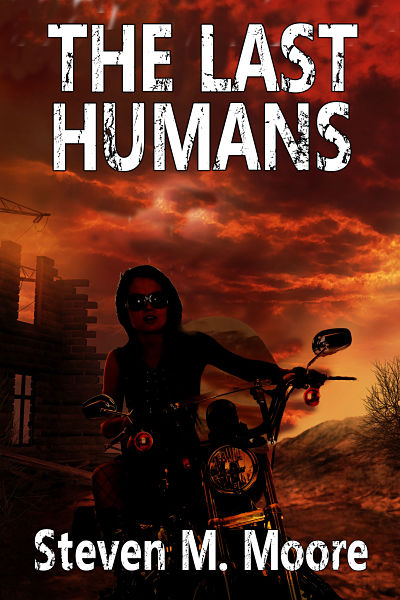
Ready for some post-apocalyptic reading entertainment? The Last Humans is worth waiting for. It’s a post-apocalyptic thriller that’s mind-bending enough for the most avid fan of this subgenre. The manuscript is now with my beta-readers.

Strange star. Readers of my sci-fi novel Survivors of the Chaos know that the planet Saturn and its moons play important roles in the novel. Recently a star smaller than Saturn was discovered. It has 300 times the mass, though, so it’s massive enough to sustain nuclear fusion. We’re learning more about our Universe every day!

Reading ebooks. Did you know that with a Kindle app you can read .mobi-formatted ebooks on most any device? My Win 10 version came with it, but you can download it from Amazon. Yes, I know many readers like the look and feel of a print book, whether trade paperback, hardbound, or airport-sized paperback, but they’re usually paying a higher price (print books are more expensive to produce) and also missing out on a lot of good reading that includes new editions of literary standards (I have a few on my Kindle, like Tale of Two Cities).

I used to be exclusively a print book reader, but I received a Kindle as a birthday present and it has become my constant companion. That said, the app is a good alternative for those who don’t want to invest in yet another device.

***

In libris libertas!


Book review of Peter May’s Entry Island…

August 11th, 2017

(Peter May, Entry Island, Quercus, 2014, 978-1-62365-663-8)

Because I’m half-Irish by ancestry, I once tried to learn Gaelic. I failed. So it was interesting to learn in this novel that speakers of Irish and Scotch Gaelic can understand each other, but, thinking about that some more, I guess it’s like when I spoke Spanish in Italy and got along fine.

This is a small point about the huge panorama of this novel. It’s a tour through history as Sime (pronounced “sheem”) MacKenzie, a homicide detective, tries to figure out how he already knows Kirsty Cowell, a murder suspect. That’s one mystery. The other is about who killed Kirsty’s husband.

Being half-Irish, I also knew about the Irish potato famines (I seem to remember there were several), but again I had no idea The Famine had affected parts of Scotland too. And the bad history between English lords and their Irish tenants had its parallel with the English lairds and their Scottish tenants. You can learn history from reading fiction much more than you can watching Hollywood destroy it on the silver screen (after I saw The Gladiator, I had to come home and check to make sure I wasn’t going senile—and that movie won an Academy Award?).

Maybe because of these relationships between Irish and Scottish history, I found the mostly predictable plot still gripping. Sime’s ancestor’s history, told via the latter’s diary entries, is the short part and the most interesting until the Postscript (it should have been called an epilogue) that shattered most of my admiration for the ancestor. Maybe I should have said two plots, as the longer part of the novel describes Sime’s struggles to solve a murder case while carrying the mental baggage of a failed marriage, insomnia, and the loneliness he feels as a Scotsman in French Canada, the last similar to his ancestor’s troubles in the New World.

Read the rest of this entry »