Amazon v. authors and publishers…

January 22nd, 2019

Evidence accrues all the time showing how Amazon, the world’s mega-retailer and biggest online bookstore, is neither an author’s nor a publisher’s friend.

Authors Guild, which is more a representative for Big Five publishers’ and their authors’ interests than a true union for writers, has recently added more logs to that bonfire. They’re alarmed that their author members only made an average of $20K in 2018, down from the previous year. I’m embarrassed to say how much I made (not my main motivation, of course), but their reasons resonate a wee bit with me.

Whether self- (indie-) or traditionally published, if you don’t play by Amazon’s rules, they will bury your books. They reward those who do play by their rules (Mark Dawson, for example), but the rules are prejudicial for both publishers and authors because they support Amazon’s monopolistic policies. Their message to Ms. or Mr. Author: make your books exclusive on Amazon, sell pages worth of your writing for pennies to Prime members, and use our marketing services, and we won’t bury your book. Ms. or Mr. Publisher, pay our commissions and fees and use our marketing services (it’s harder for Amazon to demand exclusivity here), and we won’t bury the books in your catalog.

To be fair, Amazon isn’t the only retailer that buries books. While Smashwords doesn’t overtly promote exclusivity (far from it, because they distribute to affiliated retailers, which Amazon doesn’t do), they also bury books too. And they use the same two criteria to justify it.

Read the rest of this entry »

News and Notices from the Writing Trenches #165…

January 18th, 2019

A belated welcome to 2019! I’m not suspicious. I was born in an even year, married in an odd year, and our kids were born in even years. 2019 will bring what it will…and I wish all of you a safe, prosperous, and happy next twelve months. Thanks for being readers.

Publishing in 2018. Two articles about publishing caught my interest in the NY Times over the holidays. The first covered the expiration of copyrights. Some classics and many old books will be losing their copyrights. That mainly affects publishers and deceased authors’ estates, but it’s a warning that nothing in this business is permanent. Copyrights are long duration for a reason, but they’re not permanent.

The second article spoke to production problems. It wasn’t about the Times having printing and delivery problems or the hacking of press installations on the West Coast that affected West Coast newspapers as well as West Coast editions of the Times and Wall Street Journal. It seems that Big Five publishers had problems with keeping up with demand for popular books over the holidays. Maybe that helped indie authors and small presses whose offerings have to compete with the NYC conglomerates. I always ask for books for my gifts, and the production shortages didn’t seem to bother friends and relatives working off my wish list. What about you?

Read the rest of this entry »

Morality clauses…

January 17th, 2019

Many Big Five publishers’ book contracts have them now. Most small presses don’t. What are they?

Mostly thanks to Twitter being a haven for far-left and far-right trolls and home for the rants of other special interest groups , some authors have been slammed as they’re tried in the court of public opinion. Whether the actions of these authors is reprehensible or not, this can especially hurt the Big Five’s bottom line, hence the clauses.

In an exposé in the NY Times (Jan. 6), I was surprised to read about this practice. And some authors are rebelling. For example, Ursula K. Le Guin, the famous sci-fi author, wrote a scathing satire against Harper Collins when she saw such a clause in her 2011 contract (ironically that publisher is owned by Rupert Murdoch, whose Fox News has had a few #MeToo targets in its ranks). Ms. Le Guin, of course, had no reprehensible behavior; she just objected to the idea of this morality clause.

The danger of these clauses might be as bad for authors as a Twitter attack: the publishers also get to serve as judge and jury for charges that are time and culture dependent. Consider Lady Chatterly’s Lover or Fanny Hill. There are groups who vocally protested against both books and partially succeeded in banning them long before Twitter or the internet even existed. The point is that censorship should not be placed in the hands of public opinion (where the most vocal can outrant people with common sense) or editors and publishers who can even use these clauses to get out of a contract. If there were advances associated with the contract (rare these days), the author can even be forced to give them back with some of these clauses.

Of course, an author can find a lawyer and sue his publisher. Whether s/he does that or not, the reading public at large doesn’t ever seem to know what’s going on, especially if the author isn’t well known. The publishers can just sweep the censorship dirt they’ve created right under their chief editor’s rug.

For publishers, books are a business. For authors, they might just write for the love of writing. The two are often at odds, especially with Big Five publishers, where books are a BIG, LUCRATIVE business. Bless Ursula for fighting back, but I wonder how many less known authors have had their book contracts canceled.

Small presses seem to be immune to this. I know a few who want to know what role sex and violence plays in a novel up front, but I don’t know of any who include a morality clause in case authors and/or their books are attacked by denizens of the Twittersphere after the fact. Maybe the Big Five publishers who are including these morality clauses should practice a wee bit of preventative medicine? And follow the lead of the small presses?

I’m an avid reader, so I’d like to write something from the reader’s viewpoint on this issue (not considered in that Times article, by the way). I censor my own reading! I won’t read erotica, for example, and I also skip bodice rippers. But I respect any reader’s right to read in those genres. Parents should also recognize that kids mature at different rates. They probably should censor their children’s reading via reasoned recommendations, but they should also censor video games (blood and gore and sexual attacks somehow seem worse graphically than they are in a novel) and the streaming video and podcasts kids often watch. That’s where the censorship belongs, not with publishers who are only reacting in a knee-jerk fashion to attacks from the Twittersphere.

These are just my opinions, of course. What do you think about this issue?

***

Comments are always welcome!

Goin’ the Extra Mile. The U.S. made the MECHs (“Mechanically Enhanced Cybernetic Humans”), the Russians stole them, and now the Chinese will kidnap Mary Jo Melendez and her family to get the. Taking place on the West Coast of the U.S., France, and China, this mystery/thriller with non-stop action and suspense is the perfect cure for your winter blahs. Available in ebook format from Amazon and Smashwords and from all the latter’s affiliated retailers (iBooks, B&N, Kobo, etc.).

Around the world and to the stars! In libris libertas!


Steve’s shorts: A Long Way From Home (Part Two)…

January 16th, 2019

A Long Way from Home

Copyright 2018, Steven M. Moore

Part Two

“Not a bad little planet,” said Geoff Rivera, the security team’s head.

Kris was studying the screen in the ops tent that showed a view of a vast, grassy plain. “Looks like Kansas,” she said.

“Pardon?”

“Center of the North American continent on Earth. It was a state in the United States of America before the Chaos.”

Geoff shrugged. “You know more history than I do. But why do you bother?”

“Because I can trace my roots all the way back to there. Topeka, Kansas, to be precise. And to the first starship that colonized New Haven in the 82 Eridani system. Two of my ancestors were scientists, professors from Kansas State University who migrated to the East Coast, or they probably wouldn’t have survived the Chaos.”

“Interesting. That’s a few centuries ago.”

“A few millennia, you mean. Kerouac could help you discover your ancestry if you asked for it.”

“I don’t like chatting with Kerouac. He’s a know-it-all.”

Kris laughed. “That’s a fair description—and accurate. In his databanks one can find most of Human knowledge. He even needs time to dig through it.”

“OK, so this is like Kansas. So what?”

Kris had piloted the shuttle down to the surface. She had picked the landing spot because, unlike some other parts of the planet’s land mass, it was flat. “We’ll need to break out the tricopters for surveillance. We need to find fresh water and biomass for our hydroponics. That’s the first order of business.”

Geoff nodded. “Just like a regular planetary survey.”

“Only this one is key for our future survival.”

***

There were a few crewmembers who wanted to stay on the planet. Captain Halbek paid no attention to them. He needed the full crew. Besides, the majority wanted to make the attempt to go home.

Kris admitted that the minority had a point. When they tried to cross the gap, there would be no more stars with friendly planets. But she also had to admit she wanted to be on the first ship that made the crossing. Once there was one, others would follow.

Of course, there were many unexplored regions in the Milky Way. The Interstellar Trade Union of Independent Planets, or ITUIP, was a loose union of planetary systems, a small number in near-Earth space. Citizens from ITUIP had spread beyond its frontiers to colonize new worlds; exploratory ships like Alcibiades added to the increasing list of planets available for colonization (there were plenty of “illegal colonies” too whose colonists had used that data) and sometimes ran across new civilizations, some friendly, others hostile. But Kris would rather return to the home galaxy and all its unexplored regions than stay in a completely strange place so far from ITUIP that the name would soon be forgotten.

Jose Vargas, their resident astrobiologist, also pointed out that they hardly had viable gene pools in the species aboard Alcibiades; future generations would be doomed. Kerouac calculated how long that would take. The results depended on a species’ natural longevity, but corrected for that, they weren’t encouraging.

After three months on the planet that had no name besides its number as the only E-type planet in the Cloud that was included in Kerouac’s catalog, the starship left orbit. Three jumps took it to the rim of the Cloud where they waited for the AI to finish its calculations.

***

“I will program seven jumps,” said Kerouac. “After each one, we need to spend some time in normal space so I can recalculate.”

The small group of section heads in the ready room studied the path on the screen that summarized their predicament.

“I don’t suppose you have an estimate for the subjective time it will take,” said the captain.

Read the rest of this entry »

The world’s big cities…

January 15th, 2019

They often appear as settings in novels, especially mysteries, thrillers, and romance books. They’re also often characters in their own right too.

Consider New York City. You’ll hear only a sampling of its many languages on any trip there. You’ll have access to just a many ethnic food restaurants too. And, even though crime dominates the local news, after 9/11 it has become one of the safest big cities in the world—vibrant, exciting, and full of culture.

That said, it’s not my favorite big city, although it’s a mere thirteen miles away. San Francisco, Vienna, Dublin, and Buenos Aires head that list.

In my novel writing research, I recently revisited San Francisco in my new mystery/thriller Goin’ the Extra Mile. Most of that book takes place in Beijing, but I had to research San Francisco too because I haven’t been there much since I left my old day-job and settled down to become a full-time writer on the East Coast. That novel was a return to California for me in general, although my upcoming post-apocalyptic thriller The Last Humans will continue that.

From my time spent living in Colombia, you might think Bogotá would be my favorite Colombian city (it too is very big and bustling!). A recent travel page in the NY Times was dedicated to the local sites the traveler can find there, and it’s featured in my sci-fi thriller Soldiers of God. But Medellin is my favorite Colombian city, and Buenos Aires, a European-like metropolis, is my favorite South American city. I might have to write a book with Medellin and Buenos Aires as settings. They’re related in strange ways—the Medellin dialect is similar to the Porteño dialect, and Argentine tangos are the rage in both cities.

Vienna, Austria plays a role in my upcoming novel Son of Thunder, the sequel to Rembrandt’s Angel, although its role is more like a cameo (several, in fact, but you’ll have to be a good detective to find the one corresponding to St. John the Divine). So does Trieste, Italy. Again, these two big cities are not only related culturally, but also historically—Trieste has many Austrian influences because it used to be part of the Austro-Hungarian Empire. When I spent five weeks in Italy (during my previous academic life), I liked Trieste better than Rome (which also has a cameo in Son of Thunder). But Vienna is special.

Some of the sites in Dublin appear on my “About the Author” web page at this website. I felt right at home in that wonderful city. It’s probably also time for me to write a novel with Dublin as a setting. But with all those great Irish writers (one reason quotes from George Bernard Shaw are featured in Rembrandt’s Angel), I’m reluctant to do so. But I also liked Cork and Donegal, so maybe A. B. Carolan will help me create settings for an Irish tour de force in the future. Maybe with a Garda inspector as main character?

***

Comments are always welcome!

Rembrandt’s Angel. Esther Brookstone, Scotland Yard Inspector in the Art and Antiques Division, is obsessed with recovering a Rembrandt stolen by the Nazis in World War Two. Paramour Bastiann van Coevorden, and Interpol agent, tries to channel and control her obsession. The two get more than they bargained for as they discover what the stolen paintings are financing. Follow the adventures of these sleuths who are 21st century clones of Dame Agatha’s famous characters, Miss Marple and Hercule Poirot. Available in ebook format on Amazon and Smashwords and all the latter’s retail affiliates, and in print format on Amazon or your favorite local bookstore (if they don’t have it, ask for it).

Around the world and to the stars! In libris libertas!

Movie Reviews #68…

January 11th, 2019

Vice. Adam McKay, director. The title of this movie is a play on words and it hints that it can be considered a commentary about the evil incompetence in the halls so power that adversely affect the lives of millions. On a more personal level, the movie is a dark, satirical masterpiece about the Machiavelli-like U.S. Vice-President who engineered the murder of thousands, Dick Cheney (played ably by Christian Bale). His wife Lynne (played by Amy Adams) doesn’t come off well either—behind ever evil man is an evil woman? But Steve Carell steals the show for me in his role as Donald Rumsfeld, although his neo-con peccadillos are swept under the rug.

I’m the first to admit that this is a zany biopic with many liberal Hollywood stars’ participation, but I saw nothing that was blatantly incorrect. Yes, Hillary’s support of the Iraq War was also included, as was Powell’s justified reluctance for going to the U.N. to denounce Saddam’s non-existent WMDs.

There’s a lot of dark humor. It would have been too painful to play it straight. And, even in a little more than two hours, you can see the historical background leads to our current situation, including Nixon’s downfall and how Reagan’s “Make America Great Again”  became perverted. Except for the veterans who were maimed and killed as a result of this myopic malfeasance, no greatness is portrayed here, only a charade performed by politicos who played with people’s lives in their abuse of power.

While the history leading to our present circumstances is made clear, the movie leaves out some important things. The part that Saddam’s oil played is barely mentioned via a map showing how petroleum companies like Halliburton would carve up Iraq; the role that Bush’s desire for revenge for the attack on his father isn’t mentioned at all; and the neo-cons and their view of the world had to be ferreted out from the focus on evil personalities. President Bush’s deer-in-the-headlights look at that primary school would have also been a nice addition to the black humor too. Maybe the screenwriters, producers (including Brad Pitt and Will Farrell), and director didn’t think it was possible to satirize all that evil.

Reviews are mixed for this movie, so I’ll offer my summary: it’s the best movie I’ve seen all year! It’s a clever, pithy, commentary on how things can go terribly wrong in Washington when powerful but incompetent people are in charge…as if we needed a reminder about that.

***

Comments are always welcome!

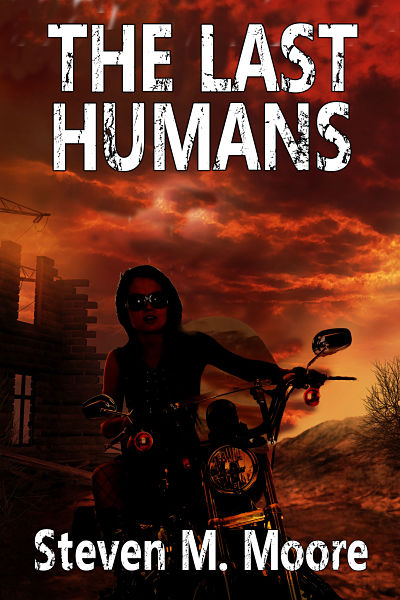
The Last Humans. A dysfunctional Washington DC could cause man-made disasters of many sorts. In this post-apocalyptic thriller, ex-USN and LA Sheriff’s diver Penny Castro surfaces from a dive to find the apocalypse. Few survive the airborne plague. Her subsequent adventures put her in some hopeless situations as she struggles to protect her adopted family. The reader will be biting his nails all the way through. Coming from Black Opal Press this year. Look for it.

Around the world and to the stars! In libris libertas!

Pre-Release Excerpt from Son of Thunder…

January 10th, 2019

[Note from Steve: Thanks to Penmore Press, this year you will be treated to another adventure involving those imperfect clones of Agatha Christie’s characters Miss Marple and Hercule Poirot, that is, Esther Brookstone, now ex-Scotland Yard Inspector from the Art and Antiques Division, and Bastiann van Coevorden, an Interpol agent and Esther’s paramour and wannabe protector. They’re 21st century versions of the famous sleuths, of course. In this new novel, they will meet the artist Sandro Botticelli and the disciple St. John the Divine…and there’s no time travel. Without further ado, here’s an excerpt from the mystery/thriller Son of Thunder.]

Esther was a seasoned traveler, but she missed her plane.

That afternoon, when she called the lift to take her last little bit of garbage downstairs to the bin in her building’s garage, something she always did before a trip, she took only a few steps when a man popped out from behind a support column, grabbed her, and put a handkerchief over her mouth.

What she inhaled took the force from her kick to his groin….

“You’re no more a countess than I am,” said the blurred face belonging to a complete stranger when she awoke.  “You’re a meddling old hag.”

She said nothing.  She was waiting for her head to clear before she tried to assess her situation.  Her captor patted her on the cheek.

“Your husband wasn’t even a count under modern Italian law.  Alberto Sartini was only a greedy Swiss banker.”

Italian, she thought.  And I’ll castrate you for your insults!

“But to the business at hand.  I have someone on Moretti’s house staff.  That person informed me two objets d’art were found in an old armoire that used to belong to a priest, a Botticelli painting and a parchment, to be precise.”  He laughed.  “At first I was only interested in the armoire as a family heirloom.  When Moretti’s slut won that bid, I lost interest until I heard about what was in the armoire.” He paced the floor, his hands behind his back.  What an intense fellow!  “I’m not interested in the painting, whether it’s an authentic Botticelli or not.  Stolen art is difficult to handle unless you sell it cents on the euro to someone in the black market.  But the document intrigues me.  Does it prove my ancestor made a long journey with Sandro Botticelli?”

Esther was confused.  First, this man was an obvious amateur.  Second, had the priest who owned the armoire, painting, and parchment dallied in the pastime of many Renaissance priests who sired bastard children?  Third, why should anyone care about their ancestor taking a trip with the famous painter?

The conversation was becoming strange.  No, there isn’t any conversation!  She hadn’t said anything yet!

“Sorry.  I didn’t catch your name.”

“You may call me Bruno.  My full name is Bruno Toscano.”

Her head now clear, Esther studied his features. He had a buzz haircut that gave the impression of baldness compared to the bushy eyebrows that hovered like giant caterpillars above bottle-glass lenses with wire frames. Otherwise, he was a plain man who wore inexpensive and ill-fitting clothes.  He was shorter than she was.  Maybe I aimed my kick too high?

He continued his pacing and muttering to himself as if his ego and id were embroiled in a serious discussion, at times seeming to put himself into a trance.  She remembered how the glasses had magnified the malevolence in the cold, blue eyes.

“Very well, Bruno, untie me and I’ll try to answer your questions.”

He smiled.  Some dental work needed.  Everything about him was wrinkled—his shirt, his suit, and his tie that was too long.  She couldn’t tilt her head down far enough to see his shoes.  She supposed they were old and worn too.

“You’d like that, wouldn’t you?  You’re an old hag, but you’re not a fragile old hag.  I know about some of your exploits.  I don’t trust you, you see.  Not at all.  Not at all.”

“The parchment describes a trip to Ephesus and vicinity.  It’s almost like a travel log because it’s a word-map to St. John’s burial place.”

“St. John the Divine?  Who wrote that document?  Does the writer mention a Bishop Leonardo?”

“No mention of anyone, of him or Sandro Botticelli.  Is this bishop some relative of yours?”

“Not a direct relative.  We’re descendants of Bishop Leonardo’s brother.”  The man thought a moment.  Esther took the opportunity to test her constraints.  Loose, but not loose enough.  He stopped pacing and leaned over her.  “I’ve now decided a saint’s bones would be more valuable than an armoire.  If I can’t prove my ancestor traveled with Botticelli to search for the bones, finding them and selling them would be a suitable alternative to the armoire and painting.”

Read the rest of this entry »
Steve’s shorts: A Long Way from Home…

January 9th, 2019

A Long Way from Home

Copyright 2018, Steven M. Moore

Part One

Kris knew something was wrong when the starship Alcibiades reentered ordinary space. Kerouac took longer than normal to tell her where they were. Usually the AI’s announcement was almost instantaneous and a formality because the starship was where it was supposed to be. The AI calculated and monitored the quantum histories through the multiverses followed by the stardrive discovered centuries earlier.

This time Kris held her breath during the delay. She broke out in a cold sweat. Starships still disappeared, never to be heard from again. On the very first test of the stardrive, the mixed crew of Humans and Rangers and the test ship became a topological nightmare.

But I’m still alive, she thought. She brought up the starfield on her screen. But where are we?

As if it had read her mind, Kerouac spoke. “I’m having trouble determining our exact position, Kris. Preliminary estimates indicate we’re in the Large Magellanic Cloud near the east end of the bar closest to the home galaxy.”

Kris gasped. “That can’t be!”

“Calculations continue as I try to make my estimates more precise.”

Kris now cursed. She’d have to wake the captain.

***

“I’m trying hard to convince myself my XO and AI haven’t become simultaneously insane,” said Halbek, the Tali who captained the starship Alcibiades. “I don’t recognize anything on that screen. Are you certain, Kerouac?”

“It’s a matter of perspective,” said the AI. “We never see the Cloud from within.” He swung the view past the end of the central bar and beyond, focusing on the large galaxy that filled most of the screen with its telescopic image. “We’re looking across more than 50 kiloparsecs or 163 thousand light-years to the Milky Way Galaxy. The bar in the Cloud is slightly distorted so that both ends are closer to home than the middle, so we’re not that bad off.”

“Not that bad off?” the captain said. “Is that black humor on your part, you chaotic bunch of quantum circuitry?”

“Insults aren’t advisable in this situation,” said the AI. “And there’s nothing chaotic about my circuity. I calculate that your next question will be something like ‘How can this happen?’ with a 63% probability. Here’s my answer to that question: paths in string space between multiverses are chaotic. No matter how precise my calculations are, there’s a small chance for a disastrous targeting error. That’s chaos theory at work on the quantum level, everyone, and it applies to old-fashioned Newtonian mechanics as well. In the case of directing a stardrive to go where we want it to go, which, I will remind you, biological beings are incapable of doing, the complications can lead to much more chaos. To put a fine point on it, I’m surprised it hasn’t occurred before, losing starships within the Local Group.”

“It probably has,” said Kris. “Ships infrequently go missing.  Maybe all the way to Andromeda?”

“Correction then: there’s no record of it happening before because there’s no one who has returned to create the record.”

“Will that be our fate?”

“Possibly. The Cloud isn’t a bad place to be. There are probably lots of star systems around with E-type planets, just like the home galaxy. When the Cloud was discovered by the Persian astronomer Abd al-Rahman al-Sufi Shirazi, he rather admired it, according to my historical records. Amerigo Vespucci rather enjoyed viewing it too. He was a member of a family who were patrons of Renaissance painters, and I believe two continents on Earth were named after him for his map-making abilities. As for the contents of the Cloud, the stars—”

“Cut the history lesson,” said Halbek. “Can we return home?”

“Unknown,” said the AI. “Reaching the Cloud’s edge might not be a problem. Crossing that 50 kiloparsec gap to our home galaxy is probably impossible, but if anyone can find a way to do it, I can. Parallel calculations are going on right now.”

“We might want to do what Kerouac has suggested,” Kris told Halbek. “At least, find a star system with an E-type planet where we can replenish our supplies. Whatever solution Kerouac comes up with will certainly take several jumps back into normal space to adjust our aim for the Milky Way’s edge.”

“Which we could hardly make out right now,” the captain said with a growl, “if it weren’t for the telescopes.”

***

Comments are welcome.

Want to learn more about ITUIP and the Humans first star colonies? The epic Chaos Chronicles Trilogy begins in the dystopia caused by the Chaos and ends far into the future, which is the past for this story. That’s three novels in one ebook available on Amazon and Smashwords and all the latter’s affiliated retailers (iBooks, B&N, Kobo, etc). Hours of sci-fi entertainment!

Around the world and to the stars! In libris libertas!

Autobiographies and memoirs…

January 8th, 2019

While I’ve been candid in interviews on other websites and in my writings on this blog, I’ll never write an autobiography or memoir. There are logical reasons for this decision.

Let me clear up some definitions before I start listing the reasons. Amazon conflates autobiography and memoir. Maybe they don’t know the difference—or their bots don’t. A memoir is a literary work about one aspect of a person’s life. An autobiography is about a person’s entire life, at least up to the time of writing. Word length is irrelevant; time is of the essence.

Now for the reasons. First, as an introvert and author, and in spite of my “internet presence,” I’m a private person. Many details of my life aren’t even known by my own family and friends!

Second, I’m a fiction writer. My life, or parts of it, won’t make a good story that could possibly entertain readers. I suppose my life is unusual in some sense because I’ve had some interesting experiences, some good, some bad, and I’ve made some unusual choices, but I think my life is boring compared to what I read and write about. I live vicariously in books and their characters, either mine or other writers’.

Third, I’m not egotistical. Just the opposite. I’d rather be forgotten. OK, maybe remembered a bit for my fiction writing and my academic papers, but I don’t want an autobiography or memoir floating around that pretends to summarize my entire life or parts of it in one book.

Celebs write memoirs (or their ghostwriters do); because they’re still celebs and not on Death’s door step, they’re not ready for the autobiography, I guess.  I’m not a celeb. People who have suffered through trying experiences and prevailed also write memoirs. Mine aren’t inconsequential, but others have suffered through similar ones—and I can offer no special advice for future sufferers. People who have done interesting things also write autobiographies and memoirs. Modesty aside, I’ve done interesting things, like living in South America for quite a while, but again there’s nothing earthshaking about that.

I might write an autobiography, though, and just make it accessible to my wife. That’s a personal thing and akin to leaving photos, diaries, and journals so family historians can peruse them if they feel so inclined. I’d try to leave more info than those ancestry DNA sites. But I won’t publish a memoir or autobiography. No way!

All that said, biographies are generally more interesting than autobiographies, if only because they’re usually written with historical perspective after the person’s death. I might write one of those about someone else someday…just for the hell of it. I’ve read a lot of them….and writing them has to be a challenge!

***

Comments are always welcome.

Goin’ the Extra Mile. I put Mary Jo through many challenging situations in #3 in the “Mary Jo Melendez Mysteries.” The U.S. made the MECHs (“Mechanically Enhanced Cybernetic Humans”), Russia stole them, and now China wants them bad enough to kidnap Mary Jo and her family. This new ebook is available on Amazon and Smashwords and all the latter’s affiliated retailers (iBooks, B&N, Kobo, etc).

Around the world and to the stars! In libris libertas!

Mini-Reviews of Books #39…

January 4th, 2019

Denali Deception. Ernest Dempsey, author (Enclave Publishing, 2017). Why did I keep seeing Nicholas Cage playing main character Sean Wyatt while I read this book? Ah, yes, because of the parallels with that crazy movie National Treasure, one of most disorganized cinematic experiences I’ve ever had! Maybe this tale is more believable than that movie at the beginning if you accept an archaeological organization run by James Bond types, but the ending was absolutely unbelievable and inexplicable, archaeologically speaking or otherwise.

The notes at the end show the author has done his history homework, yet he ruins the historical basis of his story because he doesn’t follow Clancy’s maxim: fiction has to seem real, whether real history is intertwined or not. That maxim is important, even in fantasy writing (within the rules of the fantasy world the author creates).

Nonsensical fun at least? Maybe for one book’s worth. If you like it, there’s a whole series—14 more books! If you compare the series to Sue Grafton’s, there’s nothing wrong with that, but I don’t think I could take Sean Wyatt for another thirteen stories. With National Treasure, we only had to endure Nicholas Cage’s character twice. With Sean, I’ll stick with just one book, thank you, even though it was a lot of fun if only for the history. Lincoln and Seward and an unbelievable conspiracy? A U.S. president who leads his own SWAT? And I didn’t even have any Jameson, let alone popcorn, like I did for the movie!

Fringe Runner. Rachel Aukes, author (Waypoint Books, 2016). Authors derive their plots from many sources—history, imagination, casual observation, and so forth. For this space opera, the author turned to the American Revolution, at least for how it began, because “the revolution” here continues after this first book in a series.

We have the Collective playing the role of the British, and we have the colonists who hate the Collective because they’ve had enough of their exploitation. Slavery plays a role too, softened by the use of “indentured” in place of the more common word. I haven’t quite figured out who plays Paul Revere, but Captain Reyne rides around space a lot, shouting the “Myrads are coming!” (they’re part of the Collective).

This is sci-fi so bad (in many ways) that it’s rollicking fun—much better than Star Wars. Caveat emptor, though: Like that movie franchise, hard sci-fi it’s not. And you might prefer The Hitchhiker’s Guide to the Galaxy.

***

Comments are always welcome.

Rembrandt’s Angel. Miss Marple and Hercule Poirot in their 21st century reincarnations Esther Brookstone and Bastiann van Coevorden are the main characters in this mystery/thriller novel. Esther works for Scotland Yard in the Art and Antiques Division; Bastiann, her paramour, is an Interpol agent. Esther becomes obsessed with recovering “An Angel with Titus’ Features,” a Rembrandt painting stolen by the Nazis in World War Two. Bastiann tries mightily to keep her on an even keel and keep her safe. Together they move around Europe and South America as the story goes far beyond a search for the painting. Available in ebook format on Amazon and Smashwords and all the latter’s retail affiliates (iBooks, B&N, Kobo, etc) and in print format on Amazon or at your favorite bookstore (if they don’t have it, ask for it).

Around the world and to the stars! In libris libertas!