The NY Times Book Review, Part Two…

February 7th, 2019

[Note from Steve: You can find Part One in the “Writing” archive of this blog.]

In a much earlier post, I was a bit harsh about suggesting you use the NY Times Book Review for the bottom of your bird cages. I actually scan it every Saturday or Sunday (it’s part of the Sunday edition, but we get that on Saturday…and we have no birds now). I scan it on the slight chance that I’ll see some book I’ve read. I’ll have to confess that I’ve never purchased a book that was listed therein, either before the purchase or after. Yes, I’ve received some as gifts, but frankly only a small number pique my interest. Why is that?

First, there are books by celebs—memoirs, confessions, whatever you want to call them. The Big Five publishing conglomerates love’em because enough readers buy them as an escape from their mundane and/or exploited lives, and celebs enrich themselves (but not their ghostwriters) by “writing” them. Boring.

Second, there are books that wannabe political candidates write. There will be many of those as politicians preen and posture looking towards 2020 (I think President Obama had two, Kamala Harris already has one, and he who shall not be named had that book about how to fail at making deals). Independent of party affiliation, they try to establish the prospective candidate’s creds and their good girl’s or boy’s sterling personalities. If they’re reading this (highly unlikely, if only because many aren’t avid readers), let me just announce here that I don’t vote on the basis of promises and/or lies; I vote for the candidates with reasoned and logical policies where they have analyzed what the consequences will be after they’ve enacted them. 99% of politicians fail me in this respect. Their pre-candidacy books usually fail too.

Third, most fiction from the Big Five doesn’t interest me or outright turns me off, especially those wonderful books in that throw-away category of literary fiction. I select fiction to read by considering the book’s promise for entertaining me and/or enlightening me, irrespective of author, not some formulaic genre spiel that has been copied so many times I have to wonder how they were able to avoid being accused of plagiarism. In other words, I want a fresh, good story that keeps me reading. (How many ebooks have I purchased and stopped reading after a few chapters? Books from the Big Five with endorsements from other Big Five authors? Yes, but also from indie and small press authors whose books I often turn to because they are fresh, good stories. And the Big Five books are too expensive.)

Yes, celeb’s books, politician’s books, and formulaic fiction books fill the pages of the NY Times Book Review. I’ve stopped asking why. You’d think they would too if they were really interested in reading and literacy.

***

Comments are always welcome!

Aristocrats and Assassins. #4 in the “Detectives Chen and Castilblanco Series” is my favorite C&C book. In one very positive review with many kudos, the reviewer also commented that it could also serve as a model in a master class for authors who want to create a series: like all my books, it’s a completely independent story involving the detectives. Casilblanco is finally on vacation in Europe with his wife, and the action stays there. The assassins are terrorists, and the aristocrats are some European royals. Available at Amazon and Smashwords and all the latter’s affiliated retailers (iBooks, B&N, Kobo, etc).

Around the world and to the stars! In libris libertas!

Review of June Trop’s The Deadliest Fever…

February 6th, 2019

The Deadliest Fever. June Trop, author (Black Opal Books, 2018). Miriam bat Isaac is an alchemist and amateur sleuth. This novel, the last one of a series recently published, focuses more on the second role. This is a mystery with historical fiction overtones that includes the clash of two cultures, one Jewish and the other Roman, and they somewhat coexist in Alexandria during the time of Nero.

Someone desecrates the synagogue leaving it a mess with blood and oil on the floor. But then one of the relics gets damaged several times. Miriam the sleuth wonders what’s afoot.

I have to apologize here. While I sat in on a course that compared the great religions of the world, in this short review I can’t pretend to do justice to all the new details I learned about Jewish religious traditions. It suffices to say that this background material makes the novel come alive, though, as do the historical settings. The details given, both religious and otherwise, indicate that the author did a lot of research for this book, as the endnotes show. There’s also a glossary there, but the meaning of terms I didn’t know were easily guessed from context. (Some readers might want to refer to that glossary before starting the novel, or during their reading.)

It’s a bit odd that there’s no homicide case to solve here in what is an unusual story. The violence of the era is found in the Roman Empire for the most part. A past pogrom against Alexandrian Jews is mentioned, but the Romans were equal opportunity tyrants in those days, as the Christians of the era also knew.

The plot picks up speed as you turn the pages, almost becoming a thriller by book’s end. The characters are finely drawn, with Miriam, the main character, able to shed her relatively privileged lifestyle and go undercover. Suspense and intrigue are aspects of human existence through the centuries, so why not in Nero’s time?

There is romance here too, with Miriam’s beau Judah a man who has pulled himself up by his bootstraps (or sandal ties), no mean feat in this era of class distinctions and even slavery. A practical man, Judah nicely complements Miriam. They make a good team, so maybe they’ll be solving more cases in the future.

If readers want to experience a new, original take on crime stories (at least new for me), don’t miss this book. Recommended.

[Note: If you want to learn more about this author, see the “Interviews” category of this blog for my interview of June Trop. This book is available in ebook and print format.]

***

Comments are always welcome.

Aristocrats and Assassins. #4 in the “Detectives Chen and Castilblanco Series” is my favorite C&C book. In one very positive review with many kudos, the reviewer also commented that it could also serve as a model in a master class for authors who want to create a series: like all my books, it’s a completely independent story involving the detectives. Casilblanco is finally on vacation in Europe with his wife, and the action stays there. The assassins are terrorists, and the aristocrats are some European royals. Available at Amazon and Smashwords and all the latter’s affiliated retailers (iBooks, B&N, Kobo, etc).

Around the world and to the stars! In libris libertas!

Hard-boiled…

February 5th, 2019

Two recent events brought back fond memories. I downloaded Theodore P. Druch’s Pure Gold, a collection of three novellas inspired by hard-boiled crime fiction, and ABC News decided to revisit the Robert Blake case. Although I have written hard-boiled crime stories myself, the fond memories were about a childhood where I “graduated” from reading one Hardy Boys story (The Secret of Wildcat Swamp) to books by authors who comprised the hard-boiled movement.

Pure Gold and Blake AKA Beretta are unrelated, of course. The connection was only made by my weird mind. (Many authors are always a wee bit weird, so I don’t feel guilty about that). I haven’t read Druch’s book yet (started it), but any homage to hard-boiled will probably be entertaining when I read it. My thoughts on Blake’s case are more complicated.

ABC’s biopic (exposé? scandal piece?) is yet another show that resurrects another shocking case as a technique to increase Nielsen ratings. I have no use for this practice because it only appeals to the crowds that love scandal. Blake’s character, though, added to my love for tough guy who fights crime. My Detective Castilblanco is a mix of such characters that my weird mind has created; you can see a lot of those hard-boiled cops and PIs in him.

Blake’s history (I’m sure ABC’s presentation will be slanted)—accused of murdering his wife, acquitted in a jury trial, and then sued for wrongful death by a vindictive family out to ruin his life, which they did—is reminiscent of the O.J. case. Whether you believe either one of these famous stars is guilty or not does NOT matter. They were acquitted of two heinous crimes, and families who reject those criminal court judgments should NOT be allowed to sue for wrongful death after the fact—in other words, they shouldn’t have a consolation prize. Criminal trials have much stricter tests for guilt than civil trials, so their decisions should take precedence. (Adopting that policy in our litigious judicial system would free up the courts quite a bit!) This is a serious flaw in our justice system that everyone forgets about until some TV producer gets the idea of resurrecting the scandal. (ABC isn’t as guilty of this as streaming video services like Amazon, NetFlix, and so forth).

Read the rest of this entry »

Review of Sandra Gardner’s Grave Expectations…

February 1st, 2019

Grave Expectations. Sandra Gardner, author. (Black Opal Books, 2019) This novel continues in the Carl Hiaasen tradition of the first book in the series, Dead Shrinks Don’t Talk, which I also reviewed. In other words, it’s a serious mystery that’s hilarious at the same time. You will recall that the Dr. Watson for Marabella Vinegar’s Holmes is her ghost-mom. (Or is it the reverse? Ghost-mom has ambitions to be Miss Marple or Jessica Fletcher. Dame Angela, who played Ms. Fletcher, is still alive, though.)

The case afoot for our Sherlock incarnation this time is finding out who murdered Marabella’s old neighbor, a crime designed to look like a heart attack. Enter all the old man’s relatives who compete for our disgust and the inheritance involving millions. (Yes, a ubiquitous plot in the mystery literature, but it’s all about how authors put their own twists on that story.) As is often the case in Dame Agatha’s oeuvre (lots of Dames in this review), that dysfunctional, greedy family provides many suspects. Marabella and ghost-mom must figure out which of them did the dirty deed.

The main plot is often hilarious. There are some hilarious side stories too—Marabella’s boyfriend, with his three St. Bernard dogs meeting Zilla the cat, as well as his meeting ghost-mom; girlfriend Toniann’s wedding (Marabella is maid of honor); and coworker Carmen’s legal battle with Li Li, the boyfriend’s assistant. All good fun, and nicely fleshing out the main characters and their foibles.

Detective Rivera also returns. NYPD cops are often gruff and cranky because they’re overworked, but I’d like to see more of him. (Maybe in the next book?) I bet there’s more to his character that readers would like to discover.

My only complaint echoes one in my review of the first book: The ending seemed rushed again. Readers will be having so much fun with the story that they won’t want it to end. Just my perception maybe, because I felt that way.

All in all, this book is a lot of fun amidst its honest portrayal of quirky NYC culture. I sailed through this book with a smile on my face, and that wasn’t there only because of the Jameson. Recommended.

***

Comments are always welcome!

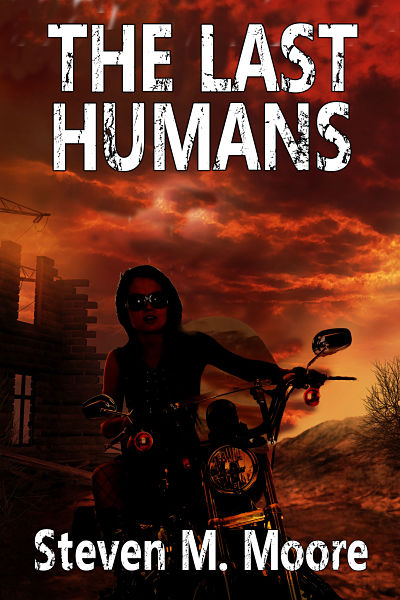
The Last Humans. Penny Castro uses her USN search-and-rescue diving skills to become a forensics diver for the LA County Sheriff’s Department. Surfacing from a dive, she finds that she’s one of the few survivors of a biological attack left in the world. Her adventures from that point on illustrate her strong will to survive and protect her adopted family. Coming soon from Black Opal Books!

Around the world and to the stars! In libris libertas.

Sex, violence, and all that…

January 31st, 2019

One advantage for authors becoming minimalist writers is that they can leave a lot to readers’ imaginations. Some readers might not realize it, but their own minds are wonderful instruments for filling in the gaps and creating their own images about what is going on from just a few suggestions offered by the writer. The Goldilocks Principle applies. Not too many suggestions, not too few, but just enough. This technique is especially beneficial when writing scenes containing sex, violence, and other action scenes. Readers’ imaginations can run wild with the cues provided by the writer and make their reading more of a breathless and more personal roller coaster ride.

Unless writers are writing erotica or porn, they can avoid the plumbing issues in sex scenes in this manner. While readers aren’t medical doctors or forensic specialists with a deep understanding of human anatomy, most understand the anatomical issues. Such scenes are still consequential even when the prose is minimalist, but the events leading up to them are often more important. Even in bodice rippers, the seduction is more interesting than the consummation!

While sex scenes might contain violence, especially in mysteries and thrillers but also sci-fi, other scenes can contain it too. How much blood and gore should a writer include? I suppose there’s a niche for those stories that describe a lot of violence—horror and sexual perversion stories come to mind—but I tend to avoid those scenes as a speed reader and get on to the meatier stuff (pardon the bad pun). (Reading preferences are subjective, so some readers might relish that material.) Again, being a minimalist writer, I focus on events leading up to that violence and subsequent events after it occurs.

But such scenes appear in many of my plots. My characters are human (or have some human characteristics, even if they’re strange ETs), so they have to act like humans. For me, the plot involving those characters drives me to include such scenes—in other words, they just lie somewhere on the line that defines the spectrum of all human behavior, even if they’re at the extremes of that distribution.

Read the rest of this entry »

Review of Marc Liebman’s Cherubs 2…

January 30th, 2019

Cherubs 2. Marc Liebman, author (Penmore Press, 2017). Numerous historical fiction stories about the Vietnam War portray how this conflict ripped at the fabric of U.S. society ad created mental and physical wounds for those who fought in an unpopular war. This is such a story, and it is a good one.

I confess that I approached it with some trepidation. Most readers won’t be able to approach this novel lightly either. Yes, it’s about SAR (search and rescue for downed aviators, not synthetic aperture radar). Josh Haman, the main character, is a helicopter pilot who works with the U.S. Navy but is slapped around a bit in a rigid organization dominated by old warriors and Naval academy graduates.

But this novel, like all good thrillers, has twists and turns often associated with machinations from China and Russia, two U.S. adversaries who were “backing” the North Vietnamese government (the word is in quotes because the North Vietnamese were being played like puppets just like the U.S. and the French before them did with South Vietnam in the decades-long civil war).

The story is about mettle and heroism pitted against rigidity and political manipulation, from within the armed forces to political machinations on a global scale. It’s historical fiction writ large that goes beyond personal stories, making a thriller that’s an exciting read.

That said, there are some stretches where the narrative dominates and the omniscient POV is overused. For example, I skipped over the description of a long hazing ritual that could have been much shorter.  The plot is a bit jumpy at times too as the reader travels from the local to the global and back, often within the same chapter. Some characters aren’t well-developed either, although the reason is obvious: there are many of them.

Josh Haman’s adventures as a SAR helicopter pilot cover his time as a newbie to his two secret surveillance missions ferrying SEALs into China. If that sounds suicidal, readers can blame the Air Force general who wouldn’t risk his own people to perform the missions and called on the USN to do it for them. Powerful moments are portrayed here. Josh’s confrontation and trial with the coward Higgins is an indictment of a rigidity in the military that non-academy personnel often have to face. Higgins’s father provides the clearest indictment of his son, though: “I don’t like what we’re doing in Vietnam. It is the wrong war with the wrong mission, but anyone who puts up his right hand and takes the oath to serve make a commitment to his country to do his duty.” Amen. (I lost all respect for my fellow citizens who didn’t realize that sacrifice of our service people, treating returning vets terribly during and after that long war. Hopefully they’ve learned their lesson and treat Afghanistan and Iraq veterans better. Politicians are the problem, not soldiers.)

Read the rest of this entry »

When fiction should NOT seem real…

January 29th, 2019

[Note from Steve: The reader may consider this post a sequel to a previous one, “Real Events in Fiction.”]

In your area the percentage might be different, but in news about my tristate area (NJ, NY, Conn), the media generally focuses on the negative and ignores the positive—maybe 90% of the news stories are negative, especially those involving the Big Apple. That gives me lots of ideas for mysteries and thrillers, but it’s an unwarranted bias created by the media. Since 9/11, NYC has been one of the safest cities in the world.

Good writers follow Clancy’s maxim that fiction must seem real, but should they follow that bleak reality of local, national, and international news stories to make depressing plots? In addition to cozies and romantic comedies, even more gripping mysteries and thrillers seem not to satisfy Clancy’s maxim when measured against the perceived reality reported on by the news media. In other words, that comparison would imply they’re unreal.

Sure, novels contain bad events. Mysteries have some bodies or evil conspiracies, and crime fighters—cops, FBI agents, and even ordinary citizens—sleuth around to find out who the bad guys are. Thrillers let readers know who the perps are up-front and follow what the protagonists do to thwart their nefarious activities—again, the latter might be ordinary citizens often struggling against overwhelming odds to rise up and stop what’s going on with extraordinary deeds. In any case, both mysteries and thrillers often end in an upbeat fashion, although some heroines and heroes might make the ultimate sacrifice along the way. According to the news media, that usually doesn’t happen in reality (although, to their credit, they’ll report on the sacrifices first responders often make, if they don’t take them to task).

Read the rest of this entry »

Movie Reviews #69…

January 25th, 2019

On the Basis of Sex. Mimi Leder, dir. Felicity Jones does a good job portraying Ruth Bader Ginsburg, while Armie Hammer and Cailee Spaeny do well as her husband and daughter, respectively. The movie is a wee bit slow in parts, but it was generally interesting, if only for its historical importance. It is the story of how the first domino fell on the way to the now stalled Equal Rights Amendment (which will never be approved under the Trump administration, of course—one only needs to remember the Kavanaugh hearings). The trial scene at the finale was as gripping as any legal thriller. RBG is getting a lot of deserved publicity these days for her long service as a progressive judge standing up for people’s rights, including women’s. Maybe this will help get the ERA approved? Recommended.

A Dog’s Way Home. Charles Martin Smith, dir. Many might consider this just family-oriented entertainment for dog lovers, but I found it refreshing and meaningful. And there are lots of animals—cats, in particular. Of course, Bella, the dog that loses her mother and is raised by Mama Cat, steals the show. Moviegoers will love Big Kitten too (how did they film those scenes with her?). It’s a road trip where Bella makes a lot of friends and encounters enough enemies as she makes her long journey home. Ashley Judd doesn’t do so well in her secondary role as Teri, but Jonah Hauer-King and Alexandra Shipp as Lucas and Olivia respectively were great. I’m sure we’ll be seeing a lot more of the last two. Recommended, if only for the great Rocky Mountains scenery.

***

Comments are always welcome.

Goin’ the Extra Mile. If any novel in the “Mary Jo Melendez Mysteries” trilogy should become a movie, this would be it. I put poor Mary Jo into some bad situations here. The U.S. made the MECHs (“Mechanically Enhanced Cybernetic Humans”), Russia stole them, and now China wants them and will kidnap Mary Jo and her family to get them. Taking place in the Silicon Valley, France, and China, this novel isn’t for readers with cardiac problems! Available in ebook format on Amazon and Smashwords and all the latter’s affiliated retailers (iBooks, B&N, Kobo, etc.)

Around the world and to the stars! In libris libertas!

Real events in fiction…

January 24th, 2019

When I read Frederick Forsyth’s The Day of the Jackal, I was impressed at the get-go because the author starts with real events—the war with Algeria waged by France under DeGaulle—and continues the plot from there to make a tense, taut thriller. Other thrillers by the same author often followed the same scheme.

Mixing real events into our fiction can help make the fiction seem more real. If the author can get the reader thinking, “Could this really happen?” or even “This could really happen,” the reader’s interest invariably increases. But there are dangers.

Subsequent events in the real world might overtake those included events, for example, and make the fiction based on them seem less real. And the fiction writer cannot change the outcome of those real events in the real world.

A case in point: The painting in Rembrandt’s Angel, “An Angel with Titus’ Features,” is a real Rembrandt. It has never been recovered. My fictional character Esther Brookstone becomes obsessed with recovering it. [Spoiler alert.] If she had recovered it, as some readers wanted, that would contradict the fact that the painting is still missing. (This is one reason why the Botticelli painting in Son of Thunder, the sequel to Rembrandt’s Angel, is completely fictional, although Sandro could have painted such a painting.)

Another real event in Rembrandt’s Angel that was dangerous to include is BREXIT. It’s happening as you read this article, of course (and PM might receive a no confidence vote as I write this), and Esther comments about it as if it were in the past, but I’ll be in hot water if somehow the Brits change their mind and stay in the E.U.! (That’s possible after Parliament’s torpedoing May’s withdrawal plan.)

Forsyth played it safe. His plot was about an assassin whose identity the French and Brits never discover. In other words, we, the readers, can neither confirm nor deny his real existence, or his death, for that matter. All I can say is that so far my two examples that were more dangerous for me to include in my novel haven’t yet caused problems—the painting hasn’t been recovered and BREXIT is still on track, for good or bad (Esther seems indifferent about it).

Read the rest of this entry »

Steve’s shorts: A Long Way from Home, Part Three…

January 23rd, 2019

A Long Way from Home

Copyright 2018, Steven M. Moore

Part Three

Kris was on the ship’s bridge monitoring the next jump through the metaverses when Kerouac the AI wanted to have a discussion.

“This mind-wipe policy has been in effect for over a thousand standard years,” it began. “Tell me, Kris, what are its moral justifications?”

Kris smiled. An AI worrying about moral issues in applying punishment to biological beings? That was common in androids; she’d never experienced it with a ship’s AI. “It’s a balancing act. There are no moral justifications for murder. Even an autocratic ruler of a planet that’s in ITUIP can get his planet kicked out if he orders the killing of a political adversary. Generally speaking, Humans did away with capital punishment long ago and opted for a life sentence in prison, or multiple life sentences because of parole procedures, or banishment. A mind-wipe is applied in lieu of execution, but it also is a sentence that’s rarely applied because it destroys most of the personality. It’s only used when it’s considered that its application plus retraining for a psychotic personality can make a productive and contributing member of society.”

“Does that happen?”

“Yes. You might want to consider it a complete software upgrade. The old AIs went through that sometimes.”

“But no longer. That sounds scary.” The moment of silence that followed puzzled Kris. “I think that would destroy my personality too.”

Personality? She’d have to think about that! “In both cases, it’s painless. In biological beings, the retraining is painless too.”

“How can losing your personality be painless?”

“I’m assured it is. And a mind-wipe is only applied in extreme cases, like I said.”

There was a moment of silence. Then: “I’ve analyzed some alternatives for punishing Tarbok,” Kerouac said. “Do you want to hear them?” Kris nodded, eyes still on readouts. “It would be a break with tradition, but let’s assume we will return to ITUIP one day. Can we not put Tarbok in the brig and let his punishment be decided in a planetary court of law? Even on his home planet?”

“The captain can make that decision, I suppose.”

“Would you please inform him of my analysis?”

“Why don’t you tell him?”

“He’s more likely to listen to his XO.”

***

Halbek liked the idea. But problems continued to occur. Nothing as serious as murder, though.

“Being confined in Alcibiades for such a long period is making everyone crazy,” Kris said at the next meeting of section heads.

The captain propped his chin on his black, leathery hands, his ears twitching. Except for the ears, it was a very Human gesture from the Tali. “Any comments on our situation, Kerouac?”

“In city environments and even with a single species, crowded and confined conditions create stress. Many behavioral studies come to that conclusion. Our situation is exacerbated by the mixed crew.”

“We’re almost there,” said Kris. “We only need a temporary solution.”

Halbek raised his head and looked around the table. “I think I have it. Old-fashioned cryosleep.”

Read the rest of this entry »