Website upgrades and updates…

March 15th, 2019

[Note from Steve: It’s the Ides of March today…and I wish an early happy St. Paddy’s day to everyone. Have fun, be safe!]

Authors have many items that represent fixed and continuing costs for doing business. These eat into royalties. Costs and profits—writing is a business. (I’m not very good at it, but that’s what it is, even if authors are having a lot of fun writing.) Like a supermarket, authors’ royalty income is small per each item sold, so it’s a profitable business only if lots of books are sold. But those fixed costs are often big ticket items relative to the cost of each item sold, akin to rent, construction, and personnel costs for those supermarkets.

Some costs like editing, formatting, and/or cover art are frequent but erratic and per book, but these add up unless authors only invest their time, i.e. are 100% DIY self-publishers—not a good idea for the items specifically mentioned, by the way. Others are sporadic and larger cost items. Again, unless authors are 100% DIY, a website is in this category—a “homemade” website can be OK, but there are pros who can do a better job.

There’s the initial cost of the website. Authors should hire a freelance guru or some company’s gurus to set up their websites (mine is Monkey C Media in San Diego). That gives authors a great-looking website ab initio, but they need to update and upgrade every so often. More costs. (I’m ignoring domain payments and hosting costs for now—they’re yearly.)

But the costs don’t end with that initial website construction. There are many costs that continue over the lifetime of the website. Authors can’t ignore the website once it’s built, either for content or website upgrades and updates. I’m in the middle of the latter process right now.

First, I prepare for the pros’ upgrades and updates by making their jobs a wee bit easier. I’m responsible for the text on my website. That’s just a continuous time investment because it is 100% DIY. I use WordPress that allows me to easily update the text on the web pages and post articles in my blog—those are things visible to the website visitor. I work a lot on the web pages’ text before approaching the gurus.

Graphics, margins, and such are more complicated. I never learned HTML (I know Fortran, C/C++, MaLab-ese, and UNIX scripts from my old day-job, but there’s a limit!). That means fixing those things, especially dropping in images like cover images and photos, and scaling them (most aren’t scaled properly for the web page), so it’s something I’d rather pay for vs. learning HTML or any of its successors (many cover images are also linked to the book’s Amazon page—I can give them those links, of course).

Read the rest of this entry »

What if?…and alternate history…

March 14th, 2019

For some strange reason, alternate history is considered a subgenre of sci-fi or fantasy, most likely the former. Maybe the reason is whoever decides these things just didn’t know where to put it? It isn’t as puzzling as that catch-all genre literary fiction, but it’s close.

An alternate history story is the quintessential example of an author using a what-if to write a story. What if George Washington had been assassinated? What if Lincoln hadn’t? What if Hitler had been taken out early on in his nefarious career? What if Eisenhower had been in his illustrious career? What if Alexander the Great had conquered all the known world and his empire had continued into the modern era? What if gunpowder had never been invented? (Feel free to use any of those ideas, by the way.)

I’ve collected what-ifs all my life, but none of them led me to write an alternate history story. In fact, I don’t read  much in that genre unless it really is hard sci-fi, like Hogan’s The Proteus Operation (it’s about a plot to take out Hitler and involves time travel). When I discussed reality in fiction a few posts ago, I didn’t consider alternate history—it isn’t reality, of course; it’s fiction. It might as well be called alternate reality.

I don’t know what turns me off about this genre. I don’t like steampunk either, a genre that has a lot in common with alternate history and has been described as “what the past world look like if the future had happened sooner” (sorry, I don’t know who coined this delightful and logically twisted definition—maybe a reader can tell me in a comment). They all fit in with the idea of parallel universes, or the many worlds interpretation of quantum mechanics, where at each moment in time (actually points on the Universe’s world-line or quantum history), all possible states of the Universe exist and “ours” splits off into just one state, ad infinitum. (The idea of quantum histories might be the salvation for quantizing general relativity, an unsolved problem in theoretical physics. It also leads to the idea of metaverses. FTL travel in my sci-fi is linked to hopping between these metaversal states, a process so complicated it’s done with advanced AIs. By the way, my own oeuvre contains the “future history” timeline associated with many of my books—see the list of free PDFs on my “Free Stuff & Contests’ web page.)

It turns out that in our own special Universe’s world-line, there really was a plot to assassinate Hitler, but only after that monstrous villain had already done immense damage. There was also a plot to assassinate Washington. Neither one succeeded in our Universe’s progression along its timeline, but what if they had? In those universes where they did succeed, what happened afterward? That’s a story for alternate history (or “future history”?).

Read the rest of this entry »

Interviewing author Bruce Woods…

March 13th, 2019

Steve: Today I’m pleased to offer readers of this blog an interview with Bruce Woods, author of the new historical fantasy novel Royal Blood and other books. Royal Blood has just been published by Penmore Press. So let’s welcome him. Bruce, why don’t you tell us something about yourself?

Bruce: Thanks. My novels Royal Blood and Dragon Blood are scheduled to be published by Penmore Press. (Royal Blood was previously offered in paperback by Knox Robinson, but that press has gone out of business.) I’ve finished two trilogies, the first of which includes a final book not yet scheduled and a second featuring many of the characters in the first but with a different protagonist,  The second is not yet scheduled for publication. I live in Alaska with my wife and two cats. Our kids both recently graduated and now live in the lower 48.                                                                                         

Bruce on reading and writing:

Steve: Why, how, and when did you start writing?

Bruce: Like most authors, I suppose, I’ve always been writing but took up fiction full time after a career of magazine editing and, most recently, service as writer/editor/media spokesperson for USFWS (U.S. Fish and Wildlife Service) Alaska.

Steve: Did you publish the first book you wrote?

Bruce: Nope. The first one remains unpublished, but I haven’t given up hope!

Steve: What is your biggest problem with the writing process? How do you tackle it?

Bruce: Deep in my heart, I suspect that I’m more of a stylist than a storyteller. This has led me to the genre of historical fantasy, where the story exists but my fictional characters’ impact upon it becomes the focus of my tale. I’m currently working on a straight literary fiction manuscript, which is slogging along as they all have..

Steve: Do you feel writing is something you need to do or want to do?

Bruce: Writing is what I do. I can’t imagine not doing it.

Steve: Have your personal experiences or situations influenced you creatively? If so, how? Bruce: I’ve spent most of my life in magazine editing. I learned many things along the way. Perhaps the most important is that the writing itself should never take precedence over the information presented.

Steve: How much of your creative ability do you think is innate and how much is learned?

Bruce: I was perhaps born with a spark, but everything I’ve done and everything I’ll do works toward fanning that into a flame.

Steve: What is the last book you read? What are you reading now?

Bruce: I’ve always got at least two books going, either reading or rereading. I’m currently rereading William Gibson’s Spook Country and Mollie Panter-Downs’ London War Notes.

Steve: Who are your favorite authors?  Whose writing inspires you the most and why?

Bruce: I’m a reading omnivore. But everyone who writes fantasy owes a debt to Anne Rice and Steve King. I also owe a lot to George MacDonald Fraser’s Flashman books. I hope there’s humor in my work too, though I suspect it’s a bit dryer than Fraser’s. Gibson (mentioned above), Hemingway, and Terry Pratchett are always worth another read for inspiration.

Steve: What’s the last book to make you laugh?  Cry?

Bruce: I suspect I’ve chuckled and teared up while rereading Spook Country, if only at the mastery over the language that Gibson shows.

Steve: Should writers read in their genre?  Should they be avid readers?

Read the rest of this entry »

Music in the prose…

March 12th, 2019

Some prose is so beautiful that it almost seems like music. Garcia Marquez’s Nobel winning novel did that for me—maybe it helped I read Cien Años de Soledad in Spanish, a musical language to be sure—this book will soon become a video series instead of a single movie, which is more appropriate for the century it covers!.

In this article I’m writing about references to music in literature, though, or writers being inspired by music. Musicians take stories and turn them into musical theater and operas. Writers don’t often return the favor. In my free download, Mayhem, Murder, and Music, the individual stories are inspired by music, but that’s not the same as turning a musical piece into a story (see my web page “Free Stuff & Contests” for this and other free PDFs). Maybe some clever producers of audiobooks use a musical background (and sound effects like in those old radio shows?), but the plots aren’t stolen from musical pieces.

Why not? Writers, especially beginning ones, are often given plot ideas in writing groups. (In my third article this week, I’ll even provide some.) Why not the following then? Take Beethoven’s Sixth Symphony—it’s the “Pastoral”—and steal its story, a day in the countryside. The thunderstorm movement could even be a harbinger of horror. Hmm. Maybe old Ludwig stole the idea from such a short story, sans horror? Musicologists can chime in, if any read this blog. I’ll refrain from going to Google this time. Or take Berlioz’s Symphonie Fantastique and turn it into a story about witches and their victims. In the audiobook version, these pieces can be playing in the background.

It’s a stretch, I know. Mussorgsky did a double take by going from art pieces associated with various stories to a musical piece, Pictures at an Exhibition (Ravel orchestrated the composer’s original piano work to make the piece a popular orchestral extravaganza and filler in concerts), but no writer I know of has done the opposite. Maybe the best we can do is to write stories inspired by musical pieces in a loose sense?

Will the future of publishing change this? I can imagine multimedia ebooks or audiobooks where the stories are inspired by music and/or speech and even contain odors (like the ones you might imagine for that Beethoven symphony right after the storm when the world smells fresh and spring-like). The possibilities are endless for mixing prose with audio, visual, tactile, and other senses. But will the music essentially be the story?

Probably not, but it can always suggest one. What would Star Wars’s evil Empire be without that stirring music in the background announcing Darth Vader on that battleship? And there’s the rub. As the medias mix, will the printed word play second fiddle to the movie? After all, that famous opening scroll in the original movie is the only prose the viewer sees—it’s more like a prologue to a book, but the movie is the story.

And it’s entirely possible that readership will disappear no matter how the stories are generated because the written word is no longer a medium for artistic expression. That would be sad.

***

Comments are always welcome!

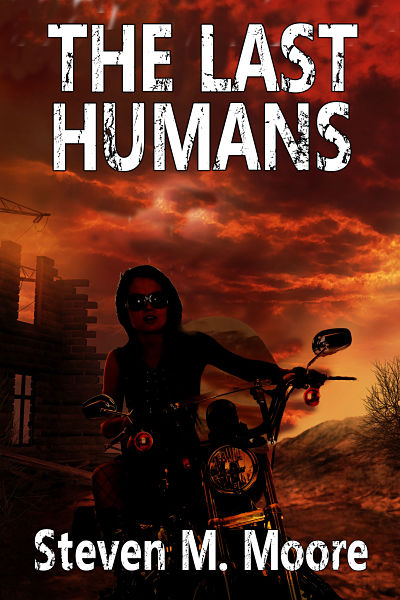
Last man alive? What about last woman alive? Penny Castro, LA County Sheriff’s Deputy and forensic diver, finds she isn’t alone, though—there are a few others who survive the contagion and want to kill her. And the remnants of a US government could be the greatest danger for her and the family she’s adopted. The post-apocalyptic thriller The Last Humans will soon be published by Black Opal Books and available at the publisher’s website, online retailers, and bookstores (if they don’t have it, ask for it!). Coming March 30! Pre-orders now accepted on Amazon and Smashwords.

Around the world and to the stars! In libris libertas!

Movie Reviews #72…

March 8th, 2019

Greta. Neil Jordan, director. Frances is a waitress who finds a purse on a NYC subway train. She goes to the owner’s apartment to return it in spite of warnings from her Smith College school chum and roommate Erica. There she meets Greta. It all goes downhill from there as Greta first stalks and then imprisons Frances. Greta is a psycho who’s done this before.

Where some reviewers see a campy horror flick, I see a modern Hitchcockian psychological thriller. The viewer will see good performances by Chloe Grace Moretz as Frances and Maika Monroe as Erica as supporting actors for Isabelle Huppert as the cold, psychotic ex-nurse Greta. Stephen Rea (of The Crying Game) has a brief cameo as a hard-boiled PI without much common sense—unmarried with no children will make a difference too.

Watch for other details too—they’re important in this one (cat and bird figurines on Greta’s nightstand, Greta’s adoption of a dog about to be euthanized, and an old-fashioned metronome on the piano are but three examples).

I don’t often read psychological thriller books, but I loved that old Hitchcock TV show. I think the director did too. This movie and that show specialize in the horror hidden in everyday life. You’ll be thinking and talking about this one for a while. I’m afraid it won’t resonate so soon after the Oscars, but I definitely recommend it.

***

Comments are always welcome.

The Last Humans. Ex-USN SAR diver Penny Castro is now a forensics diver for the LA County Sheriff’s Department. After a dive to recover a corpse near Malibu, she surfaces to find all her colleagues dead. As she moves about LA County, she discovers most people are victims, but a few surviving feral humans make her own survival a challenge. Slowly she forms a small family of sane survivors she has to also defend from a crippled US government that wants revenge against those who unleashed a contagion on the country. Coming soon from Black Opal Books, this post-apocalyptic thriller will be available in print and ebook formats wherever books are sold, including Amazon and Smashwords and all the latter’s associated retailers (iBooks, B&N, Kobo, etc.), as well as at the publisher’s website and your favorite local bookstore (if they don’t have it, ask for it). Reviewers may query now for a copy in return for an honest review.

Around the world and to the stars! In libris libertas!

Plot vs. characterization…

March 7th, 2019

Some authors put plot before characterization; others reverse that. I always ask the question in my interviews with other authors. It’s a trick question, you see. You have character-driven plots and plots that aren’t. For the first, the author has to make sure the characters (even if there’s only one) are well-developed and interesting enough. Note that I didn’t add “…to support the plot.” Their development and the interest that generates among readers carries the plot forward, but it can work both ways—the plot must also nurture that development.

Plots that aren’t character-driven often occur in mystery, suspense, and thriller novel. Characterization is still important, but there are many characters covering a wide range of importance. These novels are often perfect for the minimalist writer (sometimes called the “hard-boiled style” in mystery and suspense). The characters’ descriptions are just enough for the reader to fill in details and thus participate in the creative process.

Character-driven plots often have a lot of narrative—description of the characters and their situations with readers often being able to get inside their heads to see what they see and what they think about what’s going on. The fiction usually has less action and more introspection, i.e. psychology plays a more fundamental role.

I often observe a mix in many novels that I read where the author uses the character-driven part as a respite from intense action or suspense, even in minimalist writing. The plot flows, but these quiet sections are eddies in the flowing waters and maybe dark pools as well, hiding the characters’ secret thoughts. Creating all this takes some skill, and how readers react to it widely varies.

Reading tastes are subjective. Likes and dislikes of readers are impossible to predict, so an author shouldn’t try. Her first audience is herself; she must write first in a way that her story is the kind she’d read, looking at it objectively, of course.

In that sense, there is no choice to make between plot and characterization. Authors can begin their novel-writing marathons by thinking about the main characters, or they can focus on the plot, which usually starts with a what-if, and add characters as needed. Whether there’s any emphasis after the novel is finished is merely a reflection about how the authors’ stories evolve. There’s really no choice to be made. Each story must contain themes, plot, characters, dialogue, narrative, settings, and other elements of good storytelling.

I suppose one point could be made for putting characters above plot, though. There are only so many plots, no matter the genre. The way the author evolves the plot makes it unique; but the many possible characters reflect the diversity of human beings, and those possibilities make it easier to make the plot unique.

***

Comments are always welcome.

Rembrandt’s Angel. What if Dame Agatha had brought together Miss Marple and Hercule Poirot to solve a crime? She never did, but in this novel, Scotland Yard Inspector Esther Brookstone, from the Art and Antiques Division, and Bastiann van Coevorden, Interpol agent, become 21st century versions of Christie’s famous characters. Esther becomes obsessed with recovering a Rembrandt the Nazis stole in World War Two. Bastiann has to rein her in at times. A romance blossoms between the two as the pursuit of the painting turns into a lot more. Available in ebook format at Amazon and Smashwords and all the latter’s affiliated retailers (iBooks, B&N, Kobo, etc) and in print format at Amazon and your local bookstore (if they don’t have it, ask for it).

The sequel, Son of Thunder, will be out this year, also published by Penmore Press.

Around the world and to the stars! In libris libertas!

Reviews of recent books…

March 6th, 2019

I write reviews all the time for other authors’ books, but I’m not very lucky in receiving them for my own books. Here’s a few for some recent books.

A reviewer of Goin’ the Extra Mile says…

“WOW! What an exciting story from Steven Moore.  A total page turner from the start.  There are no doubts who you cheer for and who you want to lose in this exciting espionage story.
BACKGROUND: While in the CIA [actually she’s an ex-USN Master-at-Arms], Mary Jo was sent to reclaim two MECHs (“Mechanically Enhanced Cybernetic Humans”) that were stolen from the CIA [a secret US government project] by Russian operatives. Instead, she freed them, then the three of them destroyed the laboratory and escaped to freedom. That was years ago and they have had no contact with each other since then.  But nobody believes Mary Jo. The Russians and CIA keep trying to find the MECHs and they still believe Mary Jo knows where they are.
CURRENT: Mary Jo is former Navy and now a former discredited/framed CIA agent [actually a security guard at the place with the MECHs project].  Her husband is a former FBI agent, [and] now all they want is to live the American dream of raising a family in peace.  But it appears the Chinese have different ideas for their future.
When Mary Jo’s husband and two children are kidnapped we start a rescue operation that jumps between France and America and ends up in Beijing. All kinds of alphabet agencies are involved, FBI, CIA, DSGI, DSGE, MSS, etc. [US, US, French, French, and Chinese agencies.]
Woven throughout the story are references of the Wall a previous President built, the disrespect of our leaders by the leaders of other countries, the decay of American values and freedoms, becoming more of a third-world country than a powerful leader of the world.  Unfortunately, this part of the story is partially true and just may be our actual future.
This story of political power desolving democracy and the free world deserves 5 stars.
I received a free copy of this book via Booksprout and am voluntarily leaving a review.”

—Diana Raven, in an Amazon review

Read the rest of this entry »

It was a dark and stormy night…

March 5th, 2019

Let’s take this clichéd weather phrase as segue to the following question: How important is weather in fiction? As usual, the answer is: It depends.

Sometimes apocalyptic weather is like a main character: tornados, hurricanes, blizzards, volcanoes raining down ash and pumace, and other dangerous events often become villains in thrillers. I still remember from my three-year-old book reading experiences a story about a little red fire engine who had to perform in the middle of an ice storm. Yeah, that’s not a novel (anyone remember the title?), but the story clearly resonated. Readers should realize that books their children read can have a lasting effect, and that’s why they offer such a good ROI for publishers.

Somewhat later I read Agatha Christie, Arthur Conan Doyle, and other pioneers of British mysteries. Some Irish stories too. It wasn’t surprising that they often contained bad weather—that area of the world is known for it. Also Scotland, and its bad weather is common in Ian Rankin’s work—snow as well as rain. (We lucked out on our trip to Ireland—see the pics on my website—because we had sunshine every day except one for two weeks, an unusual occurrence that let us enjoy the emerald fields of the Emerald Isle along with the splendor of the wild surf along the western coast).

Some of those old British classics I love to hate (i.e. NOT the mysteries) have prose almost as bad as the cliché in the title. Weather is just part of the setting, so authors can overdo it sometimes. But how many times did Noye’s Fludde appear in those old English mystery plays? (There’s a great vocal piece featuring a kids’ choir with that title by Benjamin Britten—Noah’s Flood would be the modern translation.) Weather events are ubiquitous in literature, old and new.

Weather can set a mood too because many people react emotionally to weather—sadness, fear of impending danger, future promise indicated by a rainbow, and so forth. That’s why bad weather can be such a good villain and good weather can create romantic euphoria.

I’m a fan of using Goldilock’s Principle in using writing elements: never too much, never too little, but just enough. We can always use weather in our stories as long as we follow this principle. But we might want to change “It was a dark and stormy night…” to something minimalist like “A heavy rain fell…” or “There was fog on the Danube…” and then get on with the story!

***

Comments are always welcome.

Rembrandt’s Angel. What if Dame Agatha had brought together Miss Marple and Hercule Poirot to solve a crime? She never did, but in this novel, Scotland Yard Inspector Esther Brookstone, from the Art and Antiques Division, and Bastiann van Coevorden, Interpol agent, become 21st century versions of Christie’s famous characters. Esther becomes obsessed with recovering a Rembrandt the Nazis stole in World War Two. Bastiann has to rein her in at times. A romance blossoms between the two as the pursuit of the painting turns into a lot more. Available in ebook format at Amazon and Smashwords and all the latter’s affiliated retailers (iBooks, B&N, Kobo, etc) and in print format at Amazon and your local bookstore (if they don’t have it, ask for it).

The sequel, Son of Thunder, will be out this year, also published by Penmore Press.

Around the world and to the stars! In libris libertas!

Movie Reviews #71: Green Book…

March 1st, 2019

Green Book. Peter Farrelly, dir. Dr. Don Shirley (Mahershala Ali) is a classically trained black pianist who is the lead in a trio based in NYC that plays classic jazz and stylized popular tunes. He lives over Carnegie Hall back during the sixties. He wants Frank “Tony Lip” Vallelonga (Viggo Mortensen) to be his driver on the trio’s tour south. Tony thinks Shirley means Atlantic City, but the pianist corrects him: he means the Deep South, not a good place for a black to be in the sixties.

This begins this road trip story based on real events. It’s a trip through the southern bastions of bigotry and hatred that still exist today. Shirley’s motivation is to prove a point, that no matter how much white men and women like his music, he’s still considered inferior, a person who can’t eat in a white restaurant or even pee with whites. Tony’s job is to protect the gifted pianist from those who can’t get past the color of his boss’s skin.

What’s great about this story is that two men from two different worlds come to understand each other and each other’s worlds enough to become fast friends. I think Dr. King would approve of that message. Lately we don’t hear it enough, though. On the contrary, we have backtracked in many ways, becoming an us-versus-them society where politicians exploit racist attitudes, hatred, and bigotry for their own ends, and voters, like lemmings, follow them over the cliffs these pols create.

The movie has some funny moments too (it’s called a comedy, but the general theme is serious). Tony’s from the Bronx, so the movie plays off the contrasts between the suave and sophisticated musician and Tony’s good-hearted street smarts. And there are also plenty of warm moments too where we can enjoy our common humanity.

The movie had some pre-Oscar controversy. Some people stated that it follows the Hollywood norm of Driving Miss Daisy of painting the black man as having to be better than others to be treated equal. I can understand where these critics are coming from (most notably Spike Lee), but historical treatments always benefit us by putting the present in context. I also thought it was a bit inaccurate. In the sixties, the South was fighting the Civil War again, but that green book covered many cities north of the Mason-Dixon line. Racism can be found everywhere. And should we write the stereotyping of an Italian thug from the Bronx as unfair too? My take: the movie told Dr. Shirley and Tony Lip’s story. Period.

Maybe more of us should see this movie to discover what coming together is all about. It was nominated for five Oscars—for best picture, Mortensen for best actor, Ali for best supporting actor, best original screenplay, and best film editing. Oscar favored the movie and Ali, as he spread his magic touch around the nominees.  Mortensen can be happy, though, because the movie was a team effort. It was on my list of must-see movies for a while, even before the Oscar nominations (holidays, edits for my new book, and taxes got in the way). I’m glad I could finally experience it last week when I told myself, “Geez, this movie should get something.” It’s definitely one of the best movies of 2018, if not the best as the Academy would have it. I saw many good ones–Black Panther, for example, even though it avoids the hard reality that Green Book treated.

***

Comments are welcome.

The Secret Lab and The Secret of the Urns. On a lighter note, consider these two young adult sci-fi mysteries from A. B. Carolan.

The first novel takes place in the future on the International Space Station where Shashibala Garcia and her friends try to discover the origins of a mutant cat that keeps disappearing on them. They uncover much more.

The second novel takes place much later and follows Asako Kobayashi’s dream for studying the natives of Hard Fist, a satellite of a Jupiter-like planet. She has to fight bigotry and hatred to follow her dream.

Both novels are available in ebook versions from Amazon and Smashwords and all the latter’s affiliated retailers (iBooks, B&N, Kobo, etc), as well as print on Amazon.

And another young adult sci-fi mystery from A. B. is coming soon! It’s called Mind Games.

Around the world and to the stars! In libris libertas!


Writing companions…

February 28th, 2019

Readers often want to know how authors write those books they love. It’s a common question in interviews. In my list of questions for interviewees, I approach the question sideways and treat it indirectly. As both a reader and writer, though, I’m interested in the answers if only because I want to compare myself to other authors.

So writers, do you sit in Starbucks with your laptop and sip on a bad cup of coffee to do your writing? Do you have classical or rock music playing in the background from some iTunes playlist you’ve constructed? Or do you need absolute silence?

There are probably as many writing companions as there are writers. Writing isn’t rocket science, but it I intense, and many of us, myself included, have developed techniques to help us focus. These include choices of place, food and drink, and people around us.

Many authors have one special place to write. They might take notes out and about in many places, but there’s that one special place where they do their best work. In his book On Writing, Stephen King talks about this, including how his desk is placed (that’s in the memoir part that you might not have read or remembered if you’re an author).

Food and drink? Maybe. I’m sure there are authors who have their Keurig in their study along with a bowl of pretzels, but I learned long ago that food and drink don’t play well with computers! For me, it’s my two morning mugs and then on to writing. So, be careful and backup your works in progress often if you need food and drink at hand.

People? Nowadays many stay-at-home moms and dads are internet commuters and rarely go into a physical workplace. Many consultants do this. It’s hard for stay-at-home writers to focus if they’re also chief cooks and babysitters—children must always take precedence, so if that’s your full-time day-job, your writing will be mostly limited to when the kids are in school or asleep.

Writing has always been a lonely job too. Maybe some writers need other humans around (a library comes to mind), but maybe others need absolute solitude. Each one of us has to choose what works best given the possibilities.

All these choices are our writing companions. It’s a wonder so many books are written because organizing a writing life isn’t easy. Each year, hundreds of thousands of books are published. Each one represents an author’s choice of writing companions—compromises, stolen moments, and so forth. I find that amazing.

***

Comments are always welcome.

The Last Humans. Penny Castro is a forensic diver for the LA County Sheriff’s Department. She surfaces from a dive to find all her colleagues dead. She struggles to survive and then protect the family of other survivors she creates as gangs of feral humans and others threaten her. And then she helps a struggling US government. This post-apocalyptic thriller is coming soon from Black Opal Books.

Around the world and to the stars! In libris libertas!