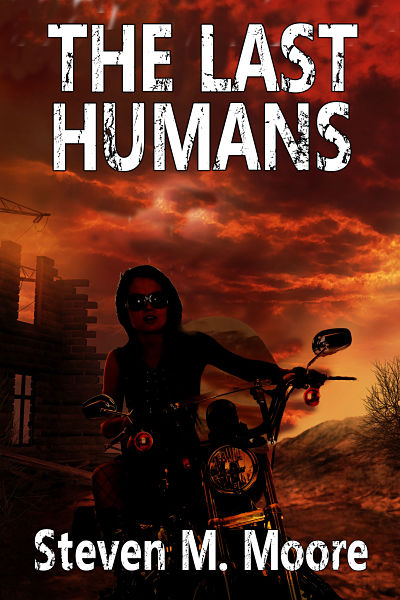
Judging a book by its cover…
The adage says not to do this. While it’s certainly true that bad books can have good covers and bad covers can camouflage bad books—the Big Five publishing conglomerates are guilty of both sins—a better adage might be “a better cover makes any book look more attractive to read.
The “need” for a cover comes from print versions, of course. A traditional book without a good cover doesn’t look more than a manuscript, some legal document, or battle plan (“Project 2025”); in other words, it looks like an amateur project in the wide world of books! Or maybe just a preprint sample of what’s inside, a mere indication of what the final version might look like. In that last sense only, it might be useful for some editor or beta-reader looking for editing or printing errors, but it will never grace a bookstore or any reader’s shelves. Covers for ebooks seem a bit more optional.
Nowadays, though, covers have a more general purpose that ye olde bookstores in the early twentieth century never needed or even could imagine: They provide the tiny icons for the online catalogs and web ages found at internet booksellers. These are mini pics often called “thumbnail images.” A good cover is a requirement, where “good” means “looking attractive even when shrunken.”
A good cover artist probably knows that, but an author must insist on it Too many details can disappear when a book’s cover art is turned into a thumbnail. I’d estimate that less than half of my cover images hold up well when put to this test. Image details are lost, but they might not be that important, especially if the full cover was too busy anyway as if the full cover can tell the whole story.
We can express this as a new rule for all authors (although it’s generally out of the hands of the Big Five’s victims): Make sure your cover is attractive, distinctive, and informative even when reduced to a clickable image on a commercial web page Titles and subtitles should remain legible, for example, as well as the author’s name, but the latter shouldn’t dominate. (Sorry, unless you’re someone like Stephen King, your name isn’t as important as your title or subtitle!)
The image itself can be an artistic abstraction or some scene form the story (if the latter can be made simple enough). Error towards minimalism not business.
***
Comments are always welcome. (Please follow the rules listed on the “Join the Conversation” web page.)
“The Chaos Chronicles Trilogy Collection.” This collection contains the three novels, Survivors of the Chaos, Sing a Zamba Galactica, and Come Dance a Cumbia…with Stars in Your Hand! (The first novel is a completely rewritten and re-edited second edition of the original Infinity POD version.) This is my Foundation trilogy because it covers a wide span of galactic future history, but, unlike my old hero Isaac Asimov, there be ETs in my future universe: the good, the bad, and the ugly (and some of those good, some of them bad). It begins on a dystopian Earth dominated by mega-corporations and ends with ETs and Humans teaming up to defeat my version of the Mule. (I’d call this “classic sci-fi,” but doesn’t that imply I’m dead (I’m not!) like Isaac?)
Around the world and to the stars! In libris libertas