Archive for the ‘Writing’ Category

Hard-boiled or minimalist writing?

Thursday, December 4th, 2014

I love to chat with other authors, even if it’s via the internet.  (In fact, I’m ugly and big enough that I might scare them in a face-to-face meeting!)  Linda Hall, whose excellent book Night Watch I recently reviewed, mentioned that my style was a bit like Raymond Chandler’s.  She was referring to my mystery/thriller/crime/detective series featuring NYPD homicide detectives Chen and Castilblanco (the series is now featured in my new look).  Oh, the memories!  I thought back to those many “hard-boiled detective stories” I read in my youth.  Linda is right in seeing their influence, but I use a different stylistic description; to me, “hard-boiled” means something more general, minimalist writing.  You’ll find it even in my sci-fi stories.

Minimalist writing is a technique to get the reader to participate in the creative process.  I want every reader to develop his own mental picture of Detective Castilblanco, physically but also in mannerisms, language, and actions, for example.  I have to paint a wee bit on the canvas, suggestions, as it were, but the reader has to finish the painting.  Is this lazy writing?  I suppose some writers would call it that.  It includes “hard-boiled,” of course, but goes much farther.  The truth of the matter is, unless you actually know Castilblanco and have been around him for years, your mental picture generated from my words on the page is just as valid as mine!

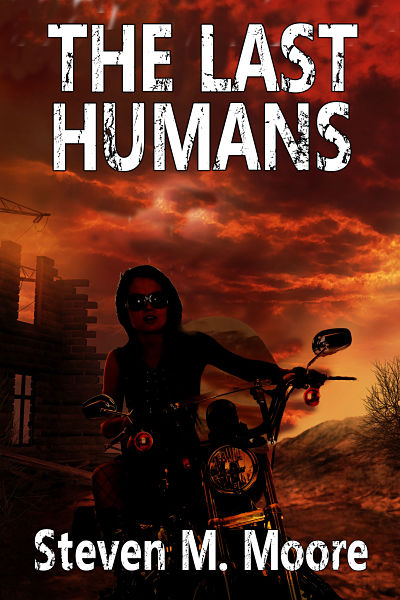
Long ago, I concluded that was what writers of hard-boiled detective stories were trying to do.  In that sense, those wonderful old and wonderful Sam Spade Bogart movies were less successful, because a movie viewer differs from a book reader.  A book has no visuals, beyond the cover.  While many might identify Sam Spade with Bogart, a reader of those tales who never saw the movies will have his own internal visual.  The written words on each page stimulate the human brain to create an imaginary picture of the character.  Every kid knows this  (I’d read my Tarzan comics and then go in the backyard  and jump off a cliff onto a threatening lion with a knife in my mouth—the cliff was a stepladder, but the knife, my Dad’s bait knife, was real).  Your mental picture of Castilblanco will differ from someone else’s.  Sure, there will be common elements—everyone will have Mr. C chomping on Tums, for example.
(more…)

Lost and found…

Tuesday, December 2nd, 2014

It’s been said that the measure of your time on this planet is how long people remember you after you’re dead.  Notice I didn’t say that measure had to be positive.  A person could be a scurrilous SOB and be remembered for a long time—Hitler and Stalin come to mind, for example.  The other extreme might be Gandhi or Mother Teresa.

Creative people have an advantage in this respect because memory of the person can fade fast (even with the internet, very few people really know you, on the average), but the memory of their creations can live on and on.  Michelangelo comes to mind.  Maybe in some far future people will even forget his name, but his creations could be eternal, to a close approximation.  Sculptors, painters, musicians, and, yes, authors, can enjoy a kind of permanence that others can’t.

That might be a motivation for creating works of art and literature, a motivation that today could range from the altruistic desire to leave your artistic message to future generations, to the simple financial desire to bequeath something of dollar value to your progeny.  For the creator of artworks and literature, the “discovery problem” might not be solved in their lifetime.  Fortune is fickle, though, so some of their survivors, those holding the rights to their works, might become rich when their ancestor’s discovered.

(more…)

Thanksgiving…

Thursday, November 27th, 2014

If you traveled this holiday, be thankful you arrived…hopefully you’ll have a safe return.  If you managed to eat and drink in moderation, be thankful for that–many people fail miserably.  If you were constantly thinking of bargain sales all this week, you should get a life–that’s not in the spirit of this holiday.

The Thanksgiving holiday is just that…a day of thanks.  You might be an immigrant mother and father living in fear that ICE will come knocking at your door.  You might be homeless and/or hungry.  You might be a poor soldier eating his or her MRE, wondering if a bullet or IED will be your Christmas gift this year.  You might be a single mother working two shifts and another job on weekends but still wondering who’s going to play Santa to your kids.  You might be a patient in a hospice with stage four cancer.

All I can say is that there’s always someone worse off than you.  That’s why everyone of us has something to be thankful for.  You can rest assured that your situation could be a lot worse.

So, celebrate the holiday today, even if you have only a few small things to be thankful for.  That’s what this holiday is about.

Above all, be thankful that you’re still alive.  Just being alive is the greatest adventure one can have in this Universe.  Our time on Earth is all too finite, but it’s our time.  Live it to the fullest you can…and be thankful you had the opportunity.

[Regular blog posts will resume next Tuesday.]

So you want to write a series?

Thursday, November 20th, 2014

I have written three series and am starting a fourth.  A recent WD (that’s Writer’s Digest for my readers who aren’t authors) article interviews four series writers.  One of the writers is Ian Rankin, author of the Inspector Rebus novels; he’s someone I discovered when I was polishing my mystery, crime, and police procedural writing skills.  Unfortunately (and typically?), the interviewer led these four down a few blind alleys, so I can’t recommend this article beyond saying my interest was more in what Ian Rankin had to say about generalities than series per se.  The fundamental question remains: should you, as an author, set out to write a series?

My answer is an emphatic no!  One reviewer of Aristocrats and Assassins admired the fact that that novel can be read independently of the others in the “Detectives Chen and Castilblanco Series.”  I blush to say that the review went so far as to recommend that I give a course on how to make a series book also a stand-alone.  While anything in writing is reducible to some algorithmic logic with great difficulty, here’s my short course (and maybe what that WD article should have been?).  I might reiterate points in the WD article—dunno; like I said, I was only interested in what Rankin had to say about things in general.  I also might repeat points I’ve talked about in other articles about writing.  Bear with me—I promise to be logical about it.

Don’t set out to write a series!  That’s stupid.  Where would Harper Lee be if she set out to write a series?  Moreover, where would Lippincott be if they’d forced Ms. Lee to contract for a series?  (Well, maybe, still in existence, and not a dead body cast aside by Wolters Kluwer, but that’s not the point here.)  Yeah, I know, Steve Moore, like Ian Rankin, has that great detective/crime/police procedural series, “Detectives Chen and Castilblanco,” and you want to do something similar, you say.  (More on why that’s not a pigeon-hole to put C & C in later.)  The temptation is great.  Let me just say that The Midas Bomb, Full Medical, and Survivors of the Chaos, first books in their respective series, were NOT written with a series in mind.  The only book I’ve ever written with that in mind is Muddlin’ Through, and only because when I finished it my muses were already whispering in my ear that Mary Jo Melendez’ story wouldn’t end with that novel.

What bad things happen if you set out to write a series?  First, you are tempted simply to break a long story into two.  I did that a wee bit with Survivors of the Chaos, but I added a lot to that first book (the first part and large portions of the second), so much so that it became a stand-alone on its own merit.  I shelved copious amounts of material, in fact, thinking that only my heirs would see it, but my muses wouldn’t let up.  All that original material and material corresponding to Soldiers of God was written before Full Medical and The Midas Bomb.  I hoodwinked my muses, though, by putting most of those first books in the same alternate universe—different times, of course.  That’s a setting, not a series, and it spans centuries. (more…)

American vistas…

Thursday, October 16th, 2014

The settings for many of my stories cover a variety of venues, from the NYC area where I now live, to other places in the U.S., Asia, Europe, and South America, to Earth’s solar system and beyond.  My characters have traipsed through five of the seven continents (guess which ones I’ve not considered).  My having lived abroad for many years gives me a broader perspective than some authors, I suppose, but any detailed knowledge could probably be obtained via Google nowadays (some of the scenes from Aristocrats and Assassins and Muddlin’ Through are exceptions).  But many people, myself included at times, tend to forget the scenic vistas we Americans can enjoy right here at home.

This isn’t an article written for Frommer’s.  I just want to reminisce a bit about some sites I’ve seen in this country and some I should see if my time on this planet allows it.  Let me start on the West Coast, where I was born.  While the drought is changing California (one town in Tulare County, my home county, named Porterville, has no water, for example), I lived a childhood of privilege—not one of material wealth, but one of scenic wealth.  Living in the county seat of Visalia, aka the gateway to Kings Canyon and Sequoia National Parks to the locals, at least (Fresno likes to claim that title too), I could see Mt. Whitney on a clear day.  I could visit those park areas by going east and visit the great Pacific Ocean going west.  The snow stayed up on the Sierra Nevada Mountains, where snow should stay.

(more…)

Gardens…

Wednesday, October 8th, 2014

Many people love their gardens, whether they’re filled with flowers, shrubs, and trees, or vegetables.  More generally, many people love expansive places where they can jog, feed the ducks, or just sit on a bench enjoying the sun or shade while maybe talking to a friend.  What would New York City be without its High Line or Central Park?  What would DC be without its Mall or National Zoo?  What would Boston be without the Commons and Gardens?  What would San Francisco be without Golden Gate Park?

I can go on and on.  My sci-fi thriller Evil Agenda features both the Botanical Garden in Barcelona and “Needle Park” in Zurich, if I remember correctly (that’s one problem with having written so many books—I can’t keep things straight anymore!).  The first is beautiful; the second not so much.  But that’s not the point of this post.  My point is that gardens and parks are used in literature for multiple things, from a tryst between lovers (vampires or otherwise) to murders and rapes.  Even in big cities, there are out-of-the-way places and times where the gardens or parks are deserted.  That makes them ideal for staging certain events that we write about.

(more…)

Seasons…

Tuesday, October 7th, 2014

In the spirit of last Tuesday’s post on global warming and greenhouse gases and the current changing of the seasons (something affecting both hemispheres, mind you), I thought I’d write about a few things we human beings take for granted about Gaia.  One thing is the tilt of the planet’s axis.  Gaia’s is optimal.  It’s the Goldilocks Principle all over again: too little tilt and the equatorial zones could become too hot, with maybe sweltering jungles or dry deserts; too much tilt and the winters everywhere could become too harsh, perhaps making the planet like that Ice Planet in Star Wars (probably without the white apes, because they wouldn’t have anything to eat).

We often complain about the seasons.  My friendsl have likely heard me say, “Gee, I wish it was between 65 and 75 and sunny all year around.”  I’d qualify this by recognizing the need for rain, but raining only at night would be nice, wouldn’t it?  Medellin, Colombia falls into that temperature range most of the time, but temperature in Colombia is a strong function of altitude, which means other parts of the country can be sweltering.  That’s one way to avoid some effects of no axis tilt—just throw some high mountains into the mix.  But high altitudes can cause problems.  People have nosebleeds even in Denver.  Elderly Bogotanos (residents of Colombia’s capital) are often advised to retire to lower altitudes if they can, especially if they have cardiac problems.  Equatorial countries experience many of the effects that an E-type planet with little or no axis tilt might have.

(more…)

Joe in the mornings…

Wednesday, September 24th, 2014

I’m not just talking about my two mugs of rich, Colombian coffee, but those are certainly necessary for my writing.  I’m also talking about Joe Konrath’s blog.  Long the top link in my useful links for writers and readers (see my “Join the Conversation” webpage)—it’s called “A Newbie’s Guide to Publishing”—it features old Joe and frequent contributor Barry Eisler, often knocking the Big Five for hanging around in their traditional paradigm and attacking those Big Five authors like Patterson who ineptly try to mount defenses of the same.  This is a wonderful place to lurk…and comment too, if you have something to say (your comment will often be lost because the threads become long, but Joe, like me, often sneaks in a comment or two to the comments).  This blog is good for readers too, those who want to know what the Amazon v. Hachette and other skirmishes pitting indie v. Big Five are all about.

I was forced to become just a lurker when Joe took off the name/URL(my website) option.  This happened so often on other blogs using Joe’s same blog service, not WordPress, that I now believe it was an error that Joe’s service made, and nothing intentionally done by Joe.  So I started commenting again, but my comments, as on most blogs and in most discussion groups, are limited.  I’m a shy guy and prefer to lurk (I’m talking about the internet here, folks, so no raised eyebrows, please).  Where I bombard you with my op-eds (my reactions to current news items) as much as I write about the business of writing, Joe’s topics are exclusive to the latter.  Same style, though—acerbic and cynical.  This blog is fun even for old hands who’ve been writing for a while and also readers, but it’s a must for authors starting out.

(more…)

Series bound…

Wednesday, September 17th, 2014

If you’re a Yankees fan, probably not; if you’re a Red Sox fan, most certainly not.  If you’re thinking that the new college playoff plan is better than the BCS, you’re right—almost anything would be—but it’s really nothing like the NCAA tournament (you’d have to start the football version back in late August or early September when college teams begin their seasons!).  In the sports world, no matter the playoff that takes place, being number one after a lengthy season is largely irrelevant—it’s the series that counts.  Having a winning series in the book world is altogether different.

Take Patterson’s Women’s Murder Club mysteries.  I’ll give the old boy credit.  It was an original idea, and he avoided the cardinal sin of making each successive book dependent on the previous ones.  You can jump in anywhere.  Looking back over the titles I read in the series, I’ll confess that the order I read them in was completely random (yeah, I used to read Patterson).  Sure, the characters and setting were familiar from book to book, but you can pick up any book from the series and enjoy it.  At a higher quality level, Ian Rankin’s Inspector Rebus series also has that positive feature too.  I started with Resurrection Men when I brushed up on how to write mysteries and police procedurals (some of his books take on new meaning—I’m hoping the Scots vote for independence).

(more…)

Advertising in the internet age…

Tuesday, September 2nd, 2014

Recently the inventor of those pop-up ads apologized for creating them.  I guess he finds them annoying too.  Here’s my take: Many websites offer all kinds of “free services,” so they’ve decided to make money by convincing corporate advertisers that those pop-up ads, especially those targeted to a consumer’s interest, really are worth it.  I guess that’s progress.  We’ve progressed from the carnival quack screaming about his wondrous elixirs; to TV’s screaming used car salesmen (they’re invariably men—they scream the best, Toyota’s ever-present spokeslady notwithstanding); and finally to the internet’s pop-up ads, which now are often videos with people—you guessed it—screaming about some wonderful product they’re selling or recommending (streaming video’s inventor should also apologize!).

I can’t believe any sane person enjoys this.  Millennials love to scream—go to Central Park in the summer to any GMA concert, or to any popular protest event that’s a la mode.  GenXers love to scream at their kids—they have kids now, and the GenXers pandering to their every need has backfired for these paraents.  Baby boomers no longer scream—they lost their voices (and hearing, for that matter) screaming at protests (against the Vietnam War instead of against Wall Street or Israel), rock concerts (lots of dBs there), and their kids (the boomers overly permissive parents too).  I suppose turn-about is fair play.  The internet is so democratic that it screams at all of us, although it can tailor the content of the screams to the audience using all that info about ourselves that we give the data brokers.

(more…)