Archive for the ‘Writing’ Category

The new guardians of what you read…

Monday, April 6th, 2015

[I apologize for the length of this post.  I wanted to clearly lay out why I cannot support Joe Konrath’s new “Ebooks Are Forever,” or EAF, initiative.  This proposal allows public libraries to peruse and purchase from a list of indie novels, a list controlled by Joe.  Skip to just after the *** if you want just the bottom line, and go back and fill in background material as needed.  This initiative will affect all readers who check out ebooks from public libraries!  It also negatively affects most indie writers.]

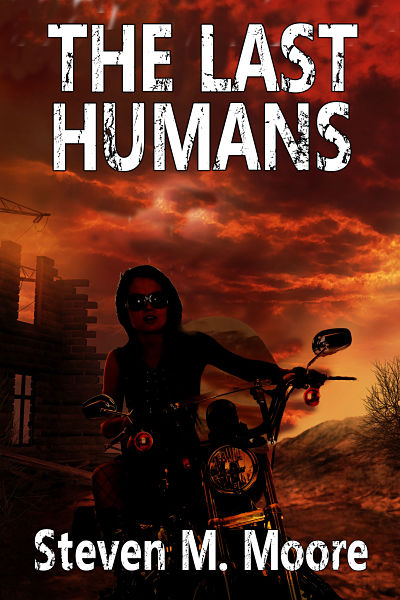
In my first sci-fi thriller novel Full Medical, the Guardians enforce the conspiracy by keeping the clone children in their compound and feeding them the lie that they will be a special crew for a non-existent starship.  Controlling readers’ actions and attacking their freedom of choice is like that, only more nefarious.  Traditional or legacy publishers spend oodles of money doing just that.  Enter the indie writers to save the day!  Well, sometimes….  You see, dear reader, control and greed is just as much a part of some indie writers’ genetic makeup as those manipulated, selected, and copycat genes were in the clone children of Full Medical.  A writer, traditional or indie, might start out with noble intentions, but greed and an obsession with control can rear its ugly head.  Some indie writers are very successful, so they want more.  They will cheapen the indie paradigm and try to control what you read.
(more…)

The anti-science troglodytes…

Thursday, March 19th, 2015

As a writer, I love words.  Sometimes I love a particular word because it’s mysterious.  “Eldritch” is an example.  You can understand its meaning from context when you combine it with “light”—it just looks spooky and sinister.  Because English is spoken in so many places, an author can give local color to his prose by choosing particular words (often not consciously).  I love the sound of “scarpered”—it just sounds like someone in a hurry to leave town.  When my beta-reader knew what it meant but still objected to its use in one of my books, I went on a search to find out how I’d picked it up.  Turns out it’s very UK-ish—sort of like “forthwith” and other words where I love how they trip off the tongue.  I’d picked it up from Ian Rankin (love his Inspector Rebus books), so my beta-reader was right and made a good catch.  Unless it occurs in dialog associated with a character who’s from the UK, or who’s trying to sound like a person from the UK, it isn’t quite appropriate in American prose.  Still love the sound, though.

“Troglodyte” is a word that looks and sounds good too.  It’s a fun word.  If I remember correctly, it originally means “cave dweller.”  (The origins of English are well mapped out in David Crystal’s The Stories of English—a lot of fun if you’re into that kind of thing.)  The word is more conventionally used to mean “deliberately ignorant or old-fashioned.”  Ergo, this long segue is just leading up to my main topic: There are anti-science troglodytes among us who are challenging science with their far-out beliefs and attacking scientific progress at all levels, some even funding campaigns against science.  Ironically, many of these same troglodytes are using science and technology as tools to further their anti-scientific agendas.

(more…)

Indie v. legacy recap…

Thursday, March 5th, 2015

[Note 1.  Like all my blog posts, this is op-ed, even though it’s about the writing business.  As such, I get first crack at expressing my opinions on things—I have lots of them, but you can only write so much!  But, because they are only my take on a current event or news topic, you might not agree, so anyone can comment.  Note 2. I apologize to my friends on Facebook, where I usually share these posts.  Facebook has made it impossible to share.  You can follow me on Google+.  I recommend cancelling your Facebook accounts and creating Google+ accounts, if you haven’t already.]

A few days ago, I read Joe Konrath’s report on a debate he had with Scott Turow.  Joe’s a brave soul, not because he faced Turow (well, that too), but because he played Daniel and walked into legacy publishing’s lions’ den, New York City.  The results of that debate were predictable.  The audience, more there to support Scott and legacy publishing, decided that Amazon is NOT the reader’s friend.  Exit polls (I’ll call them that) said that Joe won in a landslide—Amazon IS the reader’s friend.

It’s more debatable whether Amazon is the author’s friend, though, and whether it will continue to be if it is now.  That came up in the debate too.  We know which sides Scott and Joe are on, of course.  Scott’s made his millions with the old publishing paradigm we call legacy publishing; Joe started out there, became disgusted, and pursued indie publishing, making plenty of money too.  Amazon opened up the gates to hell, in Scott’s opinion; it opened up the gates to opportunity in Joe’s.  Both have had successful writing careers, unlike most writers, whether they be in the legacy or indie camp.

(more…)

Literature, journalism, or MFA degree?

Thursday, February 26th, 2015

In my old day job, the young scientists and engineers would often ask about advanced degrees.  They’d have a BA or BS, or even an MA or MS, and be wondering if they could further their career by receiving more training via an advanced degree.  I’d often say two things: (1) the PhD is over-rated, unless you want to paint yourself into a very tight corner (aka over-specialization); and (2) experience in problem solving is the most valuable thing you can gain to further your career.

Now that I’m a full-time writer, is the advice any different?  Generally speaking, no.  (Considering this is a blog post and not a tweet, I won’t stop here, though.)  I know some sci-fi writers have (or had) a PhD—Asimov, Benford, Heinlein, Hoyle are examples of scientists turned writers, and their books are classics—and I suppose a few authors of legal or medical thrillers have advanced degrees, but I claim that while their degrees might aid them to create tight, logical plots, they otherwise are irrelevant.  You might say, “That makes sense.”  But your next question should be: “What about degrees that have to do with writing?”  What about the various Lit degrees—English Lit, French Lit, Russian Lit, for example—and what about MFAs or journalism?

(more…)

Parodies v. truths…

Thursday, February 19th, 2015

I had just finished Scott Dyson’s short story collection Dark Windows on Monday night a week ago, so I decided to cruise a bit through the 999 Comcast channels we pay so much for and so seldom use (anyone believe that the planned merger with TWC will make that any better?).  I came across Mike and Molly, a sitcom, on one of the traditional network TV channels.  I remembered an episode from a few weeks ago I watched under similar circumstances (rather than launch into a new book and stay up late, I often watch TV to make me drowsy—that and a finger of Jameson whiskey often works to cure insomnia).  In that episode, Molly, the ex-teacher, was finishing an erotic romance—it sounded better than Fifty Shades, though (that was parody #1).

In the new episode, Molly’s picked up by a big-time editor (publishing company not named, but the fancy, uncluttered desk implies he has plenty of minions to work through his slush pile).  He’s suave, sophisticated, and sociopathic (like that alliteration?), i.e. a snooty know-it-all.  He tries to convince Molly to rewrite the book.  She rebels, but he says he owns her (she signed a standard author’s contract, you see, complete with advance).  We now have parody #2 that offers a humorous critique of the traditional publishing paradigm—and maybe a painful reminder to midlist authors?

(more…)

Off-Beat Recipes #1…

Wednesday, January 28th, 2015

[Note: I come up with these occasionally.  Just thought I’d share.  Maybe recipes for the Super Bowl?  Or, something to eat when trapped inside by a blizzard?  I take no responsibility for medical fallout.  You are what you eat…and drink….]

Baloney Quesadillas.  Ingredients: Flatbread, cheese and baloney slices, and salsa.  Layer slices of baloney and American cheese onto half a flatbread (ham and brie can be used by sophisticates).  Spoon on salsa liberally.  Fold the flat bread over and heat in the oven for 30 seconds.  Serves one.  Enjoy.

Kermit’s Revenge.  Ingredients: Fresh spinach, Kiwi slices, a few jalapeños, cilantro, lime, two glasses of green tea, tabasco sauce, and a glass containing two fingers of Jameson, neat.  Lightly steam the spinach and put it in a blender.  Add the Kiwi slices, cilantro, jalapeños, the juice of half the lime, green tea, and tabasco sauce.  Blend together.  Serve blender contents to your wife or girlfriend who’s trying to get you to eat healthy.  You drink the Jameson.

Humble Pie.  Ingredients: Apple sauce, hamburger buns, Reddi-Wip, and cinnamon and sugar (optional).  Pour half the can or jar of apple sauce onto each large hamburger bun.  Add cinnamon and a bit more sugar.  Add top of bun.  Sprinkle powdered sugar on the top and microwave for thirty seconds (a wee bit more if the applesauce was cold).  Add Reddi-Wip.  Take the Chevy to the levee and eat your pie—or share with your companion.

Suicide Bomber.  Ingredients: Cola (Coke, Pepsi, RC Cola—who cares?), rum, vodka, gin, pepper, tabasco sauce, and tomato juice.  Mix to taste (if you drink enough, you can’t follow this direction). Toast Charlie Hebdo.  [I usually don’t make fun of terrorism…and never of the Prophet.  I came up with this out of desperation when my ex-physics student lost his father in a 1985 M-19 attack one terrible day in Bogotá.  There might have been other hard liquor ingredients, like aguardiente.  Experiment.]

And so it goes….     

Are you ready for multimedia ebooks?

Thursday, January 22nd, 2015

[Note to readers: this is my second post on the ebook revolution.  In the first, I spoke to the advantages of ebooks over pbooks, but I didn’t mention the one potential advantage considered here.  Enjoy!]

I’ve been an avid reader all my life, but I sense that there are fewer of us with each passing decade.  That’s a unisex statement.  When most people are just struggling to make ends meet, sometimes with more than one job, raise their children, and stay healthy, time for any entertainment can become scarce.  But gender differences also influence the statistics.    Women readers outnumber men, a positive development if you assume that this means that (1) men are sharing more in household duties, and/or (2) all the modern gizmos we have free up more leisure time for women, and/or (3) women are now socially and economically independent enough to enjoy quiet moments reading.  It’s a negative development if it means that men are so addicted to computer games, streaming video, porn, or sports that sitting down to read a book is the last thing they’ll do.  The idea that reading is something you had to do in school can make for a quick exit from a rewarding reader’s life almost as fast as math as well, for both men and women.

Let me posit that the ebook has the potential to change some of the negatives non-readers feel toward reading.  While I’ll not be quick to experiment (I’m a traditional reader and writer), I know this potential exists.  Even established writers like Deaver are experimenting.  I’m not applauding his writing a novel in reverse (that’s just a strange and ungainly way of presenting the written word, of course), but his release of an audio-only book is interesting. It doesn’t go far enough, though.  An ebook gives an author many opportunities for exploring multimedia.  In particular, sight, sound, touch, smell, and the written word can be blended together in a single story.  Who knows?  Maybe we can add an odor app or a touch app to ereaders and tablet computers.  I don’t know how many times I’ve written a gunfight scene.  Even if the gun has a silencer, the sound is a better description than simply writing pfft!  The odor of gunsmoke could be added too.  In my new Mary Jo Melendez novel, there’ll be a fire scene.  Heating up your ereader or tablet, adding the crackle of flames, and including the odor of a burning room could make that scene come alive.

(more…)

The ebook revolution: changing times…

Thursday, January 8th, 2015

The ebook is changing how, what, and when people read.  The “how” is clear: many people are finding that carrying around and reading a book with an ereading device is better than lugging around a huge pbook.  Consider William Manchester Paul Reid’s The Last Lion, a biography about Winston Churchill.  (Yes, I read books like that too.)  This pbook (the version I’m reading isn’t even hardbound) weighs more than the bust of Beethoven sitting on my upright piano (I use fake books, the staple of piano bar musicians everywhere, to pretend I’m Schroeder)—in other words, the book could be used as a weapon in a murder mystery.  I received this book as a Christmas gift—people still like to give their reading friends and relatives’ pbooks because they’re a bit more tangible than ebooks, I suppose.  But avid readers like me are exploiting the ebook revolution to lessen the weight on our sagging bookshelves.  Instead of chaotic stacks of pbooks around the house, we fill our Kindles or other devices.  (Many devices are compatible with a free Kindle app downloadable from Amazon.)

There’s still a niche for pbooks.  Anything with a lot of graphics, especially color graphics—those famous coffee table books, for example—probably won’t work well in ebook format as long as paper-whites are still around (I prefer paper-white because they eliminate the glare).  My fake books are another example, although I’ve often wished I could change the “font size” of some that I find challenging my aging eyes (they started “aging” at twenty-one, so the downhill slide has been gradual).  Self-help pbooks are another example when they contain screen captures.  The latter don’t often help if you’re  using a paper-white device and the screen shots are in color; the font size is also a hindrance here too.  I tend to use my laptop, for example, if I’m trying to read an ebook written by some internet PR and marketing guru who uses screen captures.

(more…)

Pseudonyms…

Thursday, January 1st, 2015

Early on in the writing business, say circa 2002, I made a mistake.  I didn’t use a pen name or pseudonym and I should have (more on this later).  Many authors do.  There are pros and cons.  I’ll analyze some of them here.  First, let me say that while “pseudonym” is used more in the writing business, pseudonyms go beyond writing.  The email address corresponding to my contact page, steve@stevenmmoore.com, is an alias, a type of pseudonym that points to my private email—yes, I have just the one account, probably something I should change (spammers, beware—I have both accounts equipped with heavy spam traps).  Aliases are internet pseudonyms that people use in most of the same ways authors use them—distinguishing different public personas or areas of expertise; private monikers from public ones; hiding certain personal characteristics, like sex, race, religious affiliation, or political views; or pretending we have some personal characteristics we don’t have (scam artists use that all the time, like the Nigerian princess who needs your help to get her royal but deposed father’s money out of the country).

Some famous pseudonyms, in fact, have nothing to do with writing.  I first saw L L Cool J, short for “Ladies Love Cool James,” on that first NCIS spinoff, NCIS Los Angeles; I learned that James Todd Smith was a rapper before he was an actor.  Actors and singers often become known by their pseudonyms; some go as far as changing their birth name to their pseudonym.  Israel Beilin became Irving Berlin; Reginald Kenneth Dwight became Elton John.  Angelina Jolie Voight became Angelina Jolie, presumably to distinguish herself from her father, John Voight, with whom she’s had a rocky relationship, but Drew Barrymore, Jane Fonda, and George Clooney kept their famous relatives’ last names.  You can have fun finding many other examples.

(more…)

Formula for a bestselling novel…

Thursday, December 18th, 2014

I wish there was one, a turn-the-crank algorithm that allows me to produce one every time I write.  I, of course, can’t claim to have written one, no matter what definition you use.  Why am I qualified to write this then?  Because I read a lot, even books considered “bestsellers” (Flash Boys was the last one, but that’s non-fiction.)  I can’t discover a formula.  Take the genres I write in.  I’ve read much better mysteries than Gone Girl, for example.  What made that a “bestseller”?  Hype maybe, but when you compare to other bestsellers, it’s hard to determine some commonality.  Why?

First, what do I mean by bestseller?  It’s a bit like porn, I suppose…I usually know one when I see it (although, like the case of Gone Girl, I just have to take other people’s word).  To Kill a Mockingbird, the author’s first and only book, is still a bestseller; so is The Hunt for Red October (although less so).  So bestseller has something to do with number of copies sold (or checked out in public libraries).  It probably has little to do with the NY Times Book Review, though, which would rank Clancy higher than Harper Lee due more to the rate of sales, not the total number of books sold.  Presumably Lee’s Mockingbird will still be popular long after Collins’ Mockingjay goes the way of all badly written sci-fi schlock; the first book has staying power, whereas the Times emphasizes quick returns for publishers (why not?  They’re a publisher!).

(more…)