News and Notices from the Writing Trenches #147…

July 26th, 2017

Freebies. Although my books are never free now (except when a reviewer offers to do an honest review), I do offer other freebies. Here’s a description of a few:

First, there are my blog posts. Among these you will find book and movie reviews as well as short stories and novellas (archived in the following blog categories: “book reviews,” “mini-reviews of books,” “movie reviews,” and “Steve’s shorts,” respectively). The op-eds usually aren’t related to writing or the book business, but you might find those entertaining too. Comments are always welcome.

Sometimes I compile my short fiction into PDFs. See the list on the webpage “Free Stuff & Contests.” These PDFs are all free for the asking. You can circulate them to friends and family as long as you respect the copyrights.

Articles about writing and the book business. Readers and writers might be interested in these. They’re archived in the blog category “Writing.”  My blog also features this online newsletter, “News and Notices from the Writing Trenches.” You can sign up for a free email newsletter too.

My little course on writing fiction (another PDF free for the asking) might be interesting to readers and of help to writers. In it I relate some of my experiences I’ve gained as a writer publishing over the last 10+ years.  There’s an updated version now available where I relate some of my experiences about traditional publishing and the trade-offs between indie and traditional publishing. This five-lesson course (with references) complements Stephen King’s little book On Writing, but it can be read independently.

Both the articles and course offer an insider’s viewpoint that often goes beyond similar material you might find elsewhere. Check them out—all free!

Want some awesome book recommendations? In addition to my book reviews, don’t forget the books listed on the webpage “Steve’s Bookshelf.” These are books I’ve found particularly interesting, both fiction and non-fiction. You’ll probably recognize many of the authors, but other books different from those that made them famous are often listed. Moreover, there’s a list of up-and-coming authors and their books you might have yet to discover.

In the last category, let me recommend Donna Carrick’s The First Excellence and the stories of Scott Dyson. Donna runs Carrick Publishing and does the formatting for many of my books, both ebooks and trade paperbacks, but she’s quite an author in her own right. Scott has some really creepy tales, many of them reminding me of Stephen King in his early career. Scott is also one of my beta-readers, but he didn’t learn to write horror from me—I’m not good at that, so he has a natural talent.  Both authors, Donna and Scott, are good friends…and quite talented.

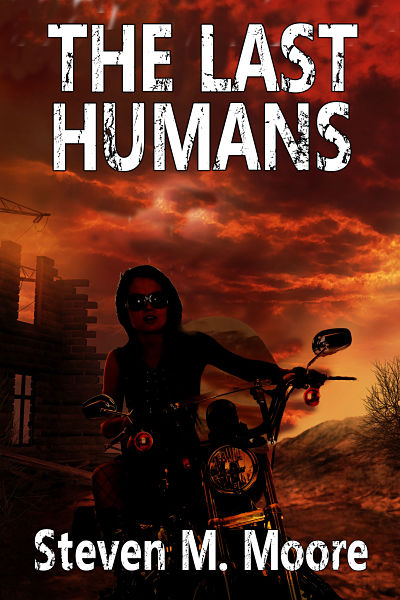
Are you waiting for my post-apocalyptic thriller? It’s been sent to beta-readers. The post-apocalyptic subgenre is very popular now, but The Last Humans is a bit different than your average post-apocalyptic thriller. First, it’s nearer present day. Second, it mostly takes place in California and is only the second novel of mine to take place in my home state (the thriller Silicon Slummin’…and Just Gettin’ By was the first). Third, it features another strong, smart woman who manages to survive the aftermath of an apocalypse.

Read the rest of this entry »

Monday words of wisdom…

July 24th, 2017

Save your breath; don’t worry about Death.  A better praxis is to worry about taxes.

***

Rembrandt’s Angel (a mystery/thriller from Penmore Press). To what lengths would you go to recover a stolen masterpiece? Scotland Yard’s Arts and Antiques Inspector Esther Brookstone goes the extra mile. She and paramour/sidekick Bastiann van Coevorden, an Interpol agent, set out to outwit the dealers of stolen art and recover “An Angel with Titus’ Features,” a Rembrandt painting stolen by the Nazis in World War Two. Their efforts lead to much more, as they uncover an international conspiracy that threatens Europe. During their dangerous adventures, their relationship solidifies and becomes a full-blown romance. This book is available in ebook format at Amazon and at Smashwords and its affiliate retailers. It’s available as a print version at Amazon, B&N, or your favorite bookstore (if not there, ask for it). Happy reading!

In libris libertas.

Movie Reviews # 47…

July 21st, 2017

War for the Planet of the Apes. Matt Reeves, dir. Andy Serkis (of Lord of the Rings fame, as Gollum) does another incredible job as Caesar, the leader of the apes. I liked the ape actors better than the human ones, and for good reason (see below).

Starting with Boule’s book, these stories have never been good or believable sci-fi. Sure, a virus can cause major changes (see my More than Human: The Mensa Contagion, for example), but producing intelligent apes who spend most of a movie on horseback doesn’t qualify as a reasonable futuristic extrapolation. For this movie’s plot, some reviewers have mentioned a parallel with The Ten Commandments (curiously Charlton Heston was in that one as well as the first Planet). I’d go further: This is the biblical Exodus story!

I was sitting in the theater thinking, “The screenwriter has plagiarized this story from somewhere. It’s too familiar.” Walking to the parking lot, it hit me. Can you plagiarize the Bible? Guess so. That aside, you can’t help cheering for the apes; human beings are definitely the bad guys here. The apes are the Jewish slaves from the Exodus story; the nasty humans are the enslaving Egyptians.

I’m not sure who the little girl represents. She’s the only good human around, that’s for sure, but both she and the evil human colonel can recognize the humanity in the apes, especially Caesar. Maybe Reeves wrote her in so not all humans are bad, or he was trying to avoid critics who might scream that he’s sexist. Unlike the original with Heston, there aren’t really any women in Reeves’s trilogy.

This movie is better than the average summer drivel that’s been served up by Hollywood. Wonder Woman beats it as an action flick, though. We’ll see how Spidey does—I wasn’t impressed by the previews.

Aren’t you getting tired of these franchise remakes? Maybe the remake of Murder on the Orient Express will finally kill you with indigestion—I hope not. Can’t they do anything original anymore in Glitter City?

***

Rembrandt’s Angel (a mystery/thriller from Penmore Press). To what lengths would you go to recover a stolen masterpiece? Scotland Yard’s Arts and Antiques Inspector Esther Brookstone goes the extra mile. She and paramour/sidekick Bastiann van Coevorden, an Interpol agent, set out to outwit the dealers of stolen art and recover “An Angel with Titus’ Features,” a Rembrandt painting stolen by the Nazis in World War Two. Their efforts lead to much more, as they uncover an international conspiracy that threatens Europe. During their dangerous adventures, their relationship solidifies and becomes a full-blown romance. This book is available in ebook format at Amazon and at Smashwords and its affiliate retailers. It’s available as a print version at Amazon, B&N, or your favorite bookstore (if not there, ask for it). Happy reading!

In libris libertas!

Languages…

July 20th, 2017

When you get to be my age—old but young-at-heart—you start wondering if you had to do it all over again, what different choices would you make. Life is about choices, of course—choices covering an entire spectrum, from small to big. You might have some regrets too. That’s only human.

I don’t regret the choices I’ve made in my personal life. Given the same circumstances, I’d make the same ones. I wouldn’t have minded if some of them had turned out differently—I’d like to decrease the bad experiences and amplify the good ones—but I generally wouldn’t change the choices I made that led to these experiences.

I started publishing my fiction 10+ years ago (the first edition of my second novel, Full Medical, was published in 2006). At an early age, I knew I wanted to be a writer. I’m a practical person, though, so I made the choice to become a scientist, figuring that being a successful writer was too much like winning the lottery. It is, no matter what some authors or writing gurus say. Don’t give up on your day-job just yet. I think Dean Koontz’s wife gave him a year or so to achieve success. That’s unheard of nowadays, unless you win the lottery like Hugh Howey, J. K. Rowling, or Mark Weir. Writing good fiction is a necessary condition; there are no sufficient ones.

Science might not seem like a career that forms a basis for writing success (except maybe for sci-fi—many successful sci-fi writers are ex-scientists). One can wonder what careers are best for that. A love of languages has always accompanied my love for writing. I have a modest ability with languages. Given other circumstances, I might have become a linguist. That seems to be a fulfilling career for putting food on the table while you write stories and wait for some modicum of success. Probably not as lucrative as hard science and technology, though, which everyone calls STEM nowadays. While a journalism degree is probably better than an MFA (the former produces more understanding of and exposure to the human condition), the study of languages is undeniably related to what a writer does all the time: putting ideas into words and choosing the right words and logic to do so.

Of course, any writing career does this, even writing verses for Hallmark. But the study of languages goes far beyond writing skills. Understanding the linguistic history and structure of languages, especially one as dynamic as English, offers the future and present writer an incredible base for the logical choices s/he must make in her or his writing.

I don’t own many print books now. Although I have enough to keep bookshelves sagging, I generally find ebooks more practical—they’re easy to read, very accessible, and don’t take up any physical space beyond my Kindle. But there’s one print book on my reference shelf that I greatly value, David Crystal’s The Stories of English. Even if you ignore current dialects and regional variations, English is a complicated amalgam of many bits and pieces that has seen a dynamic and rapid development. The Spanish reader can still read Cervantes; we struggle with Shakespeare. And these men were almost contemporaries (Shakespeare died one day after Cervantes).

Read the rest of this entry »

Monday words of wisdom…

July 17th, 2017

The word for “fake news” in Putin’s Russia is simply “news.”—Garry Kasparov

***

There’s a big book Summer/Winter Smashwords site-wide promo from July 1 – 31. You have be a member to receive the email catalog. Join Smashwords—it’s free, and it provides a large universe of reading entertainment. Almost all my ebooks are on sale with price reductions from 25 – 50 %. That includes the first six books in the “Detectives Chen and Castilblanco Series.” Load your e-reader up for summer (northern hemisphere) or winter (southern hemisphere).

In libris libertas!

Vive la France!

July 14th, 2017

Today is Bastille Day. Best wishes to all the French around the world!

***

In libris libertas!

Endangered species: short fiction…

July 13th, 2017

When I start a story, it can become a novel, novella, or short story. I don’t force it. O’Henry was a master of the short story and said a lot in a few words. Nothing wrong with that!

Unfortunately short stories and novellas don’t sell well. Magazines and literary journals were the chief publishers of short fiction. They’re languishing if not disappearing. Short story collections have a hard time acquiring readers and reviewers too. Agents and publishers shun short fiction.

With all this going on, many authors try to force a short story into a novel. It’s not uncommon that a short story or novella becomes a full novel, of course. The Golden Years of Virginia Morgan, one of my thrillers, started life as a short story and grew into a novel, and I’m trying to finish a YA sci-fi novel The Secret Urns that expands on a short story.

When I started in this business 10+ years ago, I began submitting short stories along with my novels. The one that’s the basis for that future YA novel even won a contest. And many of the Chen and Castilblanco cases never became novels! But editors of magazines rejected my short stories. Agents and editors were rejecting my novels too. Both of these groups are prejudiced against “new authors,” i.e. writers they’ve never heard about. But the first group seemed cliquish and followers of fads too.

I love short fiction, though. I love to read it, and, by a perusal of the “Steve’s Shorts” category of my blog and short story collections (some of them are PDFs free for the asking), readers know that I love to write it too. There’s something about writing entertaining and pithy short fiction. Plot, characterization, settings, dialogue, and themes still play an important role, but short fiction is often like a rogue wave or tsunami in a vast ocean of extended novels.

Short fiction is lot like poetry. The latter often says a lot in a few words; so does short fiction. I’m not much good at writing poetry as readers of The Collector know—it contains an early poem of mine, but I passed the blame onto Detective Castilblanco.

There’s little to motivate authors to write short fiction these days—not from readers who determine the market, nor from editors and publishers who avoid it because of that market pressure. However, writers should still write short fiction. Doing so teaches the art of minimal verbosity. I’ve seen too many novels that are bloated and fat because of their verbosity—J. K. Rowling’s Harry Potter books are prime examples, but there are many others. Authors should lean to be minimalist writers. Verbosity is NOT a virtue; it’s a negative. An economy of expression is a positive. A few bon mots that express a world of meaning in a few short paragraphs can produce a wonder to behold. Coming directly to the point without fat verbiage should be the requisite for every fiction story, but writing short fiction gives authors that skill. If a reader loves lots of excessive and erudite words, s/he should read a dictionary; otherwise, short fiction can provide hours of pleasure as well as any novel.

***

Rembrandt’s Angel. To what lengths would you go to recover a stolen masterpiece? Scotland Yard’s Arts and Antiques Inspector Esther Brookstone goes the extra mile. She and paramour/sidekick Bastiann van Coevorden, an Interpol agent, set out to outwit the dealers of stolen art and recover “An Angel with Titus’ Features,” a Rembrandt painting stolen by the Nazis in World War Two. Their efforts lead to much more, as they uncover an international conspiracy that threatens Europe. During their dangerous adventures, their relationship solidifies and becomes a full-blown romance. Published by Penmore Press, this novel is available in ebook format at Amazon, Smashwords, Kobo, B&N, and Apple, and in print through Amazon, B&N, or your local bookstore (if they don’t have it, ask them to order it). Great summer reading!

In libris libertas…

Mr. T’s birthday…

July 12th, 2017

Today is Henry David Thoreau’s birthday. In keeping with the environmental theme of my posts this week, I should be lauding this icon of the environmental and naturalist movement. I won’t do that, so let me explain why.

I don’t like to speak ill about the dead, but I lived in Concord for a few years and the Boston area for many more. An observant person living in that area couldn’t help but notice that Mr. T was a nut who would be institutionalized today if we had any quality mental hospitals left (most of them now are little more than what Salieri experienced in the movie Amadeus).

Mr. T and the rest of the transcendentalists would debate God and Nature drinking rum in Concord’s taverns while their families almost died from cold and hunger (that experience enshrined in the Fruitlands Museum, northwest of Concord, MA. I’m not sure those transcendental tipplers solved any of the world’s problems, but they certainly didn’t solve their families’. (In their defense, those hot toddies can be comforting during those Boston-area winters, which is why apres-ski activities are so popular throughout New England.)

In Walden Woods, haven for conservationists (and Don Henley and the Eagles), Mr. T lived in a one-room log cabin. He needed a fire to keep warm when he wasn’t throwing down rum in Concord center, so he built them, and, on one occasion, almost burned down those woods around the lake (which they still call a pond, but just try walking around it—I did, several times). I’m not sure Henley’s Walden Woods Project would be so successful if Mr. T had succeeded in doing so. But icons are icons, so maybe the Eagles’ front man would have forgiven Mr. T.

Since I’m a reviewer as well as a writer, let me review Mr. T’s famous book. It’s a dreary little tome. The bet I can say about it? It’s the short cure for insomnia! If you need a long cure, read War and Peace. I don’t know what genre label I should give his “masterpiece” either. Maybe the folks at B&N have it shelved under cookbooks (setting fire to Walden Woods) or colonial tippling. OK, maybe I’d shelve it under historical nonsense.

In many ways, Mr. T showed what NOT to do in regards to conservation activism. It’s no wonder that I can’t understand why conservationists treat him as their patron saint. I guess I’ll just have to accept him reluctantly as a meaningless icon like everyone else. We need a few right now. Poor Gaia needs all the help she can get, especially in this political climate where Mr. Trump and his cronies are on the attack. We need a hero, a symbol for the conservation movement. I’d opt for John Muir (unfortunately he was a fan of Mr. T) or Ansel Adams, who was both a photographer and environmentalist, or maybe even the A-Team’s Mr. T, over Thoreau.

But happy birthday, Henry David. I’m sure the rum is better wherever you are now.

***

There’s a big book Summer/Winter Smashwords site-wide promo from July 1 – 31. You have be a member to receive the email catalog. Join Smashwords—it’s free, and it provides a large universe of reading entertainment. Almost all my ebooks are on sale with price reductions from 25 – 50 %. That includes the first six books in the “Detectives Chen and Castilblanco Series.” Load your e-reader up for summer (northern hemisphere) or winter (southern hemisphere).

In libris libertas…

Op-eds…

July 11th, 2017

What’s this? An op-ed about op-eds? In general, my posts on Tuesdays are op-eds. They’re short articles expressing my opinions about current events and their implications in our lives. My inspiration was a pithy little book by Kurt Vonnegut titled A Man without a Country containing biting and entertaining sarcasm, its articles about some absurdities in our American lives.

Op-eds tend to rub people the wrong way if they don’t keep an open mind. Even if the writer presents views the reader doesn’t agree with, though, s/he can often learn something by reading them. At the very least, the disagreeing reader will reinforce her or his own opinions.

When I constructed this website (OK, web gurus at Monkey C Media constructed it—I can program in FORTRAN and C++, but not HTML—but I supervised and was in charge of content). The nice lady who runs Monkey C Media, Jeniffer Thompson, insisted I needed a blog—Google’s bots must be fed content to keep them happy. I’m not sure that’s still true, but, at the time, her arguments made sense. But what could I write?

Even back then (10+ years ago), there were book blogs galore—sites containing posts about books, writing, and the publishing business. I wanted something different. Vonnegut’s little book came to mind.

So, here I am still writing articles that comment about current events where I feel my opinions need to be read, mostly because I’m an independent and free thinker (most authors are) who says things that might not be considered politically correct. You think Saudi Arabia is a friend of the West—think again! Do you think progressivism or conservatism have no place in political discourse?—think again, because they both do. Do you think social democrats are commies?—think again! Do you think Wall Street bankers and “financial gurus” should be allowed to set the rules for controlling financial institutions?—think again!

I know my opinions aren’t liked by some people. Some readers read my op-ed articles and say, “I’ll never buy one of that SOB’s books!” While the reader is entitled to feel that way—after all, my books also have themes that make people uncomfortable interwoven through the plots—but readers should learn to look for the story in the author’s writing. Otherwise, they might miss some very good ones.

Let me list some authors whose opinions I find disagreeable: James Hogan, Michael Crichton, Tom Clancy, and Orson Scott Card. You might not have read any of their books, but they’ve all written some great, entertaining stories. If you take the attitude that you won’t read an author because s/he has opinions contrary to yours, you’ll be missing some great stories.

To take it out of the context of America’s genre fiction, what would the free world have missed if Garcia Marquez hadn’t been read because a shortsighted American government wouldn’t allow him to enter this country because he was a Marxist? The creator of magical realism has wonderful stories. Sure there are interwoven themes, notably criticism of power-hungry and despotic caudillos and regimes of Latin America, many of their corrupt governments supported by the U.S., from Bautista (Cuba) to Pinochet (Chile) and beyond.

Storytelling ability trumps an author’s personal views (I hate to use the verb “trump” now, but it works here). I don’t put myself in the class of the writing superstars I’ve named above. Far from it. But if you don’t read my stories because of my op-ed articles, I feel sorry for you. And you should read them, and others. They might contain something that leaves you saying, “Gee, I never thought about that in that way!” And, if you want a plain-vanilla book blog, you’ll find plenty online. Mine is unique.

God bless op-ed!

***

Rembrandt’s Angel. To what lengths would you go to recover a stolen masterpiece? Scotland Yard’s Arts and Antiques Inspector Esther Brookstone goes the extra mile. She and paramour/sidekick Bastiann van Coevorden, an Interpol agent, set out to outwit the dealers of stolen art and recover “An Angel with Titus’ Features,” a Rembrandt painting stolen by the Nazis in World War Two. Their efforts lead to much more, as they uncover an international conspiracy that threatens Europe. During their dangerous adventures, their relationship solidifies and becomes a full-blown romance. Published by Penmore Press, this novel is available in ebook format at Amazon, Smashwords, Kobo, B&N, and Apple, and in print through Amazon, B&N, or your local bookstore (if they don’t have it, ask them to order it). Great summer reading!

And so it goes…

Monday words of wisdom…

July 10th, 2017

Protecting our environment is not a radical idea; it is a moral responsibility.—Bernie Sanders

***

There’s a big book Summer/Winter Smashwords site-wide promo from July 1 – 31. You have be a member to receive the email catalog. Join Smashwords—it’s free, and it provides a large universe of reading entertainment. Almost all my ebooks are on sale with price reductions from 25 – 50 %. That includes the first six books in the “Detectives Chen and Castilblanco Series.” Load your e-reader up for summer (northern hemisphere) or winter (southern hemisphere).

In libris libertas!