Review of Alex Gerlis’s Vienna Spies…

June 13th, 2018

(Alex Gerlis, Vienna Spies, Studio 28, 2017, ASIN B06XY644HG)

What a great story! More gripping than Follett’s Eye of the Needle and Deaver’s Garden of Beasts, this spy tale about Vienna at the end of WWII kept me reading. It’s complex, poignant, and gritty. It took me a while to keep the characters straight, even with the character list kindly provided by the author, but that’s stretching it to find something negative. My kind of book!

The book is related to some of the author’s other historical novels—Major Edgar, the spy controller, is in them, for example. I believe the main characters, Rolf Eder and Katharina Hoch, are new. Eder is a Vienna native who becomes a somewhat reluctant spy for the British, a dangerous game in wartime Vienna, considering the Austrians have bought into Hitler’s far-right nationalistic nightmare. His partner Katharina becomes his lover after he gets over the loss of fiancée who was tortured by the Viennese Gestapo. The overriding problem: Keep a Soviet spy Viktor from turning Austria Communist at the end of the war. The means? Get an old Austrian statesman not to side with the Soviets by hustling him out of Vienna to the American-British lines.

This novel isn’t for the squeamish, although the descriptions don’t begin to compare with the horrors the Nazis performed. At the same time, readers will meet human beings who laugh and love their way to survive the worst war the world has seen.

Readers might even end up identifying with the Soviet spy. All the spies here are conflicted. Not one Nazi has redeeming qualities. Classic battle between some good and some evil.

***

Did you miss Rembrandt’s Angel? More Nazis, ISIS terrorists, and a cartel contribute villains to this mystery/thriller about a Scotland Yard’s obsession to recover a missing Rembrandt.  Available on Amazon and Smashwords and its affiliates (iBooks, B&N, Kobo, etc). Or ask for it at your favorite bookstore (if they don’t have it, ask them to order it).

In libris libertas…


Less is more…

June 12th, 2018

As I work on one of my projects, the sequel to Rembrandt’s Angel, I’m fighting the content editing. For those not accustomed to writer’s jargon, there are three kinds of editing: content, copy, and proofreading. I do the first as I go, and it’s mostly cut-and-paste, and often just cut.  Someone else or I do the second after the manuscript is done, and the third kicks in when we have to make final checks on the product (this used to be done with galley proofs, and still is, in some cases).

Seat-of-the-pants writing, that is, not using a rigid outline, leads to content editing as you go. I find that to be more efficient. I’m not good at following an outline even if I create it, finding outlines too restrictive with negative repercussions for flow and spontaneity. That’s a personal choice, of course.  At any rate, I’m having trouble doing the content editing for the sequel.

The novel will be another mystery/thriller but also more historical than Rembrandt’s Angel. For any historical fiction, there’s always a lot of background material. Usually I have no problem pruning my prose, but there’s so much good material in this case that it pains me to delete it.

In other words, I’m suffering from the opposite of writer’s block. Esther Brookstone and Bastiann van Coevorden, the two main characters from Rembrandt’s Angel, are such great characters that it’s tempting to surround them with all the good material available and not delete it. I suppose this conundrum is better than not knowing what to write. I wonder if it’s a characteristic of historical fiction.

I’m a writer who believes in the Goldilocks Principle, a minimalist writer looking for just enough description and narrative, not too much or too little, especially in my mysteries and thrillers. In storytelling, less is more. If writers have a story to write, they shouldn’t be verbose and just tell the story succinctly. (This is probably why I’m a fan of short stories. My collaborator, A. B. Carolan, offers a new one this week, by the way.)

But there’s nothing minimalist about history, especially in this new sequel that will cover more than two millennia. I know I can resolve my conundrum if I work at it, so I’ll keep struggling. I don’t want to take the easy way out, i.e. leave all that prose in the story just because it’s great material.

Two examples illustrate the dangers in not doing this. J. K. Rowling became more verbose as the Harry Potter series progressed, and my enjoyment of it diminished. And I enjoyed Ken Follett’s Eye of the Needle more than his later historical novels. These are my perceptions, of course. Other readers might like verbosity. And, is it verbosity if it’s great prose? That’s a delicate question.

I’ve never suffered from writer’s block. My muses, really banshees with Tasers, know this; they and some characters like Esther and Bastiann, push me to write the next story. I’ve never asked them if they want me to stop cutting out material. They’d probably just answer, “Use it in another story.”

Sometimes authors just have to be brutal with their prose. Sure, save those beautiful or deep prose passages; they might be useful at a later date. But always keep in the back of your mind the following mantra: Less is more. Many readers don’t want to get bogged down in superfluous narrative.

***

Prepare for the sequel by reading Rembrandt’s Angel. This mystery/thriller about a Scotland Yard’s obsession to recover a missing Rembrandt is available on Amazon and Smashwords and its affiliates (iBooks, B&N, Kobo, etc). Or ask for it at your favorite bookstore (if they don’t have it, ask them to order it).

In libris libertas…

Movie Reviews #61: Solo…

June 7th, 2018

Solo. Ron Howard, dir. I went in with low expectations. Frankly, I’m tired of this light-saber fantasy series, with princesses and Jedi warriors, trying to be sci-fi. But this movie was much better than I expected. I liked it, even though Disney probably doesn’t, as they compare it to the Marvel Avengers movie, a huge money maker that’s a mixed-up mess with little plot.  Is the Star Wars enterprise becoming like the Star Trek one with only die-hard fans extolling its virtues?

I don’t see why that should happen.  Compared to Avengers, this movie’s plot, for what it is, holds together and is far better.  It’s an origins story; I lov’em! And, for a Star Wars movie, there’s less fantasy and more sci-fi (if you can get past the hyperfuel plot device!). That’s a break in tradition. I didn’t see one princess looking for a protecting Jedi!

Besides learning how Han Solo ended up on Tatooine and other details about his early life including the origin of his last name, how he met Chewbacca, and won the Millennium Falcon, the plot gets right down to the point. Just cowboys and aliens from a galaxy far, far away at the shootout at the OK Corral most of the time—multiple times! With all those fancy laser guns Han et al possess, they’re just gunslingers, and you might think you’re lost in an episode of Firefly. (Nothing wrong with that and entertaining, but certainly not original).

The best acting was from Woody Harrelson as Beckett. Donald Glover was too much of a comic character as Lando, and it was hard to imagine him morphing into Billy Dee. (His role was akin to that other Glover’s stint with Mel Gibson in that other famous shootout series). Alden Ehrenreich was OK as Solo, but same comment when imagining him morphing into Harrison Ford’s Solo—I can’t make the transition. The rest of the cast was just OK. Of course, I’m biased by my memory of the original characters—sort of like seeing Roger Moore (no relation) instead of Sean Connery as James Bond.

There are great special effects, of course, and some of the ETs are great fun (multiple-eyed creature at the two card games, for example, but guess who was the cheater). Definitely worth a watch…and far better than the latest movies in the main series—sorry J. J. Abrams. It’s been a bad spring and summer for movies so far, but this one will entertain you…and maybe be worth the price of admission so you can make Disney happy?

***

Great Spring Thaw Sale? Still on at Smashwords! My author page there lists all my ebooks there, and you’ll find at least two on sale to the end of June.  My oeuvre contains both oldies (more current today than ever before) and new releases. Great late spring and summer reading.

In libris libertas!


Review of Jill Paterson’s The Fourth String…

June 6th, 2018

(Jill Paterson, The Fourth String, J. Henderson, 2017, ASIN B07848BHT2)

When Crispin Fitzgerald, new conductor of the Sydney Symphony, is brutally murdered, DCI Alistair Fitzjohn is called back from leave to take charge of the case. He finds a crowd of persons of interest: all of Fitzgerald’s condo building, quite an artsy group.

We get a peek into book signings and other author woes, the stolen art trade, and apartments used for violin practice, sculpting, and vocal lessons, as the building’s inhabitants go about their businesses under the watchful eyes of the police. Oh, and the murderer leaves spoor—a violin string draped around the victim’s neck.

As the case progresses, Inspector Fitzjohn and his sidekick Betts delve deeper into the past of all the persons of interest. They turn up even more of them as they go.  Meanwhile, Fitzjohn’s troubles with his irascible neighbor and snarky superintendent continue, although the latter is temporarily replaced by a woman. Will she become a romantic interest and someone to fill the loneliness in the Inspector’s life? You’ll have to read the book to find out.

A few copy editing errors remain, notably with the British-style single quotes, but there’s not enough to ruin the fun. The plotting is carefully done and the author continues to develop her main characters, which is the advantage of writing a series. But this novel can be read independently from the others, the mark of a good series. There’s not much local color here, though. In fact, the story could have taken place in England or Canada, and it reminds me of the P. D. James and Louise Penny mysteries—horrible happenings occurring amidst Commonwealth propriety.

I’m a fan of this series. Like all of the Fitzjohn books, nice twists and turns abound. This one is a pleasant mix of police procedural, with Fitzjohn’s traditional sleuthing, mystery—who did the deed?—and suspense, because there’s evil to be rooted out. In other words, this is the kind of novel I love to read. Fans of good mysteries will too.

(Note: I purchased this book for R&R reading.  When I do so and like the book, I often write a review.)

***

Great Spring Thaw Sale? Still on at Smashwords! My author page there lists all my ebooks there, and you’ll find at least two on sale to the end of June.  If you want more mysteries, I have them.  My oeuvre contains both oldies (more current today than ever before) and new releases. Great late spring and summer reading.

In libris libertas!

New book prices and sales…

June 5th, 2018

Most of my indie ebooks are $2.99. Considering that the Sunday Times is $6 now, and I spend far more time producing a book than the Times does in writing that newspaper (I’m discounting ad copy, which I ignore), I hereby announce that all new ebooks in the future will either be $3.99 and up, depending on word count. That means they’ll still be a bargain, of course.  (There’s almost zero entertaining and meaningful fiction in the Times, so maybe I’m comparing apples to oranges?)

I don’t have control of pricing for my traditionally published ebooks (the ebook version of Rembrandt’s Angel, $5.50, still beats the cost of the Times, though). Same goes for all my print books. The indie ones have the lowest prices that Amazon’s Create Space allows; the traditional ones, like the traditionally published ebooks, have prices set by the publishers.

For readers who want free ebooks or ebooks on sale, forget about it! I long ago decided not to give away my hard work, no matter how much Amazon, book promo sites, and readers want me to do so. Marketing gurus advise authors to make the first book in a series free. I find at least two problems with that marketing strategy: (1) I spend at least as much time and effort writing that first book as any other book in the series, or any other book, for that matter (some books, like Rembrandt’s Angel,  require a lot of research, for example); and (2) that marketing tactic is unfair to readers and authors alike because it assumes that readers have to read a series sequentially, when a true series should have the property that each book can be read independently—if the latter’s not true, the series is just a soap opera!  (That was Howey’s installments of Wool until he combined them together, that soap-opera flavor affecting the total—still a good read, though.)

If you want free, and insist on it, I provide that option in abundance with short stories in these blog posts from my colleague A. B. Carolan and me, and I also offer free short fiction as downloads (short story collections and novellas—see the “Free Stuff & Contests” webpage for the list and the easy directions for downloading).  Of course, reviewers can receive a free copy of a book in exchange for an honest review (habitual reviewers often receive bonus ebooks of their choice too). That’s it for free!  Nada mas!

Read the rest of this entry »

Character bios: Caitlin Murphy and Asako O’Brian…

May 31st, 2018

Caitlin’s story starts in Soldiers of God, a novel that’s a bridge between the “Clones and Mutants Trilogy” and the “Chaos Chronicles Trilogy” (someday I might write a sequel). I have many strong female characters, but this FBI agent is sometimes a bit fragile as well as generally strong, the first because she falls for a priest, Juan Pablo Gomez, who she runs as an informant. Subplot one. Vladimir Kalinin, the ubiquitous villain in many of my novels, and most recently in one extended fictional timeline in the “Clones and Mutantss Trilogy,” is back creating more mayhem.  Subplot two. And she has to solve a hate crime too.  Subplot three.  (Are they connected?  Read the book.)

Asako O’Brian first appears in the first novel of the “Clones and Mutants Trilogy” (Full Medical, my very first book). She’s an FBI forensics specialist who becomes friends with Caitlin Murphy, although their friendship is a bit rocky at the beginning. Caitlin is twenty years younger than Asako and not known for her sweet disposition; Asako, on the other hand, is seasoned and sweet.

Caitlin has a reputation for being smart as a whip and very intense.  Complicating the usual problem of balancing an FBI career with a meaningful relationship, some consider her brains and intensity as reasons why some men shy away from her.

Asako sees a lot of her younger self in Caitlin with some notable exceptions.  Where Asako is  a petite brunette, Caitlin is a tall and large-boned redhead, the smallest of four siblings only because three brothers were former Notre Dame linemen.  She thinks her height also drives away some men, those whose egos suffer when dating a woman taller than them.

Caitlin has become a bit of a loner because of her job and insecurities.  Caitlin’s mornings and evenings often are focused on Miss Boots.  Her cat offers her better companionship than most men.  She has a personality, not a fake one some lout dreams up to impress Caitlin.  The cat is always happy to be on her master’s lap purring while Caitlin reads or watches TV, anything to get her mind off her ticking biological clock and the hypocrisy, prejudices, chaos, and violence she has to deal with in her job, and in the world she lives in.

***

The first edition of Full Medical is only available in print from Xlibris Publishing; the second edition is only available as an ebook from Amazon and Smashwords.  The first edition of Soldiers of God is only available in print from Infinity Publishing; the second edition is only available as an ebook from Amazon and Smashwords.  (These are both sci-fi thrillers; neither one is a cat mystery.)

The Great Spring Thaw Sale continues.  Every week a new ebook goes on sale at Smashwords for two weeks.  If you missed one, please note that all my ebook are reasonably priced.  Smashwords is the only place you’ll find my ebooks on sale.  Use the coupon code for a book on sale during checkout.

In libris libertas…

Music and writing…

May 29th, 2018

I’m a music addict. Like my reading, I dabble in many genres—a lot of classical (wasn’t that nineteen-year-old cellist Sheku Kannah-Mason great in the Meghan-Harry wedding?), folk, jazz, some rock, some C&W, and other pop. I even have a short-story collection where the stories are all inspired by musical pieces (see “Mayhem, Murder, and Music” in my list of free PDFs on the “Free Stuff & Contests” webpage—just follow the directions for downloading).

I was reading and storytelling a bit before I also became a music addict, but they have all accompanied me for a long time on my journey through life. My parents couldn’t afford a piano so I started on the trombone, working up to some Dixieland band participation (my favorite jazz subgenre). When I learned the piano at age 40+, it was difficult: my teacher fought with me to make both my hands independent instruments. I almost got it, but I’ve regressed to melody in the right hand and chords in the left—I call it “noodling” (don’t know what other people would call it).

Music is more mathematical than storytelling. Sure, writers must put logical structure into their novels, but that structure is a lot more flexible than in pop songs, and even modern symphony and chamber music often adheres to structures set up in the 18th century (it’s getting a bit out of control now because a lot of it is written by academics to “impress” other academics and not for the general population like Beethoven and Mozart pieces were).

There’s some crossover now too.  Dylan received the Nobel Prize in literature for his lyrics (modern poetry, really).  Kendrick Lamar received a Pulitzer for his rap. I don’t have an example for a writer receiving a music prize (comment if you know of one), but I’m sure that other writers, like me, have been inspired by music.

Stories and musical compositions have one thing in common: they are (or should be) entertaining. That’s where the crossover lies. I guess I’m old-fashioned: my ideal entertaining evening is to plop into my recliner in front of the fire, read a good book, and have light classical music playing. Guess what? There’s rarely anything to watch on TV (I won’t do streaming video or video games, the competing entertainment sources for millions), so I often flip to the cable channel that continuously runs light classical. (I have tons of CDs, and still many treasured LPs, all for serious listening, but the TV remote is right beside that recliner.) Our cable also has jazz, C&W, and pop, but I’m very selective about that, so their programming choices are often annoying and distracting. (No folk that I can tell either.)

Here’s a question I sometimes receive in book events: Do I write with music? Sometimes, but not usually. That harks back to the logical structure a novel needs. I make that happen with self-criticism and by content editing as I go, all requiring analytic thought. I even do a bit of copy editing, but most of that occurs after the manuscript is complete, and at that point I’ll put some nice music on. I’ll also do that when I proofread. Just something relaxing to mimic how I read for R&R.  (All my storytelling goes through multiple editing steps, so I can’t figure out how some errors escape us—but there always are a few that remain.)

Every story in that free PDF was inspired by music, but has a complete novel been inspired by a piece of music? Not one that I can remember reading. My novel Rembrandt’s Angel was inspired by a missing Rembrandt, though. But that’s another story, if you’ll pardon the pun.

***

Did you miss Rembrandt’s Angel? Bastiann van Coevorden, an Interpol agent, has to manage Scotland Yard Inspector Esther Brookstone’s obsession with recovering a Rembrandt, “An Angel with Titus’ Features,” stolen by the Nazis in World War Two. Esther’s mission becomes deadlier and different from her usual cases in the Art and Antiques Division of the Yard. The duo takes readers on a wild tour of Europe and South America before the story reaches its climax, as they find out what the stolen paintings are used to finance. In the process, the couple’s romantic interludes become a full-blown romance. Available on Amazon, Smashwords and its affiliates (Apple, B&N, Kobo, etc), and in most bookstores (if they don’t have it, ask for it).

In libris libertas!

Memorial Day 2018…

May 28th, 2018

It’s been a big weekend! I’m sure you’ve traveled safely and imbibed responsibly, and will continue to do so.  Did you also honor those who gave the ultimate sacrifice to keep our country safe?  That’s what it’s all about.

Character bios: Penny Castro, Esther Brookstone, and Bastiann van Coevorden…

May 24th, 2018

[Note: This article is part of the new series of blog posts, “Character Bios”—you’ll find them all in the blog category of the same name.]

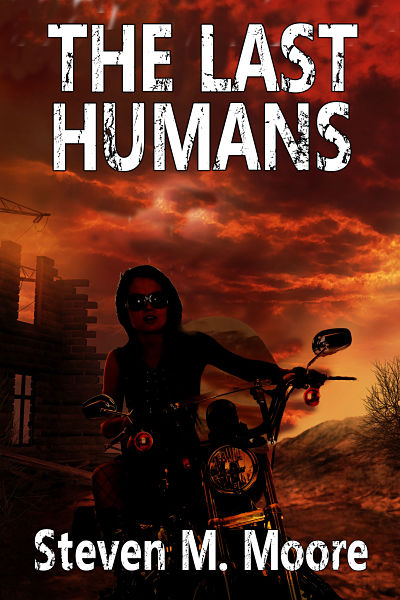
Penny Castro. Born in New Jersey, Penelope “Penny” Castro gave up a athletic scholarship as a swimmer to join the U.S.N. where she became a search and rescue diver.  That experience landed her a job with the L.A. County Sheriff’s Department as a forensic diver. She is a survivor of the biological attack on the West Coast that soon became worldwide. In the aftermath, she managed to survive many threats and find her way to a refugee camp where she was instrumental in improving the situation for survivors. Her adventures are described in the post-apocalyptic thriller The Last Humans (will be released in 2019 by Black Opal Books).

Penny is a small, strong woman with a quick tongue who is a bit uncomfortable with her Latina features—black, curly hair surrounding a face with Native American and African American features—but she gets beyond that and even creates a family amidst all the chaos.  She now lives with her husband, an old man she considers a father figure, an adopted child, and two children of her own.  They own a small ranch in California’s Central Valley.

Esther Brookstone. This Scotland Yard Inspector who works in the Art and Antiques Division is art thieves and unscrupulous art dealers’ worst enemy. She’s tough and tenacious and surprisingly lethal for her 60+ years. She’s a widow three times; her current love interest is Bastiann van Coevorden, an Interpol agent who’s twenty years younger.

Her colleagues call her Miss Marple, but they don’t dare do it to her face.  Her most recent case involved the search for a lost Rembrandt painting that was stolen by the Nazis in World War Two.  It turned a lot more deadly than most of her cases.  That case is described in the mystery/thriller Rembrandt’s Angel (Penmore Press, 2017).

Esther’s father was a vicar but her last husband was an atheist, so she’s a bit confused about religion, but all her husbands and her father gave her a moral backbone and righteous stubbornness that motivate her in the pursuit of the bad guys.  Details about how she moved from MI6 to Scotland Yard are obscure.  She admires the tough American cop, NYPD homicide detective Rolando Castilblanco, who still owes her a curry dinner.

Esther is kicking around the idea of retirement, starting an art gallery, and spending more time at the Scottish castle she inherited from a distant relative.  Her big decision?  Whether Bastiann will continue to be a part of her life.

Bastiann van Coevorden.  This Interpol agent prefers to find the bad guys and let local authorities handle the rest, which is Interpol’s general business model.  He’s not above the little firefight now and then when the going gets rough, though, and his current love interest, Scotland Yard Inspector Esther Brookstone has led him into such situations, as has his American cop friends, Chen and Castilblanco.

Still, Bastiann is sophisticated, not unlike Hercule Poirot (he resembles the actor who played Christie’s famous character).  He’s from Belgium, though, but his mother was a French spy.  He knows Esther has a background in MI6, but he’s not privy to the details.  Her present focus on art crimes fits right in with hi general obsession with apprehending criminals who make Europe and the world unsafe.

Bastiann has also worked on cases with Detective Castilblanco.  He hasn’t yet figured out if Esther Brookstone wants to settle down a bit and have a committed relationship, but he’s willing to bide his time.

***

Did you miss Rembrandt’s Angel? Both that novel and my novel The Collector present my unique thesis that stolen artwork can be used as collateral for other nefarious criminal activity. In Rembrandt’s Angel (Penmore Press, 2017), Bastiann van Coevorden, an Interpol agent, has to manage Scotland Yard Inspector Esther Brookstone’s obsession with recovering the Rembrandt, “An Angel with Titus’ Features,” stolen by the Nazis in World War Two. Esther’s mission becomes deadlier and different from her usual cases in the Art and Antiques Division of the Yard. The duo takes readers on a wild tour of Europe and South America before the story reaches its thrilling climax, as they find out what the stolen paintings are used to finance. In the process, the couple’s romantic interludes become a full-blown romance. Available on Amazon, Smashwords and its affiliates (Apple, B&N, Kobo, etc), and in most bookstores (if they don’t have it, ask for it).

The earlier novel, The Collector, also features Esther and Bastiann in cameo roles, and he also appears in Aristocrats and Assassins and Gaia and the Goliaths. These three ebooks are available on Amazon and Smashwords.

All of these books can be read independently.

Want free fiction? Peruse my list of PDFs on the “Free Stuff & Contests” webpage and follow the directions for downloading.  (Or you can just go to the OneDrive file folder.) You’ll find many stories there—mysteries, thrillers, and sci-fi.

The Great Spring Thaw Sale still continues on Smashwords.

In libris libertas!
News and Notices from the Writing Trenches #160…

May 23rd, 2018

Spam. In my last newsletter, I explained why comments to this blog disappeared for a while. I fixed that, but I’ve been getting a lot of spam recently, so I’ve been adjusting my spam filter accordingly (sometimes with active participation). Apparently WordPress understands a lot of written languages; I don’t. While I’m a man of the world, I’m not a polyglot and only know a few languages.

It’s fun to receive comments written in lots of different alphabets, but I can’t trust WordPress’s spam filter to screen them properly. Moreover, if responders can read the blog post, they can at least write their comment in English, no matter how bad it is, so other readers (and me!) can understand the content of the comment.

As a consequence, and very reluctantly, I will delete all comments written in a foreign language EVEN IF I do understand that language. That’s only fair to the readers who might want to start a discussion thread.

I apologize for any inconvenience this might cause readers of this blog.

Bookstores. Reports are indicating a comeback. That’s good news for both readers and writers. There was a time when a lot of them were going out of business, most notably Borders. The B&N book barns and smaller many smaller ones have made themselves into a community service—functions, events, and coffee and treats offered new experiences—but they’ve maintained their comfortable side of offering a place to browse while we look for that special book for someone, even ourselves.  They’re all doing a bit better.

USA doesn’t always win (that’s “United States of Amazon,” in this case, because the online retailer seems to offer anything and everything to the buying public). Walmart is trying to get in on the act now.  I still like to browse in the stacks, either in a bookstore or the public library.  My favorite bookstores are the ones that sell used books! There’s a musty je ne sais quoi to them that gets my reader’s juices flowing.

Beaches. I don’t know about you, but I have problems reading my Kindle Fire in bright sunlight, so I do my beachside reading with a print book or use my Kindle inside or in the shade. But vacation reading is coming up. Mother Nature snapped her fingers a while ago and turned winter into summer with several ninety degree days, but we went back to spring for a while. It’s still good to prepare for your vacation by loading up your e-reader with some good ebooks, or purchasing a few books in print you’ve been wanting to read (you can’t pack many of those, though).

Read the rest of this entry »