News and Notices from the Writing Trenches #119…

April 25th, 2016

[This is the post from last Friday.  I had to redo it because of a WordPress glitch.  My apologies.]

How to help your favorite authors.  1. Buy their books.   Those authors get off on entertaining you or informing you.  Reward them for activating those pleasure endorphins.  2. Review their books.  A simple review about what you like or dislike about a book and why informs readers and the author.  3. Follow them and share.  Both Amazon and Goodreads allow the first.  It’s much better than a simple “like.”  And most social media sites allow you to share, so do so with the blurb of the book and news about the author.  4. Recommend them.  Same idea as share, but you can do this with face-to-face too, with family and friends.  Even at the lunch table at work.  You talk about a good movie.  Talk about a good book too.  5. Offer to help.  Say kind words about the East Coast author if you’re in the Midwest or West, or in a different country.  Tell your local bookstore and library about the authors.

Do you do any of these?  (Adapted from Penny Sansevieri’s “5 Quick Ways to Help Your Favorite Author,” Author Marketing Experts.  I’ve taken the liberty to assume you have more than one favorite author.)

Freebies.  The only way you’ll get one is to write an honest review for one of my books.  There are 22 to choose from now.  But this newsletter and the rest of the content of this blog are free.  Readers and writers should check out the op-ed comments on current news, articles on writing and the writing business, book and movie reviews, author interviews, and free short stories and novellas.  Don’t want to scrounge around in the archives?  What can I say?  You want free but want it handed to you on a silver platter?  Get a life!

Pricing.  All my books are reasonably priced—sale prices really, compared to traditional publishing.  This is possible because by buying indie, you, the reader, eliminate all that bloated traditional publishing bureaucracy where most of what you pay goes to the publisher and not the author who writes the stories you love to read.  If you haven’t tried indie, don’t miss the opportunity.  In general, indie authors offer quality entertainment at reasonable prices.  Sure, there are crappy books out there, from both indie and traditionally published authors, but you can afford to try an indie ebook that is usually priced for less than a meal at McDonald’s.  The ebook is better for your health too.  Here’s my amazon page.

More on Patterson.  I’ll give the old boy credit.  He keeps inventing new ways to make money in the publishing world.  You’d think he was starving.  I was invited to take his writing course (I’m sure there was a charge, but I don’t remember the cost—I treated the email as spam), presumably so I can be as famous as James Patterson.  Or maybe he’s just looking for new co-authors to write books for him in his assembly line book factory?  Whatever the reason, Patterson has taught me more about what NOT to do than what to do in my writing career.  In particular, I refuse to exploit either readers or writers.  I’ll leave that to traditional publishing, their agents, editors, and authors like Patterson.

Paper books v. ebooks: the eco-argument.  Yeah, I know.  Many people want to hold a physical book in their lap, not an e-reader.  OK, I respect that.  But consider this: While POD (Create Space and others) eliminates some of the damage, the sum total of all paper books kills forests in the world.  E-readers are more toxic when discarded, but I’ve had my Kindle for years—e-readers contribute far less eco-waste than paper media.  Considering I average one to two books read every two weeks, that would come to between 26 and 52 paper books per year.  OK, I read a lot, but if every reader reads even 5 books per year, that’s a lot of paper.  Books will probably go completely electronic before newspapers, another contributor to forest depletion, but please do some eco-thinking.  I’ll try to provide POD availability in my catalog as budget permits, but my eco-thoughts keep one foot on the accelerator and one on the brake.

Follow-up on LinkedIn.  It’s worse than I thought.  Because I don’t use LI to find jobs, I was oblivious to the social media site’s unscrupulous tactics respect to job searches.  As outlined in the Forbes article, “Has LinkedIn Crossed an Ethical Line,” LI not only charges job seekers $29.95 to move them up to the top of the pile, regardless of qualifications, but, of course, charges employers for posting there.  Don’t waste your money.  Only a small percentage of job seekers actually found their jobs from job boards.  (My Indie Authors Coop is working out pretty well, by the way, as a good substitute for LI.)

Spring and summer reading.  Both books in the “Mary Jo Melendez Mysteries” will have a Kindle Countdown sale April 29 through May 6.  The sci-fi thrillers Muddlin’ Through and Silicon Slummin’…and Just Gettin’ By will both be priced at $0.99, reduced from $2.99.  And don’t forget my new sci-fi novel, Rogue Planet, at $2.99.  That’s a lot of spring and summer reading for only $5.

First book in a series.  If you’ve resisted jumping into the “Detectives Chen and Castilblanco Series” because the first book was too expensive, fret no more.  That first Infinity edition of The Midas Bomb (I had no control over pricing) was replaced by a brand new rewritten and reedited second edition.  Now every ebook in the series is $2.99.  You can read the series in order or jump in anywhere.  It doesn’t matter because each book can be read independently.  Another reading binge you could have this spring and summer—six ebooks for $18!  (Note: The Midas Bomb is available in all ebook formats for $2.99.  There is also a paper version for $9.99.  I’ll slowly add the rest of the series to Smashwords too, which also distributes to many ebook retailers.  I don’t know about paper versions.  We’ll see how TMB’s paper version does.)

In libris libertas….

Social networking for authors: pros and cons…

April 21st, 2016

Book signings, book fairs, and book clubs take second place for today’s authors.  While those three activities still offer some face-to-face possibilities locally and nationally (if you have the money to travel and the time), the internet has to be number one for any author today, whether indie or traditionally published.  (I’m discounting the Hugh Howeys and Andy Weirs, who started as indie, and all the old stallions and mares in the Big Five’s stables, who probably have a staff to do their social networking.)  This is as it should be.  The internet allows us to reach out to millions of readers and chat with more readers and authors than we would ever meet in the old days.  But social networking in particular and the internet in general have their pros and cons.

Some days ago, I was working on a novel and needed a bit of background.  While I’ve traveled a lot in Europe and South America (probably more than in the U.S., if you discount work-related travel where long trips and long meetings ended in margaritas and exhaustion), I’ve never been to Scotland, which is still part of the U.K.  The closest I’ve been is to Ireland, which is NOT part of the U.K. (in fact, 2016 is the centenary year of the Easter Rising, which led to Irish independence).  But one of my characters had just inherited a castle not far from Edinburgh, basically an old stonewalled house in disrepair (think James Bond’s place, Skyfall, but on a smaller scale).  I needed travel-like info from the internet so I could take my readers and myself there, thanks to the invitation from my character.

What happened was annoying.  Sure, I found the info I was looking for.  After an hour or so, I had more than I needed, in fact, because a Google search will give you opinions from ordinary people like you and me who have been there and can provide personal stories that go far beyond the travel brochures.  Fine and dandy.  I do this a lot.  You’ll have a hard time in a book determining whether I’ve been to a place or not.  I could make an error, but that error could stem from a fallible memory as well as a bad interpretation of internet info.  What happened has happened before: I almost immediately started receiving ads about travel in Scotland!  (I say “almost immediately” because they started coming through before I could close the browser.)

Read the rest of this entry »

Mini-Reviews #20…

April 20th, 2016

[Two crime stories today that maybe justify the $0 price?  Don’t take my word for it, of course.  Reviews are always just a reader’s opinion.  Yours is as good as mine—maybe even better!]

Eleven.  Carolyn Arnold, author (Hibbert & Stiles, 2011).  There’s a lot of publishing folklore out there.  One bit of advice to authors is: give away the first book in the series so that readers are attracted to the rest of the series.  Another, almost contradictory piece of advice: write the next book in the series because the new book will motivate readers to read the first ones.  My answer to this bit of folklore is: it all depends on how the writer writes!  If the series is a good one, books that use a few of the same characters and maybe similar settings but can be read independently, it doesn’t matter—but the writer has to spin a good yarn.

This writer has taken the first advice.  She even puts an excerpt from the next book right up front.  I paid $0 for this book, but I don’t like to see giveaways.  The author might as well take a promenade in Times Square carrying a sign that says, “I put $0 value on all my hard work”!  But this author was a believer, yet advice #1 didn’t work with this reader.  The book’s OK, but I won’t be buying any more books from this series.  It moves slowly in the beginning—the proverbial “hook” for me was completely absent (ho hum, another serial killer tracked down by an intrepid FBI agent)—but it picks up speed toward the end.  The Redeemer (the serial killer) is already in jail, but he has disciples.  The agents don’t know who they are.  The reader doesn’t either.  They come out of the woodwork throughout the novel.  If mystery, that’s not misdirection, that’s using deus ex machina to save a plot.  If thriller, that just doesn’t work for me.

Read the rest of this entry »

Monday words of wisdom…

April 18th, 2016

The human race may starve, but at least it will be GMO-free.

***

May Day Sale.  Mary Jo Melendez invites you to a Kindle Countdown Sale.  Her stories, Muddlin’ Through and Silicon Slummin’…and Just Gettin’ By, will be on sale from April 29 through May 6, $0.99 each, reduced from $2.99.  That’s a lot of spring and summer reading for only $2.

HAPPY TAX DAY!

News and Notices from the Writing Trenches #118…

April 15th, 2016

(UN)HAPPY TAX DAY!

Lee Child loves me.  Probably not.  Readers might have seen the quote from one of his books that runs across the top of this website.  His secretary approved that; I thanked her, not Lee Child.  I imagine his secretary also arranged to send out the marketing blurb on his behalf from Goodreads which recommends Steve Berry’s new book, The 14th Colony.  Probably every Goodreads member received that spam.  Or, maybe just those interested in mysteries and thrillers?  I wonder how much that cost and how Child’s secretary managed to pull it off.

Child speaks about Berry’s Cotton Malone: “He’s a kinder, gentler Jack Reacher.”  Isn’t that nice!  I wonder if Tom Cruise will play him in the movie too.  I also wonder how much the ebook will cost relative to the paper version.  And are the old stallions in traditional publishing’s stables getting so desperate they have to endorse each other?  Sounds a bit like those modern academic composers who write music for other academics, the kind of music James Levine used to ram down our throats at the BSO.  OK, let’s play nice.  Let’s just say the old stallions have an exclusive club where they can munch their oats together and resist en masse being sent to the glue factory.

New voices.  The problem with old stallions like Baldacci, Child, Deaver, King, Preston, Patterson and others, along with old mares like Gerritsen, Grafton, Higgins Clark, and others, is that they’ve become formulaic.  Traditional publishing calls those horses a sure bet instead, of course, and will spend tons of PR and marketing money on them, from full-page Times ads and TV videos (Patterson is the champion of those), to Goodreads campaigns (the Lee Child email; Higgins Clark just had a full-page ad for a new book—I gave up on her books long ago because they’re just novel-length cozies).  Indie and midlist authors have to go it alone.  That doesn’t mean the old stallions and mares haven’t written good books—see my “Steve’s Bookshelf” for some of them—but their books listed there are not the kind of books that their rabid fans devour (for some reason, many readers like formulaic).

Read the rest of this entry »

Scientists and mathematicians #3…

April 14th, 2016

Some theoretical physicists play loose with mathematics.  Feynman, for example, never worried about the convergence of the series needed to calculate things in QED (that’s quantum electrodynamics); in fact, he designed a technique, now called Feynman diagrams, to allow him to throw away infinities easily and just hoped things would work out.  That’s called renormalization.  The renormalization of quantum field theories became a big deal.  The electro-weak theory of Weinberg, Glashow, and Salam, designed to explain and combine the electromagnetic and the weak forces, for example, was never fully accepted until ‘t Hooft proved it could be “renormalized.”

Dirac’s bras and kets were just vectors and linear functionals on a Hilbert space, but I doubt he worried too much about functional analysis, the study of infinite-dimensional vector spaces and their linear operators.  Even Maxwell’s brilliant synthesis of all classical electromagnetic phenomena—gamma rays, x-rays, visible light, electricity, and magnetism—had to wait years until vector calculus was invented by Gibbs before its true beauty could be seen.  A classical vector field is determined by its curl and divergence, and that’s exactly what Maxwell’s equations say about the electric and magnetic fields.

Sometimes physics gets ahead of mathematics.  Sometimes it’s the reverse.  The key to quantum chromodynamics isn’t Gell-Mann’s Eightfold Way.  The representations for the special unitary group SU(3) he used to organize hadrons into composites of quarks already existed.  His contribution was to recognize that the representations could organize the hadronic particle zoo.  Similarly, I always thought that algebraic topology was an esoteric branch of mathematics, and yet it has found multiple uses in particle physics.

On the flip side, Ed Witten’s treatment of string theory (part of quantum field theory) has led into many breakthroughs in the theory of knots, an unusually esoteric mathematical subject, so much so that Witten received the Fields Medal, the prestigious mathematics equivalent of a Nobel prize (the story about why Nobel didn’t want to give a prize to mathematicians seems apocryphal).  Much earlier, Einstein’s General Theory of Relativity wouldn’t have gone anywhere without tensor calculus—his friend Grossman, a mathematician, even helped him with the math.

Read the rest of this entry »

Points on an alternate timeline…

April 13th, 2016

That’s what many of my books represent.  I’ve had great fun scattering them along this timeline corresponding to an imagined but alternate future history for 10+ years.  You’re probably not aware of the nexus between these books.  Maybe you’ll be surprised.  “OK, you have four series,” you say.  “Aren’t those at least independent?”  One is, the “Mary Jo Melendez Mysteries,” a miniseries of two books so far, Muddlin’ Through and Silicon Slummin’…and Just Gettin’ By (the two books are on sale from April 29 to May 6, by the way).  All the books in the other three series are scattered along this long timeline that exists in my imagination.

It’s curious.  I don’t write linearly.  I can’t be constrained by a linearity like Grafton’s alphabet mysteries or Rowling’s Harry Potter stories.  Linearity is far from my thoughts when I sit down to start a new yarn.  As I go along, I might see that the story can reuse some characters and settings on that timeline, but that’s never a goal to begin with.  That’s why there are independent books like Mary Jo’s adventures and More than Human: The Mensa Contagion.  My new book, Rogue Planet, is 99% independent too.  I also hop around three genres.  One quarter you might see a sci-fi novel, another a mystery, a third a thriller, or combinations of these genres.  You can still think of me as channeling Asimov, whose extended Foundation series (that includes books beyond the Foundation trilogy) is a masterpiece of sci-fi.  Mine goes beyond sci-fi, though, and the points land on that timeline in a random fashion.

Read the rest of this entry »

Monday words of wisdom…

April 11th, 2016

A bean supper will be held on Tuesday evening in the church hall. Music will follow.  (Seen in a church bulletin.)

***

Just a reminder: Rogue Planet is now available!  Think Game of Thrones or Star Wars with high-tech magic.  Hard sci-fi, space opera, or fantasy?  You decide.  You’ll find it in all ebook formats for $2.99 (Amazon, Smashwords and its distributors) as well as paper for $10.99 (Create Space).  And, if less futuristic mystery and thrills are your preference, remember my May Day Sale: Muddlin’ Through and Silicon Slummin’…and Just Gettin’ By will have a Kindle Countdown Sale April 29 through May 6; both books will be on sale for $0.99, reduced from $2.99.  That’s a lot of spring and summer reading for $5!

News and Notices from the Writing Trenches #117…

April 8th, 2016

Readers can be formulaic too.  Many writers become formulaic over time.  This is partly due to the same reason a K-6 teacher, instead of teaching each grade in succession to keep her or his teaching skills fresh, prefers to keep on doing the same thing, grade 2, say, year after year, over and over again—it’s the easy way out, and, if s/he’s successful at it (that becomes a less appropriate adjective with time, of course), why not continue?  In the writing world, a perceived market preference for a book series might contribute pressure to becoming formulaic too.  (That doesn’t mean series are bad.  It only means the author has to be careful with them.)

But readers can also become formulaic.  How?  We can all fall into a rut.  We love Baldacci and look for his books, for example, and resist looking for new authors who might write just as well…or better!  It’s only human to prefer the known and familiar over the unknown and unfamiliar.  In the process, a vicious circle is created, readers feeding off writers who produce more of the same, and writers feeding off readers who want more of the same: Baldacci à readers à Baldacci à readers…you get the idea.

But we have to consider all the good reading we might be missing!  In a perfect world, that’s what reviews are good for—they would allow us, the readers, to discover a new writer and allow authors to reach out to new readers.  It’s not a perfect world, though, so we have to deal with zero-content reviews that are little more than votes on American idol.  A smart reader will take responsibility of her or his reading and look for those new voices, using all info available on the book’s Amazon page at least.  In the process, s/he might be amazed at what’s out there!

Social networking.  Readers can meet other readers and authors, and PR and marketing gurus recommend it for authors because it contributes to name recognition, not just for indies but traditionally published authors too.  Readers, do you like to mix with nerdy authors?  Do you hate it when they self-promote?  Maybe yes to both questions, right?  Authors should also be readers, and, in that capacity, also get a bang out of just discussing different books and genres, whatever the marketing gurus say.  However, when a discussion thread says “no self-promoting,” follow the wishes of the group and moderator, please.  If you want to use one of your own books to make a point, say something like “not intended as self-promo comments.”  Readers, be generous and accept that—that reader/writer’s point might be valid.

So, what are the best social media sites for readers and writers?  Surprise!  They’re not Facebook or Twitter.  If you want to discuss books and writing, stay away from them as if they had internet ebola! Both of those are so dominated by people getting on their soapboxes that anything you post about books or the book business will be buried in a lot of online shouting.  Use Goodreads and LinkedIn.  Reserve Funny Bunch and Twitland for family, friends, trying to get a hot date (or any date?), and listening to rants, including Trump’s.

Goodreads has many groups dedicated to readers and reading.  They also have a few dedicated to writers and writing (authors, beware, other authors aren’t particularly interested in buying your books!—they only want to sell theirs).  LinkedIn groups, as you might expect, deal more with the business side of writing—editing, publishing, promoting, technical issues (are CSIs’ booties really Teflon?), whatever.  On both sites, I see authors promoting their books.  Most respect the rules and do it only where it’s allowed.  Many don’t.  The latter do no one any good.  And I don’t understand why they bother on LinkedIn—it’s not that kind of site.

Rogue Planet.  OK, I’m being repetitive and you’re probably tired of my self-promo activity, but this new novel mixing hard sci-fi with fantasy, is now available in all ebook formats (Amazon + Smashwords) and print (Create Space).  It’s set in the same universe as the “Chaos Chronicles Trilogy” and the Dr. Carlos stories, but you don’t have to read these to take part in the swashbuckling adventures of Prince Kaushal as he goes after an evil theocracy on his home planet.  It’s my version of Star Wars, but maybe you’ll compare it to Game of Thrones.  I just call it a lot of futuristic fun.

May Day, May Day, May Day Sale. Mary Jo Melendez invites you to a Kindle Countdown Sale.  Before she adds her stories to Smashwords, making them available in all ebook formats, she’s giving you a chance to read Muddlin’ Through and Silicon Slummin’…and Just Gettin’ By at $0.99, reduced from $2.99.  That’s $2 off, folks!  Or, two exciting books for $2!  The sale will take place from April 29 through May 5.  This is absolutely the last time these prices will be reduced.  It’s the perfect time to begin stocking up on good summer reading.  (OK, it’s a wee bit ahead of time to announce this, but you wouldn’t believe the acrobatics I have to perform in order to schedule a countdown sale for an entire series, thanks to those Amazon KDP restrictions.)

In libris libertas…

Excerpt from Rogue Planet…

April 6th, 2016

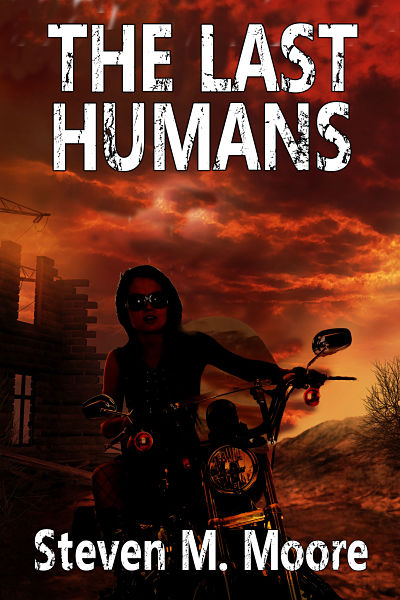
OK, Rogue Planet is a done deal, but maybe you’re too shy to click on the “Peek Inside” button on the Amazon book page, so I decided to repost this excerpt.  Before giving you a first look at this new novel, here’s the blurb:

Hidden away from near-Earth planets in remote spiral arms of the Galaxy are Human worlds that have lost contact with more progressive worlds and reverted to strange and primitive customs and traditions, their leaders using religion, superstition, and imported technologies to rule in tyranny.  Survey ships explored and catalogued these planets as suitable for future colonization centuries earlier, but groups with a special interest in ensuring a homogeneous and often despotic society didn’t bother applying for permission to colonize.

Following the ITUIP (Interstellar Trade Union of Independent Planets) Protocol, ships were restricted to observe and maintain a hands-off policy for these rogue planets, even when there was great temptation to intervene.  Eden, where a theocracy rules with an iron fist, is such a planet.  A group of rebels struggles to end the oppressive regime to forge a new future.

Set in the same universe as the “Chaos Chronicles Trilogy” and the Dr. Carlos stories, this sci-fi saga once again explores the never-ending battle between good and evil so prominent in my other books.

I had fun writing this hard sci-fi tale with a fantasy flavor.  I hope you have as much fun reading it, available in all ebook formats at $2.99 (Amazon and Smashwords) and print for $9.99 (Create Space).  And, as usual, you can read for free in exchange for an honest review (I’ll put it on Net Galley for a short time for those would-be reviewers who are too shy to query me directly).

Now, for the excerpt:

Chapter Four

The Entertainer

Two weeks later, Kaushal wound through a maze of corridors and tunnels, many underground, and found a secluded and breezy courtyard he remembered from his childhood in the castle.  The walls were high enough to trap most sounds he made practicing the roki, and lush vegetation muted the echoes.  He knew several places like this, and rotated between them, randomizing his choices to avoid discovery.

He only stopped playing and singing when he saw the shadow cast on the stone floor.  When she peeked around the corner of the column, he smiled at Princess Anju.

“Will you report me?”

She stepped from behind the column.  “No, as long as you don’t report me.”

“Agreed.  Are you in trouble?”

“My uncle would go into a fit of rage if he knew I’m alone with a Second Tribe slave.  He might kill me even, like he did my father.  And he’d likely kill you too.  Or, at the very least, castrate you.”

“I suppose my voice would turn to soprano in that case,” he said with a smile.  He had no idea where he’d heard that.  Was it the practice in his father’s court?  Even the Second Tribe frowned on female singers, so boys and men singing countertenor took their place.  Maybe they weren’t countertenors to begin with?

            “That’s not funny,” she said.  She sat on the opposite end of the bench, folding her hands in her lap.  “Can I listen to more?”

“You make me nervous,” he said.

“A performer with no audience is a hibjab shrieking at the moon.”

“What’s a hibjab?”

“Some animal on Paradise, I suppose, before the Ice Age.  It’s just a saying.  It means—”

He held up a hand.  “I figured out what it means.  You’re saying I should practice with an audience, and you’ll be my first audience member.”

She nodded.  “Please, continue.”

She listened to him for a while and then stood.

“I have to go.  Do you often come here?  I only found this place today.”

“There are many secret spots like this in the castle.  I can show you if you like.”

She raised an eyebrow but followed with a smile.  “I’d like that.”

***

            “You didn’t!”

“People in the court will love your songs and playing,” said Princess Anju.

“I don’t want to entertain the court.  Why should I?  You people have taken over my world.”

She frowned.  “Not I.  And don’t be so stubborn.  Other Second Tribe slaves are courtiers. It’s a privilege and an escape from a hard life.”  She put her tiny hand on his arm.  “Do it for me.”

Read the rest of this entry »