October 24th, 2016

Those of us who had imagination circuits built can look in someone’s face and see stories there; to everyone else, a face will be just a face.—Kurt Vonnegut

***

Free PDFs for the asking: see the “Free Stuff & Contests” webpage.

In libris libertas!

The cart and the horse…

October 20th, 2016

I never could decipher the adage “Don’t put the cart before the horse” to my satisfaction.  That frustration was partial motivation for writing “The Case of the Carriageless Horse,” Detective Castilblanco’s first case as a homicide detective—the story appears in the collection World Enough and Crime.  The conundrum: Why would anyone want a horse if s/he didn’t already own a cart? Maybe the implication is that a horse has a lot more uses than just dragging a cart around?  That’s true, but it begs the question.  If someone has a little cart, s/he’d get a little pony, like you see in kiddies’ parks; if someone has a huge cart loaded down with bricks, s/he’d get a Clydesdale.  The correct horse for the cart should obviously be chosen AFTER the cart!

Or maybe I don’t understand the adage because I have it in the wrong order?  Maybe it’s supposed to be “Don’t put the horse before the cart”?  The only horses most of us worry about anymore are those in their cars, and not so much of that anymore unless you’re into muscle cars—modern cars have been “tuned” to a T for max performance from min horses.  But I grew up in the Big Valley, farm and ranch country, so I was exposed to a lot of equestrian lore.  Even though I left that agriculturally rich area when I was 18 and didn’t look back much, that lore stuck with me.  (The main character’s life with his horse in the first part of Survivors of the Chaos was inspired by my father’s early life.)  I had a brother and cousin who broke horses, after all.  My brother broke one of Mom’s little porcelain horses; my cousin broke real horses, rancher-lingo for training a horse to tolerate a rider.

No matter the order of the saying or how we interpret it, it’s segue to the following question: What comes first, the book’s audience or the book? In a previous post about story forms, I said something like “build it (the story) and they will come (the readers).”  Unlike the cart and the horse, this is pretty clear: an author can’t build an audience for a single book, he can only “build a book”! S/he has a story to tell and, when she tells it, s/he can only hope there will be an audience to read it.  That can be helped along by pre-publication publicity and previous books, but neither one offers guarantees.  In fact, previous books can kill the audience s/he has, although readers can be forgiving if they like the premise of the new book.

Read the rest of this entry »

Steve’s Shorts: Part Four of Five…

October 19th, 2016

Russians

Copyright 2016, Steven M. Moore

Part Four of Five

Boris tapped on the VW passenger’s window.  Jan rolled it down.  “There are two detectives staking out your apartment.  They’re so obvious even I could spot them.  Here’s what we’re going to do.”

She got out and walked in the direction he had come from.  He got in the VW and passed her.  As he passed the patrol car, he slowed down and turned off his headlights.  As he figured, that attracted the cops’ attention. He sped up and they pursued with siren and flashing lights.

He knew the neighborhood better than they did.  He let them follow for about ten blocks, making numerous lefts and rights, and then turned into an alley that had an entrance into a convenience store’s lot, drove through another complex’s lot, and waited in the shadows behind the apartment building for five minutes between two dumpsters.  The sound of the siren faded into the distance.

He then took a much straighter route back to Jan’s apartment and picked her up.

“It’s still in my purse,” she said, waving the large bag.  “There’s so much stuff in there, including a couple of old lighters, that they’d only find it if it bit them on the nose.”

“Do you smoke?”

“Are you kidding?  I used them to light birthday candles for my many cousins.  They’ve been in there for a while.  Do you smoke?  If so, what?”

“Years ago I used to smoke a pipe to look sophisticated,” he said with a smile.  “Pipe tobacco, nothing else.  Muscovites back then abused alcohol more than drugs, but I think that might be changing.  I never wanted to do any damage to my brain.  It’s all I have going for me.”

“You have a lot more than brains going for you, Boris.”

He felt the blush creeping up his neck.  “Now we need a computer.  I suggest the IT center.  It’s open 24/7.”

“We might need some time.  Do you have a laptop at home?  It looks like the cops took all of ours from the apartment.”

“Wait a sec.  I have a solution.”  He used the car phone to dial a number.

“You’re using my old houseboat as a hideaway, aren’t you,” said a gravelly voice.

“Gerry, I’m innocent of anything you’ve heard from the cops.”

“Figured as much.  They never even interviewed me.  ‘Course, I was at that boring conference when all that exciting shit went down.  I only saw the news on my laptop.  Are you having a fucking orgy on my boat with that leggy redhead?  You’d better clean up things when you’re done.”

Boris’s original blush, once dimming, now blossomed again.  “She’s in the car with me, Gerry, and we’re not doing anything like you’re saying.  She’s in trouble, and I’m helping.”

“I bet.  I know how that consoling gambit goes.  A knight in shining armor to save a damsel in distress?  That’s as good as shtick as any to get into a woman’s pants.”

“Will you stop?  I need to borrow your laptop.  Can we come by tomorrow morning for coffee?”

“Sure.  Cindy will be working and the kids will be in school.  I don’t have a class until ten, so I might still be in pajamas.”

“We’ll be there at eight.”

“You’re not going to put a virus on my machine, are you?”

Read the rest of this entry »
Monday words of wisdom…

October 17th, 2016

Don’t join the book burners. Do not think you are going to conceal thoughts by concealing evidence that they ever existed.—Dwight D. Eisenhower

In libris libertas!

Movie Reviews #37…

October 14th, 2016

Birth of a Nation. Nate Parker, dir. Whew! A powerful movie, although my reaction was on a par with Nat Turner’s after his first victim. The buildup to the gore is the powerful stuff as the Turner boy grows up in slavery and becomes a preacher for his fellow slaves. The whites cover a wide spectrum here, from faux sympathies for their victims to indifference to out-and-out evil SOBs. My only real complaint about the story beyond the normal Hollywood distortion of history—Turner had several masters, I believe—is that the situation for slaves in the South during that era was much worse than depicted.

Parker, who also wrote the script, does a good job portraying the doomed Nat Turner.  Hammer does well as the alcoholic master Samuel Turner too. Mark Boone Junior as the Rev. Zalthall convinces Samuel Turner to take his black preacher on tour to preach to blacks on other plantations. In this way, Nat Turner is exposed to the general plight of Southern slaves and meets the evil despots who own them, some making his own master almost look like a saint. Turner builds up a network this way that forms the core of the rebels.

In spite of flaws—stretches seemed painfully slow, for example—this is one of those movies where you have to say, “How could this have been allowed to happen?”  Slavery, not the rebellion!  The U.S. can never cleanse slavery from the national conscience. It is our holocaust and white America the Nazis. It took us nearly a century to eradicate institutionalized slavery when all we needed to do was apply the Constitution and its Bill of Rights. It boggles the mind. But many things are like this, and we must look forward: the past is done, no matter how evil it was. We must take the progressive outlook, which includes never letting this ever happen again.

In libris libertas…   

News and Notices from the Writing Trenches #132…

October 13th, 2016

Mom-and-pop bookstores. There was an interesting little article in the NY Times about how mom-and-pop bookstores are surviving through online sales. I have no idea where the Times reporters got their information (another mysterious person slipping them a brown envelope like the one containing Trump’s tax report?), but it just sounds wrong. Why would customers order online from a mom-and-pop when they have a greater inventory elsewhere? I’m guessing that the owners of the mom-and-pop are offering some services the big retailers like Amazon can’t and won’t offer, if only personalized reading recommendations (actually, Amazon offers those).  Readers, please enlighten me: how is online business saving the mom-and-pop bookstores?

Print versions. They seem hardly worth it! I had enough people tell me they preferred print over ebooks that I thought it would be a good idea to start adding print versions. The second edition of The Midas Bomb and Rogue Planet have print versions as a consequence. No one’s buying them. One reason is clear: bookstores (especially the big book barns) won’t stock them or order them until customers request them. When readers peruse Amazon, most probably ignore that a print version is available, or are turned away by the price (my print version prices are less than traditional publishers’, though). I’m thinking they are only useful to me for book clubs, book fairs, book signings, and the like, where the print version is a lot more tangible than a postcard that features the ebook cover. Readers, let me know what you think.

PDF policy. The “Steve’s Shorts” category of my blog will be solely for short stories from now on. I will offer free PDFs of novellas, but they will no longer be posted to the blog. To get a free copy, shoot me off an email query using this website’s “Contact Page.” (I respect your privacy. I will never divulge your email and will delete it in fact once I respond to your request.) BTW, you can freely copy these and pass them around—just don’t sell them or steal the content (copyright laws still apply). The PDFs offer a simple, cost-effective way to try out my storytelling.  “The Portal in the Pines” will be the next free PDF. This novella is a tale about first contact. I’m accepting queries for a copy now. Available PDFs will always be listed on my webpage “Free Stuff & Contests.”

Review requests. Authors, please don’t waste your time querying me directly. (1) I do my “official reviewing” with Bookpleasures, so query that website—we have a large staff of reviewers. (2) Even for books I read for R&R and like enough to review on Amazon, I won’t write an Amazon review if the book has more than 50 reviews. While most of them might only say “great!” or “this is terrible!”, I won’t play Amazon’s game where reviews are fed into a meat grinder to spit out a useless ranking—said ranking isn’t believable even if the book has 1000 reviews!

Pricing. J. C. Penney proved the fallacy in trying to say all their merchandise is already on sale. Human psychology says people want high prices and then to receive discounts. Your department store will set astronomical prices and then offer sales where the consumer more likely than not just ends up paying a price the store should have posted to begin with.

Given this psychology, I’m planning a price increase on ALL my books in January 2017. They won’t be astronomical prices, but they will be higher. And then, occasionally, I’ll put a book on sale on Smashwords (I have to be exclusive on Amazon to do that, bless their greedy little souls, so I won’t do sales via Amazon anymore). FYI: you can buy .mobi (Kindle) formatted ebooks on Smashwords—take that, Amazon! (Print versions will never be on sale—they’re expensive because it costs more to produce and sell them, but you might be able to get a discount if you see me in a book fair or for a local book club.)

Hooray! You’re a Reader! We’re an endangered species, but if you’re perusing this newsletter and/or this blog, you must be a reader, so I thank you. I do have to wonder why you don’t buy my books, though. They cover a broad spectrum of genres and themes. I always write them to entertain you—that’s my first priority. Otherwise, why bother? I have no narcissistic need to be a famous writer. I just want to entertain some readers like you with my yarns. Check out my catalog—there’s something for everyone.

Rogue Planet. What a disappointment! I had so much fun writing this, and no one is reading it. I guess readers just don’t like the mix of hard sci-fi and fantasy elements. Too bad. Prince Kaushal is one of my best characters, and the story continues the saga started in the “Chaos Chronicles Trilogy.” It also is a warning about what can happen when a despotic theocracy rules the world. Maybe that’s a problem too—is that setting is too close to home considering ISIS and Iran? Give it another look. You might like it.

In libris libertas!


“Cultural appropriation” in writing…

October 13th, 2016

Last month Lionel Shriver “belittled” the movement against cultural appropriation at the Brisbane Writers Festival in Australia (felt I had to add the last for the geographically challenged who don’t know where Brisbane is—not as bad as not knowing about Aleppo, but telling). I’ve never read anything by Shriver. I’ll have to confess, I’d never heard of Ms. Shriver, and she’s probably never heard of me. BUT I AGREE WITH HER…to a point. You might be already considering the movement she’s complaining about as a storm in a teacup. If not, read on. I hope to convince you that’s exactly what it is. (BTW, pox on the organizers of that conference who decided to give the protestors equal time. Giving wingnuts a podium is a big mistake…always.)

First, telling a writer of fiction s/he can’t use her or his imagination to write ABOUT ANYTHING s/he desires is wrong on so many levels that no debate is really needed, but here are two obvious counters: (1) I’ve written many novels where the MC (main character) is a woman. Let me hasten to add that Steven M. Moore is not a pen name; I’m not a female author writing as a male one (some do, with some justification, but it goes the other way too—female writers who write mystery and thrillers might use a male pen name). I’ve known enough strong women in my life that I believe I understand them (that might be delusional, but it’s what I believe). Some of my female MCs are even in the first person where I had to get “inside their heads.” (2) I’ve written sci-fi novels where an MC or important character is an ET. Is that kind of “cultural appropriation” to be banned too?

You should be able to see how foolish this movement is. But onward: You might counter the above by saying the movement is talking about human cultures, not sexual or ET identity. I’m sure this movement will unload on me about characters who are Hispanic too: WASC Moore dares to write about Hispanic culture! (WASC is “White Anglo-Saxon Catholic”—some Hispanics are blond-haired and blue-eyed, folks, and many of them are Catholic.) FYI for those who’ve never read my bios: For 10+ years I was completely immersed in one Hispanic culture, Colombia’s. My first wife was Colombian. By the time I left Colombia, I was dreaming in Spanish. And Colombia respects, even adores, cultural aspects from around Latin America; music at parties were always a mix of Colombian music (already a mix from various regions of the country), rancheros, tangos, and many other forms of Latin music, without even counting the dance music (OK, the tango is a dance, but it’s the sung version, made famous by Gardel, that turns Colombians on—he died in a plane crash near Medellin, Colombia.)

Read the rest of this entry »

Steve’s Shorts: Russians, Part Three of Five…

October 12th, 2016

Russians

Copyright 2016, Steven M. Moore

Part Three of Five

Once inside the houseboat, Jan and Boris went around closing blinds and shutters.  He turned on the old TV set.  He left her watching, found a liquor stash with a few bottles that weren’t empty—why keep the empty ones?—and poured generous servings into some heavy water glasses he had rinsed out.  He joined her on the sofa and handed her a glass.

“I’m not twenty-one.”  He shrugged.  She took several swallows of the Canadian whiskey.  “This is a nightmare.  I’m wondering when I’ll wake up.”

“You’ll get through it.  We’re going to—”  She grabbed his arm and pointed.  A red banner was displayed at the bottom of the screen that said “Breaking News.”  He turned up the volume.

“Police are looking for assailants who put another coed in the hospital this evening.  Viewers will recall that university student Janet Connors was shot on campus a few days ago.  One of her roommates has been missing since then, and another roommate has been attacked and is an induced coma.  Police are looking for Ms. Connors.  Two witnesses testify seeing her running through from her apartment building.  They are looking for Ms. Connors and one of her math professors, Boris Vashchenko, who is also missing.  A police spokesperson is saying that Dr. Vashchenko is a prime suspect.”

Jan and Boris traded glances but then continued to watch.  When the TV station returned to its regular programming, Boris turned the TV off.

“That’s not why we’re here,” he said to Jan.

“I know that.  The police probably just want the public to be on the lookout for us.  I guess they won’t get much from poor Mary Sue for a while.  At least she’s alive.”

“Because you called 9-1-1.  They might soon figure out that you fled to my apartment, though, and start a search for my VW.”

“Is that why you parked it behind that warehouse?”

“Maybe.  I was acting on instinct.” He took a long sip of his whiskey.  He eyed the amber liquid.  “Not bad, considering.  I’m not sure where or how to begin figuring out what’s going on.”

“That TV reporter didn’t mention the thugs.  You’d think those witnesses would have seen them too.”

He smiled, found a pad, and wrote down a number. “The SUV’s plate.  I memorized it.  I’m calling Fonseca.”

“They can trace the call.”

“I’ve disabled everything trackable.  Do you have a cellphone?”

“Back at the apartment, in my purse.”

“So not with you.  This one will go overboard as soon as I finish the call.”  He found Fonseca’s number.  The call went to voicemail.  “He’s probably at your apartment.”  He held up a finger.  “Hello.  You might want to be looking for a black SUV with the following license plate number.”  He read off the number and hung up.

Read the rest of this entry »

Monday words of wisdom…

October 10th, 2016

You want a friend in Washington? Get a dog.—Harry S. Truman

In libris libertas!

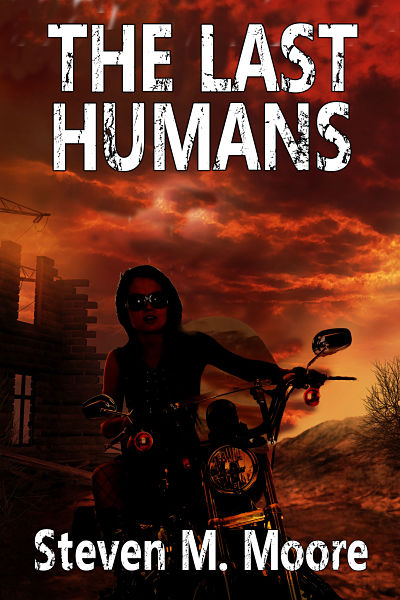
Dystopian and post-apocalyptic fiction

October 6th, 2016

This subgenre of sci-fi (or set of key words to describe a plot) waxes and wanes and generally reflects the pessimism in society.  Often a reaction to a real or perceived threat, books described by one or both these key words have attracted readers.  I’d read all the classics before I entered high school.  Maybe this is unusual for a lad who was supposed to be more curious about those strange creatures called girls, but it was the Cold War.  Reading pessimistic books about my possible future seemed natural.  Boring drills when we hid under our desks to “protect us from the Russian bombs” didn’t help, especially when I was punished for telling teachers they were stupid to believe the drills would save anyone.

Huxley’s Brave New World and Ape and Essence, Wells’s The Time Machine, Orwell’s 1984 and Animal Farm, Koestler’s Darkness at Noon, and a few others I can’t remember interested me much more than the assigned books on our class reading lists.  I suppose I raised a few eyebrows when I’d make book reports on “elective reading” I’d done, although dystopian and post-apocalyptic books seemed safer than some other books I read (notes to my parents would have been forthcoming for Tom Jones and Fanny Hill, I’m sure—teachers and parents like to think they can control a child’s reading habits!).

I graduated to books like Bradley’s Fahrenheit 451, Kornbluth’s Not This August, and Christopher’s No Blade of Grass that were seminal for some of my own stories, not in plot but in structure: the world goes to hell, but there are a few individuals who can make it a wee bit better.  While pure dystopian and post-apocalyptic books still exist—Atwood’s Oryx and Crake is an example (a book she calls speculative fiction is post-apocalyptic sci-fi, of course)—making readers want to slash their wrists or suck on a shotgun seems less fulfilling than leaving them with some optimism.  The best books of this type do just that, like Not this August and No Blade of Grass, while even famous ones like Fahrenheit 451 fail.

Read the rest of this entry »